Jonathan Galassi - Muse
Здесь есть возможность читать онлайн «Jonathan Galassi - Muse» весь текст электронной книги совершенно бесплатно (целиком полную версию без сокращений). В некоторых случаях можно слушать аудио, скачать через торрент в формате fb2 и присутствует краткое содержание. Год выпуска: 2015, Издательство: Knopf, Жанр: Современная проза, на английском языке. Описание произведения, (предисловие) а так же отзывы посетителей доступны на портале библиотеки ЛибКат.
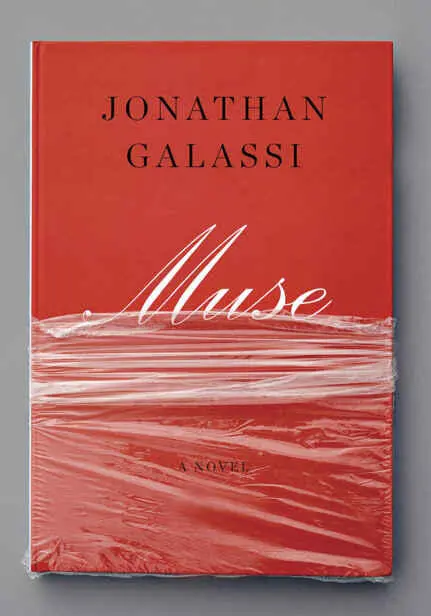
- Название:Muse
- Автор:
- Издательство:Knopf
- Жанр:
- Год:2015
- ISBN:нет данных
- Рейтинг книги:4 / 5. Голосов: 1
-
Избранное:Добавить в избранное
- Отзывы:
-
Ваша оценка:
Muse: краткое содержание, описание и аннотация
Предлагаем к чтению аннотацию, описание, краткое содержание или предисловие (зависит от того, что написал сам автор книги «Muse»). Если вы не нашли необходимую информацию о книге — напишите в комментариях, мы постараемся отыскать её.
Paul Dukach is heir apparent at Purcell & Stern, one of the last independent publishing houses in New York, whose shabby offices on Union Square belie the treasures on its list. Working with his boss, the flamboyant Homer Stern, Paul learns the ins and outs of the book trade — how to work an agent over lunch; how to swim with the literary sharks at the Frankfurt Book Fair; and, most important, how to nurse the fragile egos of the dazzling, volatile authors he adores.
But Paul's deepest admiration has always been reserved for one writer: poet Ida Perkins, whose audacious verse and notorious private life have shaped America's contemporary literary landscape, and whose longtime publisher — also her cousin and erstwhile lover — happens to be Homer’s biggest rival. And when Paul at last has the chance to meet Ida at her Venetian palazzo, she entrusts him with her greatest secret — one that will change all of their lives forever.
Studded with juicy details only a quintessential insider could know, written with both satiric verve and openhearted nostalgia,
is a brilliant, haunting book about the beguiling interplay between life and art, and the eternal romance of literature.
Muse — читать онлайн бесплатно полную книгу (весь текст) целиком
Ниже представлен текст книги, разбитый по страницам. Система сохранения места последней прочитанной страницы, позволяет с удобством читать онлайн бесплатно книгу «Muse», без необходимости каждый раз заново искать на чём Вы остановились. Поставьте закладку, и сможете в любой момент перейти на страницу, на которой закончили чтение.
Интервал:
Закладка:
Paul was convinced that no one had done more to ensure the health of what became a vital alternative strain in American literature than Sterling Wainwright in his heyday. After all, Byron Hummock, the showiest of the trendsetting postwar Jewish American writers, had published his first book of stories with Sterling, as had April Owens her now-classic anti-O’Neillian dramas of modern Greek love and politics, and Jorge Metzl his groundbreaking journalism about West Africa. Sterling’s Impetus New Poets also introduced and stayed loyal to most of the second- and third-generation modernists. Only Pound and his disciple Laughlin, with his comparatively staid Nude Erections, as Pound had dubbed it, established a decade earlier not thirty miles east in Connecticut’s Northwest Corner, could hold a candle to the impetus that Outerbridge and Wainwright together had given to the Movement Moment.
And Sterling had evolved, too. From being a gawky, sex-obsessed, very tall rich young man, he grew into a debonair, eligible, sex-obsessed bachelor-about-town. Yes, he was something of a wastrel, along with his youthful buddy from Cincinnati Johnnie George, heir to the Skoobie Doo peanut butter fortune, who enjoyed nothing more than swanning around with Sterling and a couple of starlets for evenings on the town in New York, ski vacations in Jackson Hole, Wyoming, or trouble in Tahiti. One winter Sterling and Georgie had spent two months in the Hole, as they called it, and came away owning the ski resort at the Summit for their pains. The Summit boasted the finest powder Sterling had skied on since his student days in Switzerland, and some mighty attractive women, too. Paul had seen a picture of him making an elegant turn on a slope somewhere, a nimble industrial princeling as handsome as a matinee idol. No wonder dashing, tall, blond, rich Sterling had wowed local cattle heiress and landowner Jeannette Stevens and promptly gotten her pregnant. Jeannette was lovely and forthright in the Western way, but not all that challenging, Sterling admitted, and after giving him a daughter, she had gone back to Wyoming, baby in tow, while Sterling stayed in the East, carousing and reading and picking up writers in minuscule deals that had added up over time to a list of influence and importance, if not overwhelming salability.
By his fifties, when America was still licking its wounds over its debacle in Southeast Asia and being torn apart by the revolution in values it unleashed, the onetime playboy had evolved, Paul saw, into a literary grandee and guru, a kind of minor saint of the counterculture as the publisher and protector of his most popular author, the iconic Ida Perkins.
Sterling, as Paul didn’t need reminding, had known Ida his whole life; she was his cousin, after all. Doris Appleton, the much younger half-sister of his grandmother Ida Appleton Wainwright (the Appletons hailed originally from Salem, Massachusetts, and claimed two or three witches in their lineage), had married George Peabody (“Pebo”) Perkins, a stiff, Episcopalian Proper Bostonian if there ever was one, as a mere girl of eighteen in 1919; Ida’s father was a hopelessly ineffectual banker who lost everything in the Crash and turned into a nasty drunk. As if that weren’t enough, Pebo’s brother Thomas Handyside Perkins, known as Handy, married a cousin of Sterling’s mother, Lavinia Furness, so they were doubly if not exactly closely related. So Sterling and Ida were glancingly aware of each other from family gatherings throughout their childhoods, though she barely acknowledged her younger cousin’s existence.
It had been at the Wainwright family’s elaborate “camp” at Otter Creek on Michigan’s Upper Peninsula in 1943, the summer Sterling turned sixteen, that he’d first come alive to his older cousin’s beauty. And Ida had been equally smitten with Sterling, a golf club — wielding Adonis who’d already begun turning heads, as he would all his life — Paul had heard the stories.
Sterling’s infatuation with Ida, then, was not only genteelly quasi-incestuous, but had the sanctified aura of first love about it. But it wasn’t simply carnal, though her flowing red locks, creamy skin, and callipygian figure were as remarkable as her aquiline profile, which today graces our 52-cent stamp. To see the cousins together was to feel you were on a movie set — except that they were so natural and unaffected, there wasn’t the faintest whiff of commerce about them.
And young Ida had turned out to be a poet as well — and a supremely gifted one. No wonder Sterling, who already had the literary bug himself, fell book, line, and sinker for his beauteous lyre-strumming playmate, who at eighteen had just published her notorious first collection. Even crusty Arnold, himself more than a little dazzled by the poetic Wundermädchen, had dubbed her, on reading Virgin Again that same fateful summer, “the Sappho of Our Times.”
The Sappho of Our Times was not a Sapphist, however — far from it. Her fling with her young cousin hadn’t lasted long, Sterling admitted, but Paul knew it was only the first in a string of passionate liaisons destined to become the stuff of literary myth. Ida’s liaisons became as legendary as Edna St. Vincent Millay’s, but where Vincent had been blowzily self-advertising in her controversy-courting life and work, the young Ida was aristocratically private — ice to the outer world, a furnace within. Only H.D. and Marianne Moore approached Ida in ethereal remoteness, so dazzlingly raffinée next to the louche effusions of her own contemporary, the sloppy Muriel Rukeyser. No, Ida’s style — cool, fragmentary, and mysterious — was entirely her own, and lent her more than a whiff of erotic glamour. “No wonder they thought she was one of the girls,” Sterling joshed, downing his third single malt of the evening.
Sterling ran into the now-infamous and if anything more striking Ida in New York in the fall of 1948, and before long he was head over heels again, the way he’d been at sixteen — enough to allow him to recover at least temporarily from A.O.’s dismissal of his work and start writing again. “ Il Catullo americano ” an Italian critic had named him in his later years, the American Catullus, a moniker he wore with pride, though he could never quite muster the engorged animus that had made the Roman immortal. Sterling’s love poems were generically idealizing, maybe even a little saccharine. Basically, Paul thought, he was too nice.
Ida sweeter
than upstate
Falernian
I’m waiting
here down
in the garden
under the window:
Now jump!
Not the stuff of greatness, alas. But Ida had responded. Tall, dreamy Cousin Sterling, his adolescent peachiness seasoned by a few years of romantic training, his remaining baby fat absorbed into leanness, caught her fancy again, and over that Christmas holiday they had their second torrid entanglement.
Sterling made it sound as if he’d spent a lifetime mourning those few weeks — though he’d gone on to have a rich and varied sex life of his own. He’d acquired another wife, and a son and namesake, after a series of relationships, including a long-standing, emotionally wrenching one with Bree Davis, who worked as an editor for many years at Impetus. Bree was a live wire, sensible and huskily beautiful, a kind of literary Ava Gardner, but Sterling’s mother had put her foot down. He’d had one free shot; his next consort was not going to be a nobody, too. So Bree got the boot, though the on dit was that they’d never totally called it quits, and Sterling married Maxine Schwalbe, the self-effacing, no-nonsense, seriously wealthy daughter of the founder of Mac Labs. Sterling, who was more than a foot taller than his wife, was, Paul was aware, the less wealthy partner of the two, though Wainwright’s own investments, as his protégée Bettina Braun had told Paul, brought him $10,000 a day back in the early eighties, when money was still money.
Читать дальшеИнтервал:
Закладка:
Похожие книги на «Muse»
Представляем Вашему вниманию похожие книги на «Muse» списком для выбора. Мы отобрали схожую по названию и смыслу литературу в надежде предоставить читателям больше вариантов отыскать новые, интересные, ещё непрочитанные произведения.










Обсуждение, отзывы о книге «Muse» и просто собственные мнения читателей. Оставьте ваши комментарии, напишите, что Вы думаете о произведении, его смысле или главных героях. Укажите что конкретно понравилось, а что нет, и почему Вы так считаете.