Jonathan Galassi - Muse
Здесь есть возможность читать онлайн «Jonathan Galassi - Muse» весь текст электронной книги совершенно бесплатно (целиком полную версию без сокращений). В некоторых случаях можно слушать аудио, скачать через торрент в формате fb2 и присутствует краткое содержание. Год выпуска: 2015, Издательство: Knopf, Жанр: Современная проза, на английском языке. Описание произведения, (предисловие) а так же отзывы посетителей доступны на портале библиотеки ЛибКат.
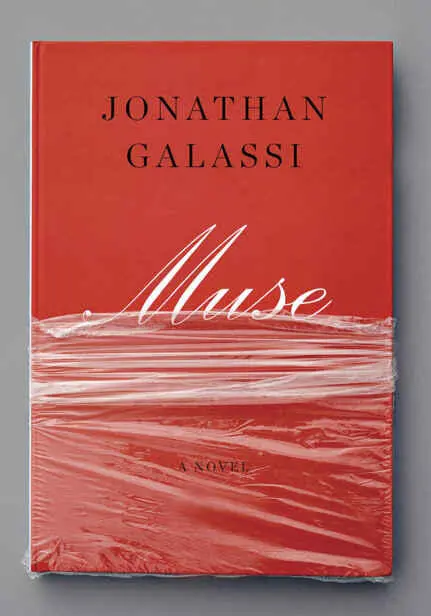
- Название:Muse
- Автор:
- Издательство:Knopf
- Жанр:
- Год:2015
- ISBN:нет данных
- Рейтинг книги:4 / 5. Голосов: 1
-
Избранное:Добавить в избранное
- Отзывы:
-
Ваша оценка:
Muse: краткое содержание, описание и аннотация
Предлагаем к чтению аннотацию, описание, краткое содержание или предисловие (зависит от того, что написал сам автор книги «Muse»). Если вы не нашли необходимую информацию о книге — напишите в комментариях, мы постараемся отыскать её.
Paul Dukach is heir apparent at Purcell & Stern, one of the last independent publishing houses in New York, whose shabby offices on Union Square belie the treasures on its list. Working with his boss, the flamboyant Homer Stern, Paul learns the ins and outs of the book trade — how to work an agent over lunch; how to swim with the literary sharks at the Frankfurt Book Fair; and, most important, how to nurse the fragile egos of the dazzling, volatile authors he adores.
But Paul's deepest admiration has always been reserved for one writer: poet Ida Perkins, whose audacious verse and notorious private life have shaped America's contemporary literary landscape, and whose longtime publisher — also her cousin and erstwhile lover — happens to be Homer’s biggest rival. And when Paul at last has the chance to meet Ida at her Venetian palazzo, she entrusts him with her greatest secret — one that will change all of their lives forever.
Studded with juicy details only a quintessential insider could know, written with both satiric verve and openhearted nostalgia,
is a brilliant, haunting book about the beguiling interplay between life and art, and the eternal romance of literature.
Muse — читать онлайн бесплатно полную книгу (весь текст) целиком
Ниже представлен текст книги, разбитый по страницам. Система сохранения места последней прочитанной страницы, позволяет с удобством читать онлайн бесплатно книгу «Muse», без необходимости каждый раз заново искать на чём Вы остановились. Поставьте закладку, и сможете в любой момент перейти на страницу, на которой закончили чтение.
Интервал:
Закладка:
There was something about the changeless tranquillity of the place — the large, unfarmed farms with their well-tended meadows and woods; the lack of change in their ownership; the deep, deep cold of the long, long winters. When Sterling’s Aunt Lobelia had settled here in the twenties, she’d built herself a Palladian mansion on a rock ledge on River Road. After Sterling had come to his senses and returned from London, she’d constructed a tall, boxy wooden house for him across the street, and let him set up Impetus Editions in the farmer’s house beyond the meadow. In between the Cow Cottage, as it was known, and his aunt were nothing but birch and maple fern woods scattered with towering rhododendrons and flame azaleas that blazed bright orange in June.
On Paul’s first evening, he walked down the grassy old woods road that ran past the cottage like something out of a poem by Robert Frost. It wound over a rickety bridge, up a steep hill, and across a pine forest plateau, then descended beside a swamp that was home to Venus flytrap and other carnivorous plants, passing a small, unoccupied screen-porched cottage on the right. After another slight incline it arrived at Handspring Pond and Aunt Lobelia’s stone “camp,” a Beaux Arts gem in its own right, with Sterling’s shingled one a few hundred feet to the east. Sprinkled around the edge of the little lake were a dozen similar structures, most of them owned by the several branches of the Binns family. The only noise that intruded on the pond, where motorboats were forbidden, was an occasional shout from the beach at the west end, which Beebe leased to the town for a dollar a year. The woods roads and trails in the Bald Mountain Forest passed many wonders — secret lakes, cellars of settlements abandoned centuries ago, even occasional patches of primeval first-growth forest, the ultimate rarity.
The photos of Hiram’s Corners in the mid-nineteenth century that Paul saw at the Historical Society on the town green were shocking: these densely green hills had, like most of the Eastern Seaboard, been virtually shorn of forest by charcoalers avid to feed the kilns of the small iron factories that lined the Huckleberry River, which was little more than a big brook, before the invention of steel. The very innovations that had been the sources of the Wainwrights’ and Binnses’ wealth — oil, coal, and steel — had killed off these little enterprises and tens of thousands like them and allowed those brash nineteenth-century Midwestern arrivistes to become the lords of Hiram’s Corners. And now oil and steel had been shoved aside by what — high tech? Everyone was waiting for the first dot-commers to show up in Middlesex. So far, though, it seemed to have been passed over by the new Masters of the Universe in favor of showier spots. Being up in the hills, Hiram’s Corners didn’t even have high-speed Internet access, a bone of contention, Paul soon learned, for the few transplanted New Yorkers who wanted to live and work here. It was a place out of time, nearly feudal in its hierarchies and peaceableness. Paul lay back in his chaise longue and breathed in its self-satisfied woodsy air like perfume.
The Cow Cottage had originally been built as the farmer’s house on Aunt Lobelia’s property. Like her own aunt Aurelia, she’d arrived from Cincinnati, one of those reverse pioneers who made their way back to the original Colonies to acquire the patina of gentility that was missing in the Western Reserve. Aunt Lobelia was stolid and a little self-righteous, but devoted to her brother’s wayward yet alert only son, and indulgent, up to a point, of his odd interest in the arts. When Sterling had decided to become a publisher, she’d created a sylvan refuge in which he could pursue his literary aspirations away from the intermittently prying eyes of his intermittently disapproving parents and under her conventional but benevolent nose.
A succession of writers had lived in the Cottage, helping Sterling conduct Impetus business and holding down the fort when he took off for the Summit, where he still spent much of every winter, skiing, snowshoeing, and transforming the place into a Spartan but first-world-class ski resort, and visiting Jeannette and their daughter, Ida, named, he said, for his Wainwright grandmother.
In his absence, first Harold Cowden, then Konrad Preuss, and lastly Eli Mandel, all of them among Sterling’s second string of indigent young writers, had tried to make a go of working for subsistence wages in the upper Hudson Valley with no one to see or talk to except the naturally curious — i.e., suspicious — locals, who didn’t know a villanelle from a bottle of bourbon. Cowden had got a book out of it — his Hiram’s Corners Cantata, usually viewed as an aberration in his work — before being briefly institutionalized. Preuss and Mandel, perhaps better balanced, had lasted less long. Then Sterling established the Impetus New York office and bought the Barrow Street apartment (useful for authorial conferences that sometimes turned into trysts and/or vice versa), and the work and play of Impetus Editions had largely moved south. But to the initiated, the Cow Cottage retained its aura of literary sanctity, and the attached barn, with its mullioned Swiss windows, was stocked with Sterling’s overflow library of IE books, a veritable temple to the literary cult he’d established. It was here that Paul had set up shop to work on A.O.’s notebooks.
Paul shared Sterling’s view that A.O. was the only Red poet who had not been bested by ideology. As with his model Shelley, Arnold’s superabundant lyric gift surpassed and, some would say, annihilated the ideas he expressed, till all there was, in effect, was the poetry — its thrust and lilt steamrolling the poet’s purported convictions. Paul could practically taste the romance of A.O.’s life in Venice with Ida, she consoling him about the eternal vagaries of politics and reminding him of the enduring power of his voice, Arnold urging her on to ever-new delvings, new castles in Spain, new amazements to be pulled out of the humid Venetian breeze, composing his mysterious encrypted poems all the while.
But this wasn’t Venice. Paul was here in this idyllic yet unfamiliar place, with a daunting task in front of him. He’d taken up the study of ciphers, having ordered every guide he could find on the Medusa website that didn’t sound too technical. He felt guilty about patronizing the rapacious online bookseller, but the truth was that Styx and Stonze never had what he needed, even in their Madison Square flagship store, where board games and wrapping paper and the book chain’s own proprietary product were beginning to squeeze out books. What would Morgan think? he wondered — a bit disingenuously, since he already knew.
Paul had convinced himself that it was just a matter of time before he’d find the method in A.O.’s madness. Working in the airless barn wasn’t always conducive to code-cracking, though. Some days, he’d spend more time than he’d have liked to admit not working on the notebooks, fretting about the non-life he was leading or poring over Sterling’s secondary — or was it tertiary? — library of Impetus titles, alphabetically arranged on unpainted shelves with old juice bottles for bookends. Everyone from Tagore to Blaisdell, early Luteri to late Broch, Robert Duncan to Dermott Weems to César Vallejo to Pélieu to Serenghetti — it was a checkerboard of world literature, mind-boggling in its breadth and adventurousness and originality. Yes, Sterling liked to talk about the ones that got away but, my God, the ones he’d landed, the cavalcade of writers he’d discovered, nurtured, and kept in print over a long and no doubt often discouraging but ultimately triumphant career!
The truth was that many of these names, the makers of modern culture, had sold very little over the course of their long lives in print with Impetus. It was one of the realities of publishing: what was truly new often languished in the warehouse nearly unasked-for. One of the tricks of publishing was catching the wave of public taste at the right moment. If you were too prescient, too far ahead of the swell, literally nothing would happen — until lightning struck, if it did, years, sometimes decades, later. In the meantime, you had to have other ways of keeping body and soul together to be a serious writer — or a publisher. The remarkable thing about Sterling was how he’d used his means, and used them brilliantly, to build his house. With Aunt Lobelia’s help, he’d husbanded his modest stake and kept his shoestring operation going long enough, consistently enough, devotedly enough, that fifty years on he had a catalog that was the envy of the more discerning of his commercial confreres. And Impetus had eventually become profitable as well, when a goodly number of its key authors had ended up being adopted in classrooms across America. The long tail had paid off for Sterling. Not that this was why he’d done it; but commercial success in the end was heroic confirmation of the essential soundness of his undertaking. He’d made a wager with fate that out of desire, stick-to-itiveness, and judgment, he could create a worthwhile publishing venture. And he’d succeeded; by trusting his own taste, he’d shown them all — his uncomprehending family, his derisive competitors, even crusty, superior Arnold Outerbridge, who’d taken a left-handed chance on a brash young layabout.
Читать дальшеИнтервал:
Закладка:
Похожие книги на «Muse»
Представляем Вашему вниманию похожие книги на «Muse» списком для выбора. Мы отобрали схожую по названию и смыслу литературу в надежде предоставить читателям больше вариантов отыскать новые, интересные, ещё непрочитанные произведения.








Обсуждение, отзывы о книге «Muse» и просто собственные мнения читателей. Оставьте ваши комментарии, напишите, что Вы думаете о произведении, его смысле или главных героях. Укажите что конкретно понравилось, а что нет, и почему Вы так считаете.