Jonathan Galassi - Muse
Здесь есть возможность читать онлайн «Jonathan Galassi - Muse» весь текст электронной книги совершенно бесплатно (целиком полную версию без сокращений). В некоторых случаях можно слушать аудио, скачать через торрент в формате fb2 и присутствует краткое содержание. Год выпуска: 2015, Издательство: Knopf, Жанр: Современная проза, на английском языке. Описание произведения, (предисловие) а так же отзывы посетителей доступны на портале библиотеки ЛибКат.
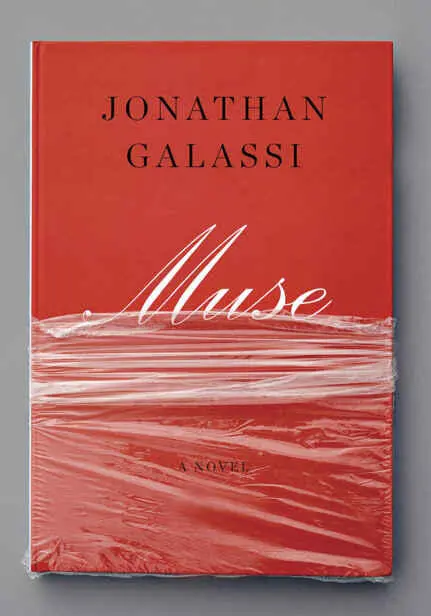
- Название:Muse
- Автор:
- Издательство:Knopf
- Жанр:
- Год:2015
- ISBN:нет данных
- Рейтинг книги:4 / 5. Голосов: 1
-
Избранное:Добавить в избранное
- Отзывы:
-
Ваша оценка:
Muse: краткое содержание, описание и аннотация
Предлагаем к чтению аннотацию, описание, краткое содержание или предисловие (зависит от того, что написал сам автор книги «Muse»). Если вы не нашли необходимую информацию о книге — напишите в комментариях, мы постараемся отыскать её.
Paul Dukach is heir apparent at Purcell & Stern, one of the last independent publishing houses in New York, whose shabby offices on Union Square belie the treasures on its list. Working with his boss, the flamboyant Homer Stern, Paul learns the ins and outs of the book trade — how to work an agent over lunch; how to swim with the literary sharks at the Frankfurt Book Fair; and, most important, how to nurse the fragile egos of the dazzling, volatile authors he adores.
But Paul's deepest admiration has always been reserved for one writer: poet Ida Perkins, whose audacious verse and notorious private life have shaped America's contemporary literary landscape, and whose longtime publisher — also her cousin and erstwhile lover — happens to be Homer’s biggest rival. And when Paul at last has the chance to meet Ida at her Venetian palazzo, she entrusts him with her greatest secret — one that will change all of their lives forever.
Studded with juicy details only a quintessential insider could know, written with both satiric verve and openhearted nostalgia,
is a brilliant, haunting book about the beguiling interplay between life and art, and the eternal romance of literature.
Muse — читать онлайн бесплатно полную книгу (весь текст) целиком
Ниже представлен текст книги, разбитый по страницам. Система сохранения места последней прочитанной страницы, позволяет с удобством читать онлайн бесплатно книгу «Muse», без необходимости каждый раз заново искать на чём Вы остановились. Поставьте закладку, и сможете в любой момент перейти на страницу, на которой закончили чтение.
Интервал:
Закладка:
Dearest Arnold:
My spies tell me the powder at the Summit is peerless this season, but I haven’t been able to get away, largely due to the run on Ida’s work. We’ve reprinted Half a Heart thirteen times since the National Book Award, and my salesmen tell me the stores can’t keep it on the shelves. And all of her work is going gangbusters. E. S. Wilentz collared me in front of his shop on Eighth Street this morning and wouldn’t stop chanting, “SEND. ME. MORE. BOOKS.” It was embarrassing — and sublime. Of course we don’t have books to send him at the moment, but the printer promised another twenty thousand next week. Twenty thousand! Our cynical old sales manager Sidney Huntoon says it’ll be “Gone today, here tomorrow,” once the excitement dies down, but in Ida’s case, I don’t think so for once. The old girl is the absolute toast of the town. You should have seen her on Dick Cavett , making eyes and getting him to laugh uproariously. And her show with Audrey Dienstfrey and Her Kind was a sellout at Boston Garden. Audrey screamed and wept and made an enormous scene — envious, no doubt — but now they’re joined at the hip and Audrey won’t let her new soul sister out of her sight.
You’d be proud of your consort. I certainly am. We’re minting money, for once. Ida seems to be enjoying it all — at least most of it; I don’t think she’s wild about being mobbed in the street. Luckily, she’s coming up to the farm for the weekend to hide out, bringing that ingrate Hummock and maybe young John Ashbery along. Yawn. Maxine has orga nized a little golf tourney for everyone that ought to be a riot, since most of the guests aren’t exactly star athletes.
In other news, I’m sorry to report that we’re going to have to let Elegy for Evgenia go out of stock for the time being, as demand has fallen below the acceptable threshold for a reprint. Here’s hoping the situation turns around shortly.
I trust all is otherwise serene in La Serenissima. Keep the faith; we’re holding on as usual here.
Ever thine,
There were ecstatic reviews and the inevitable pans, particularly of Barricade and The Brownouts, published in Ida’s so-called Anti phase. There were endless award citations: four National Book Awards (and a photograph of Ida arm in arm with fellow winners Joyce Carol Oates and William Steig at the awards dinner in 1992); two Pulitzer Prizes; the Feltrinelli, Lenin, Nonino, Prince of Asturias, Jerusalem, and T. S. Eliot prizes; the gold medal for poetry of the American Academy of Arts and Letters; a letter from 41 offering Ida the Presidential Medal of Freedom (with a carbon of a reply from Sterling politely declining on her behalf); a list of thirty-nine honorary degrees, from 1960 to 2005; copies of full-page advertisements for various titles; articles in Flair and Vogue about her idiosyncratic fashion sense; bills from Bergdorf Goodman for thousands of dollars, primarily for shoes; travel agents’ invoices from the triumphal 1967 West Coast tour, during which Ida had cavorted naked in the big pool at Esalen with Pepita Erskine, after spending the weekend in Watts with Eldridge Cleaver. A photo of sunburned, shirtless Allen Ginsberg and Robert Lowell flanking a pale, straw-hatted Ida, taken by Elizabeth Hardwick on Mount Desert Island in August 1968, two days after the New York Post printed the iconic shot of Ida in a Chanel suit with matching spectator pumps and alligator bag outside La Côte Basque with Babe Paley and Truman Capote (“Whose Hair Higher?” the caption queried). Invitations to twelve state dinners at the White House, from the Johnson to Obama administrations. A royalty statement for Aria di Giudecca (7,238 copies sold in the first six months of 2000).
And there was this, from 1964:
Dear Mr. Wainwright:
I want to thank you for sending Ida Perkins’s new book, The Face-lift Wars, which I have been nibbling at with great fascination since its arrival. Miss Perkins is that unlikely miracle, a Real Thing. Gertrude Stein, who as you know encouraged Ida when she was still a girl, would have been gratified to see how she has panned out.
With appreciation,
Alice Toklas
* * *
That night Paul had troubled dreams, of Ida and Sterling and A.O. and Gertrude Stein and Mao and Gloria Steinem (and Jasper, too) caught in bizarre conflicting situations, battles, triangles, thrashing sex, and misery — and him on the sidelines, not knowing how to enter in, to engage or calm them. He woke headachy and exhausted, and spent another rainy day in the barn finishing up his transcription, which that day seemed boring and pointless. He was sick of them all, and most of all sick of himself and his voyeuristic need to live through them. Luckily, it would soon be time to pack up and head back to the city.
First, though, Homer was coming for a visit. He’d called to announce that he and Iphigene were driving up to Hiram’s Corners to check in on Paul—“consorting with the enemy,” he’d put it good-humoredly enough, though he’d been disparaging about Outerbridge when Paul had admitted he was working with Sterling on the notebooks. Maybe Homer was curious about how his old competitor lived; his own country place was a turn-of-the-century Tyrolean chalet in Westchester originally built by his great-uncle that now, unfortunately, backed onto the Saw Mill River Parkway. Or maybe it was simple boredom that sent him out of the house. In any case, Paul decided to invite Sterling and Bree to lunch at the Cow Cottage on the Sterns’ visiting day. He fixed a shrimp salad, iced tea, and icebox cookies, and waited for the fireworks.
It had gone well, much to his relief. Sterling presented Homer with a rare copy of a Hiram’s Corners Chapbook of Elspeth Adams’s First Poems, and Homer had been visibly touched. They’d all chatted cordially about the weather, their children, and various authors, steering clear, for the most part, of the ones they’d “shared” (i.e., fought over) and moving on to the general decline of the business and the perfidy of agents — subjects the two old lions were in utter agreement about. And then, after a couple of hours of making nice, Homer and Iphigene had been on their way. Ida had gone unmentioned, needless to say — after all, there were other ladies at the table — but in Paul’s mind, and who knows, perhaps in the other men’s, too, she had been vividly present.
He’d imagined her suddenly appearing: lunch on Olympus, le déjeuner sur l’herbe, all of them immortally young, feasting nude on nectar and ambrosia. Instead, it had been a congenial little meal, a moment of truce between aged warriors — with nothing to arouse their old rivalry.
“He’s mellowed,” Homer said about Sterling when Paul was back at work — which was precisely what Sterling had told Paul down at the dock that afternoon. The good feeling lasted a few weeks, and then they were back to what they enjoyed most: doing each other down to Paul. He was caught in the middle, as usual. Yet he felt abler now to move back and forth between his heroes. He’d been with both of them at the same time and place and no one had even raised his voice.
VII. Sunny Days at P & S
“How was your weekend, dearie? Read anything interesting?”
Paul, who’d been back at work for a few weeks, was sitting in Homer’s corner office with him and Sally, as they did most mornings after she’d taken Homer’s dictation. The company’s ratty style extended to the boss’s inner sanctum, which, though larger than the other offices and furnished with a conference table and a dirt-encrusted Danish modern desk and two sweat-stained aquamarine leather armchairs, was every bit as shabby as the rest of the premises. The cracked linoleum floor was waxed fairly often, filth and all, so it was shiny as well as grubby. Thirty-year-old curtains of a beige indistinguishable from dinge framed windows overlooking Union Square, which was currently experiencing a renaissance that had made it the teenage hangout capital of Manhattan. Now, instead of users scoring at the foot of the Civil War monument in the center of the park, recovering users competed with after-schoolers, dog walkers, and the occasional hardy passerby for seats on the too-few benches. Still, the greenmarket that happened four days a week right outside the office was a boon. Paul occasionally saw Homer and Sally shopping for fruit or flowers on their daily postprandial stroll.
Читать дальшеИнтервал:
Закладка:
Похожие книги на «Muse»
Представляем Вашему вниманию похожие книги на «Muse» списком для выбора. Мы отобрали схожую по названию и смыслу литературу в надежде предоставить читателям больше вариантов отыскать новые, интересные, ещё непрочитанные произведения.











Обсуждение, отзывы о книге «Muse» и просто собственные мнения читателей. Оставьте ваши комментарии, напишите, что Вы думаете о произведении, его смысле или главных героях. Укажите что конкретно понравилось, а что нет, и почему Вы так считаете.