Jonathan Galassi - Muse
Здесь есть возможность читать онлайн «Jonathan Galassi - Muse» весь текст электронной книги совершенно бесплатно (целиком полную версию без сокращений). В некоторых случаях можно слушать аудио, скачать через торрент в формате fb2 и присутствует краткое содержание. Год выпуска: 2015, Издательство: Knopf, Жанр: Современная проза, на английском языке. Описание произведения, (предисловие) а так же отзывы посетителей доступны на портале библиотеки ЛибКат.
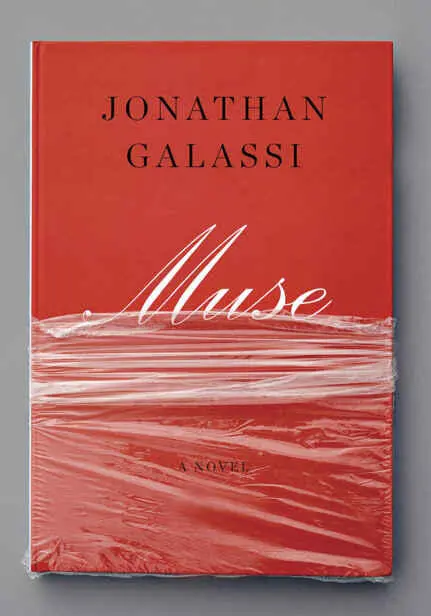
- Название:Muse
- Автор:
- Издательство:Knopf
- Жанр:
- Год:2015
- ISBN:нет данных
- Рейтинг книги:4 / 5. Голосов: 1
-
Избранное:Добавить в избранное
- Отзывы:
-
Ваша оценка:
Muse: краткое содержание, описание и аннотация
Предлагаем к чтению аннотацию, описание, краткое содержание или предисловие (зависит от того, что написал сам автор книги «Muse»). Если вы не нашли необходимую информацию о книге — напишите в комментариях, мы постараемся отыскать её.
Paul Dukach is heir apparent at Purcell & Stern, one of the last independent publishing houses in New York, whose shabby offices on Union Square belie the treasures on its list. Working with his boss, the flamboyant Homer Stern, Paul learns the ins and outs of the book trade — how to work an agent over lunch; how to swim with the literary sharks at the Frankfurt Book Fair; and, most important, how to nurse the fragile egos of the dazzling, volatile authors he adores.
But Paul's deepest admiration has always been reserved for one writer: poet Ida Perkins, whose audacious verse and notorious private life have shaped America's contemporary literary landscape, and whose longtime publisher — also her cousin and erstwhile lover — happens to be Homer’s biggest rival. And when Paul at last has the chance to meet Ida at her Venetian palazzo, she entrusts him with her greatest secret — one that will change all of their lives forever.
Studded with juicy details only a quintessential insider could know, written with both satiric verve and openhearted nostalgia,
is a brilliant, haunting book about the beguiling interplay between life and art, and the eternal romance of literature.
Muse — читать онлайн бесплатно полную книгу (весь текст) целиком
Ниже представлен текст книги, разбитый по страницам. Система сохранения места последней прочитанной страницы, позволяет с удобством читать онлайн бесплатно книгу «Muse», без необходимости каждый раз заново искать на чём Вы остановились. Поставьте закладку, и сможете в любой момент перейти на страницу, на которой закончили чтение.
Интервал:
Закладка:
“Not much. A few no-count novels.”
“When is that momser Burns going to finish his book? He owes us a small fortune. If he’d lay off shtupping that girl of his with the ring in her nose and get down to work, we’d all be a lot better off.”
“That’s a bindi Anjali wears on her forehead, Homer. Earl phoned last week to say he’s about to deliver.”
Homer’s banter with Paul kept things lively and safely impersonal between them. His constant stream of gossip, especially the sexual variety, invariably contained juicy tidbits about whoever was current on his ever-active shit list. “Davidoff is a faggot,” he’d assert, more or less out of thin air, or “I hear that cocksucker Stevens is boffing both his secretaries. When the Nympho finds out, she’ll have a vaginal collapse.” Homer was an equal opportunity offender when it came to others’ proclivities — though “cocksucker” was a term reserved exclusively for heterosexuals. Ethnicity wasn’t one of his primary categories of derision, but he did enjoy poking fun at the “piece of fluff” that Gerald Bourne had brought over from Paris on his most recent annual visit (Gerald always showed up with a foulard for Homer, an extravagant scarf for Sally, and a tie for Paul, picked up, no doubt, at the Hermès airport gift shop). “What was It wearing?” the boss would ask, about someone whose sexuality was a little too fluid according to his antediluvian standards.
“I don’t believe people do all the things you say they do, Homer; they couldn’t possibly,” Paul would object when Homer cataloged the shenanigans of his foes, and friends, to which Homer would counter, “No, but they do something.” Which was hard to deny. Sexual activity for Homer was an index of moral fallibility and vitality at one and the same time. It didn’t matter what people did; he was sure they did something illicit. It meant they were alive, like him. Maybe he was simply looking for companionship in transgression.
Homer had been a varsity sexual athlete in his prime, according to Georges Savoy, who told Paul that Stern would often return from lunch with wet hair. For years he had a special “wire” in his office, originally installed, it was rumored, for secret government contacts. Now, though, the old black rotary phone rang only when a woman friend from out of Homer’s colorful past checked in; then Sally would stand in the hall and intone, “Your phone is ringing.” (She refused to answer it herself.) Homer was reputed to have maintained a pied-à-terre near the office where he would repair for nooners, sometimes allegedly three-ways recruited (but how?) from among the staff. Sex was P & S’s best — indeed its only — sport (the softball team was famously terrible), and it was Homer who set the tone. “Put this in with your smalls,” he’d tell his rights director, Cherry Withington, on her way to Frankfurt, tossing her the galleys of a new book. Sex was recreation for him, a healthy, immensely satisfying pastime, and he was an avid tennis player too, well into his eighties. For all his profanity and bedroom antics, though, Homer was a relative prude when it came to misbehaving on the page. He was no Barney Rosset, the swashbuckling, boundary-testing founder of Grove Press, who’d braved the censorship laws bringing out Lady Chatterley’s Lover, The Story of O, and other lubricious classics. Sex scenes in the novels Homer published made him uncomfortable, though he was convinced (erroneously, for the most part) that they sold books.
Paul could tell who Homer’s old flames had been by how courtly he was with them, loyal in a way he was with no one else — not authors, relations, or even his best foreign confederates. Sex with Homer seemed to lead to friendship, perhaps the most unambivalent relationships he had. He was a ladies’ man, and not just in the accepted sense of the term. Women seemed to offer him a solace that was missing from his noisy yet inarticulate sparring with men.
It was impossible for Homer to be really close to another male; his Neanderthal instinct was too strong. He boasted about his affection for his authors, the Three Aces in particular, but when Paul joined them for lunch, as he was always invited to because Homer, he sensed, was uncomfortable one-on-one, the conversation often ended up being superficial, if not inane — a terrible waste when three of the leading writers in the world were sitting at the table. Homer, for all his impact, was a man of a few words, many of them unprintable, which got repeated over and over in ingenious combinations. “And so forth and so on” was how his stories tended to trail off, with a dismissive wave. “Let’s go make a book” was how he brought lunch to a close.
What Homer thrived on most was having enemies. Nothing gave him more pleasure than cutting dead a former employee — a “deserter,” hence a nonperson — or providing a denigrating comment about a competitor to The Daily Blade. In his days doing army PR he’d learned that it didn’t matter what you said as long as you were quoted. He had a series of rubber stamps for unwelcome correspondence, which he’d return with GREAT MOMENTS IN LITERATURE, HORSESHIT PIE, or best of all FUCK YOU VERY MUCH smudged in big black letters across the pages. He delighted in accusing Sandy Isenberg, the pint-sized president of Owl House, of boorishness, making bellicose public sallies that left Sandy, a short man unaccustomed to opposition of any kind, sputtering with rage.
Best of all, though, was fighting with agents, those parasites who interfered with his private relations with his property — i.e., his authors. Paul, who felt it was advisable to get along with people if possible because you might want or need to do business with them in the future, now and again suggested it might be politic to reestablish relations with Agent X, who had incurred Homer’s ire years ago by selling a book he’d wanted to Farrar, Straus or Knopf.
“Don’t give me that Christian forgiveness bullshit, Dukach. I’m a vindictive Jew!” he’d bellow. “End of joke!”—another classic Homer Stern way of closing a conversation.
One agent who loomed in his imagination was Angus McTaggart, with whom Homer enjoyed a long-standing sadomasochistic bromance. McTaggart, who professed to adore Homer, adored working his way through Homer’s catalog even more, signing up his unrepresented or badly represented writers and then demanding oversize improvements in their compensation for their next books, which Homer delighted in being outraged about. Most of the writers ended up staying, on terms that made publishing them unprofitable for Homer, but some of the bigger ones did occasionally leave for greener pastures, like Abe Burack, after he finally hit it big with his big Brooklyn novel, A Patch on Bernie. Homer would thunder and swear and refuse to take Angus’s calls for a few weeks or months. Then Angus would take him out to lunch, grovel apologetically, and pick up the check, an unheard-of deviation from the publisher-agent quadrille, and the cycle would start up again. But unlike the Nympho, another powerful agent who couldn’t help taking Homer’s acting-out personally (to be fair, there was a misogynist cast to many of his jabs), Angus reveled in the ritualized combat that was a way of averting boredom for both of them.
Homer loved winning, and loved seeing others lose even more. But he also enjoyed the game for its own sake. And he was extraordinarily good at it. He had created a highly articulated organism and employed the diversionary color of his personality effectively in its service — unless he got carried away, as he quite often did, by his emotions. His employees felt to him like his “illegitimate children”; they were the best in the business because they were his. He was no intellectual and didn’t pretend to be, though he read, or “sniffed,” as he put it, all the books he published. He was an amateur, in the original sense of the word: he loved writing and writers. And he was unmatched at the one thing that mattered to them more than anything — even money: he could get them talked about.
Читать дальшеИнтервал:
Закладка:
Похожие книги на «Muse»
Представляем Вашему вниманию похожие книги на «Muse» списком для выбора. Мы отобрали схожую по названию и смыслу литературу в надежде предоставить читателям больше вариантов отыскать новые, интересные, ещё непрочитанные произведения.









Обсуждение, отзывы о книге «Muse» и просто собственные мнения читателей. Оставьте ваши комментарии, напишите, что Вы думаете о произведении, его смысле или главных героях. Укажите что конкретно понравилось, а что нет, и почему Вы так считаете.