Jonathan Galassi - Muse
Здесь есть возможность читать онлайн «Jonathan Galassi - Muse» весь текст электронной книги совершенно бесплатно (целиком полную версию без сокращений). В некоторых случаях можно слушать аудио, скачать через торрент в формате fb2 и присутствует краткое содержание. Год выпуска: 2015, Издательство: Knopf, Жанр: Современная проза, на английском языке. Описание произведения, (предисловие) а так же отзывы посетителей доступны на портале библиотеки ЛибКат.
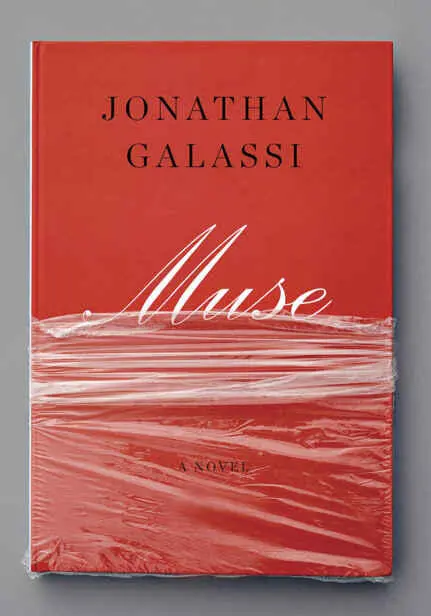
- Название:Muse
- Автор:
- Издательство:Knopf
- Жанр:
- Год:2015
- ISBN:нет данных
- Рейтинг книги:4 / 5. Голосов: 1
-
Избранное:Добавить в избранное
- Отзывы:
-
Ваша оценка:
Muse: краткое содержание, описание и аннотация
Предлагаем к чтению аннотацию, описание, краткое содержание или предисловие (зависит от того, что написал сам автор книги «Muse»). Если вы не нашли необходимую информацию о книге — напишите в комментариях, мы постараемся отыскать её.
Paul Dukach is heir apparent at Purcell & Stern, one of the last independent publishing houses in New York, whose shabby offices on Union Square belie the treasures on its list. Working with his boss, the flamboyant Homer Stern, Paul learns the ins and outs of the book trade — how to work an agent over lunch; how to swim with the literary sharks at the Frankfurt Book Fair; and, most important, how to nurse the fragile egos of the dazzling, volatile authors he adores.
But Paul's deepest admiration has always been reserved for one writer: poet Ida Perkins, whose audacious verse and notorious private life have shaped America's contemporary literary landscape, and whose longtime publisher — also her cousin and erstwhile lover — happens to be Homer’s biggest rival. And when Paul at last has the chance to meet Ida at her Venetian palazzo, she entrusts him with her greatest secret — one that will change all of their lives forever.
Studded with juicy details only a quintessential insider could know, written with both satiric verve and openhearted nostalgia,
is a brilliant, haunting book about the beguiling interplay between life and art, and the eternal romance of literature.
Muse — читать онлайн бесплатно полную книгу (весь текст) целиком
Ниже представлен текст книги, разбитый по страницам. Система сохранения места последней прочитанной страницы, позволяет с удобством читать онлайн бесплатно книгу «Muse», без необходимости каждый раз заново искать на чём Вы остановились. Поставьте закладку, и сможете в любой момент перейти на страницу, на которой закончили чтение.
Интервал:
Закладка:
The bus lurched to a halt at Fourteenth Street, and he made his escape. He was going to see Ida Perkins in Venice. Unaccountably, he was convinced this visit would change his life. First though, he had to get through Frankfurt.
VIII. The Fair
The modern-day Frankfurt Book Fair was a postwar phenomenon, a vehicle for easing the readmission of Germany into the company of civilized Western societies. Originally, it had been a phenomenon of the Renaissance, Frankfurt being the largest trading center near Mainz, where Johannes Gutenberg and his fellows had invented movable type in the late 1430s. The fair had been established again in 1949 and had grown into the most important annual gathering in international publishing. Every October, tens of thousands of publishers from all over the world scurried like so many ants among the warehouse-like halls of the fair’s bleak campus on the edge of the city center, rushing to appointments with their counterparts.
But books weren’t sold at the modern-day Frankfurt. Authors were — by the pound and sometimes by the gross. What the publishers did at Frankfurt was hump the right to sell their writers’ work in other territories and languages, often pocketing a substantial portion of the earnings for themselves (the ever-paternalistic French were among the most egregious, raking off 50 percent of the take). The days before agents woke up to the potential of international deals were a wild and woolly era, though the seigneurial rituals of fair commerce were punctiliously observed by the players. Rights directors were the most visible players under the Frankfurt bell jar, and the acknowledged queen of them all was Cora Blamesly, FSG’s mace-wielding Iron Maiden, who hailed from the arbor-draped hills of Carinthia and was a past master at brandishing her picked-up Sloane Ranger accent, with its ineradicable Germanic undertone, and her S/M selling techniques to extract outrageous contracts from her desperate European “friends.”
Cora and her ilk would hold back important manuscripts for sale at the fair and then “slip” them with elaborate fanfare to favored editors in various territories, demanding that they be read overnight and soliciting preemptive offers, often inflated by the expectations and tensions of Frankfurt’s carnival atmosphere.
The Europeans were desperate because the postwar cultural economy had dictated that Italian and German, Japanese and Brazilian, and sometimes even French readers needed and wanted to read American books. Not just the big commercial authors, either, the Stephen Kings and Danielle Steels, but the Serious Literary Writers, too. First there’d been the anxiety-ridden, attitude-infused Jewish American novelists; followed by the less interesting, more self-regarding WASPs, the Updikes and Styrons and Foxxes; and the nondescript newbies, the young Turks full of sass and plausibility that Cora and her counterparts whipped up into supernovas for the four days of the fair, sometimes for book after book, year after year. European publishing nabobs like Jorge Vilas (Spain), Norberto Beltraffio (Italy), Matthias Schoenborn (Germany), and the biggest overspender of them all, Danny van Gennep from Utrecht, had been playing this way for years, and were on the hook to Cora for literal millions. When Roger Straus or Lucy Morello brought a new author to Frankfurt, they all jumped, as they did for Rob Routman, the head-turning editor in chief of Owl House — sometimes, it was rumored, without reading all that much (or, let’s be honest, any) of the manuscript — because often, or often enough anyway, the books “worked,” i.e., sold copies back home. Many publishers played “Ready, Fire, Aim” buying foreign books, acquiring titles that sounded hot but often, when the commissioned translations materialized months later, would have them shaking their heads, wondering how such a dog could have appeared so leonine in the half-light of the smoke-infested Hessischer Hof bar, still packed at two a.m. with drunken, libidinous editors and rights people splayed across each other on the sagging couches.
The serial drink dates and langweilisch alcoholic dinners with self-congratulatory speeches by the hosting German publishers, followed by more drinks on into the night (same-time-next-year cohabitation was not unheard of, either) contributed to Frankfurt’s nonstop bonhomie and its open-walleted frenzy. As one grand old man of Danish publishing had told Homer, “We come to Frankfurt every year to see if we’re still alive.” Some, alas, were not. The worst were former bigwigs who had the bad taste to reappear, wandering the cavernous halls, buttonholing former colleagues between nonexistent appointments. They were ghosts, revenants, and everyone knew it — including them, perhaps.
Frankfurt was anything but social; it was carnivorousness at its most rapacious, with a genteel European veneer. The dressy clothes, the parties, the cigars, the jacked-up prices in the hotels and restaurants, the disappointing food were all of a piece. It was exhausting and repetitive and depressing — and no one in publishing with any sense or style would have missed it for the world.
Homer was made for Frankfurt. Nowhere was he more relaxed, more full of avuncular wisdom and wisecracking anecdotes. He had refused to come to postwar Germany for years, but had been won over by Brigitta Bohlenball, the vivacious widow of Friedrich Bohlenball, who had almost instantaneously, thanks to a series of shrewd buys, used his Swiss milk fortune and Communist politics (a Swiss Communist: a rara avis indeed!) to become one of Europe’s most stylish publishers. Friedrich had introduced a number of weighty novelists and philosophers before committing suicide at the age of forty, leaving Brigitta and young Friedchen with several hundred million Swiss francs, a villa near Lugano, and a Schloss in the Engadine, not to mention Zurich’s swankiest publishing house.
“Come, Homer. You’ll have such a good time, I promise you,” Brigitta cooed over lunch at La Caravelle, and she’d made good on her vow, introducing her new American catch to the greatest, which is to say the most snobbish, editors in Europe.
If a snobbish publisher seems like an oxymoron today, it’s only an indication of how the notion of class has degraded in the postwar era. The aristocrats of European publishing, the Gallimards, Einaudis, and Rowohlts, were good old bourgeois who had gotten through the war more or less intact, though sometimes with not-unblemished political affiliations in their back pockets, as was true for numberless European businessmen. They weren’t very different, mutatis mutandis, from Homer, which is no doubt why he came to feel so at home among them. And he did feel gloriously, chest-thumpingly himself in those smoky, cold fair halls and smoky, overheated hotel bars and restaurants. Membership in Brigitta’s club had long since stilled his qualms about the Krauts, as he still called them, and the saturnalia of Frankfurt had become the high point of Homer’s and Sally’s publishing year.
They appeared as a couple, and indeed many of Homer’s foreign colleagues, some of whom enjoyed not-dissimilar domestic arrangements, thought they were married. Paul remembered a dinner at Homer’s town house soon after he’d joined the company with a number of P & S’s better-known foreign authors, including Piergiorgio Ponchielli and his wife, Anita Moreno, and Marianne O’Loane. Norberto Beltraffio, one of Homer’s most exuberant European colleagues, sailed into the drawing room while Homer was seeing to the wine and, throwing his arms wide, asked the assembled crowd, “Where’s Sally?” Luckily, Iphigene was also out of the room.
As a rule, Homer and Sally spent a long weekend at a spa on Lake Constance, resting up for the ardors of the fair, and afterward flew on to London or Paris to recover in style for a week or two. They were gone for a month’s vacation, as some back in New York had it, and on the company dime.
Читать дальшеИнтервал:
Закладка:
Похожие книги на «Muse»
Представляем Вашему вниманию похожие книги на «Muse» списком для выбора. Мы отобрали схожую по названию и смыслу литературу в надежде предоставить читателям больше вариантов отыскать новые, интересные, ещё непрочитанные произведения.











Обсуждение, отзывы о книге «Muse» и просто собственные мнения читателей. Оставьте ваши комментарии, напишите, что Вы думаете о произведении, его смысле или главных героях. Укажите что конкретно понравилось, а что нет, и почему Вы так считаете.