Jonathan Galassi - Muse
Здесь есть возможность читать онлайн «Jonathan Galassi - Muse» весь текст электронной книги совершенно бесплатно (целиком полную версию без сокращений). В некоторых случаях можно слушать аудио, скачать через торрент в формате fb2 и присутствует краткое содержание. Год выпуска: 2015, Издательство: Knopf, Жанр: Современная проза, на английском языке. Описание произведения, (предисловие) а так же отзывы посетителей доступны на портале библиотеки ЛибКат.
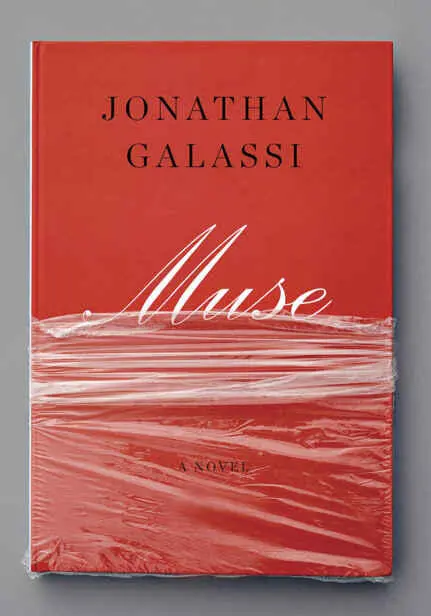
- Название:Muse
- Автор:
- Издательство:Knopf
- Жанр:
- Год:2015
- ISBN:нет данных
- Рейтинг книги:4 / 5. Голосов: 1
-
Избранное:Добавить в избранное
- Отзывы:
-
Ваша оценка:
Muse: краткое содержание, описание и аннотация
Предлагаем к чтению аннотацию, описание, краткое содержание или предисловие (зависит от того, что написал сам автор книги «Muse»). Если вы не нашли необходимую информацию о книге — напишите в комментариях, мы постараемся отыскать её.
Paul Dukach is heir apparent at Purcell & Stern, one of the last independent publishing houses in New York, whose shabby offices on Union Square belie the treasures on its list. Working with his boss, the flamboyant Homer Stern, Paul learns the ins and outs of the book trade — how to work an agent over lunch; how to swim with the literary sharks at the Frankfurt Book Fair; and, most important, how to nurse the fragile egos of the dazzling, volatile authors he adores.
But Paul's deepest admiration has always been reserved for one writer: poet Ida Perkins, whose audacious verse and notorious private life have shaped America's contemporary literary landscape, and whose longtime publisher — also her cousin and erstwhile lover — happens to be Homer’s biggest rival. And when Paul at last has the chance to meet Ida at her Venetian palazzo, she entrusts him with her greatest secret — one that will change all of their lives forever.
Studded with juicy details only a quintessential insider could know, written with both satiric verve and openhearted nostalgia,
is a brilliant, haunting book about the beguiling interplay between life and art, and the eternal romance of literature.
Muse — читать онлайн бесплатно полную книгу (весь текст) целиком
Ниже представлен текст книги, разбитый по страницам. Система сохранения места последней прочитанной страницы, позволяет с удобством читать онлайн бесплатно книгу «Muse», без необходимости каждый раз заново искать на чём Вы остановились. Поставьте закладку, и сможете в любой момент перейти на страницу, на которой закончили чтение.
Интервал:
Закладка:
On Friday evening he stood in his off-the-rack suit at a long table in an otherwise deserted hotel restaurant as Homer’s crowd — Brigitta, Norberto, Matthias, Beatriz, Jorge and Lalli, Héloise, Gianni, Teresa — sat expectantly, waiting, he was sure, for him to commit an unforced error. He made a stab at imitating Homer’s offhand delivery of one of his risqué toasts, but Paul’s own attempts at public humor usually came off a little forced. All seemed to be going along all right, though, until he made the mistake of mentioning e-books:
“Why, before you know it, you’ll be enjoying Padraic and Thor and Pepita and Dmitry on your own devices, just like us!” he exclaimed with ersatz jollity, given that he’d never opened an e-reader himself.
It was as if he’d farted at the table or mentioned the Holocaust. Brigitta and Matthias stared at each other bug-eyed and sucked in their cheeks, like specters out of Goya’s Disasters of War, imagining the digital horde advancing from the West like the latest strain of American influenza. Thank God they would be too old to care when it reached their shores.
Paul shrank down in his seat. What would Homer and Sally say when word reached them, as it assuredly would, that he’d demonstrated once and for all how unsuited he was for this well-padded, backward-looking world?
He couldn’t wait to breathe the fetid air of his beloved Venice, where he often escaped after the mind-numbing hothouse of the fair. He washed down the rest of his veal chop with too much syrupy Rotwein, ushered his last guests out of the funereal restaurant, and caught the midnight train with minutes to spare. He arrived in Venice early the next morning, sleepless but jangly with excitement.
He splurged on a water taxi down the Grand Canal, stunned as always to be confronted with how truly strange Venice was. The shut-up palaces fell straight into the oily loden-colored water (what held them up?). The sky alternated between pearlescent and Bellini blue. He felt gusts of enchantment and resistance, elation and revulsion. Venice was a hallucinatory incubus, the most artificial environment in the world: Disneyland for grown-ups. It reeked of sex and its putrescent partner, death. Thomas Mann had caught its rouged, feverish aura perfectly.
What was Ida Perkins, the avatar of red-cheeked American expansiveness and optimism, doing here? This was a place to hide, to fade away — not to grab life by the lapels, as she always had. Had Ida become infected by A.O.’s old man’s despondency? Or had she found a new lease on life with Leonello Moro? Was Ida still Ida?
Paul spent the morning wandering, struck yet again by the seemingly chance beauty of Italian public spaces, shaken down over time into nonchalant irregularity and aptness. He had always felt lighter in Italy, unburdened by expectations, his own or anyone else’s; he could move at will here, unimpeded and unobserved, as he sometimes could in New York, too, actually, walking anonymous in the noontime crowd. He had lunch in the autumn sun at a trattoria in the Campo Santo Stefano, and made stabs at resuscitating his dormant Italian. He reread Ida’s Venice book, Aria di Giudecca, which was as alive to the decay and incandescence of the city as anything he knew (“city of Jewish saints / of cul-de-sacs and feints / of stains and taints”). Then he started leafing through his transcriptions of A.O.’s notebooks while he sipped his espresso:
14 JUNE 1987
8:45 caffè latte, pane al cioccolato
10:15 Dr. Giannotti
14:30 computer
15:40 phone call — U.S.
16:20 Debenedetti
17:00 seamstress
20:0 °Celine
hair heaven glimmer thread error reflect pillow binding
Seamstress? Why would Arnold see a seamstress? Paul shivered a little as the gathering shadows overtook the afternoon sun. Then he returned to his reading. On Monday he was going to meet Ida Perkins. He had lots of questions and he wanted to be prepared.
IX. Dorsoduro 434
The gloomy “false Byzantium” of the Hotel Danieli bar at three o’clock on an October afternoon was only partly offset by the blaze in the fireplace reflected in the room’s high-hung, aged mirrors. The upholstery of the couches, gray peau de soie moiré, suited Paul’s mood. Outside was burnished Venice autumn weather — pure cloudless blue, sixty-eight degrees in the sun on the Riva degli Schiavoni; but he was trapped inside, overcoat beside him on the couch, waiting for Ida Perkins.
He was taut and indrawn, the way he tended to be when meeting someone new, but especially so today. He was about to come face-to-face with the Person, the Goddess, the One and Only … he was winding himself up, he knew; he had to stop.
Why was he here? He had a sudden urge to hightail it back to New York and forget the whole thing. Instead, he played with his BlackBerry, scanning but not reading his messages.
Suddenly, a slender figure turned the corner from the foyer and peered into the mote-filled semi-gloom before making her way toward him, negotiating among the islands of furniture that filled the room.
Ida was here.
But no, it was an elderly Italian woman in a heavy pea jacket, not Ida at all.
“Signor Dukach, La Contessa Moro is not well today, mi dispiace davvero, ” the woman offered. “She asked me to see if instead you might come see her tomorrow afternoon.”
“Yes, of course, ma’am. I can do that.” Paul felt a thrill. He was going to visit Ida at home! Over the years on his trips to Venice, he’d scoped out her address, hoping for a glimpse of her in a window or, better yet, on the street. Now he was going to see for himself.
“A che ora, signora?” he asked, as nonchalantly as he could.
“Alle quattro del pomeriggio, per piacere. Dorsoduro 434, presso San Gabriele. Grazie, grazie tante.”
The woman looked around anxiously, rubbing her hands together as if from the cold, though the room was pleasantly warm. Nodding apologetically, she backed away, turned, and disappeared.
Paul was reprieved! He was going to see Ida, but not yet. Carefree, he strolled in the thinning light past the Arsenale, all the way to San Pietro di Castello; then he meandered back through a warren of backwater rios to San Marco and over the Accademia Bridge. After a stint in the museum with his favorite Carpaccios, he found his way to Montin, a simple trattoria on a de Chiricoesque canal where the maître d’ was only too happy to show him the table where Ezra Pound had sat with his back to the crowd every evening with Olga Rudge — and occasionally, in his last years, with Arnold and Ida.
He had a couple of limoncellos after his fegato alla veneziana and polenta and then wandered back to his hotel on a small canal that gave onto the Giudecca, passing the monument to Dmitry Chavchavadze on the way. Dmitry, who had died of a heart attack in Atlanta a few years before, had, like other émigrés, chosen to spend his immortality in Venice, the ultimate way station of the exile.
Paul fell asleep immediately. In the morning, he lit out for the Ghetto and the farther reaches of Cannaregio with his dog-eared Red Guide, paying an obligatory visit on the way to barrel-vaulted Santa Maria dei Miracoli, nestled like a marble boat in the harbor of small canals surrounding her.
* * *
The nondescript entrance to Palazzo Moro di Schiuma fronted on a narrow alley that ended unceremoniously at the Grand Canal. Paul rang the bell at precisely 4:00 and a small door clicked open. After walking down a short brick passageway between high stucco walls with shards of broken bottles at the top, he found himself in a disused garden. Climbing vines just losing their reddened leaves covered the back of the house. Paul entered the portico to the right as directed and took the small elevator to the fourth floor.
Читать дальшеИнтервал:
Закладка:
Похожие книги на «Muse»
Представляем Вашему вниманию похожие книги на «Muse» списком для выбора. Мы отобрали схожую по названию и смыслу литературу в надежде предоставить читателям больше вариантов отыскать новые, интересные, ещё непрочитанные произведения.









Обсуждение, отзывы о книге «Muse» и просто собственные мнения читателей. Оставьте ваши комментарии, напишите, что Вы думаете о произведении, его смысле или главных героях. Укажите что конкретно понравилось, а что нет, и почему Вы так считаете.