Jonathan Galassi - Muse
Здесь есть возможность читать онлайн «Jonathan Galassi - Muse» весь текст электронной книги совершенно бесплатно (целиком полную версию без сокращений). В некоторых случаях можно слушать аудио, скачать через торрент в формате fb2 и присутствует краткое содержание. Год выпуска: 2015, Издательство: Knopf, Жанр: Современная проза, на английском языке. Описание произведения, (предисловие) а так же отзывы посетителей доступны на портале библиотеки ЛибКат.
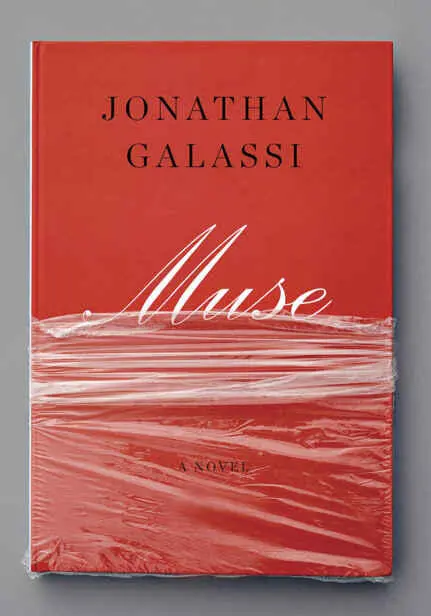
- Название:Muse
- Автор:
- Издательство:Knopf
- Жанр:
- Год:2015
- ISBN:нет данных
- Рейтинг книги:4 / 5. Голосов: 1
-
Избранное:Добавить в избранное
- Отзывы:
-
Ваша оценка:
Muse: краткое содержание, описание и аннотация
Предлагаем к чтению аннотацию, описание, краткое содержание или предисловие (зависит от того, что написал сам автор книги «Muse»). Если вы не нашли необходимую информацию о книге — напишите в комментариях, мы постараемся отыскать её.
Paul Dukach is heir apparent at Purcell & Stern, one of the last independent publishing houses in New York, whose shabby offices on Union Square belie the treasures on its list. Working with his boss, the flamboyant Homer Stern, Paul learns the ins and outs of the book trade — how to work an agent over lunch; how to swim with the literary sharks at the Frankfurt Book Fair; and, most important, how to nurse the fragile egos of the dazzling, volatile authors he adores.
But Paul's deepest admiration has always been reserved for one writer: poet Ida Perkins, whose audacious verse and notorious private life have shaped America's contemporary literary landscape, and whose longtime publisher — also her cousin and erstwhile lover — happens to be Homer’s biggest rival. And when Paul at last has the chance to meet Ida at her Venetian palazzo, she entrusts him with her greatest secret — one that will change all of their lives forever.
Studded with juicy details only a quintessential insider could know, written with both satiric verve and openhearted nostalgia,
is a brilliant, haunting book about the beguiling interplay between life and art, and the eternal romance of literature.
Muse — читать онлайн бесплатно полную книгу (весь текст) целиком
Ниже представлен текст книги, разбитый по страницам. Система сохранения места последней прочитанной страницы, позволяет с удобством читать онлайн бесплатно книгу «Muse», без необходимости каждый раз заново искать на чём Вы остановились. Поставьте закладку, и сможете в любой момент перейти на страницу, на которой закончили чтение.
Интервал:
Закладка:
Maria was a hardworking, sloe-eyed, shapely young publisher from Reykjavik who often appealed to her fellow publishers in other territories for tips since she couldn’t afford the staff to read most of the books submitted to her.
“Ida Perkins is to American poetry as Proust is to the French novel. Seriously.” Paul recoiled internally hearing himself talking Frankfurt-speak, a repulsive commercial shorthand he loathed yet had developed a disgusting facility with — even when it came to Ida; though she wasn’t “his” author, he felt compelled to spread the word about her at every opportunity. It was nearing midnight, long past his normal witching hour, but the crowd was just beginning to thicken like a rancid sauce. He knew he’d had far too much to drink and needed to get back to his two-star hotel in the red-light district near the Hauptbahnhof.
“Yes, but is she really good? I mean really, really, really good? I need to know.”
“Yes, Maria, Ida is really, really, really good — absolutely the top. I’m telling you it’s true — and we don’t even publish her, alas.”
“Are you sure, because translating her will be so difficult, so expensive …”
“Maria, I don’t know your market. All I know is that Ida Perkins is the American poet of our time. And her work is going to last. Ask Matthias Schoenborn if you don’t believe me. He’s bringing out her Collected next year. Ask Beltraffio. Ask Jean-Marie Groddeck. They’re all convinced.” The fact that certain prestigious publishers had an author on their lists often carried irrational weight with their foreign colleagues.
“Yes, but is she really, really good?”
“ Really, really, really good, Maria. Really.” He hoped he wasn’t slurring his words, but feared he just might be.
“I’m doubtful,” she said.
Paul threw up his hands and planted a smooch on the nonplussed Maria’s forehead (most Europeans were deft practitioners of the air kiss, where lips never touched skin, but Americans often failed to carry it off). At least Maria really, really wanted to know if Ida was worth translating. The truth was, what was hot in New York was often dead on arrival in Reykjavik, and vice versa — that was the terrible truth, and maybe the saving grace, of international publishing. Paul sometimes had reason to wish there were a Frankfurt morning-after pill; but a deal was a deal, even one shaken on when one of the parties — or, better, both — was two or three sheets to the wind.
So Paul was feeling cautious when he sat down in Homer’s stead at Matthias Schoenborn’s table in the German hall the next morning for their annual discussion — lecture might have been a better word — about Matthias’s prizewinning, best-selling Mitteleuropean authors. If Homer had been there, he and Matthias, who were mad about each other, would have spent their half hour telling off-color jokes and denigrating their closest collaborators, as happy as pigs in shit, but Paul knew he would have to settle for an actual business meeting. Experience told him that few or none of the writers Matthias would be pitching were likely to make an impact in America, just as he knew in his heart of hearts that Matthias, who was one of the shrewdest showboats among the international publishers, much admired for his ebullience and his nonstop promoting of his writers — a kind of latter-day European version of Homer — had no deep interest in the authors Homer and Paul published. Sure, Matthias would grumble about the fact that Eric Nielsen, now an enormous international presence, was published by Friedchen Bohlenball, though Matthias hadn’t shown the slightest interest when Paul had buttonholed him excitedly about his discovery years ago. The truth was, Matthias didn’t care about what Paul was doing any more than Paul cared about Matthias’s Russian and Iranian émigrés eking out an existence as cabbies in Berlin. Still, they sat and talked animatedly every year—“He lies to me and I lie to him,” as Homer put it — and went to each other’s parties and were the best of Frankfurt pals, listening all the while for signs in each other’s cascading verbiage of that rarest of things, the world-class author who could make a difference for both of them. How to listen, Paul had come to feel, was the real test of Homer’s publishing “truffle hound.” Many, unfortunately, listened only to themselves.
Still, over the years, Matthias and Homer and now Paul had shared certain core writers who had had an international impact, among them Homer’s Three Aces. And Matthias, a respected avant-garde writer himself (Homer had published several of his dark, abstruse short novels before giving up the ghost), was Ida’s German publisher, too, and he was well aware of Paul’s passion for her and her work. Being the canny insider he was, Matthias often seemed to have privileged information about deliberations in Stockholm, and this year was no exception.
“It’s possible,” he told Paul. “There are other currents afoot, but it’s possible.”
Paul didn’t know what to make of these gnomic tea leaves. All he could do was what everyone else was doing: wait.
He was at the booth at one o’clock, but the silence was deafening. After an excruciating wait, word went around that Hendrijk David of the Netherlands had squeaked out enough votes to take the prize. It was said he’d been expecting it for years, sitting complacently by the phone on the appointed morning each October.
The rumor, though, turned out to be erroneous. Dries van Meegeren, another, far more obscure Dutch essayist, had won, setting off an unseemly free-for-all for the acquisition of his largely still-available rights. Publishers from nearly everywhere, who before today had never heard of van Meegeren, swarmed the normally empty Dutch hall, anxious to buy themselves a Nobel Prize winner. The booth of De Bezige Bij, The Busy Bee, van Meegeren’s lucky publisher, resembled a rebooking desk in an airline terminal after a canceled flight. (David, meanwhile, never recovered, dying in bitter disappointment a couple of years later.)
In any case, the prize hadn’t gone to Ida. Paul consoled himself with the fact that her not having won meant she still could.
He phoned Homer once the office was open in New York.
“Can you believe Dries won?” he cackled, giddy with disbelief. Van Meegeren had been campaigning for the Nobel for ages, going on reading tours across Scandinavia, writing articles about the work of Swedish Academy members, even taking up with a Swedish woman reputed to be on a first-name basis with the academy’s secretary.
“That gonif has been kissing Swedish ass for years,” Homer answered. “I was hoping for Les or Adam. I need my Four of a Kind, you know.”
“It will happen, Homer. All in good time. Everyone here sends love.” Paul relayed greetings from a passel of Homer’s long-standing confreres.
“Keep your nose clean and have fun. I’ll see you Monday.”
“Not Monday. Remember, I’m going to visit Ida Perkins in Venice after the fair.”
“Right.” Paul could hear Homer clearing his throat across the ocean. “Well, give her a slap on the ass for me, and tell her our arms are always open. Keep me posted!”
“Will do — at least the second and third parts,” Paul answered, and rang off. The fair had another two days to run, but he could hardly wait for it to be over. He sleepwalked through his appointments and forced himself to put in an appearance at a few receptions, trying to muster the enthusiasm to host the firm’s Friday night dinner in Homer’s stead. He couldn’t help feeling that, like him, Homer’s pals would be on autopilot without their Fearless Leader to mirror back their well-rehearsed performances as cultural grandees — marshals of France, someone called them. Self-importance was ubiquitous, Paul knew, but there was a particular smarmy pungency to the horse-trading in Frankfurt that he found revolting, especially when he was engaging in it. It was a far cry from the poetry of Ida Perkins or the novels of Ted Jonas, sweated out in anguish and solitude. The idea of Ida or Eric Nielsen or Pepita here among these overdressed, overfed word merchants who acted as if they owned their writers’ hides made him faintly ill.
Читать дальшеИнтервал:
Закладка:
Похожие книги на «Muse»
Представляем Вашему вниманию похожие книги на «Muse» списком для выбора. Мы отобрали схожую по названию и смыслу литературу в надежде предоставить читателям больше вариантов отыскать новые, интересные, ещё непрочитанные произведения.










Обсуждение, отзывы о книге «Muse» и просто собственные мнения читателей. Оставьте ваши комментарии, напишите, что Вы думаете о произведении, его смысле или главных героях. Укажите что конкретно понравилось, а что нет, и почему Вы так считаете.