Jonathan Galassi - Muse
Здесь есть возможность читать онлайн «Jonathan Galassi - Muse» весь текст электронной книги совершенно бесплатно (целиком полную версию без сокращений). В некоторых случаях можно слушать аудио, скачать через торрент в формате fb2 и присутствует краткое содержание. Год выпуска: 2015, Издательство: Knopf, Жанр: Современная проза, на английском языке. Описание произведения, (предисловие) а так же отзывы посетителей доступны на портале библиотеки ЛибКат.
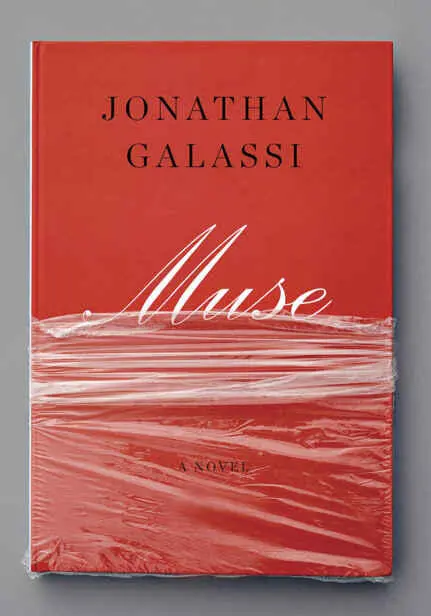
- Название:Muse
- Автор:
- Издательство:Knopf
- Жанр:
- Год:2015
- ISBN:нет данных
- Рейтинг книги:4 / 5. Голосов: 1
-
Избранное:Добавить в избранное
- Отзывы:
-
Ваша оценка:
Muse: краткое содержание, описание и аннотация
Предлагаем к чтению аннотацию, описание, краткое содержание или предисловие (зависит от того, что написал сам автор книги «Muse»). Если вы не нашли необходимую информацию о книге — напишите в комментариях, мы постараемся отыскать её.
Paul Dukach is heir apparent at Purcell & Stern, one of the last independent publishing houses in New York, whose shabby offices on Union Square belie the treasures on its list. Working with his boss, the flamboyant Homer Stern, Paul learns the ins and outs of the book trade — how to work an agent over lunch; how to swim with the literary sharks at the Frankfurt Book Fair; and, most important, how to nurse the fragile egos of the dazzling, volatile authors he adores.
But Paul's deepest admiration has always been reserved for one writer: poet Ida Perkins, whose audacious verse and notorious private life have shaped America's contemporary literary landscape, and whose longtime publisher — also her cousin and erstwhile lover — happens to be Homer’s biggest rival. And when Paul at last has the chance to meet Ida at her Venetian palazzo, she entrusts him with her greatest secret — one that will change all of their lives forever.
Studded with juicy details only a quintessential insider could know, written with both satiric verve and openhearted nostalgia,
is a brilliant, haunting book about the beguiling interplay between life and art, and the eternal romance of literature.
Muse — читать онлайн бесплатно полную книгу (весь текст) целиком
Ниже представлен текст книги, разбитый по страницам. Система сохранения места последней прочитанной страницы, позволяет с удобством читать онлайн бесплатно книгу «Muse», без необходимости каждый раз заново искать на чём Вы остановились. Поставьте закладку, и сможете в любой момент перейти на страницу, на которой закончили чтение.
Интервал:
Закладка:
It opened onto a squarish marble entryway in which a tall, frail woman with pure white hair coiled on top of her head was leaning on a cane with a carved, yellowed ivory handle. She wore a stylishly cut brown wool shift, with no jewelry except a round brooch of rough gold, and brown velvet slippers.
Yes, Ida was still Ida, Paul surmised, taking her measure once he’d recovered from the shock of her presence. Her high cheekbones retained their almost Mongol glamour, though the skin was drawn thin across them.
“Come in, Mr. Dukach.”
“Ms. Perkins, it is such an honor to meet you.”
She half bowed and indicated a pair of couches in the middle of the room, then led him slowly to them, sitting facing him, with a tea table between them.
As he moved through the low-ceilinged room furnished with commodiously grouped, low-slung Venetian fauteuils and lit here and there in the failing daylight by Murano glass lamps glowing red and green like signal lights, Paul noticed a closed-in gallery at the far end, overlooking what had to be the Grand Canal. It was here he had read somewhere that Wagner had written the third act of Tristan und Isolde. The walls of the room were covered in beige dam ask, overhung not with the expected Venetian scenes but with paintings by Severini and Morandi and, to his delight, a surreal seascape, the largest and most captivating Paul had ever seen, by the Italian Post-Impressionist De Pisis. Where, he wondered, was Leonello Moro’s notorious contemporary collection?
A few logs smoldered in a small fireplace near the door, and a lamp was lit on the desk near the east end of the room overlooking the gallery, where Ida had been working, or so it appeared.
“Would you like some tea, Mr. Dukach?” Ida’s unreconstructed Brahmin accent, with its broad extended vowels, was out of another era.
He nodded distractedly. Being here was making him forget what he’d so carefully planned to say.
Ida rang a small bell on the table beside her. The woman from yesterday appeared.
“ Tè, per cortesia, Adriana,” Ida instructed her servant.
“So. Now how can I help you?” she asked, turning to Paul. She was firm, maybe a little brusque as she patted the pillows behind her back, making herself comfortable. Paul was surprised to find that instead of the expansiveness he’d endowed her with in his fantasies, the Ida in front of him was old-fashioned, restrained, no-nonsense. And guarded.
“Rosalind Horowitz, as I believe you know, suggested I come see you,” he began. “I’m working with Sterling Wainwright on Arnold Outerbridge’s red notebooks. We’re trying … well, I’m trying to figure them out.”
“Oh yes.” Ida nodded. “Roz wrote me all about you.” She seemed to relax a bit. “And Sterling tells me you know more about me — about my work, anyway — than anyone, apart from him, of course. Which is more than a little frightening, I have to admit.” Ida laughed an uncomfortable little laugh. “I’ve certainly never heard him talk that way about another publisher — and one who works for Homer Stern to boot!”
Ida turned her face toward him at a quizzical angle, as if expecting Paul to reveal himself. Could this really be Ida, the interlocutor of so many of his wishful dreams?
“Sterling has been incredibly kind. I’ve learned an unbelievable amount from him. And Homer asked to be remembered to you, of course. He’s always talking about you .”
“I can imagine,” Ida answered with a bit of a chuckle. “How is dear old Homer? Still chasing the girls?”
“Well, probably not quite the way he used to. He’s over eighty, you know.”
“How impertinent of you to mention it, young man! As you’re well aware, I’m even older!” To his relief, Paul saw that Ida was laughing openly now. He hadn’t turned her off. Not yet.
“That’s quite hard to believe.” He managed to raise his eyes and meet hers, which were tautly focused on him, their legendary green undimmed.
“Anyway, as I was saying,” Paul forged ahead, “I’ve been trying to help … Sterling decipher Outerbridge’s notebooks in my spare time. I’ve made progress on the code he wrote them in. I know what they say. But what they mean is still a mystery. Roz thought you might be able to help — that you could tell me more about them.”
The woman in gray appeared with a tea tray and set it on the table between them. Ida was silent as she poured out their tea: Lapsang souchong; he was almost drugged by its rich, smoky scent. She offered him milk, which he accepted, and sugar, which he refused. Then she looked up.
“So. You’ve read the notebooks …”
“Yes. They appear to be timekeeping notes of some sort. A diary of his daily activities. Very minute and …”
“And obsessional.”
“Well, yes, in a word. As if he needed to keep track of his every movement.”
“I see,” Ida responded grimly, looking down into her lap. Then she raised her eyes, the lines in her tanned face deeply etched, and said carefully, “I’m afraid that in his last years, Arnold wasn’t capable of working anymore. Which was terribly cruel, given how prolific, how totally absorbed in his writing, he’d always been.”
“I’m very sorry,” Paul said, lowering his eyes. There was silence before he added, “There’s nothing worse than seeing a brilliant person deprived of his gifts.”
Ida nodded.
“You were together a long time,” Paul continued, trying to gently prime the pump.
“Nearly twenty years, this last go-around.”
“I have to confess I always imagined you side by side, sharing your work, discussing ideas, inspiring each other.”
“Well, I can see you haven’t learned very much in your young years,” Ida shot back derisively.
“Forgive me, Ms. Perkins, but I hope you can appreciate how large you and Mr. Outerbridge loom in the imaginations of some of us,” he answered.
“You’re not one of those despicable literary sleuths who thinks he can deduce every last little sordid biographical detail from a writer’s work, are you?” Ida asked, with ill-concealed suspicion.
Paul sat back, flummoxed. Was that what he was?
Ida’s jaw was set. Her eyes flared with indignation. “When, I want to know, do writers get to simply live their boring lives? Don’t you know living is not about writing, Mr. Dukach? There was always so much else going on. Svetlana. The shopping. The laundry — and the doctors! Writing is something one does — we both did, I should say — to escape, to get away. And also maybe to make sense of one’s mistakes, wrong turns you know you’ve made but can’t come to terms with any other way. Poor man’s psychoanalysis, Arnold used to call it.
“Arnold engaged with the world day in and day out. But he couldn’t have cared less what was for dinner, or who was sleeping with whom. He always had his eye on the bigger picture.”
“And you?” Paul ventured.
“My story was entirely different. I grew up in a sheltered environment, and felt the need to break away early on. Unlike Arnold, who endured deprivation from childhood. Sterling and I had to get away and see things for ourselves. It’s what brought us together that summer in Michigan. All those sailors and croquet players swirling around us in the dining hall at Otter Creek, planning their tournaments and regattas, while we were plotting our escape — to New York, London, Paris.”
Paul relaxed a little. Ida, he sensed, was performing one of her solos.
“We got there, too, each in our own way. We helped each other — at least he helped me, though my options as a woman were, needless to say, far more limited. When I published my first book it was a veritable scandal at Bryn Mawr! The shadow of Marianne Moore hung over the place like a cloying little modernist cloud. The atmosphere was far too claustrophobic for yours truly. And those intensely … innocent crushes on each other. I was not innocent, or at least I didn’t want to be. I wanted to be scandalous!”
Читать дальшеИнтервал:
Закладка:
Похожие книги на «Muse»
Представляем Вашему вниманию похожие книги на «Muse» списком для выбора. Мы отобрали схожую по названию и смыслу литературу в надежде предоставить читателям больше вариантов отыскать новые, интересные, ещё непрочитанные произведения.






Обсуждение, отзывы о книге «Muse» и просто собственные мнения читателей. Оставьте ваши комментарии, напишите, что Вы думаете о произведении, его смысле или главных героях. Укажите что конкретно понравилось, а что нет, и почему Вы так считаете.