Jonathan Galassi - Muse
Здесь есть возможность читать онлайн «Jonathan Galassi - Muse» весь текст электронной книги совершенно бесплатно (целиком полную версию без сокращений). В некоторых случаях можно слушать аудио, скачать через торрент в формате fb2 и присутствует краткое содержание. Год выпуска: 2015, Издательство: Knopf, Жанр: Современная проза, на английском языке. Описание произведения, (предисловие) а так же отзывы посетителей доступны на портале библиотеки ЛибКат.
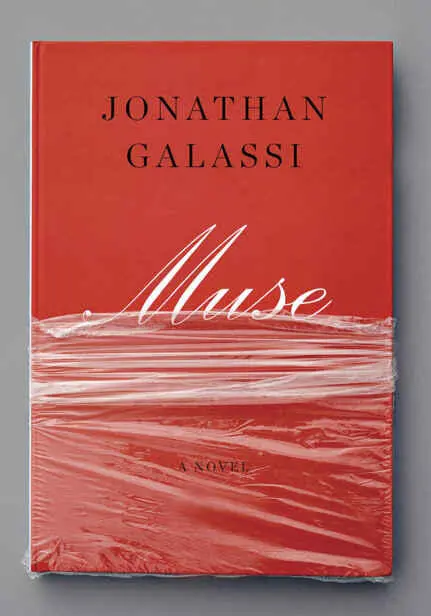
- Название:Muse
- Автор:
- Издательство:Knopf
- Жанр:
- Год:2015
- ISBN:нет данных
- Рейтинг книги:4 / 5. Голосов: 1
-
Избранное:Добавить в избранное
- Отзывы:
-
Ваша оценка:
Muse: краткое содержание, описание и аннотация
Предлагаем к чтению аннотацию, описание, краткое содержание или предисловие (зависит от того, что написал сам автор книги «Muse»). Если вы не нашли необходимую информацию о книге — напишите в комментариях, мы постараемся отыскать её.
Paul Dukach is heir apparent at Purcell & Stern, one of the last independent publishing houses in New York, whose shabby offices on Union Square belie the treasures on its list. Working with his boss, the flamboyant Homer Stern, Paul learns the ins and outs of the book trade — how to work an agent over lunch; how to swim with the literary sharks at the Frankfurt Book Fair; and, most important, how to nurse the fragile egos of the dazzling, volatile authors he adores.
But Paul's deepest admiration has always been reserved for one writer: poet Ida Perkins, whose audacious verse and notorious private life have shaped America's contemporary literary landscape, and whose longtime publisher — also her cousin and erstwhile lover — happens to be Homer’s biggest rival. And when Paul at last has the chance to meet Ida at her Venetian palazzo, she entrusts him with her greatest secret — one that will change all of their lives forever.
Studded with juicy details only a quintessential insider could know, written with both satiric verve and openhearted nostalgia,
is a brilliant, haunting book about the beguiling interplay between life and art, and the eternal romance of literature.
Muse — читать онлайн бесплатно полную книгу (весь текст) целиком
Ниже представлен текст книги, разбитый по страницам. Система сохранения места последней прочитанной страницы, позволяет с удобством читать онлайн бесплатно книгу «Muse», без необходимости каждый раз заново искать на чём Вы остановились. Поставьте закладку, и сможете в любой момент перейти на страницу, на которой закончили чтение.
Интервал:
Закладка:
Ida was enjoying herself.
“You certainly turned poetry on its head, from the very first,” Paul said.
“I was a college sophomore, just having a little fun. But they —the literary folk — took me seriously. That was the last thing I was expecting — or wanting. Another regimen, with another set of rules and expectations.”
“How did it feel to be the toast of the town when you were still a teenager?”
“Those silly young/old men with their unreadable magazines and their precious self-importance. Little prigs! I’ve always despised the Establishment, Paul, and that includes the Bohemian Establishment, which is really no different from the bankers. Poetry, for me, and for everyone serious, I think, is about otherness: being ‘maladjusted,’ standing apart. They didn’t understand the first thing about what I was writing — or what was happening to me.”
Ida leaned back and coughed a little. Her superfine hair was spun sugar in the lamplight.
“Then I met Barry Saltzman. He seemed like the way out — he was dashing, open, mature, supportive, generous. He was quite a bit older, and it didn’t bother him one bit that I was a writer — an outré one, even. He was proud of my ‘independence.’ He thought he was encouraging it. We had a lovely apartment in the East Seventies and I had maids and a secretary and all the time in the world to work. I just didn’t have anything to write about —do you understand? I needed experience. I needed to derange my senses .”
Ida looked up, as if to gauge whether he was following her. Paul nodded encouragement.
“And there was ravishing Sterling again, hanging around the Village with people Barry wouldn’t have known how to talk to. Sterling took me everywhere, including to his apartment more than once, I’m not ashamed to say, and … but”—Ida looked toward the windows—“I’m boring you.”
“You have to be joking! Nothing could be further from the truth.”
Her skin was nearly translucent. Ida trembled faintly at times as she continued.
“Then Stephen came along, Stephen Roentgen, at one of those insufferable Fifty-seventh Street art gallery readings. My quondam suitor Delmore Schwartz was there, still more or less compos mentis, and John Berryman, and old Wallace Stevens, too, down from Hartford, the one time I met him, still complaining about Eliot, if you can believe it. That’s when that pig Ora Troy started acting up, accusing me of poaching. Always out for attention. But Stephen, who was fresh off the boat from Liverpool, was pure genius — wild-eyed, extravagant, and a wonderful poet. Yes, he’d known Ora; but it was love at first sight — for both of us. No doubt you’ve seen the pictures of him with his shirt front unbuttoned and that dreamy wave in his hair. Stephen had such verve — and intensity, commitment, talent, belief in himself. He just didn’t have staying power.”
Ida was looking across the tea table straight at him. Paul didn’t know how to respond. He worried he was tiring her, but she forged ahead.
“We got married. Barry and I had divorced after he found out about Sterling. He couldn’t take it, and I didn’t blame him. In the end, he wanted an uptown life, and he deserved someone to share it fully. I needed to be down on Varick Street. So he went off with Alice Pennoyer and they were happy as could be, at least I think so. And I did adore Stephen.
“But he ran dry. He ran out of gas. He blamed me, you know, said I sucked it all out of him, that there was nothing left after I was through with him. Which was ridiculous. Everyone knows erotic energy is self-replenishing. Of course that was before Thomas.”
“Thomas?”
“Our son, Thomas Handyside Roentgen,” Ida said matter-of-factly. “Born January 13, 1951, after twenty-eight hours of labor. He died three days later.”
Paul sat up ramrod straight. “I didn’t know you had a child,” he said, as calmly as he could.
“It was our secret. We weren’t married; Stephen was supposedly with Esther Podgorny. And then our little boy died. He died. I still dream about him. Holding him for those few precious hours. He’d be fifty-nine years old today.”
Ida was silent, enveloped in memory; but it was Paul whose eyes were wet. “I am so very sorry” was all he could think to say. How could this all-important fact of Ida’s life have eluded him? What else had he missed or misunderstood about this woman he thought he knew inside out? Suddenly, certain lines and images he realized he’d never really absorbed— vacant rooms, and yes, graveyards, cypresses, shrouds— clicked into place:
the snow-blown morning when I held
your tiny purple hand
How could he not have seen it?
But Ida was continuing.
“We got married afterward, and moved to London. We wanted to have another baby. But I couldn’t, the doctors said. I think each of us secretly blamed the other. But I’ll always love Stephen. Always.”
A phone rang somewhere in the apartment. Adriana came to the doorway, but Ida shook her head and the woman disappeared.
“And then suddenly Arnold appeared. I met him the first time in the late fifties, at Louis MacNeice’s. You know the rest, I’m sure. He was still breathing fire and brimstone in those days, putting everyone on the defensive politically and morally, insufferable, really, though no one was paying much attention by then. A dyed-in-the-wool doctrinaire Marxist-Leninist, which was a damn daring thing to be at the height of the Cold War. And I was attracted to that — to his sense of injury, his conviction that the world needed putting to rights, and that it was up to us, to us, not somebody else, to do it. ‘Make it new’ was about something more than aesthetics for Arnold. Not that he wasn’t the most wonderful poet.”
“No one in the older generation had been more urgent, more persuasive, more prescient. And I knew he understood me, and my work, through and through. Because I’m a woman, everyone always assumes that love is my subject. And it is my subject. But there’s a lot more going on, always. And Arnold didn’t consign me to the second-class compartment. He didn’t need to condescend. And I fell. Fell deeply.
“He was living with Anya Borodina, the dancer. At least I think he was. Arnold was never good with details. When we were together later on, I had to take care of everything, from seeing that his socks got darned to the electric bill to what we ate — and drank. He was unreconstructed in that sense. But in his mind we were equals, in a way I’ve never felt with anyone else. Arnold understood me as I am. And in some ways that was the most radical thing about him. No other man I’ve known has been capable of it. We saw each other constantly, till he suddenly up and left.”
“Left London? For where? What happened?”
“I never knew. He was just — gone. I was devastated, naturally, but we’d never made each other promises — and we didn’t later on, either.” Ida paused. “That’s how it ought to be between two people, don’t you think? What is certain in this life? And if it were — would we want it?”
“What about Trey Turnbull?” Paul asked.
“What about him. He was an old friend of Stephen’s. You should have seen them all at the White Horse in the West Village, carousing night after night. Trey was an utterly selfish, unreliable, overgrown adolescent — and one of the most gorgeous, most intoxicating characters I’ve ever known. I ran into him again at a club in Paris one night — he’d been living there for more than a decade then. I thought, ‘Why not?’ Yes, he was ten years younger — big deal. Such a beautiful man! And what a musician. We were all swept up in the possibilities then, Paul. You can hear it in Trey’s music, I think, in the silences between his solos. Such exquisite … emptiness.”
Читать дальшеИнтервал:
Закладка:
Похожие книги на «Muse»
Представляем Вашему вниманию похожие книги на «Muse» списком для выбора. Мы отобрали схожую по названию и смыслу литературу в надежде предоставить читателям больше вариантов отыскать новые, интересные, ещё непрочитанные произведения.






Обсуждение, отзывы о книге «Muse» и просто собственные мнения читателей. Оставьте ваши комментарии, напишите, что Вы думаете о произведении, его смысле или главных героях. Укажите что конкретно понравилось, а что нет, и почему Вы так считаете.