Jonathan Galassi - Muse
Здесь есть возможность читать онлайн «Jonathan Galassi - Muse» весь текст электронной книги совершенно бесплатно (целиком полную версию без сокращений). В некоторых случаях можно слушать аудио, скачать через торрент в формате fb2 и присутствует краткое содержание. Год выпуска: 2015, Издательство: Knopf, Жанр: Современная проза, на английском языке. Описание произведения, (предисловие) а так же отзывы посетителей доступны на портале библиотеки ЛибКат.
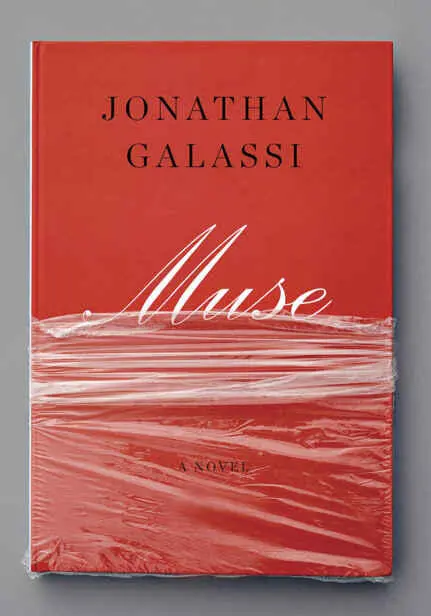
- Название:Muse
- Автор:
- Издательство:Knopf
- Жанр:
- Год:2015
- ISBN:нет данных
- Рейтинг книги:4 / 5. Голосов: 1
-
Избранное:Добавить в избранное
- Отзывы:
-
Ваша оценка:
Muse: краткое содержание, описание и аннотация
Предлагаем к чтению аннотацию, описание, краткое содержание или предисловие (зависит от того, что написал сам автор книги «Muse»). Если вы не нашли необходимую информацию о книге — напишите в комментариях, мы постараемся отыскать её.
Paul Dukach is heir apparent at Purcell & Stern, one of the last independent publishing houses in New York, whose shabby offices on Union Square belie the treasures on its list. Working with his boss, the flamboyant Homer Stern, Paul learns the ins and outs of the book trade — how to work an agent over lunch; how to swim with the literary sharks at the Frankfurt Book Fair; and, most important, how to nurse the fragile egos of the dazzling, volatile authors he adores.
But Paul's deepest admiration has always been reserved for one writer: poet Ida Perkins, whose audacious verse and notorious private life have shaped America's contemporary literary landscape, and whose longtime publisher — also her cousin and erstwhile lover — happens to be Homer’s biggest rival. And when Paul at last has the chance to meet Ida at her Venetian palazzo, she entrusts him with her greatest secret — one that will change all of their lives forever.
Studded with juicy details only a quintessential insider could know, written with both satiric verve and openhearted nostalgia,
is a brilliant, haunting book about the beguiling interplay between life and art, and the eternal romance of literature.
Muse — читать онлайн бесплатно полную книгу (весь текст) целиком
Ниже представлен текст книги, разбитый по страницам. Система сохранения места последней прочитанной страницы, позволяет с удобством читать онлайн бесплатно книгу «Muse», без необходимости каждый раз заново искать на чём Вы остановились. Поставьте закладку, и сможете в любой момент перейти на страницу, на которой закончили чтение.
Интервал:
Закладка:
Ida was looking into Paul’s eyes again, her chin quivering slightly, as if searching in him for something he was certain he didn’t have. Though she was frail, her posture remained impressively strong. He held her gaze as openly as he could, knowing that he was looking, probably for the only time in his life, into a face out of history.
“Well, I’ve certainly talked your ear off, haven’t I?” Ida laughed again, mirthlessly this time. “I guess it comes from not having anyone to share any of it with, anyone who could possibly understand. It makes one positively garrulous, loneliness.”
“It has been unforgettable,” Paul answered simply.
“Nonsense.”
Ida looked across the room through the gallery and out toward a group of winking lights moving slowly on the canal. Just as Paul was about to rise, she put her hand on his arm.
“There’s something else,” she said, addressing him with utter seriousness. “Something I’ve decided I want you to see. I think you can help me with it.” Ida paused. “It’s a very large problem for me, but you’ve shown such good judgment I’m convinced you’ll know what to do. No one has seen it. It will require all your wisdom, but I’m convinced you’ll be equal to it. Don’t ask questions; let’s just agree I’m going to trust you.”
Judgment? He’d hardly said anything all afternoon. But he answered, “Anything. I hope you know how much you and your work have meant to me — to all of us.”
“Never mind.” She patted his hand. “It will be delivered to your hotel tomorrow.”
“It?” he asked.
“Pazienza,” she answered. “No more questions today.”
It was totally dark now. As if on cue, the lady in gray, Adriana, appeared in the doorway. He rose.
“I don’t know how to thank you for this afternoon, Ms. Perkins … Ida.”
“Thank you very much for coming, Paul Dukach,” she answered, leading him to the vestibule. “And remember what I said.”
Remember? Every word she’d uttered was engraved in his consciousness — though he had no idea what in particular she was referring to.
She led him to the elevator, then took both his hands and kissed him lightly on the forehead — was she flirting, performing, or offering him a kind of benediction? Then she smiled again, unreadably, turning away as the narrow door closed.
X. Mnemosyne
The package was delivered to Paul’s hotel at eleven the next morning. It contained a sheaf of eighty-eight numbered pages of rough, ridged European-style onionskin held together by a blue metal clamp, on which a group of poems had been typed. The keys of the old typewriter were so dirty that the e ’s, a ’s, and o ’s were entirely black, but there were no corrections or erasures. In their own way, they were pristine.
Clipped to the cover was a memorandum neatly typed on heavy stationery engraved with the Moro di Schiuma crest:
Dorsoduro 434
Venezia
Tel: (041)5253975
12 ottobre 2010
To Whom It May Concern:
I am entrusting the manuscript of my final book, Mnemosyne, to Mr. Paul Dukach of New York City, to whom I hereby convey its copyright. This letter will direct him to arrange for its publication as he sees fit upon my death.
I further direct that all earnings from the sale of Mnemosyne be divided equally, like the rest of my literary and personal property, between the Children’s Aid Society and the library of Bryn Mawr College.
It was signed in a shaky but readily identifiable hand:
Ida Perkins
The letter bore the seal of a Venetian notary.
Paul sat at the small, uncomfortable desk in his room, with the only letter of Ida Perkins’s he had ever seen. The clicking of the radiator and the intermittent groan of the Giudecca foghorn were the only sounds.
He began to read.
MNEMOSYNE
Ida Perkins
Venice, 2010
M in memoriam
Ille mi par esse deo videtur.
Paul recognized the Latin epigraph as the first verse of Catullus’s imitation of Sappho’s most celebrated lyric, in which he (she, in the Greek original) likens the man sitting beside his (her) beloved to a god.
The manuscript was divided into two sections. He turned the page and read the first poem of the first part.
MNEMOSYNE REMEMBERS
Mnemosyne remembers. It’s her job.
The stationary heat,
the glare, the trance,
the listless
lob; then evening coming on:
coolth, cardigan
on ramrod shoulders,
sharp myopic stare
across the meadow
where the great man’s sheep
browse as in an underwater dream.
No stars: the tipsy
stumble down the hill
in utter darkness
then the age-old dance
hand held and no stitch dropped
but one word said.
Mnemosyne was there;
the only thing she does
is this: recall.
It’s what she does.
It’s who she is.
That’s all.
Paul read on. The poems, recognizably Ida’s in style, were piercing in their simplicity. This was Ida at her most purely lyrical, he thought, yet sharper and clearer than ever before — and sadder, more elegiac. The poems were stripped down to essential statements in a way that harked back to her early classically inspired work, though these — knowing, rueful, ironic, resigned — were patently not a young person’s poems. And Paul quickly saw that they comprised a narrative.
The Titaness Mnemosyne, goddess of memory and mother of the Muses, was speaking the poems, remembering. And it soon became clear that what she was remembering was a love affair. But this time, instead of being the longed-for object, the pursued, the responder or rejecter, as was inevitably the case with Ida, her persona here, Mnemosyne, was the initiator, the pursuer, the supplicant — struggling, often without hope, it seemed, for recognition and acceptance, desperate to be taken in by an elusive, reluctant, fugitive, disappointing other.
I WAITED
in the sunlight
by the water
waited in the breeze
to hear the rustle
in the parted
grass to see the towel
fall on the chair
the body sink
beside me and unfold
the silver voice
remind me I was there
I might have dozed
but I don’t think I did
I was so dazed
with waiting
I got lost
in time without you
time I have no way
of clawing back
stale time
that swivels counterclockwise
down the drain
time that crystallizes pain
time that isn’t
life or air
foul time that doesn’t
move but disappears
I waited
in the sun all afternoon
I waited
on the dock
till it was cold
And when I raised my head up
I was old
There were none of Ida’s familiar erotic counterparts here, no “burly assassins,” no importunate, gorgeous swains-in-waiting begging to be sidelined or shown who held the cards. In these new poems, it is Mnemosyne who pines, who struggles to be seen and answered, and often fails. At times, she seems to be fighting for her life:
I never understood
that insufferable
balderdash about
hopelessness
till now but oh now
I do now I know now
how cruel your cool
and simple
kindness is
Then, to his shock, Paul saw something else.
THE RAGE
your local raccoon
didn’t know what to
make of us vamping
disturbing the peace
disturbing his habitat
new in the dawn
flashing his tail
by the dam he was
hoping to scare us
but nothing
could scare us
nothing giardia
Читать дальшеИнтервал:
Закладка:
Похожие книги на «Muse»
Представляем Вашему вниманию похожие книги на «Muse» списком для выбора. Мы отобрали схожую по названию и смыслу литературу в надежде предоставить читателям больше вариантов отыскать новые, интересные, ещё непрочитанные произведения.








Обсуждение, отзывы о книге «Muse» и просто собственные мнения читателей. Оставьте ваши комментарии, напишите, что Вы думаете о произведении, его смысле или главных героях. Укажите что конкретно понравилось, а что нет, и почему Вы так считаете.