Jonathan Galassi - Muse
Здесь есть возможность читать онлайн «Jonathan Galassi - Muse» весь текст электронной книги совершенно бесплатно (целиком полную версию без сокращений). В некоторых случаях можно слушать аудио, скачать через торрент в формате fb2 и присутствует краткое содержание. Год выпуска: 2015, Издательство: Knopf, Жанр: Современная проза, на английском языке. Описание произведения, (предисловие) а так же отзывы посетителей доступны на портале библиотеки ЛибКат.
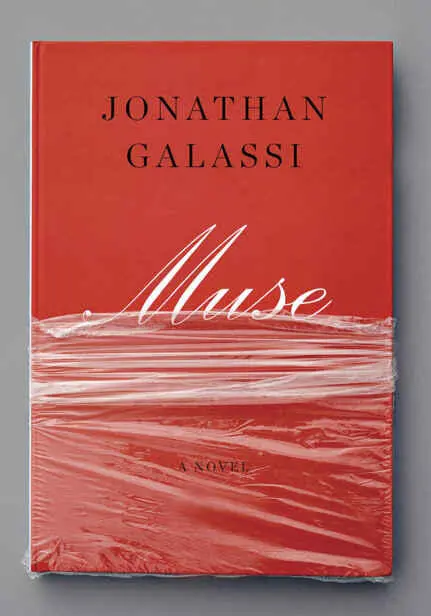
- Название:Muse
- Автор:
- Издательство:Knopf
- Жанр:
- Год:2015
- ISBN:нет данных
- Рейтинг книги:4 / 5. Голосов: 1
-
Избранное:Добавить в избранное
- Отзывы:
-
Ваша оценка:
Muse: краткое содержание, описание и аннотация
Предлагаем к чтению аннотацию, описание, краткое содержание или предисловие (зависит от того, что написал сам автор книги «Muse»). Если вы не нашли необходимую информацию о книге — напишите в комментариях, мы постараемся отыскать её.
Paul Dukach is heir apparent at Purcell & Stern, one of the last independent publishing houses in New York, whose shabby offices on Union Square belie the treasures on its list. Working with his boss, the flamboyant Homer Stern, Paul learns the ins and outs of the book trade — how to work an agent over lunch; how to swim with the literary sharks at the Frankfurt Book Fair; and, most important, how to nurse the fragile egos of the dazzling, volatile authors he adores.
But Paul's deepest admiration has always been reserved for one writer: poet Ida Perkins, whose audacious verse and notorious private life have shaped America's contemporary literary landscape, and whose longtime publisher — also her cousin and erstwhile lover — happens to be Homer’s biggest rival. And when Paul at last has the chance to meet Ida at her Venetian palazzo, she entrusts him with her greatest secret — one that will change all of their lives forever.
Studded with juicy details only a quintessential insider could know, written with both satiric verve and openhearted nostalgia,
is a brilliant, haunting book about the beguiling interplay between life and art, and the eternal romance of literature.
Muse — читать онлайн бесплатно полную книгу (весь текст) целиком
Ниже представлен текст книги, разбитый по страницам. Система сохранения места последней прочитанной страницы, позволяет с удобством читать онлайн бесплатно книгу «Muse», без необходимости каждый раз заново искать на чём Вы остановились. Поставьте закладку, и сможете в любой момент перейти на страницу, на которой закончили чтение.
Интервал:
Закладка:
As he collected his belongings and boarded his flight, Paul felt a rush of empathy for Maxine, and for her bond with Ida. Their moment in time, in Ida’s telling, had a purity and a completeness he could only endorse, and envy.
And besides, who was he to judge? What he’d wanted, as Ida had instantly grasped, he now saw, was to know his heroes as human beings — to feel his way into how they had lived, not in the pages of books, even their own books, but as men and women. He had something priceless in his briefcase — not just the last and most explosive book by Ida Perkins, but a contemporary testament to love. His ultimate loyalty had to be to what Mnemosyne represented. Whatever it took, he had to publish this perfect book perfectly. This at least was something he understood.
XI. Publishing Scoundrel
Homer was beside himself. He and Sally were open-mouthed as Paul recounted his discovery after staggering into the office late the next morning.
“Are you telling me Ida was balling Sterling’s wife?! I didn’t know the old girl had it in her.”
Paul did his usual best to ignore Homer’s provocations. “The thing is, the poems are electrifying. It’s a profoundly moving book.”
“ ‘Moving,’ my ass! This is going to turn the literary world on its tail. Get me Chowderhead!”
“Hold on, Homer. Ida is still with us,” Sally cautioned. “We have to think about her.”
“And we have to think about Sterling,” Paul added. “It’s clear he can’t publish the book, but Ida didn’t say anything about that. I need to talk to her, to clarify her intentions, and—”
“This is no time to phumpher around, Dukach. Purcell and Stern is going to be publishing Animosity, or whatever it’s called. End of joke. Who needs a fourth Ace? This is a … a royal flush.”
Homer could be a steamroller when aroused. And if he could mangle a name, he would. Paul didn’t remind him that it was his decision what happened with Ida’s book. He hoped he didn’t need to. It was already too late in Venice; he would phone Ida tomorrow.
He called Roz, thanking her lavishly for her introduction to Ida and providing a redacted version of their conversation. He called Sterling, too. Paul passed on Ida’s greetings and filled him in as to what the notebooks actually described. Sterling didn’t seem all that surprised — or interested, Paul felt. He suggested they meet for drinks, but he didn’t sense — maybe because he didn’t want to — any urgency on the other end of the line, and they said good-bye without setting a date.
On both calls, Mnemosyne went unmentioned.
A day passed, and then another, in which he got lost in catching up — writing overdue flap copy, declining manuscripts, returning calls and answering e-mails. Earl Burns had delivered the big novel they’d been waiting on for the past few years, and Paul spent the weekend reading it — somewhat disappointing, but he could see there were things that could be done to make it more reader-friendly. Earl was far from the most responsive author Paul had ever worked with, but he was congenitally practical, and Paul hoped he would come to see the logic in Paul’s major suggestion, which was that the wife should not die at the end of the book. Every thing should go on just as before — except radically new. The novel is superb, he’d tell him; now go rewrite it.
Paul let himself get reabsorbed by his work, and before he knew it three weeks had gone by. On a Thursday afternoon — it was Ida’s birthday, he suddenly realized — at about four o’clock, just as his energy was flagging, he answered a call that had been transferred from the receptionist.
“Signore Dukach?”
“Yes.” The connection was poor and it was hard to hear.
The caller was weeping. “Sono Adriana Pertuzzi, la cameriera della Contessa Moro. Mi dispiace informarla che Donna Ida è scomparsa oggi pomeriggio alle ore quindici-trenta. Mi dispiace, mi dispiace tanto.”
Scomparsa . Disappeared. Ida, his heroine, was gone. Paul expressed his sorrow as succinctly as he could, thanked Signora Pertuzzi for calling, and hung up.
Everything was going to change now. Beyond his grief, he felt an upsurge of remorse like an attack of heartburn: he’d dragged his heels and failed to find out what precisely Ida had wanted him to do about Sterling and the sheaf of poems that were now his responsibility. Yes, he’d known she was ill, but he hadn’t realized how seriously. How could he have? Had her awareness of her impending death precipitated her impulsively giving him the manuscript? Had some intimation held him back from following up with her? Would she have spoken to him in any case?
Whatever the truth, he was sitting now on the horns of an impossible dilemma.
* * *
Ida’s obituary, which began above the fold on the front page of The Daily Blade the next morning, ran over onto two full inside pages, with photos of her with each of her four husbands, and three presidents. There was a picture of Ida with Sterling and Maxine in Hiram’s Corners, and a group shot with A.O., Pound and Olga Rudge, Celine Mannheim, and her cousin Homer Stern in the garden of Palazzo del Pisellino on the Grand Canal in 1969.
Unsurprisingly, Ida’s and Stephen’s son, Thomas, went unmentioned in the long article. Paul noticed numerous other errors and omissions, though the general tone of the piece was appreciative, even affectionate, and, he felt, took the true measure of the loss to American culture that Ida’s passing represented.
Memorial services were held in Venice and London and, soon after New Year’s, at the American Academy of Arts and Letters, the colonnaded Beaux Arts palace on 155th Street in upper Manhattan that felt to Paul as if it belonged in Washington, D.C., or maybe Saint Petersburg. He watched them all file into the neoclassical auditorium with its coffered ceiling, red velvet curtains, and Renaissance-style organ, reputedly one of the best in the city: the disciples and children of the writers of the Movement whom he’d read and reread all his life. Mary de Rachewiltz, Pound’s daughter, was there, ghostly and remote, with her son, Walter, whom Paul had known at NYU, as well as the sons of William Carlos Williams, bent with age, and Giovanni Di Lorenzo’s curly-headed granddaughter Holly, now a budding rock singer — the whole club of the inheritors of the royalties, such as they were, if not the genius of Ida’s predecessors. Her younger contemporaries were in attendance, too: Snyder, Merwin, Strand, Tate, Glück, Wright, Williams, Bidart, and Stotowski. Ida’s husband, Count Leonello Moro, an elegant, short, fit man in his mid-fifties with pomaded hair, sat unnoticed in the back with Svetlana Chandos, who had come with two of her sons, as well as the Wainwright and Perkins clans by the score, in stiff dark suits and frosted hair, so different in style and demeanor from their famous renegade relation and her brothers and sisters in the art. Most of the raffish crowd in corduroy jackets and hiking boots, though, what passed for the remains of America’s literary aristocracy, struck Paul as hopelessly dowdy compared with the person they were there to celebrate.
Paul remembered a luncheon Homer had given years ago at the Thespian Brotherhood, a temple to bygone theatrical greatness on Madison Square. The occasion had been the publication of a group biography of the Wintons, arguably the most distinguished artistic/intellectual family in American history, who could lay claim to having produced America’s first great sculptor, her leading naturalist, and her first internationally acclaimed lyric soprano, all in one generation. The Winton descendants, though, turned out to be a raggle-taggle bunch of dipsomaniac WASPs from the back of beyond whom Paul couldn’t imagine being familiar with, let alone understanding, their famous forebears’ achievements. So much for genetics. Genius, it seemed, struck like lightning and moved on, leaving befuddlement and disarray in its wake. It didn’t tend to deposit a residue in the following generations the way egregious beauty or physical prowess, not to mention wealth, sometimes could, but scattered its glory willy-nilly. Which was why Paul set no stock in ancestry, Homer’s or Sterling’s or his own. Who cared who your grandfather was, in the end? It was not where or who you came from but what you did with your own grab bag of advantages and disadvantages that made you remarkable. He’d learned early on in his work that the real writers hadn’t gone to Yale or Oxford; they came from everywhere — or nowhere — and their determination to dig down, to matter, whatever the odds against them, was the only key to their succeeding. For every Ida who had been to the manner born, there were ten — no, twenty — Arnolds and Ezras and Pepitas, youngsters from the provinces determined to make their mark by dint of their own talent and hunger and grit. And Ida and Sterling had been no different. They’d been just as eager to escape their own stifling, if well-padded, backgrounds, to break away that ecstatic summer in Otter Creek, to leave behind where they’d come from and become who they aspired to be.
Читать дальшеИнтервал:
Закладка:
Похожие книги на «Muse»
Представляем Вашему вниманию похожие книги на «Muse» списком для выбора. Мы отобрали схожую по названию и смыслу литературу в надежде предоставить читателям больше вариантов отыскать новые, интересные, ещё непрочитанные произведения.










Обсуждение, отзывы о книге «Muse» и просто собственные мнения читателей. Оставьте ваши комментарии, напишите, что Вы думаете о произведении, его смысле или главных героях. Укажите что конкретно понравилось, а что нет, и почему Вы так считаете.