Jonathan Galassi - Muse
Здесь есть возможность читать онлайн «Jonathan Galassi - Muse» весь текст электронной книги совершенно бесплатно (целиком полную версию без сокращений). В некоторых случаях можно слушать аудио, скачать через торрент в формате fb2 и присутствует краткое содержание. Год выпуска: 2015, Издательство: Knopf, Жанр: Современная проза, на английском языке. Описание произведения, (предисловие) а так же отзывы посетителей доступны на портале библиотеки ЛибКат.
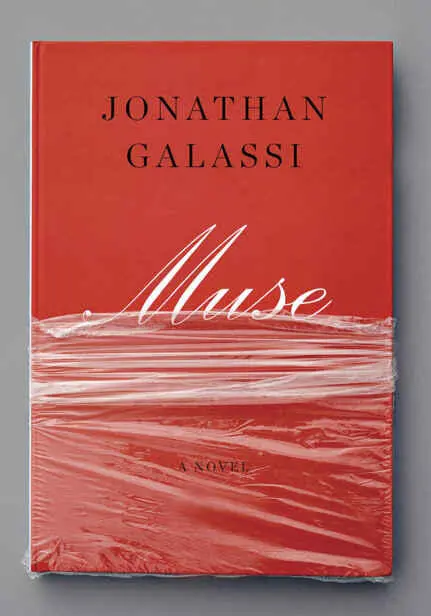
- Название:Muse
- Автор:
- Издательство:Knopf
- Жанр:
- Год:2015
- ISBN:нет данных
- Рейтинг книги:4 / 5. Голосов: 1
-
Избранное:Добавить в избранное
- Отзывы:
-
Ваша оценка:
Muse: краткое содержание, описание и аннотация
Предлагаем к чтению аннотацию, описание, краткое содержание или предисловие (зависит от того, что написал сам автор книги «Muse»). Если вы не нашли необходимую информацию о книге — напишите в комментариях, мы постараемся отыскать её.
Paul Dukach is heir apparent at Purcell & Stern, one of the last independent publishing houses in New York, whose shabby offices on Union Square belie the treasures on its list. Working with his boss, the flamboyant Homer Stern, Paul learns the ins and outs of the book trade — how to work an agent over lunch; how to swim with the literary sharks at the Frankfurt Book Fair; and, most important, how to nurse the fragile egos of the dazzling, volatile authors he adores.
But Paul's deepest admiration has always been reserved for one writer: poet Ida Perkins, whose audacious verse and notorious private life have shaped America's contemporary literary landscape, and whose longtime publisher — also her cousin and erstwhile lover — happens to be Homer’s biggest rival. And when Paul at last has the chance to meet Ida at her Venetian palazzo, she entrusts him with her greatest secret — one that will change all of their lives forever.
Studded with juicy details only a quintessential insider could know, written with both satiric verve and openhearted nostalgia,
is a brilliant, haunting book about the beguiling interplay between life and art, and the eternal romance of literature.
Muse — читать онлайн бесплатно полную книгу (весь текст) целиком
Ниже представлен текст книги, разбитый по страницам. Система сохранения места последней прочитанной страницы, позволяет с удобством читать онлайн бесплатно книгу «Muse», без необходимости каждый раз заново искать на чём Вы остановились. Поставьте закладку, и сможете в любой момент перейти на страницу, на которой закончили чтение.
Интервал:
Закладка:
“She did what ?”
“A book of poems. She said it was her last. And now, unfortunately, I guess it will be.”
“Well, why haven’t you sent it over?”
“That’s what’s so difficult. I don’t know quite how to tell you this, but, you see — she asked me not to. She gave it to me and told me she wanted me to see to its publication after her death.”
There, he’d said it.
“That’s the most outrageous thing I’ve ever heard in my life! You can’t be serious. I’ve done all her work, every single book, she and Arnold and Denise and Robert — every blasted one of them. They depend on me. I’ve always been here for them. I don’t believe you. It’s … Oh! Now I get it! Now I see. You’re out to cheat me, you and that fraudulent boss of yours!”
“I could never do that, Sterling. I think you know how I feel about you. But it was something Ms. Perkins expressly asked me to do. She must have had her reasons, though she didn’t tell me what they were. She wrote me a letter …”
“I’ll bet she did. I bet you dictated it and made her sign it. You and Homer Stern. You’re a traitor. A traitor! And after all I’ve done for you. You’ll be hearing from my lawyer. I never want to see your miserable, snot-nosed little fairy face again! I—”
There was clattering on the other end of the line, the sound of footsteps, a shout. Then the line went dead.
XIII. Mr. President
Sterling Wainwright’s memorial service was likewise held in the auditorium of the American Academy of Arts and Letters, a few weeks after his cousin Ida’s, with more or less the same crowd in attendance. Il Catullo americano had, much to his pride and joy, been elected a member of the august body the previous year, in recognition of his services to literature.
Sterling’s daughter, Ida Bernstein, had asked Paul, as one of her father’s most faithful apostles, to be among the speakers, along with Elliott Blossom; Svetlana Chandos; Sterling’s last poetic flame, Charysse Hodell; and several others. Paul, still traumatized by Sterling’s death, hadn’t known what to say to Ida B about his involvement in his hero’s demise. He kept his remarks brief, reverent, and, he hoped, witty. Afterward, Bree, Ida, and Sterling III, the spitting image of his father as a dashing young man, whom Paul was meeting for the first time, all thanked him warmly for his words.
Homer, luckily, was not in attendance.
Before long, rumors about the existence of Ida Perkins’s mysterious last book started to circulate in the blogosphere, having been anonymously planted by Homer’s publicity guru, Seth Berle. The crescendo of speculation became such that Seth suggested they might want to issue some sort of statement explaining that they and not Impetus were going to be publishing Ida’s last book.
Paul, though, was leery of offending the Wainwrights. Ida had been the Impetus author par excellence, after A.O., and Paul had still not found a way to explain to Ida and Charlie Bernstein, who, after Sterling’s death, were now running his company, that P & S was going to be doing her last book. Luckily, Ida’s will specified that her fourth and final husband, Leonello Moro, had no claim on her literary or personal property, as she had none on his. In fact, apart from her literary estate and her clothes and jewelry and a few pictures, Ida turned out to have owned almost nothing.
Beyond this, Paul was naturally concerned that the Wainwrights, and Ida B in particular, would be disturbed by the book’s contents, which were bound to be an unwelcome surprise to say the least, and by the role he himself was playing in its publication. (He wasn’t so worried by Bree; he thought she might take secret pleasure in the news that Maxine had not been an utter saint — and that Sterling had suffered an erotic comeuppance of his own.)
Ida B was not Maxine’s daughter, and though they had always been cordial and eventually much more, a certain natural distance had existed between them. But Ida, inde pendent and clear-eyed and even caustic about Sterling as she was capable of being, was nevertheless fiercely loyal to her father’s memory. There was no way around it; Mnemosyne was going to be hugely problematic for her.
It was Morgan, of course, who came up with the solution.
“Tell Ida B that Sterling told you he named her after Ida — Perkins, that is, not Wainwright. I think it’s true, by the way. Sure, he had the cover of his grandmother’s name to make it all look hunky-dory, but he was always entranced with Ida P, there’s no doubt about it. If Ida B can understand that, if she can be made to feel an affinity with her namesake, I think she’ll come around.”
Paul decided to risk it. What did he have to lose, after all? There was nothing else in his arsenal.
To his amazement and relief, it worked like a charm. Paul met Ida and Charlie Bernstein for dinner at a hole-in-the-wall in the Village one evening and told them the whole story of his visit to Ida P in Venice, handing them a copy of the manuscript of Mnemosyne as they said good night. He spent a few anxious days waiting for their response, but, as Morgan predicted, their worldly good natures and common sense saved the day. Ida B was moved by the book, and flattered, too, Paul could tell — the affiliation with his father’s old flame made her feel more connected to Sterling, who hadn’t paid his children all that much attention, not even his unswervingly faithful if occasionally gimlet-eyed daughter. Morgan was right: once Ida B had gotten used to the idea, this new bombshell of a book allowed her to identify with Ida P — and, who knows, perhaps also with Maxine, who had been neglected by Sterling in a different way.
Paul meanwhile had reread his transcription of A.O.’s notebooks in the light of Mnemosyne and confirmed the suspicion he’d had when he’d first read the manuscript that the strings of words distributed here and there among the diary entries had been drawn, many of them at least, from poems in the book. The diaries went from 1983 to 1988. The way the word lists were interspersed among them suggested that the poems of Ida’s they’d been drawn from belonged to the same period, and had likely been written as Ida’s love for Maxine was lived. This had been no brief affair, but an ongoing romance that had ended only with her death.
Which meant that Arnold had been spying on Ida in more ways and for more reasons than one. He’d been jealous of far more than the fact that Ida was still writing; it was what she was writing, too: these passionate, importunate, despairing poems to another woman. Had Ida understood this when she’d examined Paul’s transcriptions that all-important afternoon? What was it she’d said? People see more than you think they do — even when they don’t seem to see anything at all. Had she perceived then that Arnold had known all along about her love for Maxine? Had she had to come to terms then with what she hadn’t acknowledged, or hadn’t wanted to, before: her own role in Arnold’s despair?
It had all been more than Ida had been able to face, Paul decided. And so, perhaps impulsively, she’d off-loaded the responsibility onto him.
He determined to keep these insights to himself. It would all come out in the wash, if Alan Glanville did his homework.
Paul was feeling like an ace detective, as well as a psychiatrist, as he so often did at work (at times it seemed as if Earl Burns couldn’t tie his shoes without calling him for advice). And, for once, he felt he’d solved his patients’ problems. He’d had a series of Herculean tasks: to fulfill his obligation to Ida and her work; to give Homer what he’d always wanted, his chance to be her publisher; and to make the Bernsteins comfortable with this untoward turn of events, all at once. And, with an assist from Morgan, he’d done it. Talk about a royal flush! If he could pull this off, he told himself, he could do anything.
Читать дальшеИнтервал:
Закладка:
Похожие книги на «Muse»
Представляем Вашему вниманию похожие книги на «Muse» списком для выбора. Мы отобрали схожую по названию и смыслу литературу в надежде предоставить читателям больше вариантов отыскать новые, интересные, ещё непрочитанные произведения.







Обсуждение, отзывы о книге «Muse» и просто собственные мнения читателей. Оставьте ваши комментарии, напишите, что Вы думаете о произведении, его смысле или главных героях. Укажите что конкретно понравилось, а что нет, и почему Вы так считаете.