Jonathan Galassi - Muse
Здесь есть возможность читать онлайн «Jonathan Galassi - Muse» весь текст электронной книги совершенно бесплатно (целиком полную версию без сокращений). В некоторых случаях можно слушать аудио, скачать через торрент в формате fb2 и присутствует краткое содержание. Год выпуска: 2015, Издательство: Knopf, Жанр: Современная проза, на английском языке. Описание произведения, (предисловие) а так же отзывы посетителей доступны на портале библиотеки ЛибКат.
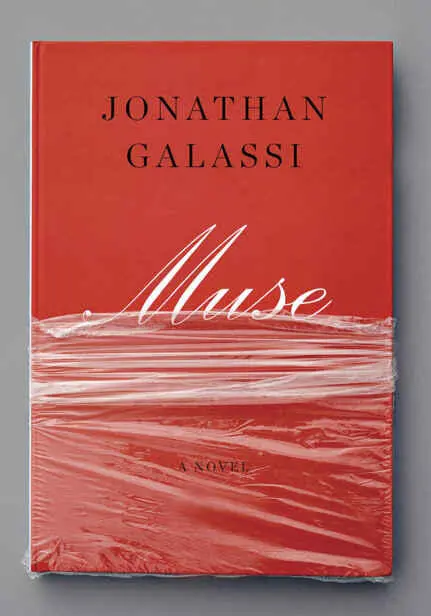
- Название:Muse
- Автор:
- Издательство:Knopf
- Жанр:
- Год:2015
- ISBN:нет данных
- Рейтинг книги:4 / 5. Голосов: 1
-
Избранное:Добавить в избранное
- Отзывы:
-
Ваша оценка:
Muse: краткое содержание, описание и аннотация
Предлагаем к чтению аннотацию, описание, краткое содержание или предисловие (зависит от того, что написал сам автор книги «Muse»). Если вы не нашли необходимую информацию о книге — напишите в комментариях, мы постараемся отыскать её.
Paul Dukach is heir apparent at Purcell & Stern, one of the last independent publishing houses in New York, whose shabby offices on Union Square belie the treasures on its list. Working with his boss, the flamboyant Homer Stern, Paul learns the ins and outs of the book trade — how to work an agent over lunch; how to swim with the literary sharks at the Frankfurt Book Fair; and, most important, how to nurse the fragile egos of the dazzling, volatile authors he adores.
But Paul's deepest admiration has always been reserved for one writer: poet Ida Perkins, whose audacious verse and notorious private life have shaped America's contemporary literary landscape, and whose longtime publisher — also her cousin and erstwhile lover — happens to be Homer’s biggest rival. And when Paul at last has the chance to meet Ida at her Venetian palazzo, she entrusts him with her greatest secret — one that will change all of their lives forever.
Studded with juicy details only a quintessential insider could know, written with both satiric verve and openhearted nostalgia,
is a brilliant, haunting book about the beguiling interplay between life and art, and the eternal romance of literature.
Muse — читать онлайн бесплатно полную книгу (весь текст) целиком
Ниже представлен текст книги, разбитый по страницам. Система сохранения места последней прочитанной страницы, позволяет с удобством читать онлайн бесплатно книгу «Muse», без необходимости каждый раз заново искать на чём Вы остановились. Поставьте закладку, и сможете в любой момент перейти на страницу, на которой закончили чтение.
Интервал:
Закладка:
“Where are you off to now, Paul?” asked his sales director, Maureen Rinaldi, seeing his overnight bag parked by his desk on a Friday morning. Momo, as he called her, had cheerfully put up with Paul’s lack of organizational talent list after list, year after year. Paul would have been helpless without her, and everybody knew it — especially Momo.
“Going to see the Man, where else?” Paul answered with a grin. In the last few months, his bimonthly trips to San Francisco had become common knowledge around the office. He was in love, for what felt like almost the first time and everyone at P & S knew it.
The Man was Rufus Olney, a content editor at Medusa. The San Francisco — based e-tailer was wreaking havoc in the publishing business, underselling publishers’ wares to steal business away from bookstores and achieve a virtual online monopoly in both print and e-books in the process. Lately, they’d been making feints at being publishers, too, as if to show the traditional book trade how far up their asses their heads were. Paul had come across Rufus on one of the more activist websites that had transformed his per sonal life post-Jasper. When he’d discovered as they chatted that Rufus (screen name Rockstar Apollo) worked for big, bad Medusa, he’d suggested they get together during the upcoming booksellers’ convention in New York. They’d hit it off, though Rufus didn’t have the slightest idea who Ida or Arnold or Homer or Sterling or the rest of Paul’s pantheon were. Content was king at Medusa, they claimed, but Rufus’s expertise ran more to genre novelists and management gurus than literary writers. Which was fine with Paul, who was looking for someone who was interested in his personal as opposed to professional attributes. Rufus, who in spite of his name had rich brown hair and a broad, still unlined forehead, seemed taken with Paul’s East Coast nerdiness. Paul was susceptible to his new friend’s hazel eyes and winning ways and found himself yielding, often, to his insistent salesman’s charms.
At first he’d called him just that, talking to Morgan or his friends at work: the Salesman. Then, as things heated up between them, the Salesman had become the Man from Medusa, as if an ironic moniker could inoculate him from his deepening attachment. Soon enough, though, Paul’s irony had died away and the Man from Medusa had morphed into the Man, pure and simple. Rufus was the Man in more ways than one, and Paul was crazy about him.
On their weekends in San Francisco, they’d spend hours in the perpetually unmade bed in Rufus’s steel-and-maple loft downtown, with its stunning view of the Bay; then Paul would relax with a glass of sauvignon blanc and pretend to fiddle with a manuscript (retro, yes, but that was Paul; he’d confessed to Rufus on their third date that he hated e-readers), while Rufus, the original foodie, rustled them up a fantastic meal. Then they’d lounge around with Rufus’s laptops and smartphones and tablets and other devices and Rufus would try to indoctrinate Paul in the intricacies of tech.
Paul was enchanted by the lingo of Rufus’s world: big data, scalability, pivoting, crowdsourcing, virtual convergence, geo-location, but before too long he came to understand that everything his guy was talking about — platforms and delivery systems and mini-books and nanotech and page rates and and and — had very little to do with what mattered to Paul, which was the words themselves and the men and women who’d written them. Rufus could make them bigger or smaller on his pads and notebooks, he could add visual elements and music, he could reformat them six ways to Sunday and break them into bits or bites or bytes and send them into the world on all sorts of pathways, but Moby-Dick was still Moby-Dick, whatever device you screened it on, and Mnemosyne was Mnemosyne, no matter how you sliced it.
What bothered Paul was that Rufus and his pals at Medusa wanted to sell Ida’s — and Thor’s and Ted’s and Rick’s and everyone else’s — work so cheaply they were practically giving it away. They couldn’t have cared less that a writer had sweated blood for years to create immortal poetry, or that an editor had hovered lovingly over the manuscript of a novel to bring it into the world in the form and condition it deserved. Rufus and his cohorts were all for Open Access. It sounded wonderful, and it was — for the end user (Paul had grown up calling her “the reader”). But the creator, who in spite of everything remained a virtual divinity to Paul, mattered far less to Rufus. If he couldn’t get one kind of content he’d find something else, unencumbered by restrictions, somewhere else. No, content wasn’t king at all at Medusa; it was more or less fungible. This drove Paul to paroxysms of rage and despair, and he found he often had to set his feelings aside when he and Rufus were together.
When he talked to Morgan these days, the news about the business was more often than not depressing. She was an extremely canny bookseller who’d outsmarted the chains by making Pages the heart and soul of the community in and around Hattersville. She had local and visiting authors give readings weekly; she had children’s hours on Saturdays; she was the den mother to a hundred book groups; she supplied books for events at Hattersville State and Embryon, the local private college. Besides, she was Morgan Dickerman, and people naturally gravitated to her the way Paul had (he wasn’t self-deluding enough to believe he was her only protégé, though he liked to flatter himself that he was still Number One). So Pages was still doing all right. But some of Morgan’s perhaps less talented or less energetic colleagues were not faring nearly as well. The chain store across the square had gone out of business, too, which, paradoxically, hadn’t helped matters at Pages.
And Morgan herself was changing. The yellow streaks in her lustrous silver hair seemed more and more prominent when he saw her, which was every six months or so. Paul didn’t like to admit it, but ageless Morgan was aging. He wondered how long she could keep it up.
“I’d like to ask your Mr. Rufus if he understands what they’re up to at Medusa,” she’d say to him, in a tone only partially intended to mask her indignation. “I mean, I’m sure he’s a good lay and hallelujah for that. But does he know what he and his posse are doing to the Fabric of Our Culture?” Paul could almost see those capital letters in neon gold, dripping blood as they burned up the airwaves between them.
But phrases like “the Fabric of Our Culture” meant very little to Rufus. He was an intelligent, educated, well-adjusted guy with a toned body, wonderful manners, and a marvelous braising technique. But at thirty-three, he was way too young to have experienced or cared about the Paperback Revolution, the travails of returns, the rise and demise of the Borders chain, or the roller-coaster vagaries of Oprah’s Book Club. Trying to get him to appreciate the arcana of the Life of the Book was like suggesting he follow Mastering the Art of French Cooking in the kitchen. He’d just nod, roll his eyes, and quote his über-boss, the nefarious George Boutis, who was fond of saying about those old-fashioned objects known as physical books (p-books to the initiated), “I like camels, too, but I don’t ride one to work.”
Over time Paul found that his disputes with Rufus about the book business had grown erotically charged. They never seemed to be able to agree on anything professionally, but they had a fantastic time fighting about it, and making up. To argue better, Paul felt he needed to be as well-versed as possible in what his antagonist was saying and thinking, so he haunted the office of the P & S Internet marketing team, and as he listened to them discussing freemiums, like-gating, webisodes, and tag clouds, Paul wondered what they’d say if they knew that the quality of his love life depended on their know-how.
Читать дальшеИнтервал:
Закладка:
Похожие книги на «Muse»
Представляем Вашему вниманию похожие книги на «Muse» списком для выбора. Мы отобрали схожую по названию и смыслу литературу в надежде предоставить читателям больше вариантов отыскать новые, интересные, ещё непрочитанные произведения.









Обсуждение, отзывы о книге «Muse» и просто собственные мнения читателей. Оставьте ваши комментарии, напишите, что Вы думаете о произведении, его смысле или главных героях. Укажите что конкретно понравилось, а что нет, и почему Вы так считаете.