Jonathan Galassi - Muse
Здесь есть возможность читать онлайн «Jonathan Galassi - Muse» весь текст электронной книги совершенно бесплатно (целиком полную версию без сокращений). В некоторых случаях можно слушать аудио, скачать через торрент в формате fb2 и присутствует краткое содержание. Год выпуска: 2015, Издательство: Knopf, Жанр: Современная проза, на английском языке. Описание произведения, (предисловие) а так же отзывы посетителей доступны на портале библиотеки ЛибКат.
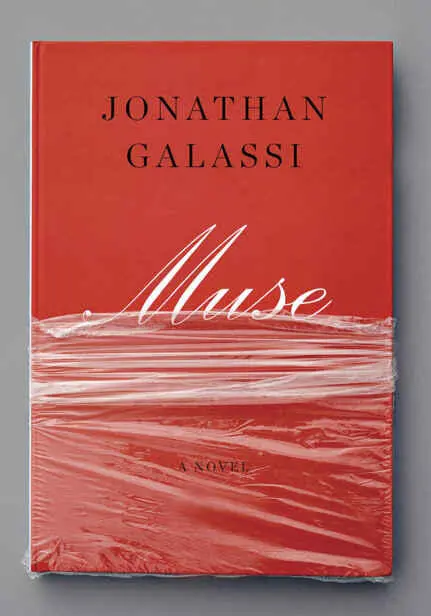
- Название:Muse
- Автор:
- Издательство:Knopf
- Жанр:
- Год:2015
- ISBN:нет данных
- Рейтинг книги:4 / 5. Голосов: 1
-
Избранное:Добавить в избранное
- Отзывы:
-
Ваша оценка:
Muse: краткое содержание, описание и аннотация
Предлагаем к чтению аннотацию, описание, краткое содержание или предисловие (зависит от того, что написал сам автор книги «Muse»). Если вы не нашли необходимую информацию о книге — напишите в комментариях, мы постараемся отыскать её.
Paul Dukach is heir apparent at Purcell & Stern, one of the last independent publishing houses in New York, whose shabby offices on Union Square belie the treasures on its list. Working with his boss, the flamboyant Homer Stern, Paul learns the ins and outs of the book trade — how to work an agent over lunch; how to swim with the literary sharks at the Frankfurt Book Fair; and, most important, how to nurse the fragile egos of the dazzling, volatile authors he adores.
But Paul's deepest admiration has always been reserved for one writer: poet Ida Perkins, whose audacious verse and notorious private life have shaped America's contemporary literary landscape, and whose longtime publisher — also her cousin and erstwhile lover — happens to be Homer’s biggest rival. And when Paul at last has the chance to meet Ida at her Venetian palazzo, she entrusts him with her greatest secret — one that will change all of their lives forever.
Studded with juicy details only a quintessential insider could know, written with both satiric verve and openhearted nostalgia,
is a brilliant, haunting book about the beguiling interplay between life and art, and the eternal romance of literature.
Muse — читать онлайн бесплатно полную книгу (весь текст) целиком
Ниже представлен текст книги, разбитый по страницам. Система сохранения места последней прочитанной страницы, позволяет с удобством читать онлайн бесплатно книгу «Muse», без необходимости каждый раз заново искать на чём Вы остановились. Поставьте закладку, и сможете в любой момент перейти на страницу, на которой закончили чтение.
Интервал:
Закладка:
Eventually, Paul met Rufus’s boss, Spike Edelman, who ran Medusa’s book operations. A few weeks later, he found himself having dinner with Spike, Rufus, and George Boutis himself. George, who was short, pugnacious, and curious about everything, had founded Medusa soon after graduating from Williams, where he’d shared an off-campus apartment with Rick Nielsen. George, who had more than a dollop of Master of the Universe arrogance, was formidably well-read, and Paul couldn’t deny that in spite of their differences he found himself fascinated, if not charmed, by his conversational adversary.
It took him months to admit this to Morgan. When he did fess up, she screamed, “Well, I’ll be a rat’s ass! You two-timing bastard! Now I’ve seen everything.” After which she laughed uproariously, all instantly forgiven.
George and Paul ended up seeing each other every so often on Paul’s trips west to wrestle with Rufus. Sometimes Spike came along, but more often it was just the four of them: Paul, Rufus, George, and his sharp-tongued, hilarious wife, Martha, whose first novel, about the frustrated wife of a Silicon Valley magnate who wants to be a painter, was soon to be published by Impetus Editions, of all things. Their no-holds-barred dinner conversation was sometimes heated but always stimulating, and Paul had come to feel as time passed that, unlike Rufus, George understood his old-fashioned author-centered vision of publishing, much as it differed from George’s own.
One evening in Rufus’s loft, after he’d served them unforgettable linguine with sea urchin, George suddenly said, over a glass of super-smooth Nonino grappa:
“How about coming to work here at Medusa, Paul? You can spearhead our publishing program for us. We’ve got everything you need — including Rufus. Hell, I’ll even buy P & S. We’ll make it the flagship of Medusa Publishing.”
Paul felt the room tilt. How was he going to tell Morgan this ? But he recovered enough to answer equably, “I’ll have to think this over, George. Thank you for your expression of confidence in me.”
Rufus was uncharacteristically quiet while they did the dishes after the Boutises left. Paul didn’t quite know how to take this; was Rufus offended that Paul hadn’t jumped at the chance to be in San Francisco with him? Had he known all along that George’s proposal was in the offing?
“Well. That was quite a shock,” Paul finally said.
“George is serious,” Rufus replied, with more than a trace of exasperation, as he emptied the dishwasher of glassware and put in the pots and pans. “He doesn’t make offers lightly, especially ones as meaningful as this.”
“I have no doubt of that,” Paul answered evenly. “But it’s a lot to take in, you have to admit. The idea is exciting in so many ways — especially being here with you. But wouldn’t it mean leaving behind everything I’ve spent my life working to accomplish?”
“Medusa is the future, Paul,” Rufus said carefully. “It’s here to stay. P & S can be part of it. And I’m here. We could have a wonderful life together.”
“It’s incredibly tempting, Rufus. I just need to think it over in tranquillity.”
“Fine. But don’t keep us waiting too long. George isn’t known for his patience.”
Us? And you; how patient are you? Paul wanted to ask. Somehow his boyfriend was sounding like a member of the opposing team.
Later, as he lay in Rufus’s sculpted arms listening to the dryer revolve in the pantry, Paul couldn’t sleep. He felt he was on the edge of a precipice and in danger of falling so far he couldn’t see the ground beneath him. And he wasn’t at all sure that the slapping of the place mats and napkins as they tossed in the dryer’s drum in the silent San Francisco night wasn’t the sound of Homer, Sterling, Ida, Arnold, Elspeth, Pepita, Dmitry — all of them — whirling like dervishes in their horrified graves.
XV. Eastport
Medusa did acquire P & S a few years down the road, along with Owl House and Harper Schuster Norton, pawns in its life-or-death struggle with Gigabyte to monopolize the retail (and e-tail) reading market. For the time being, at least, New Directions, Impetus, Boatwright, and the rest of the smaller publishing fry managed to avoid their larger competitors’ fate and remain independent.
Paul, though, was no longer with P & S. Rufus and he had broken up not long after he turned George Boutis down. So, finding himself unattached yet again in his mid-forties, and having scaled the summit of editorial achievement, by his lights anyway, with the publication of Ida’s Complete Poems, not to mention Rick Nielsen’s blockbuster, The End of Everything —coupled with the devastating news that the Soft-shell Crab would soon be shutting its doors — he decided after much soul-searching to take a break and try his luck as, you guessed it: a writer.
“It’s the most retrograde, counterintuitive thing I can imagine doing,” he told Morgan. “It’s got to be right.”
“Don’t forget bookselling!” she remonstrated. “Remem ber, you can always come home and take over Pages. I’m getting way too old for this fandango.”
Paul had a heart-to-heart with Plato and Aristotle and recommended that they hire his friend Lucy Morello, who had been doing wonders as Larry Friedman’s number two at Howland, Wolff. As usual, they were exceptionally gracious, and he’d left with enough of a nest egg to get him through a frugal year or two or three of writing. So he rented a little gray-shingled house in Eastport, Rhode Island, from Morgan’s sister in Providence, and all that long, brutal winter, the coldest in two decades, he sat at his kitchen table staring at the islands that littered the water off Pawcatuck Point, trying to work on a book about Ida, a personal reading that would try to make sense of his enduring passion for her and her work.
Occasionally, Morgan and her now husband, Ned, would drive down from Hattersville for a weekend of bundled-up walks in the punishing wind followed by bibulous dinners; more often, Paul would drive into Providence to meet Joel Hallowell, the associate professor of design at RISD he’d recently found himself attracted to, for a meal and a movie and whatever else might transpire. Joel was different from any man Paul had ever been close to — calm and self-accepting without being self-advertising, in a way that made Paul feel safe and centered. “Let’s sleep on it,” Joel would say whenever Paul wound himself up about his work or future, or the generally perilous state of the world. Paul had promised himself he’d take it slow with Joel, but, as he watched the unchanging gray ocean day after day and tried to concentrate on his work, he couldn’t ignore how frequently his new friend cropped up in his thinking, his conversation, his dreams.
He was determined to make sense of Ida once and for all, why she’d mattered so much — to him, but not just him. He had the Complete Poems beside him: twelve hundred pages of immortality, with her sunlit face on the back of the jacket, lifted from Ida B’s snapshot of her namesake holding hands with Maxine and Sterling on the dock at Hiram’s Corners. That impassive smile, like an archaic kouré’s, hid far more than it revealed. He was working to find his way behind it, to get at her essential nature.
He’d recently learned something sad about Ida’s last years in Venice. Aristotle Stern had called him to report that he’d seen his now-aged relation Celine Mannheim in New York, and she’d had surprising things to say about Leonello Moro. According to Celine, the count hadn’t coped well with Ida’s growing infirmity and had made himself increasingly scarce, spending more and more time in Barcelona. Ida had lived out her final months a solitary prisoner in Palazzo Moro.
Читать дальшеИнтервал:
Закладка:
Похожие книги на «Muse»
Представляем Вашему вниманию похожие книги на «Muse» списком для выбора. Мы отобрали схожую по названию и смыслу литературу в надежде предоставить читателям больше вариантов отыскать новые, интересные, ещё непрочитанные произведения.










Обсуждение, отзывы о книге «Muse» и просто собственные мнения читателей. Оставьте ваши комментарии, напишите, что Вы думаете о произведении, его смысле или главных героях. Укажите что конкретно понравилось, а что нет, и почему Вы так считаете.