Jonathan Galassi - Muse
Здесь есть возможность читать онлайн «Jonathan Galassi - Muse» весь текст электронной книги совершенно бесплатно (целиком полную версию без сокращений). В некоторых случаях можно слушать аудио, скачать через торрент в формате fb2 и присутствует краткое содержание. Год выпуска: 2015, Издательство: Knopf, Жанр: Современная проза, на английском языке. Описание произведения, (предисловие) а так же отзывы посетителей доступны на портале библиотеки ЛибКат.
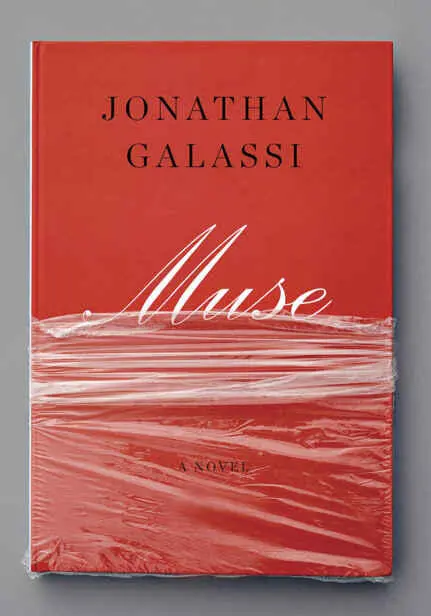
- Название:Muse
- Автор:
- Издательство:Knopf
- Жанр:
- Год:2015
- ISBN:нет данных
- Рейтинг книги:4 / 5. Голосов: 1
-
Избранное:Добавить в избранное
- Отзывы:
-
Ваша оценка:
Muse: краткое содержание, описание и аннотация
Предлагаем к чтению аннотацию, описание, краткое содержание или предисловие (зависит от того, что написал сам автор книги «Muse»). Если вы не нашли необходимую информацию о книге — напишите в комментариях, мы постараемся отыскать её.
Paul Dukach is heir apparent at Purcell & Stern, one of the last independent publishing houses in New York, whose shabby offices on Union Square belie the treasures on its list. Working with his boss, the flamboyant Homer Stern, Paul learns the ins and outs of the book trade — how to work an agent over lunch; how to swim with the literary sharks at the Frankfurt Book Fair; and, most important, how to nurse the fragile egos of the dazzling, volatile authors he adores.
But Paul's deepest admiration has always been reserved for one writer: poet Ida Perkins, whose audacious verse and notorious private life have shaped America's contemporary literary landscape, and whose longtime publisher — also her cousin and erstwhile lover — happens to be Homer’s biggest rival. And when Paul at last has the chance to meet Ida at her Venetian palazzo, she entrusts him with her greatest secret — one that will change all of their lives forever.
Studded with juicy details only a quintessential insider could know, written with both satiric verve and openhearted nostalgia,
is a brilliant, haunting book about the beguiling interplay between life and art, and the eternal romance of literature.
Muse — читать онлайн бесплатно полную книгу (весь текст) целиком
Ниже представлен текст книги, разбитый по страницам. Система сохранения места последней прочитанной страницы, позволяет с удобством читать онлайн бесплатно книгу «Muse», без необходимости каждый раз заново искать на чём Вы остановились. Поставьте закладку, и сможете в любой момент перейти на страницу, на которой закончили чтение.
Интервал:
Закладка:
Paul was distressed to imagine Ida, who had been with someone her whole life, unhappy and weak and alone. He wondered if her decision to give him Mnemosyne might have been motivated less by concern for protecting — or wounding — Sterling, than by her pressing need, as Paul had somehow intuited, to save her last book from a neglectful husband’s indifference or even envy.
Slowly, he was beginning to comprehend how one-sided, and how two-dimensional, his love for Ida and all his writers had been. It was intrinsic to the relationship; they’d needed him to magnify them in order to be fully, uninhibitedly themselves. And he’d needed to do it, to be of use, to bask in their reflected aura. It was a way of keeping his distance, of staying out of the line of fire. With Joel, he was beginning to learn the risks of mutuality. Did that mean his love for Ida was something he had to put behind him, like his fruitless enthrallment with Jasper, which had left him safely unexposed?
Ida had surely been no saint. His afternoon with her had shown him he would have to appraise her from countless contradictory angles. Yet the more faceted and surprising she’d become for him, the more she meant. Ida had been guileless and willful, passionate and snobbish, generous, great-hearted, self-seeking, myopic, petty. Like so many artists, she’d pursued her own desires, ignoring the consequences for others — and herself. She’d also suffered the worst loss a human being could know and found the inner discipline to absorb and master it. And in her words, at least, she had always been cognizant of her actions:
How can I tell you
the way it was?
Wasn’t it always
the same way for you?
There is nothing else.
If we knew what we knew,
every instance
would have to be true.
Ida, when she was most herself, had lived the way she wrote: at white heat, without backtracking or revision. That’s what her lines kept saying: this was how it was meant to be, how it could be, if only you let it. Because life was what it was. There is nothing else. And it was enough. It had to be, by definition.
Had he, too, left her in the lurch? Had he deserted his mentors Homer and Sterling when he’d left P & S? The company seemed to be thriving under Lucy, according to everything he heard from Tony and Momo and Seth. Daisy and her crew were finding and acquiring wonderful books, as always, and often — not every time, but it had been ever thus — finding engaged readers for them. Maybe he’d go back, if he ever finished his own book, and join forces with Jas, or kick-start his own latter-day Impetus or P & S with contributions from the grateful authors he’d worked with over the years.
Or maybe not.
Meanwhile, Ida was everywhere. Her work was read on the radio, quoted in songs and movies, imitated, discussed, debated. It felt as if she’d never had more readers. Both Impetus and P & S were selling p- and e-book editions of her steadily; more often than not, she was the best seller in Rufus’s Perennial Poets category, one of the most happening spots on the Medusa site. (Go figure!) Prizes, university chairs, even a highway in her native Massachusetts were being named for her. Her life was the subject of the new opera by John Adams, and her profile was set to appear on a postage stamp — if anyone still used stamps. The flat in Venice that she’d shared with Arnold had become a writers’ residence; Paul would be spending three months there in the spring. Thanks to Ida’s influence, the memorizing and recitation of poetry had miraculously become a part of the English curriculum again in certain schools. Children were learning her by heart, the way he had all those years ago.
Ida was alive, as alive as anything. She didn’t need Paul any more than she’d needed Sterling or Homer, or Arnold — or any man, or woman — to be triumphantly herself in her afterlife, even if her earthly end had been hard. Her mes sage, her genius, had been handed on, not via biology, but through the DNA locked inside her syllables. For all its greed and heedlessness, its ignorance about its past and insouciance about its future, America had produced a universal artist in Ida Perkins — in much the same way it had made a place as serene as Eastport, with its long stonewalled fields sloping down to the water, its aged, sea-stunted trees and silver houses huddled in front of the rocks that lined the shore of the Point. Some things in life can’t be improved on. He couldn’t imagine how Eastport could be more beautiful, more reassuringly humane. And the same was true of Ida.
Though it seemed eternal, Paul knew Eastport had changed greatly over the years. The stateliness of its vistas, its opennesses and secrets, whispered gently but insistently of creative destruction. Like every place, Eastport was always on the way to being something else, moving so slowly it seemed to be standing still to whoever reveled momentarily in its timelessness. We’re all just along for the ride. You could find it terrifying if you wanted to. But to Paul it felt healing, consoling.
Paul had changed, too — he’d lost his innocence, several times over; he’d fallen and been wounded; he’d erred and failed. He’d been guilty of cupidity, of calculation, of dissembling. He hoped he’d been forgiven by Sterling’s ghost, wherever he was. If Sterling had turned out to be less than impeccably heroic, it was only because of the outsize shadow Paul had compelled him to cast in Paul’s fevered imagination. Sterling was as important to him now as he’d ever been — and Homer, too, in all his testosterone-fueled glory. Time was slowly settling them into the honored niches they would occupy in his helter-skelter imagination.
Paul stared at the line of the ocean and sensed a force gathering unlike anything he’d ever known: a wave still invisible on the horizon, coming at them. It was as if they were about to relive the legendary hurricane of 1938, when the ocean had risen up and smashed Pawcatuck Point and the entire Eastern Seaboard. The shanties at Pawcatuck had been pulverized and washed away; islands had been submerged; peninsulas had turned into islands. In many places the water had flowed in and never flowed back out.
He could almost see the new wave rising to the south, climbing higher, gray on gray; he could practically hear it, roaring in his ear till it became another kind of silence. What would it bring? Dissolution. Purification. Renewal. Everything would be swept clean, and reconstituted: virgin again. Out with the old; in with the aftermath. It was time to start over.
Paul loved this view, its primal constancy even in the worst weather. He loved the repetitive heaving of the ocean. And he would love it too after the storm, maybe more than before.
He opened Ida’s Complete Poems and for the thousandth time read the poems of Mnemosyne.
GOLDENROD
Mnemosyne remembers as she sits
and stares across
the water every day
hard as she tries
she finds there’s no reprise
far too much
evades her failing eyes
but always she sees hair and forehead
lips meeting lips
and skin on ageless skin
she summons its faint mineral scent
and knows what she remembers isn’t sin
and though she can’t have back
each gone embrace
each breath each hopeless kiss
she knows she does own this
the last time
that she watched you turn
to trace your footsteps
through the goldenrod
she remembers
that she heard you call
miss you darling
see you in the fall
Mnemosyne remembers that was all
The Poetry of Ida Perkins
A Concise Bibliography
Virgin Again (Norfolk, Conn.: New Directions, 1942).
Читать дальшеИнтервал:
Закладка:
Похожие книги на «Muse»
Представляем Вашему вниманию похожие книги на «Muse» списком для выбора. Мы отобрали схожую по названию и смыслу литературу в надежде предоставить читателям больше вариантов отыскать новые, интересные, ещё непрочитанные произведения.







Обсуждение, отзывы о книге «Muse» и просто собственные мнения читателей. Оставьте ваши комментарии, напишите, что Вы думаете о произведении, его смысле или главных героях. Укажите что конкретно понравилось, а что нет, и почему Вы так считаете.