Jonathan Galassi - Muse
Здесь есть возможность читать онлайн «Jonathan Galassi - Muse» весь текст электронной книги совершенно бесплатно (целиком полную версию без сокращений). В некоторых случаях можно слушать аудио, скачать через торрент в формате fb2 и присутствует краткое содержание. Год выпуска: 2015, Издательство: Knopf, Жанр: Современная проза, на английском языке. Описание произведения, (предисловие) а так же отзывы посетителей доступны на портале библиотеки ЛибКат.
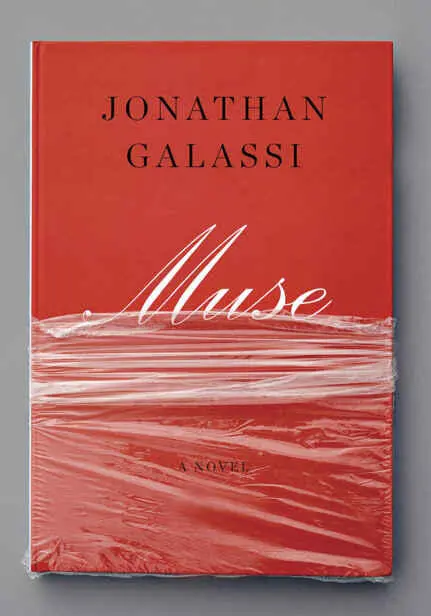
- Название:Muse
- Автор:
- Издательство:Knopf
- Жанр:
- Год:2015
- ISBN:нет данных
- Рейтинг книги:4 / 5. Голосов: 1
-
Избранное:Добавить в избранное
- Отзывы:
-
Ваша оценка:
Muse: краткое содержание, описание и аннотация
Предлагаем к чтению аннотацию, описание, краткое содержание или предисловие (зависит от того, что написал сам автор книги «Muse»). Если вы не нашли необходимую информацию о книге — напишите в комментариях, мы постараемся отыскать её.
Paul Dukach is heir apparent at Purcell & Stern, one of the last independent publishing houses in New York, whose shabby offices on Union Square belie the treasures on its list. Working with his boss, the flamboyant Homer Stern, Paul learns the ins and outs of the book trade — how to work an agent over lunch; how to swim with the literary sharks at the Frankfurt Book Fair; and, most important, how to nurse the fragile egos of the dazzling, volatile authors he adores.
But Paul's deepest admiration has always been reserved for one writer: poet Ida Perkins, whose audacious verse and notorious private life have shaped America's contemporary literary landscape, and whose longtime publisher — also her cousin and erstwhile lover — happens to be Homer’s biggest rival. And when Paul at last has the chance to meet Ida at her Venetian palazzo, she entrusts him with her greatest secret — one that will change all of their lives forever.
Studded with juicy details only a quintessential insider could know, written with both satiric verve and openhearted nostalgia,
is a brilliant, haunting book about the beguiling interplay between life and art, and the eternal romance of literature.
Muse — читать онлайн бесплатно полную книгу (весь текст) целиком
Ниже представлен текст книги, разбитый по страницам. Система сохранения места последней прочитанной страницы, позволяет с удобством читать онлайн бесплатно книгу «Muse», без необходимости каждый раз заново искать на чём Вы остановились. Поставьте закладку, и сможете в любой момент перейти на страницу, на которой закончили чтение.
Интервал:
Закладка:
In the spring of 2014, Homer was diagnosed with lung cancer, which turned out to be inoperable. He left the office early one April afternoon, never to return. Paul would call now and then to ask his advice about a negotiation or a personnel issue. Homer would sound off mildly, advising him to let the issue “supturate” until it resolved itself and hang up without saying good-bye as he always had, but Paul could tell his heart wasn’t in it. Sally visited Homer in the hospital and at home, when Iphigene let her, and reported on his condition to Paul and the team at the office, but before long, Homer cut himself off from everyone else, including Paul, as if his work, which had been his life, was already behind him.
And then one morning he was literally gone. Exit Homer. Paul got a call from a reporter at The Daily Blade, asking for a comment. He phoned Sally at home. She hadn’t heard, and she was devastated. “They didn’t call me,” she kept saying, to whoever would listen. Paul empathized with her disorientation and bereavement because they were his, too.
He had lost both his professional fathers now, and in each case he felt obscurely responsible. Was it what he’d secretly wanted? It wasn’t too long after Paul had nudged Homer aside that he’d gotten sick, just as Sterling had keeled over when Paul had given him the news about Ida. And Ida was gone, too. The polestars of his world no longer shone in the sky. Even Pepita Erskine, their signature writer for so long, had been run over by a bus a few short months before Homer’s passing.
Homer was interred in the Egyptian-style Stern family mausoleum in Queens, after a cold and correct funeral at Temple Emanu-El, the Gothic-style cathedral of New York’s old German Jewish elite. At the burial, Paul watched Sally and Iphigene circle like tigers, avoiding each other. The two women had always been icily civil; Paul remembered nearly freezing to death in the crosscurrents when he’d been seated between them at a dinner after St. John Vezey’s historic reading at the 92nd Street Y. Iphigene had been married to Homer for well over sixty years. She had understood the essence of Homer’s business, the care and feeding of literary talent. She had been an unacknowledged, unappreciated partner in the firm, frequently recommending new writers; indeed, it had been she who’d advised Homer to take on Pepita after reading one of her early filletings of white male novelists in The Protagonist, and she’d entertained Homer’s authors and their hangers-on in high old bluestocking style on East Eighty-third Street. But it was Sally, Paul felt, who’d understood Homer; the care and feeding of him had been Job One for her.
Paul had always especially liked Aristotle, the younger of the six-foot-four-inch Stern twins, whom he called “the Philosophers.” His brother, Plato, who was thin-skinned and combative, unfortunately lacked his father’s style or charisma, and after a frustrating few years running up against Homer’s egotism at P & S, had gone on to a successful career as an agent for classical musicians. Ari, by contrast, was wry and, well, philosophical, and his pickerel smile and laid-back personality had protected him from taking the family mythology too seriously. He’d ignored his father’s crocodile invitations to join the company and gone into the real family business, lumber, where he had made a literal fortune, so much so that the family wasn’t going to have to sell P & S to pay the estate taxes after Iphigene’s death. Neither son, in fact, showed signs of wanting to make big changes at the company. Both seemed to be counting on Paul to run it for them, at least for the time being.
Paul was no Homer — nor was he a Stern, though the boys treated him almost like one of the family. All he could do was try it his own way. He had a lot of time for his pal Jas Boatwright, scion of an Alabama toothpick fortune, who’d built a scrappy house of his own, much as Homer had done a generation ago. But Jas was the only one in their age group who’d gone it alone, and word had it he was struggling. How was P & S, even if it was five times the size of Boatwright Books and much longer established, going to hold its own in an ever more consolidated, competitive publishing environment? What were they going to do when Angus called to say that Merle Ferrari or Ted Jonas wanted big bucks for their next book, more indeed than they could plausibly earn, and that he knew he could get it elsewhere?
Paul leaned back with his feet up on Homer’s desk, which was now his own, twirling a Boatwright toothpick in his mouth, and feeling somewhat less of an impostor than usual. He had convinced Ida B and Charlie to co-publish the Complete Ida P with P & S next year — yes, Impetus had most of her work, but they had Mnemosyne ! — which was sure to be a bonanza for both houses. Not only that, but Nita Desser and Rick Nielsen would likely be delivering big new books in the next few months. Something always seemed to come along to save their asses; who would have thought it would be poetry? Poets on the best-seller list! That was the magic of Ida — and P & S. But what about next year, and the year after?
Paul lounged in his Aeron chair and gazed at the pictures of his heroes on the console behind his desk. There was his old boss, hands on hips, in foulard and canary-yellow trousers, sporting a smile as wide as the Hudson; Ida, with her aquiline nose and unkempt hair, peering flirtatiously up at the camera; Arnold, all mustache and beetling eyebrows, scowling at the world. And Sterling was there too, now that Homer was no more, a wistful, pale young man with thin arms, his chin on his elbow, staring dejectedly into space at his desk in the Cow Cottage, the future still in front of him.
And there was Thor Foxx, in his salmon-pink suit and goatee; Pepita with her gray Afro and leather-button cardigan, corduroy skirt and knee socks, frowning; Homer’s Three Aces, arms around each other, black ties askew, singing at full throttle like the Three Tenors; round-faced Elspeth Adams, outwardly serene and self-possessed, sporting elegant cabochon earrings; Ezekiel Schaffner, his Adam’s apple protruding assertively from his long neck; Rick Nielsen, intensely nerdy-handsome, shouldering the weight of the world; Nita Desser; Sarita Burden; Julian Entrekin; Ted Jonas.
Paul knew what mattered to him: they did, they and their headlong urge for self-expression. Their faces centered and encouraged him; they defined his world.
He looked beyond them, down onto Union Square. You couldn’t erase its history: the rallies, the riots, Gorky’s studio to the east, the long, cool shadow of Warhol’s factory on the north (so what if the building now housed a Petco?). The hordes of gorgeous youth that streamed by him, cell phones in their palms, when he strolled on St. Mark’s Place probably weren’t aware they were passing the shabby apartment where Auden had written “The Shield of Achilles” either, but it was the artists who finally gave their times and places significance. Paul felt the presence of their ghosts out in the world, just as he felt them here in his office and in his head. The air was full of them. They were everywhere and always would be.
And he knew that in this at least he was just like Sterling and Homer, no matter the differences in their backgrounds and temperaments. Their authors and their work had been the ultimate raison d’être for whatever they themselves had done. Beyond their petty self-aggrandizing, Homer and Sterling and their kind had been true to their writers’ gifts. Ida wasn’t the only one they’d been devoted to. Their authors were their gods, despite their high-handed behavior, egomania, and competitiveness. In the end, it had been all about them.
XIV. The Man from Medusa
Интервал:
Закладка:
Похожие книги на «Muse»
Представляем Вашему вниманию похожие книги на «Muse» списком для выбора. Мы отобрали схожую по названию и смыслу литературу в надежде предоставить читателям больше вариантов отыскать новые, интересные, ещё непрочитанные произведения.










Обсуждение, отзывы о книге «Muse» и просто собственные мнения читателей. Оставьте ваши комментарии, напишите, что Вы думаете о произведении, его смысле или главных героях. Укажите что конкретно понравилось, а что нет, и почему Вы так считаете.