Jonathan Galassi - Muse
Здесь есть возможность читать онлайн «Jonathan Galassi - Muse» весь текст электронной книги совершенно бесплатно (целиком полную версию без сокращений). В некоторых случаях можно слушать аудио, скачать через торрент в формате fb2 и присутствует краткое содержание. Год выпуска: 2015, Издательство: Knopf, Жанр: Современная проза, на английском языке. Описание произведения, (предисловие) а так же отзывы посетителей доступны на портале библиотеки ЛибКат.
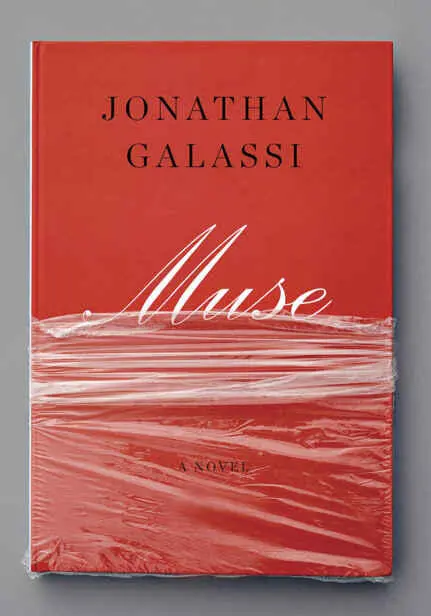
- Название:Muse
- Автор:
- Издательство:Knopf
- Жанр:
- Год:2015
- ISBN:нет данных
- Рейтинг книги:4 / 5. Голосов: 1
-
Избранное:Добавить в избранное
- Отзывы:
-
Ваша оценка:
Muse: краткое содержание, описание и аннотация
Предлагаем к чтению аннотацию, описание, краткое содержание или предисловие (зависит от того, что написал сам автор книги «Muse»). Если вы не нашли необходимую информацию о книге — напишите в комментариях, мы постараемся отыскать её.
Paul Dukach is heir apparent at Purcell & Stern, one of the last independent publishing houses in New York, whose shabby offices on Union Square belie the treasures on its list. Working with his boss, the flamboyant Homer Stern, Paul learns the ins and outs of the book trade — how to work an agent over lunch; how to swim with the literary sharks at the Frankfurt Book Fair; and, most important, how to nurse the fragile egos of the dazzling, volatile authors he adores.
But Paul's deepest admiration has always been reserved for one writer: poet Ida Perkins, whose audacious verse and notorious private life have shaped America's contemporary literary landscape, and whose longtime publisher — also her cousin and erstwhile lover — happens to be Homer’s biggest rival. And when Paul at last has the chance to meet Ida at her Venetian palazzo, she entrusts him with her greatest secret — one that will change all of their lives forever.
Studded with juicy details only a quintessential insider could know, written with both satiric verve and openhearted nostalgia,
is a brilliant, haunting book about the beguiling interplay between life and art, and the eternal romance of literature.
Muse — читать онлайн бесплатно полную книгу (весь текст) целиком
Ниже представлен текст книги, разбитый по страницам. Система сохранения места последней прочитанной страницы, позволяет с удобством читать онлайн бесплатно книгу «Muse», без необходимости каждый раз заново искать на чём Вы остановились. Поставьте закладку, и сможете в любой момент перейти на страницу, на которой закончили чтение.
Интервал:
Закладка:
Nothing was more democratic than talent. And nothing was more threatening to families, be they rich or poor, or consequently more despised and feared.
Here, too, in the academy’s ice-cold auditorium, while the speakers droned on, accurately enough, about Ida’s Enduring Significance, Paul felt something was missing. It was all heartfelt, all true as far as it went, but the encomia failed to catch the essence of the living, breathing person he’d been privileged to share an afternoon with — and whom others here had known intimately. Ida wasn’t here, in body or spirit — except when she was quoted. And then she came miraculously to life.
That was the thing. Ida was her work now. Her life in the world had ceased to matter, except to those who’d been touched, or wounded, by her. Her significance had transmuted into something lodged in her words. They’d grown out of the substrate of her life, just as she herself had derived from Delanos and Perkinses and Severances and Wainwrights, but they’d detached from their source and become autonomous. “Tel qu’en lui-même enfin l’éternité le change,” Mallarmé had put it: the future was going to refine, to redefine, Ida’s nature in a way mere life never could; it would anneal her to her essence, such as it greatly, or even maybe not greatly, was — though Paul was as sure of her work’s enduring value as he was of anything. Time would tell. The process was already under way, and it was beyond anyone’s power — hers or Sterling’s or Homer’s or Elliott Blossom’s, or his, for that matter — to determine or even influence her fate. Along with all the other words Ida had written, the poems of Mnemosyne would have a life of their own. It was Paul’s job to get out of the way, whatever the consequences. He had spent the weeks since Ida’s death wrestling with what he should do about her book. Now, at last, he thought he saw the way forward.
When Sterling’s turn came, he spoke without notes. He leaned over the podium and gazed into the packed, drafty hall, his glasses sliding disarmingly down his long nose.
“Cousin Ida was one of the lights of our house and the glories of our literature. She was named for my grandmother, like my daughter, but we shared much more, thanks in part to her loyalty to the noble and unjustly maligned Arnold Outerbridge. The freshness of her poems, the depth and strength of feeling they embody, their miraculous, sometimes shocking honesty worked wonders on the readers, and the other writers, of her time. Lionel Trilling once referred to Robert Frost as ‘a terrifying poet’—a tremendous compliment. Ida by contrast was a poet who inspired reverence and love, for the brilliance but even more for the humanity of her knowledge — not only of the fundamental properties of our language and our complex and contradictory history but, most important, of our unpredictable human natures — qualities of the woman herself now fixed forever in her immortal poetry.
“All the forces that play on human beings were at work in and on Ida. This, I think, is the secret of her astounding popularity with everyone, from Brother Elliott Blossom, who is here with us in the front row, to the Common Reader out there in the wide world. Ida was the Common Writer in a way that was and is and ever shall be entirely her own. She is Walt and Emily and Herman and Tom and Wallace and Hilda and Gertrude all rolled into one. We shall never see her like again.”
Blossom spoke, too, at mind-numbing length, and Pepita Erskine, to Paul’s surprise, recalling her time with Ida at Esalen in the sixties. W. S. Merwin represented Ida’s younger poet-peers and Abe Burack the prose writers, and Evan Halpern, now miraculously converted to unstinting approval of Paul’s goddess, the critics; last of all was Alan Glanville, the rising young Stanford scholar whom Sterling had just commissioned to write Ida’s biography.
Homer, never one for solemnities, left as soon as he decently could, but Paul stayed to the bitter end (the speechifying went on for an excruciating two and a half hours).
At the reception afterward in the upstairs gallery lined with anodyne paintings by the academy’s artist members, he finally approached Sterling.
“Well, hello, Paul. Long time no see. How’s Homer?”
“Very well. He was here, but he had to leave. Your remarks were beautiful; perfect, I thought.”
“Ida and I had a very strong connection, you know. A profound bond,” he drawled. Paul could tell he’d said it a thousand times on as many campuses. Paul was having a hard time picking up on what Sterling was feeling, not that it was ever all that easy to tell. He wasn’t a WASP for nothing. “Thanks for your letter,” he added, referring to the condolence note Paul had written him about Ida.
“I’m sorry I haven’t been more in touch. Things have been insanely busy at work. As a matter of fact, though, there’s something I need to talk to you about that came up in Venice. May I call you tomorrow?”
“Please do.” Sterling raised his left eyebrow quizzically in a characteristic gesture of — what? “I’ll be up at the farm.”
Sterling was tackled by Angelica Blauner, the painter, who had been the second wife of his chum the translator and poet Oswald Fessenden. Paul chatted nonsensically for another hour with Blossom and Glanville and Sterling’s daughter, Ida Bernstein, “Ida B,” as he’d come to think of her. He introduced himself to Count Moro, but the man, who was out of his element in English, only nodded vaguely, clearly unaware of Paul’s involvement with Ida or her book.
He also managed to stay on the other side of the room from Roz Horowitz. How was he going to explain things to Roz? She had been Ida’s loyal agent for decades, one of the first to take on a poet as a client. Why had Ida left her out of the picture? Mnemosyne was bound to be a colossal hit. Roz was not going to take kindly to being cut out of the excitement, not to mention her 10—or was it 15?—percent.
Should he have told her right away about what had happened in Venice? Possibly. But whatever and whenever Paul told her, she was going to go ballistic, and in his bones, he knew their relationship was over. Which was a shame, because he had always enjoyed Roz, and they’d done excellent work together. After all, it was she who had sent him to see Ida in the first place.
Ida had put him in an incredible pickle. He was going to toss and turn that night, and not only because of all the cheap wine he’d knocked back at the reception. He hated being on the wrong side of people he liked or admired. Only the fact that Mnemosyne, sitting quietly on his desk like a smoking kryptonite nugget, now belonged to him consoled him.
And it did, he had to admit. Big-time.
XII. A Call to Hiram’s Corners
“Sterling, it’s Paul Dukach.” He was at his desk, hunched over the phone, an encouraging mug of coffee within reach.
“Good morning, Paul,” said Sterling, always the gentleman. And then, as ever, “How’s Homer?”
“He’s well, I’m sure — though I haven’t seen him yet today. How is it up there?”
“Sunny and wickedly cold. We got three inches overnight — after I got home, luckily — and the wind is whipping it around in the meadow. But tell me about your visit with dear Ida. We haven’t had a real chat since your trip.”
“I know, and I’m sorry about that. We must set a date.” He took a sip. “It was one of the extraordinary afternoons of my life, Sterling. We discussed the notebooks, as I told you, and a thousand other things. I learned an enormous amount. But here’s the thing I need to tell you.” Paul put his mug down. “She gave me something. She gave me a manuscript.”
Читать дальшеИнтервал:
Закладка:
Похожие книги на «Muse»
Представляем Вашему вниманию похожие книги на «Muse» списком для выбора. Мы отобрали схожую по названию и смыслу литературу в надежде предоставить читателям больше вариантов отыскать новые, интересные, ещё непрочитанные произведения.






Обсуждение, отзывы о книге «Muse» и просто собственные мнения читателей. Оставьте ваши комментарии, напишите, что Вы думаете о произведении, его смысле или главных героях. Укажите что конкретно понравилось, а что нет, и почему Вы так считаете.