Jonathan Galassi - Muse
Здесь есть возможность читать онлайн «Jonathan Galassi - Muse» весь текст электронной книги совершенно бесплатно (целиком полную версию без сокращений). В некоторых случаях можно слушать аудио, скачать через торрент в формате fb2 и присутствует краткое содержание. Год выпуска: 2015, Издательство: Knopf, Жанр: Современная проза, на английском языке. Описание произведения, (предисловие) а так же отзывы посетителей доступны на портале библиотеки ЛибКат.
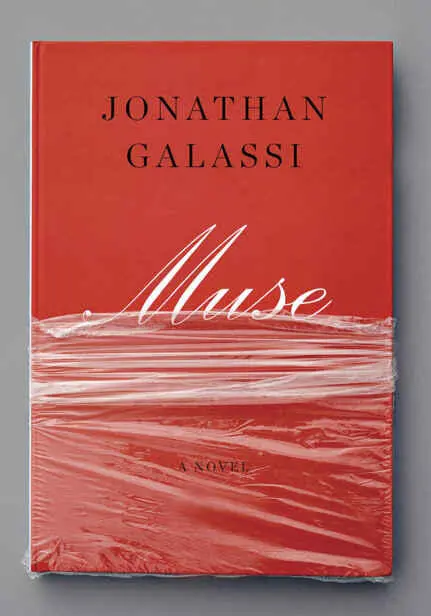
- Название:Muse
- Автор:
- Издательство:Knopf
- Жанр:
- Год:2015
- ISBN:нет данных
- Рейтинг книги:4 / 5. Голосов: 1
-
Избранное:Добавить в избранное
- Отзывы:
-
Ваша оценка:
Muse: краткое содержание, описание и аннотация
Предлагаем к чтению аннотацию, описание, краткое содержание или предисловие (зависит от того, что написал сам автор книги «Muse»). Если вы не нашли необходимую информацию о книге — напишите в комментариях, мы постараемся отыскать её.
Paul Dukach is heir apparent at Purcell & Stern, one of the last independent publishing houses in New York, whose shabby offices on Union Square belie the treasures on its list. Working with his boss, the flamboyant Homer Stern, Paul learns the ins and outs of the book trade — how to work an agent over lunch; how to swim with the literary sharks at the Frankfurt Book Fair; and, most important, how to nurse the fragile egos of the dazzling, volatile authors he adores.
But Paul's deepest admiration has always been reserved for one writer: poet Ida Perkins, whose audacious verse and notorious private life have shaped America's contemporary literary landscape, and whose longtime publisher — also her cousin and erstwhile lover — happens to be Homer’s biggest rival. And when Paul at last has the chance to meet Ida at her Venetian palazzo, she entrusts him with her greatest secret — one that will change all of their lives forever.
Studded with juicy details only a quintessential insider could know, written with both satiric verve and openhearted nostalgia,
is a brilliant, haunting book about the beguiling interplay between life and art, and the eternal romance of literature.
Muse — читать онлайн бесплатно полную книгу (весь текст) целиком
Ниже представлен текст книги, разбитый по страницам. Система сохранения места последней прочитанной страницы, позволяет с удобством читать онлайн бесплатно книгу «Muse», без необходимости каждый раз заново искать на чём Вы остановились. Поставьте закладку, и сможете в любой момент перейти на страницу, на которой закончили чтение.
Интервал:
Закладка:
He phoned Jasper and asked him to meet at the Crab the next night. They had another of their long, torturous talks, at the end of which Paul managed, definitively, to say good-bye.
* * *
On a hot August afternoon a few months later, Paul found himself on the Wainwright dock in Hiram’s Corners with Ida and Charlie Bernstein, watching the O’Sullivans act up next door and reminiscing about Sterling (Bree was on Block Island, visiting her sister). Paul had brought along a proof copy of Mnemosyne, Caroline Koblenz’s sober gray cover with its cadmium white lettering so strikingly at odds with its fiery contents. It was not lost on any of them that many of the poems in the book described the very place where they were sitting.
“Shall we stroll down to the cabin and see if we can find any evidence?” Charlie asked. A pencil-thin Nobel laureate in particle physics who held a chair at Rockefeller University and sported a scraggly salt-and-pepper beard, he had always struck Paul as complaisantly indulgent of the eccentric fauna in his wife’s family. Charlie seemed to find the saga of his in-laws’ amorous entanglements more amusing than anything else.
“Dad always thought a lot of you, Paul,” said Ida, with just the faintest sardonic undertone. “It must be hard to have to do something he would have disapproved of.”
“So hard. I feel guilty of sins I hadn’t even known I’d committed,” Paul answered, wondering, not for the first time, what Ida suspected about his final talk with Sterling.
“Well, he brought it on himself, in a way. He was never fair to Maxine, though he was totally dependent on her. I find it hard to believe she would have stepped out on him, though. Do you think Ida could have made it all up?”
“Not a chance,” Charlie interjected. “The poems are too real,” he added. “There’s no fantasy in those memories.” Paul was impressed that Charlie had read the book so closely.
The breeze picked up and little ridges appeared on the surface of the water. “Someone told me Ida used to say she could get anyone she wanted into bed,” Paul remarked, shifting in his chaise. “I hadn’t understood that applied to women as well as men.”
“Well, luckily, there’s no one left who can be hurt,” Ida said. She raised her eyebrows in silent commentary as Charlie, who’d been leafing through the book, exclaimed, “Listen to this!”
ACROSS THE POND
Something falling
at the boathouse
someone diving
in the glimmer
I can see him
I can see her
as the sun sets
in the water
then I lose her
as I lose him
incandescent
summer shimmer.
As Charlie read, a figure appeared on the Binnses’ dock on the opposite side of the little lake. The blue afternoon had moved unnoticed to rose, mottled by alternating stripes of black and gold. Then, in a perfect moment of life imitating art, whoever it was on the raft, man or woman it was impossible to tell, dove and disappeared into the silver-red water.
* * *
Mnemosyne was published on November 4, 2011, Ida’s eighty-sixth birthday and the first anniversary of her death. It seems needless to rehearse here one of the most fabled moments in modern literary history. Suffice it to say that the book was reviewed on the front page of every newspaper in the country — not in the book pages; this was news! Mnemosyne won both the National Book Award, given posthumously for the first time, and the Pulitzer Prize (Ida’s fifth and third awards, respectively). By the end of 2012, P & S had sold more than 750,000 copies, a record for a work of poetry. Just before Christmas, President Obama invited the Bernsteins and Wainwrights, the Sterns, Paul, and various members of the arts establishment to a reading of the book in the East Room of the White House, performed by America’s favorite poetry lover, Oprah Winfrey.
One person who declined the invitation was Roz Horowitz. Before Seth put out the announcement that P & S was going to publish Mnemosyne, Paul had written her a letter recounting his visit to Ida and its aftermath, and enclosing a copy of the manuscript with Ida’s memorandum attached. When he’d placed a follow-up call, Roz had refused to come to the phone. As Paul had known she would, Roz blamed him for Ida’s directive, and took to vilifying him as an ingrate and a thief at every opportunity, in spite of the fact that he made sure P & S paid her commission on every copy, as if it had been specified in Ida’s letter. The lawsuit Roz threatened failed to materialize, and she regularly cashed her substantial checks; nevertheless, she cut him dead whenever they ran into each other, which was uncomfortably often, though Paul stopped eating at Bruno’s, where they’d had their fateful lunch.
Mnemosyne gradually became part of the curriculum in many high school and college English classes, and Americans learned how to pronounce its beguiling title (it sounds particularly luscious when spoken with a southern drawl, Ne-MAW´-sin-nee, as if it were the name of a broad, ferrous river meandering through the Carolina Low Country).
The book’s success had consequences for everyone it touched. It was the high-water mark of Homer Stern’s career as a publisher, involving as it did the landing of the great literary trophy (so far, anyway) of the twenty-first century. Homer’s victory lap through Frankfurt, where he sold rights in thirty-eight countries, and at every book award dinner worth attending, was a wonder to behold. He looked the glass of fashion in his custom-made dove-gray dinner suit and helmet of white hair, the last of the independent publishing grandees, whose celebrity sometimes outshone his authors’.
But Paul’s reeling in of Homer’s long-desired quarry wrought unexpected changes in their relationship. Paul found that the balance of power between them had shifted almost invisibly, and he began to chafe under Homer’s paternalistic, not to say patronizing, ways, which had begun to feel as outdated as some of his old mentor’s business practices. Paul became more vocal about his own convictions and stood his ground when he felt Homer was in the wrong, which was increasingly often. The publishing landscape was changing, faster and more fiercely now than ever in the digital age. If things were going to stay the same around P & S, they would have to change.
Homer put up a good fight, but, being the pragmatist he was, and with a little pressure from his twin sons, Plato and Aristotle, with whom Paul had developed a rapport over the years, he ended up agreeing to make Paul president and become the firm’s chairman. Homer hated letting go, and there were some difficult days when Paul felt his mettle was being tested to the utmost. Then suddenly the storm was over, and Homer seemed to settle into a quieter routine, while Paul took over the day-to-day running of P & S.
It wasn’t second nature to him. Where Homer had been able to charm the pants — literally — off the switchboard operator and the sub rights assistant, occasionally at the same time, Paul found that his more inward temperament made it hard for him to project the hail-fellow-well-met cheer that, along with his absolute power, had allowed Homer to reign unchallenged. Paul knew his hegemony would need to be shared with his long-standing colleagues, Maureen and Seth and Daisy, whom he had recently made editor in chief, and Tony De Grand, his wisecracking CFO. After all, he didn’t own P & S; the Sterns and their stockholders did. Besides, he adored Homer, adored his bluster and exuberance and lust for life, and could overlook the volcanic temper that went along with them, as long as he wasn’t its object too often.
Homer’s days in the office were different now. Sally still took his dictation, he still told his old stories to anyone who’d listen, but he managed by walking around less, and took longer lunches, often just with Sally, at the Crab. In October, Paul traveled with them to Frankfurt and enjoyed watching Homer come alive where he was still the king who helped set the fair’s brash, mendacious tone. He still pressed the flesh at their booth and at some at least of the endless round of receptions. But Frankfurt was a special kind of mirror. In it, you watched everyone around you age, fair after fair after fair; and they saw you do the same. Homer and Sally had reached the “You look marvelous!” years, which meant that, unbelievably, they were old.
Читать дальшеИнтервал:
Закладка:
Похожие книги на «Muse»
Представляем Вашему вниманию похожие книги на «Muse» списком для выбора. Мы отобрали схожую по названию и смыслу литературу в надежде предоставить читателям больше вариантов отыскать новые, интересные, ещё непрочитанные произведения.











Обсуждение, отзывы о книге «Muse» и просто собственные мнения читателей. Оставьте ваши комментарии, напишите, что Вы думаете о произведении, его смысле или главных героях. Укажите что конкретно понравилось, а что нет, и почему Вы так считаете.