Jonathan Galassi - Muse
Здесь есть возможность читать онлайн «Jonathan Galassi - Muse» весь текст электронной книги совершенно бесплатно (целиком полную версию без сокращений). В некоторых случаях можно слушать аудио, скачать через торрент в формате fb2 и присутствует краткое содержание. Год выпуска: 2015, Издательство: Knopf, Жанр: Современная проза, на английском языке. Описание произведения, (предисловие) а так же отзывы посетителей доступны на портале библиотеки ЛибКат.
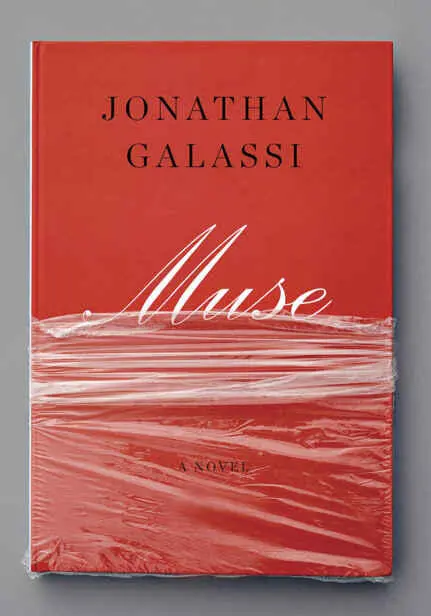
- Название:Muse
- Автор:
- Издательство:Knopf
- Жанр:
- Год:2015
- ISBN:нет данных
- Рейтинг книги:4 / 5. Голосов: 1
-
Избранное:Добавить в избранное
- Отзывы:
-
Ваша оценка:
Muse: краткое содержание, описание и аннотация
Предлагаем к чтению аннотацию, описание, краткое содержание или предисловие (зависит от того, что написал сам автор книги «Muse»). Если вы не нашли необходимую информацию о книге — напишите в комментариях, мы постараемся отыскать её.
Paul Dukach is heir apparent at Purcell & Stern, one of the last independent publishing houses in New York, whose shabby offices on Union Square belie the treasures on its list. Working with his boss, the flamboyant Homer Stern, Paul learns the ins and outs of the book trade — how to work an agent over lunch; how to swim with the literary sharks at the Frankfurt Book Fair; and, most important, how to nurse the fragile egos of the dazzling, volatile authors he adores.
But Paul's deepest admiration has always been reserved for one writer: poet Ida Perkins, whose audacious verse and notorious private life have shaped America's contemporary literary landscape, and whose longtime publisher — also her cousin and erstwhile lover — happens to be Homer’s biggest rival. And when Paul at last has the chance to meet Ida at her Venetian palazzo, she entrusts him with her greatest secret — one that will change all of their lives forever.
Studded with juicy details only a quintessential insider could know, written with both satiric verve and openhearted nostalgia,
is a brilliant, haunting book about the beguiling interplay between life and art, and the eternal romance of literature.
Muse — читать онлайн бесплатно полную книгу (весь текст) целиком
Ниже представлен текст книги, разбитый по страницам. Система сохранения места последней прочитанной страницы, позволяет с удобством читать онлайн бесплатно книгу «Muse», без необходимости каждый раз заново искать на чём Вы остановились. Поставьте закладку, и сможете в любой момент перейти на страницу, на которой закончили чтение.
Интервал:
Закладка:
Ida smiled faintly, quoting the title of what was one of her lesser-known but, to Paul, most-achieved works. He nodded, and was pleased to see she was aware he’d caught her reference — though he understood it now in an entirely new and tragic way.
His head was spinning. He asked to be excused and was directed down a narrow hallway. He paused to look at the genre and carnival scenes on the walls — the wittiest and most evocative he’d ever seen.
As he dried his hands he looked at his misshapen reflection in the smoky old mirror. What did any of this have to do with him?When he came back to the salon, though, so inviting in its calm and comfort, it was clear Ida was eager to continue.
“Where were we? Yes, Trey. Soon enough it became evident that we were cut out to be friends and nothing more. He had a lot of other … interests. And I was spending lots of time in New York then, with Allen and Frank and Jimmy — and Abe Burack. And Bill de Kooning, one July in Springs, too. Trey detested the U.S. — he’d been living in self-imposed exile for more than a decade, as lots of black artists did in those days.
“And I couldn’t stand Nixon. Couldn’t bear his surly scowl. Not to mention the fact that what we were doing in Vietnam made me literally ill. I ran into Arnold again, here, at Celine Mannheim’s — and, well, I never went back. Oh, I’d go for readings, and to see Sterling and Maxine every couple of years. But my life became Arnold. Here in Venice. For twenty years.”
“And you truly didn’t talk about your work?”
“Never — while we were writing. There were all the usual obligations and annoyances, as with anyone — and, as I said before, so many doctors. Italian medicine, Paul — you have no idea. Though some of them are truly wonderful. But they’re philosophers, you know, not scientists.
“But then when the books arrived from Impetus, we’d sit down and read them together, as if they were by somebody else. And we’d talk for hours — about what spoke to us in what we’d read, what bothered and disappointed us, what we’d stolen from each other. What we’d been after in our work, what we’d intended, even what we’d failed at. What we were jealous of, too, and not just on the page. Arnold always knew precisely what I was up to. He’d zero in on the grief I wanted to paper over. And my infidelities, even when they were only of the head and heart, as they tended to be — until the last years, at least. And he’d rant and rave and rave and rant, and then it would be over. It had gone back into the poetry, where it belonged.
“Which is why I don’t know about the notebooks, Paul. I wouldn’t have. I find it extremely odd that he wrote them in code. Communicating was what Arnold cared about more than anything. But, as I said, Arnold in his last years was … much less available, to me as much as anyone. We grew apart, I guess I need to say, though it hurts to admit it. I think the weight of his loneliness, which is the same thing as his lack of an audience, was heartbreaking for him. He felt abandoned, because he had been. He was depressed — no, angry. He walked on the Zattere, took the vaporetto to San Michele, and wandered around among the graves, I’m told by friends who saw him there. And he wrote. Wrote for hours. But what he was writing I never knew.”
Ida held Paul’s look for a moment. “I guess it was these, these notebooks.” She shifted in her seat. “And you say they’re diaries?”
“Here. They’re like this.”
Paul opened his briefcase and took out a few pages of his transcription, along with a Xerox copy of the original page in code:
12 JULY 1985
8:29 caffè, cornetto
10:40 mercato
1:30 colazione a casa
15:30 Giannotti
20:30 Olga
13 JULY 1985
8:18 caffè latte, cornetto
9:30 RAI 4
1:15 colazione
16:30 Moro
20:15 Celine
And farther down:
breeze grass towel drain disappear cold old
Ida looked them over for several minutes. Then suddenly she dropped her head and bit her lip, seemingly on the verge of tears.
“I know. It’s very sad. I’m—”
“No! You don’t understand.” Ida was incensed. “He was spying on me. These aren’t Arnold’s appointments. He never went anywhere. They’re mine. ” Ida squared her shoulders and stared at Paul. “Mine.”
“I see.” What else could he say?
Ida laughed, bitterly now. “I don’t think you do. By the end of his life, Arnold had become pathologically jealous of me. Mainly, I think, because I was still working — though I spent so much of my time taking care of him. Maybe that was part of it, too. I became unbearable to him. I don’t think he could stand the sight of me.”
This was another Ida altogether, very far from Paul’s fantasies.
“Eventually, yes, Leonello and I started seeing each other. But that was long after Arnold and I had stopped communicating, stopped sharing our lives. He was lost to me. And what was I supposed to do, I ask you? Stay locked up in that wretched apartment with someone who despised me?
“I hadn’t known he’d known, though. That’s what hurts. I wanted to protect him. But people see more than you think they do — even when they don’t seem to see anything at all.”
Ida wept. The room seemed to have closed in on them as dusk came on, till there was just the pool of light cast by the lamp next to her. Eventually, she started coughing and wouldn’t stop. Tears ran down her cheeks. She was gasping for breath.
Paul started to rise to go find Adriana, but Ida motioned to him to stay put.
At last, she was still. Out of desperation he tentatively asked, “What about these lists of words? What do you think they are?”
Ida picked up the pages again and lifted them to her face, scanning them intently and then riffling through them, stopping now and then to examine a few lines more carefully before tossing them onto the table.
“Who knows?” she said, with a tinge of resentment. “It was a long time ago, you know. Maybe they’re ideas for poems, things he wanted to look up, things he wanted to remember, or couldn’t forget. What was left of his unquenchable need to write. Like poor old Bill de Kooning, still painting those loopy dead canvases, as if the gesture itself, the mechanical act, was what mattered. Maybe Arnold, too, was a poet to the end, even if he couldn’t write poetry anymore.”
Ida was quiet for a long time, sipping her cold tea, seemingly looking at the wall. The fire in the small fireplace near the door was embers now.
Suddenly, she roused herself and turned to Paul, putting on a face like a stage actress. The room seemed to brighten artificially.
“How is Sterling? I haven’t seen him for years now. How is his life with Bree?”
“They seem very happy together,” Paul answered, as if he knew.
“Bree has been in Sterling’s life since he was a young man. She worked for him at Impetus for years. She’s remarkably astute, and beautiful, and there’s no doubt Sterling is the love of her life. But after Jeannette, Aunt Lobelia produced Maxine, and that was that. Maxine. One of the world’s perfect creatures.
“That halo of dark curls, that reluctant smile. She and Sterling were never simpatico. She wasn’t enough of a … siren for him, I guess. She was too giving, too selfless. Always there, always faithful and available. Not a good strategy with a man like that, I can assure you.”
“I’ve never heard a bad thing about her,” Paul allowed.
“That’s because she was one of God’s children. An old soul. Beautiful in a way Sterling is constitutionally incapable of appreciating. I’m afraid my dear cousin took terrible advantage of her — without intending to, of course. And then she died. Dear, dear Maxine! I miss her terribly. Getting old is not for the faint of heart, Paul. It’s not just the physical indignities, though they’re terrible. It’s that the ones who truly understand you desert you. The ingrates!” Ida laughed incredulously. “After all the time and need and adoration you’ve poured into them! That’s what’s unbearable.”
Читать дальшеИнтервал:
Закладка:
Похожие книги на «Muse»
Представляем Вашему вниманию похожие книги на «Muse» списком для выбора. Мы отобрали схожую по названию и смыслу литературу в надежде предоставить читателям больше вариантов отыскать новые, интересные, ещё непрочитанные произведения.








Обсуждение, отзывы о книге «Muse» и просто собственные мнения читателей. Оставьте ваши комментарии, напишите, что Вы думаете о произведении, его смысле или главных героях. Укажите что конкретно понравилось, а что нет, и почему Вы так считаете.