Jonathan Galassi - Muse
Здесь есть возможность читать онлайн «Jonathan Galassi - Muse» весь текст электронной книги совершенно бесплатно (целиком полную версию без сокращений). В некоторых случаях можно слушать аудио, скачать через торрент в формате fb2 и присутствует краткое содержание. Год выпуска: 2015, Издательство: Knopf, Жанр: Современная проза, на английском языке. Описание произведения, (предисловие) а так же отзывы посетителей доступны на портале библиотеки ЛибКат.
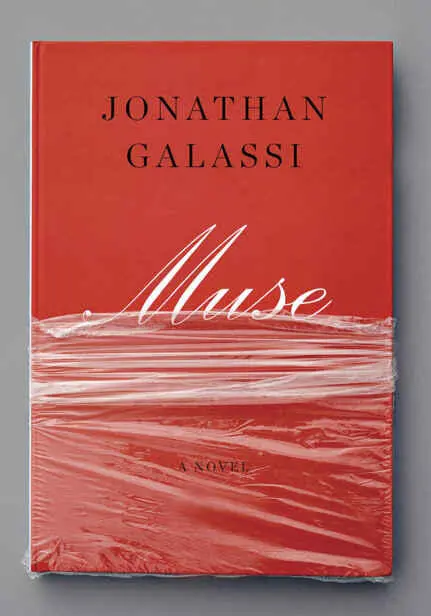
- Название:Muse
- Автор:
- Издательство:Knopf
- Жанр:
- Год:2015
- ISBN:нет данных
- Рейтинг книги:4 / 5. Голосов: 1
-
Избранное:Добавить в избранное
- Отзывы:
-
Ваша оценка:
Muse: краткое содержание, описание и аннотация
Предлагаем к чтению аннотацию, описание, краткое содержание или предисловие (зависит от того, что написал сам автор книги «Muse»). Если вы не нашли необходимую информацию о книге — напишите в комментариях, мы постараемся отыскать её.
Paul Dukach is heir apparent at Purcell & Stern, one of the last independent publishing houses in New York, whose shabby offices on Union Square belie the treasures on its list. Working with his boss, the flamboyant Homer Stern, Paul learns the ins and outs of the book trade — how to work an agent over lunch; how to swim with the literary sharks at the Frankfurt Book Fair; and, most important, how to nurse the fragile egos of the dazzling, volatile authors he adores.
But Paul's deepest admiration has always been reserved for one writer: poet Ida Perkins, whose audacious verse and notorious private life have shaped America's contemporary literary landscape, and whose longtime publisher — also her cousin and erstwhile lover — happens to be Homer’s biggest rival. And when Paul at last has the chance to meet Ida at her Venetian palazzo, she entrusts him with her greatest secret — one that will change all of their lives forever.
Studded with juicy details only a quintessential insider could know, written with both satiric verve and openhearted nostalgia,
is a brilliant, haunting book about the beguiling interplay between life and art, and the eternal romance of literature.
Muse — читать онлайн бесплатно полную книгу (весь текст) целиком
Ниже представлен текст книги, разбитый по страницам. Система сохранения места последней прочитанной страницы, позволяет с удобством читать онлайн бесплатно книгу «Muse», без необходимости каждый раз заново искать на чём Вы остановились. Поставьте закладку, и сможете в любой момент перейти на страницу, на которой закончили чтение.
Интервал:
Закладка:
Over the years, he’d come to be seen by many as the dean of Frankfurt’s gang of literary publishers, “the King of the fair,” as Brigitta had crowned him. His engagement in its rites, his small dinner at the fair’s end every year, for which some leading European publishers stayed late, his charm and mode of dress, which fit right in here and didn’t feel extravagant or slightly garish as it could in New York, even his contraband Cuban cigars — all added to Homer’s stature in the halls and watering holes of Frankfurt. The Spartan P & S booth, which echoed his no-frills offices in New York, was tacked onto a large international distributor’s stand and overflowed with visitors from all over Europe, Latin America, and Asia, come to kiss the gold seal ring on Homer’s well-veined hand.
There were other Frankfurts going on simultaneously that Homer and Sally and Paul, who had been attending with them for the past few years, had nothing to do with. The Big (i.e., irrelevant commercial) Publishers, the Random Houses and HarperCollinses and Simon & Schusters and Hachettes, wheeled and dealt multimillion-dollar contracts among themselves, though increasingly the agents were holding on to their authors’ foreign rights, stalking the halls and booths like hyenas, or even, egregiously, like the upstart McTaggart, setting up their own stands with spiffy little tables and printed catalogs several inches thick handed out by demure young people, aping the publishers themselves (the nerve!). And then there was the religious publishers’ Frankfurt; the techies’ and scientists’ Frankfurt; the illustrated book publishers’ Frankfurt; the university press publishers’ Frankfurt; the developing world publishers’ Frankfurt. Not to mention the hosting German publishers’ Frankfurt, which was not just for one-on-one publisher-to-publisher deal making, but for the authors, the critics and journalists — believe it or not, books and writers were still news in Germany — and, after the first couple of days, the public, too. They gawked and dawdled like the tourists they were, till the aisles were virtually impassable.
All these fairs, and others, too, were going on at the same time in the same cavernous spaces, which were like the biggest big-box stores ever built, their denizens streaming into the fairgrounds, riding half-mile-long mobile walkways, hitching rides on commuter trains from the beautiful old central railway station so evocative for Paul of prewar Europe, drinking late into the night in the dangerously crowded lobbies of the hotels, hungover and sleepless and hoarse by day, complaining and fibbing and wheedling and smoking and drinking, gorging and lying and drinking and fucking by night, and having the time of their lives.
To the literary publishers, however, Frankfurt was theirs and theirs alone. They set the tone; they published the Authors Who Mattered — and who sometimes unwisely showed up for receptions and speeches, though those with any self-awareness soon realized they were irrelevant encumbrances to the business at hand. The literary publishers were the Lords of Culture, the master parasites sitting on top of this swarming dunghill. Their sense of their own importance showed when they walked the halls, rolling from side to side as if they were on board an ocean liner — which in a sense they were, without knowing it: a slow-moving Ship of Fools behemoth, heading willy-nilly for the great big digital iceberg. They convened in gemütlich private receptions to which the riffraff were not invited (exclusive invitations were a ritual of the fair, sent out months in advance and occasionally even coveted). They eyed each other sharply but unobtrusively as they fibbed about their latest finds, which might conceivably be but most of the time emphatically were not the Major Contributions to World Literature they aimed to pass them off as. The pros among these gentlemanly thieves understood each other perfectly: where amity ended and commerce held sway; where commerce took a backseat and long loyalty asserted its claims. Homer was widely generous with his information, be it good or bad, and he was a past master at spreading the rumors that were the lifeblood of Frankfurt: that McTaggart was moving Hummock from Gallimard to Actes Sud; that Hummock had dumped McTaggart for the Nympho; that the Nympho was selling her agency to William Morris lock, stock, and barrel.
Homer would make special deals to keep certain authors within the inner circle — the cénacle, or cartel, some might call it — of independent houses that was informally run by him and his partners in crime. It was old-fashioned horse-trading, sure, but it often proved salutary for the authors, for over time, if they truly had the stuff (and some of them did; if not, the whole house of cards would have collapsed long ago), their international stature would gradually mature, and their readership would inevitably spread like their publishers’ waistlines.
Quite a few of Homer’s authors — more than from any other American house except FSG, a constant thorn in his side — had ended up with the Big One, the Giant Kahuna, the platinum standard in World Literature, the highest of stakes, for which he was always playing: the Nobel Prize in Literature, awarded by the hypersecretive Swedish Academy. In the United States, the Nobel didn’t quite have the commercial heft it did elsewhere, but its prestige was still unparalleled. In recent years Homer had taken to raking in Nobels the way some collect watches. Seven of the last twelve literature prizes had gone to P & S authors, to the disgruntlement of many. Homer had been heard to boast that he was on familiar terms with the king of Sweden, whose major duty seemed to be handing out the Nobel medals.
The prize was traditionally announced on the Thursday of the fair at one p.m., during the frenetic lunch hour. The big cheeses were far too suave to stand around waiting for the announcement; nevertheless, their underlings knew how to reach them at the all-important moment. This year, for the first time in decades, Homer hadn’t come to Frankfurt; he was having a hip replacement that couldn’t be postponed, and Sally had stayed home to help nurse him. So Paul was there on his own to carry the flag, gingerly treading in his boss’s oversize footsteps through the set-in-stone routine of meetings and receptions, trying not to appear like the underdressed hick he felt he must be taken for by Homer’s cliquish crowd.
In 2010, as had been the case for the past few years, Ida Perkins was rumored to be on the short list for the Nobel. How accurate such speculation was, was anybody’s guess. The putatively short-listed candidates — nobody knew if there actually was a short list — often failed to emerge as winners; and if a writer was mentioned year after year, she or he could become stale goods, even less likely to garner the ultimate accolade than the dark horses — though stale goods could miraculously become fresh-baked overnight and end up winning, as had happened more than once. This year Ida, who at eighty-four had entered Now or Never territory, was again being actively discussed as a potential winner: it was time for an American, a woman, a poet: why not all three in one?
“Now you must tell me, Paul,” whined Maria Mariasdottir, who’d cornered him one evening in the Frankfurter Hof bar, a suite of spacious rooms furnished with lots of, but never enough, sofas and chairs on the ground floor of Hitler’s favorite hotel, though it was larger and dowdier than the more exclusive Hessischer Hof across town. At night the Frankfurter Hof became an even sweatier, smokier mosh pit than the Hessischer Hof, so packed with literary flesh peddlers you could barely move. Paul thought of it as the third circle of Hell.
“Who,” Maria kept asking, “is this Ida Perkins?”
Читать дальшеИнтервал:
Закладка:
Похожие книги на «Muse»
Представляем Вашему вниманию похожие книги на «Muse» списком для выбора. Мы отобрали схожую по названию и смыслу литературу в надежде предоставить читателям больше вариантов отыскать новые, интересные, ещё непрочитанные произведения.










Обсуждение, отзывы о книге «Muse» и просто собственные мнения читателей. Оставьте ваши комментарии, напишите, что Вы думаете о произведении, его смысле или главных героях. Укажите что конкретно понравилось, а что нет, и почему Вы так считаете.