Jonathan Galassi - Muse
Здесь есть возможность читать онлайн «Jonathan Galassi - Muse» весь текст электронной книги совершенно бесплатно (целиком полную версию без сокращений). В некоторых случаях можно слушать аудио, скачать через торрент в формате fb2 и присутствует краткое содержание. Год выпуска: 2015, Издательство: Knopf, Жанр: Современная проза, на английском языке. Описание произведения, (предисловие) а так же отзывы посетителей доступны на портале библиотеки ЛибКат.
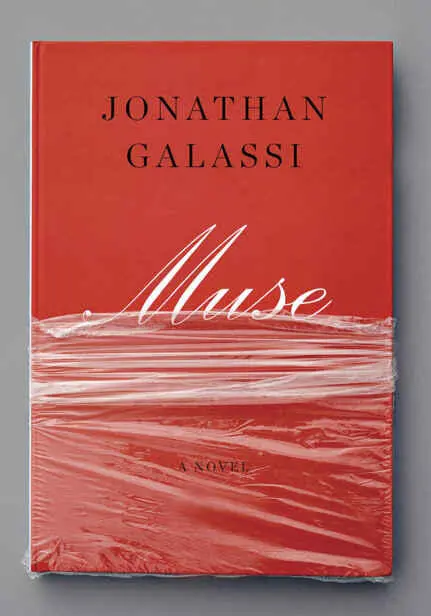
- Название:Muse
- Автор:
- Издательство:Knopf
- Жанр:
- Год:2015
- ISBN:нет данных
- Рейтинг книги:4 / 5. Голосов: 1
-
Избранное:Добавить в избранное
- Отзывы:
-
Ваша оценка:
Muse: краткое содержание, описание и аннотация
Предлагаем к чтению аннотацию, описание, краткое содержание или предисловие (зависит от того, что написал сам автор книги «Muse»). Если вы не нашли необходимую информацию о книге — напишите в комментариях, мы постараемся отыскать её.
Paul Dukach is heir apparent at Purcell & Stern, one of the last independent publishing houses in New York, whose shabby offices on Union Square belie the treasures on its list. Working with his boss, the flamboyant Homer Stern, Paul learns the ins and outs of the book trade — how to work an agent over lunch; how to swim with the literary sharks at the Frankfurt Book Fair; and, most important, how to nurse the fragile egos of the dazzling, volatile authors he adores.
But Paul's deepest admiration has always been reserved for one writer: poet Ida Perkins, whose audacious verse and notorious private life have shaped America's contemporary literary landscape, and whose longtime publisher — also her cousin and erstwhile lover — happens to be Homer’s biggest rival. And when Paul at last has the chance to meet Ida at her Venetian palazzo, she entrusts him with her greatest secret — one that will change all of their lives forever.
Studded with juicy details only a quintessential insider could know, written with both satiric verve and openhearted nostalgia,
is a brilliant, haunting book about the beguiling interplay between life and art, and the eternal romance of literature.
Muse — читать онлайн бесплатно полную книгу (весь текст) целиком
Ниже представлен текст книги, разбитый по страницам. Система сохранения места последней прочитанной страницы, позволяет с удобством читать онлайн бесплатно книгу «Muse», без необходимости каждый раз заново искать на чём Вы остановились. Поставьте закладку, и сможете в любой момент перейти на страницу, на которой закончили чтение.
Интервал:
Закладка:
Now, having more or less recovered from his agon with the notebooks, Paul mentioned to Homer and Sally that he was rereading Pepita’s demolishing essay on Outerbridge in Retrospective Transgressions, her scathing study of postwar Communist intellectuals. Pepita had become the darling of The Protagonist, the anti-Stalinist left-wing review, early in her career, when they’d published “Jiving with Joe,” her exposé of the totalitarian principles that underlay Movement aesthetics, which had put her on the map as the nerviest cultural critic of her generation.
“I met Outerbridge in Venice,” Homer was saying, re-hearsing the story Paul had heard time and again. “Celine was his landlady. I was there the night he saw Ida again, ten years after their first affair. He was sitting on the Marino Marini in the courtyard — with the cock detached, naturally — drunk as usual. But still a good-looking man in his sixties — not quite an alter kocker. Too bad nobody reads him anymore.” Homer’s evil grin was a wonder to behold.
“I wouldn’t quite say that, Homer,” Paul demurred. “But what about Ida? Did you try to get her to come to us? Not just then but—”
“Is the pope Catholic?” Homer interrupted. “What self-respecting publisher wouldn’t — though most of these pischikers can’t tell their ass from their elbow. But Ida has always been loyal to Wainwright — though she did promise that if she ever made a change, she’d come to me.”
Paul had heard that before; it was the oldest line in the business. But a man can dream, can’t he? And this was one dream he and Homer shared. Having Ida at P & S would be an enormous coup for them both. He wondered if it could ever happen. He shouldn’t even be thinking about it; the mere thought was disloyal to Sterling. But he was a publisher, wasn’t he?
A few days later, as if on the spur of the moment, he put in a call to Ida’s agent, Roz Horowitz, a canny old bird who he felt had always had a soft spot for him, and asked her to lunch.
“So tell me about Ida Perkins, Roz. What’s the news?” Paul asked, as they sipped their white wine at Bruno’s, the overpriced midtown watering hole favored by the big publishers before they made their mass exodus to lower Manhattan in the mid- to late teens. On this particular afternoon Knopf’s editorial whiz Jas Busbee, one of the banes of Paul’s existence, was having lunch with the Nympho in one corner, while in the back of the room Angus McTaggart was leaning over the table whispering conspiratorially to his new client, Orin Roden, no doubt plotting about how to move him from P & S to Owl House or somewhere with even bigger pockets (as would soon happen), waving to Paul all the while. “You know she’s always been my favorite poet.”
“Get in line, dollink.” Roz was a diminutive butterball of a woman whose legs didn’t quite reach the floor when she was sitting in her chair. She had several chins and a large pile of hennaed hair pinned on top of her head, oversize sunglasses, and wore bright red lipstick. “That and a nickel will buy you exactly nothing. Ida Perkins is everybody’s favorite poet, and you know it.”
“Well, not quite everyone’s. I never understood why she and Elspeth Adams were so standoffish.”
“You didn’t? I thought you said you knew poets. They have their cliques and their claques, their jealousies and their sworn enmities, like all artists. If you go for Stravinsky you’re not going to be too popular with Schoenberg. Take that bastard Hummock. He’s always talking down his so-called friend Roden over there. It’s human nature.”
“I suppose you’re right. Sometimes I think it’s visceral, biological even. As if they can’t stand each other’s smell.”
“Watch it, kiddo. Ida Perkins doesn’t smell. She’s as pure as a rose.”
“I know she’s perfect, Roz. And not only because she’s your client. I yield to no one in my admiration of Ida Perkins. But a rose does have a wonderful, rich odor — and thorns, too, the last time I checked. I bet even the perfect Ida Perkins has had her … dissatisfactions over the years. How happy is she with her publisher?”
Roz gave Paul an even stare. “You know very well she’s been with your new best buddy Sterling Wainwright more or less her whole life.”
“Yes, of course. I wouldn’t dream of interfering with a blissful relationship. I was just curious about how it’s gone. From her perspective.”
“The usual ups and downs. But I’m not sure I can imagine Ida anywhere else.”
“Of course not.” Paul retreated to his previous line of questioning. “Have you ever discussed Ms. Perkins’s work with your sister?”
“Aren’t we curious today. Hebe and I don’t talk business. We’ve got enough to contend with dealing with our aged parents — and each other. I know she thinks the world of Ida, though; everyone with any taste does. I wouldn’t be surprised if she wrote a book about her someday. I don’t think she’s so sure about Elizabeth Adams.”
“Elspeth.”
“If you say so. How pretentious can you get,” Roz muttered under her breath before ordering herself another glass.
“Blame her parents if you must. I think it’s a beautiful name myself. But getting back to Ms. Perkins — she hasn’t published for quite a few years now. How is her health?”
“Fine, as far as I know. To tell you the truth, we’re not in daily contact. You’re aware she lives in Venice. And she’s not on e-mail.”
“Yes. I’ve been talking to Sterling about her and Arnold Outerbridge, working on these strange notebooks he left behind. They’re written in a kind of code. I’d be interested in finding out what Ms. Perkins knows about them.”
“Arnold Outerbridge! Did I ever tell you about my night with Arnold Outerbridge? What a shit! But that’s a story for another time. What were you saying about these notebooks? Are you going to publish them?”
“That would be up to Sterling,” Paul answered in his most self-effacing vein. “Right now we’re simply trying to figure out what they add up to — if anything.” Sterling and Paul had pored over Paul’s transcription before he’d left Hiram’s Corners, but Sterling hadn’t had any better idea than Paul what was going on in them.
Roz sipped her wine and assessed Paul silently. At last she said, “Listen — I have an idea. Why don’t you go pay Ida a visit after Frankfurt? I’ll arrange it.”
“Do you think she’d see me? That would be fantastic, Roz! I don’t know how to thank you.”
“Just remember you can’t talk poetry with her. She detests literary types. And suck-ups.”
“Roz! I promise I won’t forget.”
“Don’t. Because if you start going la-di-da on her, you’re toast.”
“I give you my word.”
They finished their double decaf espressos and Paul paid for their lunch (two salades niçoises and Roz’s three glasses of Falanghina to his one), planted a noisy kiss on each cheek, and put her into a taxi. He rode the bus down Fifth Avenue to give himself time to daydream a little. He couldn’t keep from fantasizing about what it would be like to be in Ida’s presence, to actually hear her speak. He was half afraid that when she did open her mouth, he’d be so overwhelmed that what she said would go in one ear and out the other and he’d come away with nothing but the memory of his own fascination.
Yes, he had an ulterior motive in making his visit, he admitted to himself as the bus crawled through the afternoon traffic past the Empire State Building, into the seedier stretches of the Garment District and Koreatown, and on past the Flatiron Building. And Roz was well aware of it; she was setting it up, wasn’t she? What he really wanted, though, was simply to be in Ida’s presence, to see how she moved, to hear the sound of her voice. Whatever happened beyond that, if anything, would be gravy.
Читать дальшеИнтервал:
Закладка:
Похожие книги на «Muse»
Представляем Вашему вниманию похожие книги на «Muse» списком для выбора. Мы отобрали схожую по названию и смыслу литературу в надежде предоставить читателям больше вариантов отыскать новые, интересные, ещё непрочитанные произведения.








Обсуждение, отзывы о книге «Muse» и просто собственные мнения читателей. Оставьте ваши комментарии, напишите, что Вы думаете о произведении, его смысле или главных героях. Укажите что конкретно понравилось, а что нет, и почему Вы так считаете.