Jonathan Galassi - Muse
Здесь есть возможность читать онлайн «Jonathan Galassi - Muse» весь текст электронной книги совершенно бесплатно (целиком полную версию без сокращений). В некоторых случаях можно слушать аудио, скачать через торрент в формате fb2 и присутствует краткое содержание. Год выпуска: 2015, Издательство: Knopf, Жанр: Современная проза, на английском языке. Описание произведения, (предисловие) а так же отзывы посетителей доступны на портале библиотеки ЛибКат.
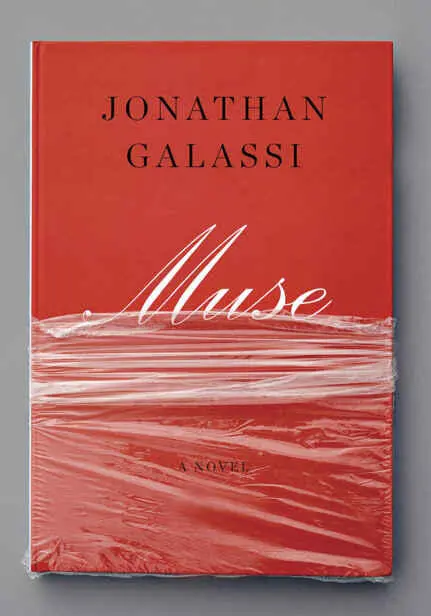
- Название:Muse
- Автор:
- Издательство:Knopf
- Жанр:
- Год:2015
- ISBN:нет данных
- Рейтинг книги:4 / 5. Голосов: 1
-
Избранное:Добавить в избранное
- Отзывы:
-
Ваша оценка:
Muse: краткое содержание, описание и аннотация
Предлагаем к чтению аннотацию, описание, краткое содержание или предисловие (зависит от того, что написал сам автор книги «Muse»). Если вы не нашли необходимую информацию о книге — напишите в комментариях, мы постараемся отыскать её.
Paul Dukach is heir apparent at Purcell & Stern, one of the last independent publishing houses in New York, whose shabby offices on Union Square belie the treasures on its list. Working with his boss, the flamboyant Homer Stern, Paul learns the ins and outs of the book trade — how to work an agent over lunch; how to swim with the literary sharks at the Frankfurt Book Fair; and, most important, how to nurse the fragile egos of the dazzling, volatile authors he adores.
But Paul's deepest admiration has always been reserved for one writer: poet Ida Perkins, whose audacious verse and notorious private life have shaped America's contemporary literary landscape, and whose longtime publisher — also her cousin and erstwhile lover — happens to be Homer’s biggest rival. And when Paul at last has the chance to meet Ida at her Venetian palazzo, she entrusts him with her greatest secret — one that will change all of their lives forever.
Studded with juicy details only a quintessential insider could know, written with both satiric verve and openhearted nostalgia,
is a brilliant, haunting book about the beguiling interplay between life and art, and the eternal romance of literature.
Muse — читать онлайн бесплатно полную книгу (весь текст) целиком
Ниже представлен текст книги, разбитый по страницам. Система сохранения места последней прочитанной страницы, позволяет с удобством читать онлайн бесплатно книгу «Muse», без необходимости каждый раз заново искать на чём Вы остановились. Поставьте закладку, и сможете в любой момент перейти на страницу, на которой закончили чтение.
Интервал:
Закладка:
“Just checking,” Sterling snorted. “She’s the one, you know, boy. She’s the one.” Then he followed Bree up the steps, and in a minute Paul heard the station wagon turning over and slowly trundling up the woods road.
He spent the evening immersed in Ida yet again — there were multiple copies of all her books in the barn. As always, he tried to feel his way into her life through her poems, but there was something elusive, indistinct, about the objects or catalysts of her own precisely evoked feelings, though Paul knew her amorous itinerary inside out. But he was beginning to hear Ida differently in her poems than he had before. True, her love objects were all gorgeous antagonists, virtually interchangeable conquered conquerors shorn of their manhood along with their locks, as in the infamous “Verga” of 1943, written when she was just eighteen:
sleep while you can while
the sun is still roaming
white body tarred
by its cyclamen stain
night-haired Endymion
splayed in the gloaming
stay in my arms
till its coming again
Yet as Ida aged, as life flowed through her veins, Paul began to detect a subtle change in her explorations of eros. It was as if gradually she became able to entertain feelings of vulnerability and insufficiency. And her portrayals of self then could be heartrending:
Look for me under my pinafore
under your skin
reckless and shivering
ravenous wild-
eyed and thin
Ida’s work developed, and changed, too, as she aged. And at times her heroic self-sufficiency began to feel like simple sadness.
* * *
The next morning, it was back to work in the barn. After a long slog, he felt he was beginning to make headway. Slowly, by a grim, steadfast process of elimination, he’d begun to break into Arnold’s code.
He’d started with some long lines, predominately in the later notebooks, which were repetitions in every possible permutation and in numberless styles of penmanship, upper- and lowercase, of just three symbols: A, 3, and #.
AAAAAAAAAAAAAAAAAAAAAAAAAAAAAAAAAAAAA
333333333333333333333333333333333333333333333333
################################################
or sometimes
################################################
aaaaaaaaaaaaaaaaaaaaaaaaaaaaaaaaaaaaaaaaaaaaaaaaaaaaaaaa
333333333333333333333333333333333333333333333333
or
333333333333333333333333333333333333333333333333
################################################
AAAaaaAAaaAaAaAaAaAaAaaaaaAAAAAAaAaaAAaaAAaA
Paul decided to adopt the hypothesis that these frequently repeated figures represented the letters of Ida’s name, which often appeared uncoded, too — row after row of I ’s and D ’s and A ’s — in the last notebooks. After that, a statistical matchup of the most common letter frequencies — he remembered good old etaoin shrdlu on the Linotype — started to produce results. Words began to form out of the blind symbology of A.O.’s lines, like figures emerging from the mist. The frequency tables needed some adjustment, though, because many of the words — again, unsurprisingly — were Italian, in which the most commonly used letters are eaoin lrtsc .
A.O.’s method turned out to be fairly straightforward, and Paul realized to his dismay that if he’d bothered to consult an expert he could have deciphered the notebooks long ago. Arnold’s encoding wasn’t quite as primitive as a Caesar’s cipher, where one letter substitutes for another a set number of places down the alphabet. Instead, he had replaced the letters and numbers with an arbitrary list of symbols: # for a, © for b, ¥ for c, x for a letter space, d for a colon. Certain letters and numbers stood in for others: a for i, and 3 for d, k for o, g for 6, for instance, which it took Paul several long sessions to figure out. Paul’s hypothesis had been correct: when Arnold meant IDA, he’d written A3#.
Once he’d deciphered them, though, the notebooks hadn’t, unfortunately, proven to be all that edifying. The “poems” turned out to be accountings of everything A.O. had done, day in and day out, hour by hour, sometimes minute by minute, in Venice:
23 APRIL 1986
8:30 coffee
9:15 lavanderia
10:36 Dr. Giannotti
11:28 Sra. Lorenzetti
12:45 fuori
15:30 home — long lunch
16:29 Sterling call
18:40 bath
19:30 Moro cocktails
21:00 dinner
22:59 bed — red room
24 APRIL 1986
8:29 caffè, cornetto
9:09 shoemaker
11:19 plumber
14:30 Giannotti …
The entries went on inexorably this way, covering roughly the last five years of A.O.’s life — before dementia seemed to leave him entirely incoherent, that is, though his daily jottings had continued even then. In the last notebook the scribbling became wilder, less concise and organized. The diary entries ceased and all that was left were chains of words, which could go on for pages:
upheaval heavy medieval bevy retrieval seawall scorch
levee steady level conundrum grief set piece
alstroemeria astronomy aphid Arthurian unstable unspeakable
table unable
roadway goldenrod icebox forehead footsteps possess embrace
No poems, no revelations or confessions. Just lists of appointments interspersed with strings of seemingly random words. And Ida’s name, in various permutations, in and out of code, repeated over and over.
Arnold’s notebooks remained opaque. Whatever meaning they held was locked inside them, maybe forever. Paul had succeeded in unscrambling their code, perhaps — or were these supposed diary entries a cipher of their own, with yet another layer of secrets beneath them? Their writer’s deeper imperative, the one that had determined the words on the pages, remained unfathomed.
Paul had been working his way through the old accordion file he’d found with the notebooks, too. It wasn’t just clippings, it turned out, but carbons of correspondence to and from Impetus and others concerning both A.O. and Ida — bills, letters from Sterling to both of them, along with some answers from Arnold — though, of course, nothing from her. Reading them was like watching Ida’s fame balloon.
It was the publication of Bringing Up the Rear in 1954 that had signaled her emergence from the chrysalis of cultdom into public fame. Even the aging Wallace Stevens had written Sterling to say, “She gives me hope for our future.” Her kinsman Robert Lowell, only eight years Ida’s senior, who’d also had a stellar career early on, winning the Pulitzer Prize when he was barely thirty, had watched her speed by him like a literary Road Runner. Still, he couldn’t help but praise the “brilliance, finish, and freedom” of Ida’s work in his Sewanee Review review of Bringing Up the Rear. Ida was a Brahmin, too, every bit as much as Cal; but she had none of the self-protective entitlement he’d had to work so assiduously to shed; it just slid off her back like rainwater. Lowell could only look on in stunned confusion.
Then there was a July 23, 1960, letter to Sterling from the manager of the Chelsea Hotel, enclosing a bill for almost $12,000:
Miss Ida Perkins and her coterie left hurriedly this morning after more than a month here at the Chelsea without settling their account. As she provided your name in case of emergencies, I am sending it on to you for satisfaction.
Or this one, from Sterling to A.O., dated February 28, 1970:
Читать дальшеИнтервал:
Закладка:
Похожие книги на «Muse»
Представляем Вашему вниманию похожие книги на «Muse» списком для выбора. Мы отобрали схожую по названию и смыслу литературу в надежде предоставить читателям больше вариантов отыскать новые, интересные, ещё непрочитанные произведения.








Обсуждение, отзывы о книге «Muse» и просто собственные мнения читателей. Оставьте ваши комментарии, напишите, что Вы думаете о произведении, его смысле или главных героях. Укажите что конкретно понравилось, а что нет, и почему Вы так считаете.