Jonathan Galassi - Muse
Здесь есть возможность читать онлайн «Jonathan Galassi - Muse» весь текст электронной книги совершенно бесплатно (целиком полную версию без сокращений). В некоторых случаях можно слушать аудио, скачать через торрент в формате fb2 и присутствует краткое содержание. Год выпуска: 2015, Издательство: Knopf, Жанр: Современная проза, на английском языке. Описание произведения, (предисловие) а так же отзывы посетителей доступны на портале библиотеки ЛибКат.
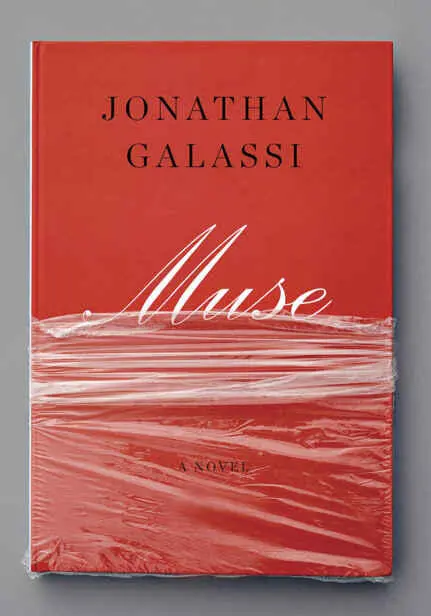
- Название:Muse
- Автор:
- Издательство:Knopf
- Жанр:
- Год:2015
- ISBN:нет данных
- Рейтинг книги:4 / 5. Голосов: 1
-
Избранное:Добавить в избранное
- Отзывы:
-
Ваша оценка:
Muse: краткое содержание, описание и аннотация
Предлагаем к чтению аннотацию, описание, краткое содержание или предисловие (зависит от того, что написал сам автор книги «Muse»). Если вы не нашли необходимую информацию о книге — напишите в комментариях, мы постараемся отыскать её.
Paul Dukach is heir apparent at Purcell & Stern, one of the last independent publishing houses in New York, whose shabby offices on Union Square belie the treasures on its list. Working with his boss, the flamboyant Homer Stern, Paul learns the ins and outs of the book trade — how to work an agent over lunch; how to swim with the literary sharks at the Frankfurt Book Fair; and, most important, how to nurse the fragile egos of the dazzling, volatile authors he adores.
But Paul's deepest admiration has always been reserved for one writer: poet Ida Perkins, whose audacious verse and notorious private life have shaped America's contemporary literary landscape, and whose longtime publisher — also her cousin and erstwhile lover — happens to be Homer’s biggest rival. And when Paul at last has the chance to meet Ida at her Venetian palazzo, she entrusts him with her greatest secret — one that will change all of their lives forever.
Studded with juicy details only a quintessential insider could know, written with both satiric verve and openhearted nostalgia,
is a brilliant, haunting book about the beguiling interplay between life and art, and the eternal romance of literature.
Muse — читать онлайн бесплатно полную книгу (весь текст) целиком
Ниже представлен текст книги, разбитый по страницам. Система сохранения места последней прочитанной страницы, позволяет с удобством читать онлайн бесплатно книгу «Muse», без необходимости каждый раз заново искать на чём Вы остановились. Поставьте закладку, и сможете в любой момент перейти на страницу, на которой закончили чтение.
Интервал:
Закладка:
Paul hadn’t come into publishing at a time when with a little money and a lot of taste and elbow grease you could build something like an Impetus or a P & S. Besides, he didn’t have the cash or the chutzpah to start something on his own. By the time he’d shown up, most of the smaller houses had been gobbled up by so-called general-interest publishers, most of them now owned in turn by much bigger conglomerates who’d publish anything they could get their hands on that had a chance of making money, and whose lists consequently more or less resembled one another. Impetus and P & S were anomalies now, among the last of the independents, whose lists reflected the tastes and commitments of the publishers themselves. It was unclear how long they’d hold out in the rush for consolidation and “scale” that was whipping through the book business and countless others like a tornado through a hay field.
Still, Paul hoped that in his work with Homer he could emulate the single-mindedness and finesse that Sterling had brought to realizing his dream. Paul believed in believers — not the credulous religious, but those who aspired to move the needle, to add something to the world. What he valued most was their all-or-nothing faith in themselves — something he wished he had more of — accompanied by the self-forgetting that true love requires. Aspiration to him didn’t feel like self-seeking.
So he daydreamed a lot in that often stifling back room, with dead flies in the cobwebs and the dust of slowly disintegrating books in the air — and not always about the shambles of his love life. He was taken with the hodgepodge of images tacked on the beams: an early Impetus logo by Alfonso Ossorio (which he later convinced Sterling to frame and hang in the house); an ink sketch of A.O. in his most prophetic mode; a dog-eared eighteenth-century print of the Forum; that eye-opening photo of Sterling moguling on the Swiss slopes; a peeling, blunt-cornered postcard of Celine Mannheim’s half-finished Venetian palazzo; a snapshot of Ida dancing the frug with Robert Duncan in a San Francisco gay bar.
He could hear bees out in the garden, under the gigantic, unthreatening clouds. He could see the hollyhocks and roses distorted by the bottle-green glass of the barn windows. He didn’t know which was more attractive: the sun-drenched world outside the barn; the barn itself with its beckoning treasures; or the pages on the desk in front of him, the paper trail, the leavings of the man who had written more than a few of the classic books arrayed around him. Part of him wanted to be outside in the cool air, so clean it hurt his citified lungs, weeding the lily beds or editing the woods, as Sterling had joked when he’d come upon him one day, piling up brush in the thin stand of birches behind the house for exercise. But he wanted to be here inside, too, with the ephemera of his heroes’ lives. He didn’t know how to choose, so he sat doing nothing, till he felt the chill of a sudden storm through the door he’d left open.
Reluctantly, he rose and went to make sure the windows were shut in the cottage. The rain raged, and the power went out for an hour. After a while, his laptop’s battery died, so he flipped through the papers in the accordion file, inhaling the smoky residue of Arnold’s and Ida’s lives. The charred smell came, he assumed, from the pages themselves, burning away invisibly as they had for years in the Impetus vault in New York. Eventually they would crumble and be lost to the world, if they weren’t thrown away first. For today, though, they were his to inhale and get lost in. Utter joy, joy he knew no one else could understand or share in, joy like a secret perversion possessed him, and in those moments in the barn Paul was guiltily, radiantly happy, wallowing in his heroes’ lives as if they were his own.
* * *
Late in the day he usually strolled down to the dock to join Sterling and Bree for a swim. It was like clockwork: at four o’clock the old station wagon would trundle past the Cow Cottage and Paul would know Sterling would be spending the next hour or two down at the pond, occasionally dipping in the water but mainly sunning and gabbing with Bree and Ida and his son-in-law Charlie Bernstein and their kids and whoever else happened to be around.
Next door to Sterling’s was the camp of Seamus O’Sullivan, a jerry-built wooden affair with a proliferation of porches, balconies, and docks from which many-colored bath towels were perpetually waving like banners in the breeze. Seamus, a longtime staff writer at The Gothamite, where he had been both the jazz and the racing critic for decades, considered himself a bon vivant and a wit. He also fancied himself a bosom buddy of Sterling’s, and he was constantly seeking to engage him in barbed banter studded with classical taglines from their school days. But Paul thought he could detect a certain detachment in Sterling’s repartee, and a corresponding neediness underneath Seamus’s affectionate raillery. Paul had begun to understand that Sterling was always just a little bit absent with everyone. He let things happen, he played along, but there was a plane of his attention that seemed unreachable.
Today, as it happened, it was just Bree on the dock with Sterling. She was knitting, chuckling as Sterling commented on the news and made derisive noises about the Higher Social Orders over at Serenity Lake, the other body of water in Hiram’s Corners, whom the Handspring Pond denizens enjoyed condescending to. There wasn’t much of a breeze this afternoon, and the one Sunfish out on the pond, manned by Rick Binns with a new blond passenger, wasn’t making much headway.
Paul, his head full of his work in the barn, asked Sterling about Outerbridge’s visit to Hiram’s Corners with Ida. “When were they here?”
“Must have been in seventy-nine, when A.O. got his honorary degree from Harvard — an honorary A.B., in fact; as you know, he never graduated.
“It was quite an afternoon,” Sterling continued. “A.O. wasn’t talking. It was in his period of Silent Protest against the way he’d been treated in the McCarthy years. But Ida was wonderful. She made the whole thing as natural as an ice-cream social with her nonstop chatter, while attending to Arnold’s every need.”
Paul noticed that Bree had stopped knitting and was looking out over the pond, at what he couldn’t tell.
“How old was she then?”
“Let’s see. A.O. was seventy-four, so she would have been in her early fifties. But she looked much younger. She always has. Her flawless skin, her carriage, her piercing green eyes — she’s always been twenty years younger than her actuarial age. And acted it, too! No, there’s no one like Ida. Never was, never will be.”
Paul hadn’t heard Sterling talk this way before. He was being sentimental! Paul had read enough of the man’s poetry to know the many varieties of amorousness he could affect, most of them patent hot air, and probably meant to be taken as such. But there was a kind of straight-up idealization in his reminiscing today that was unlike him, in Paul’s admittedly limited experience.
“What did she talk about?”
“Everything and nothing, like any normal person. She made wonderful conversation, kept things going as if there were nothing unusual or untoward about Arnold’s behavior. She covered for him. You would never have known that, of the two of them, she was arguably the greater writer. By a country mile.”
Bree was rising now, stuffing her knitting into her bag. “It’s time to be going, Sterling,” she said, though it was only five, unusually early for them to be leaving the dock.
“Read her, my boy,” Sterling advised Paul, as he struggled to his feet. “Read her.”
“Oh, I’ve read her, Sterling,” he answered. “I think I know her almost by heart.”
Читать дальшеИнтервал:
Закладка:
Похожие книги на «Muse»
Представляем Вашему вниманию похожие книги на «Muse» списком для выбора. Мы отобрали схожую по названию и смыслу литературу в надежде предоставить читателям больше вариантов отыскать новые, интересные, ещё непрочитанные произведения.







Обсуждение, отзывы о книге «Muse» и просто собственные мнения читателей. Оставьте ваши комментарии, напишите, что Вы думаете о произведении, его смысле или главных героях. Укажите что конкретно понравилось, а что нет, и почему Вы так считаете.