Даниэль Дефо - Roxana
Здесь есть возможность читать онлайн «Даниэль Дефо - Roxana» весь текст электронной книги совершенно бесплатно (целиком полную версию без сокращений). В некоторых случаях можно слушать аудио, скачать через торрент в формате fb2 и присутствует краткое содержание. Год выпуска: 1981, Издательство: Penguin Books Ltd, Жанр: Классическая проза, на английском языке. Описание произведения, (предисловие) а так же отзывы посетителей доступны на портале библиотеки ЛибКат.
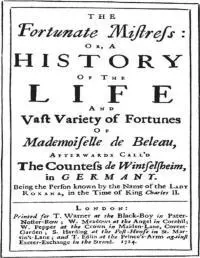
- Название:Roxana
- Автор:
- Издательство:Penguin Books Ltd
- Жанр:
- Год:1981
- ISBN:нет данных
- Рейтинг книги:3 / 5. Голосов: 1
-
Избранное:Добавить в избранное
- Отзывы:
-
Ваша оценка:
Roxana: краткое содержание, описание и аннотация
Предлагаем к чтению аннотацию, описание, краткое содержание или предисловие (зависит от того, что написал сам автор книги «Roxana»). Если вы не нашли необходимую информацию о книге — напишите в комментариях, мы постараемся отыскать её.
Roxana — читать онлайн бесплатно полную книгу (весь текст) целиком
Ниже представлен текст книги, разбитый по страницам. Система сохранения места последней прочитанной страницы, позволяет с удобством читать онлайн бесплатно книгу «Roxana», без необходимости каждый раз заново искать на чём Вы остановились. Поставьте закладку, и сможете в любой момент перейти на страницу, на которой закончили чтение.
Интервал:
Закладка:
Alas? says she , I have been lost to her ever since I was a Child: she has never seen me.
And hast thou never seen her? says the QUAKER.
Yes, says she , I have seen her, often enough, I saw her; for when she was the Lady Roxana , I was her House-Maid, being a Servant , but I did not know her then, nor she me, but it has all come out since; has she not a Maid nam’d Amy? [Note, the honest QUAKER was nonpluss’d, and greatly surpriz’d at that Question.]
Truly, says she , the Lady — has several Women-Servants, but I do not know all their Names.
But her Woman, her Favourite, adds the Girl ; is not her Name Amy ?
Why, truly, says the QUAKER, with a very happy Turn of Wit , I do not like to be examin’d; but lest thou should’st take up any Mistakes, by reason of my backwardness to speak, I will answer thee for once, That what her Woman’s Name is, I know not; but they call her Cherry . [365] Cherry. Chérie (dear). Both Roxana and her husband speak French and so use the playfully affectionate form of address to Amy. The QUAKER either is ignorant of the sense of the word or pretends to be.
N.B. My Husband gave her that Name in jest, on our Wedding-Day, and we had call’d her by it ever after; so that she spoke literally true at that time .
The Girl reply’d very modestly , That she was sorry if she gave her any Offence in asking; that she did not design to be rude to her, or pretend to examine her; but that she was in such an Agony at this Disaster, that she knew not what she did or said; and that she shou’d be very sorry to disoblige her; but begg’d of her again, as she was a Christian, and a Woman, and had been a Mother of Children, that she wou’d take Pity on her, and, if possible , assist her, so that she might but come to me, and speak a few Words to me.
The tender-hearted QUAKER told me, the Girl spoke this with such moving Eloquence, that it forc’d Tears from her; but she was oblig’d to say, That she neither knew where I was gone, or how to write to me; but that if she did ever see me again, she wou’d not fail to give me an Account of all she had said to her, or that she shou’d yet think fit to say; and to take my Answer to it, if I thought fit to give any.
Then the QUAKER took the Freedom to ask a few Particulars about this wonderful Story, as she call’d it ; at which, the Girl beginning at the first Distresses of my Life, and indeed, of her own , went thro’ all the History of her miserable Education; her Service under the Lady Roxana, as she call’d me , and her Relief by Mrs. Amy ; with the Reasons she had to believe, that as Amy own’d herself to be the same that liv’d with her Mother, and especially , that Amy was the Lady Roxana’s Maid too, and came out of France with her, She was by those Circumstances, and several others in her Conversation, as fully convinc’d, that the Lady Roxana was her Mother, as she was that the Lady — at her House [the QUAKER’s] was the very same Roxana that she had been Servant to.
My good Friend the QUAKER, tho’ terribly shock’d at the Story, and not well-knowing what to say, yet was too much my Friend to seem convinc’d in a Thing, which she did not know to be true, and which, if it was true, she cou’d see plainly I had a-mind shou’d not be known; so she turn’d her Discourse to argue the Girl out of it: She insisted upon the slender Evidence she had of the Fact itself, and the Rudeness of claiming so near a Relation of one so much above her, and of whose Concern in it she had no Knowledge, at least , no sufficient Proof; that as the Lady at her House was a Person above any Disguises, so she cou’d not believe that she wou’d deny her being her Daughter, if she was really her Mother; that she was able sufficiently to have provided for her, if she had not a-mind to have her known; and therefore, seeing she had heard all she had said of the Lady Roxana , and was so far from owning herself to be the Person, so she had censur’d that Sham-Lady as a Cheat, and a Common Woman; and that ’twas certain she cou’d never be brought to own a Name and Character she had so justly expos’d.
Beside, she told her , that her Lodger, meaning me , was not a Sham-Lady, but the real Wife of a Knight Baronet; and that she knew her to be honestly such, and far above such a Person as she had describ’d: She then added , that she had another Reason why it was not very possible to be true, and that is, says she, Thy Age is in the way; for thou acknowledgest, that thou art four and twenty Years old; and that thou wast the Youngest of three of thy Mother’s Children; so that, by thy Account, thy Mother must be extremely young, or this Lady cannot be thy Mother; for thou seest, says she , and any one may see, she is but a young Woman now, and cannot be suppos’d to be above Forty Years old, if she is so much, and is now big with-Child at her going into the Country; so that I cannot give any Credit to thy Notion of her being thy Mother; and if I might counsel thee , it shou’d be to give-over that Thought, as an improbable Story that does but serve to disorder thee , and disturb thy Head; for, added she , I perceive thou art much disturb’d indeed.
But this was all nothing: She cou’d be satisfy’d with nothing but seeing me; but the QUAKER defended herself very well, and insisted on it, that she cou’d not give her any Account of me; and finding her still importunate, she affected at last, being a little disgusted that she shou’d not believe her, and added , That indeed, if she had known where I was gone, she wou’d not have given anyone an Account of it, unless I had given her Orders to do so; but seeing she has not acquainted me, says she , where she is gone, ’tis an Intimation to me, she was not desirous it shou’d be publickly known; and with this she rise up, which was as plain a desiring her to rise up too, and be gone, as cou’d be express’d, except the downright showing her the Door.
Well, the Girl rejected all this, and told her , She cou’d not indeed expect that she ( the QUAKER) shou’d be affected with the Story she had told her, however moving; or that she shou’d take any Pity on her: That it was her Misfortune, that when she was at the House before, and in the Room with me, she did not beg to speak a Word with me in private, or throw herself upon the Floor, at my Feet, and claim what the Affection of a Mother wou’d have done for her; but since she had slipp’d her Opportunity, she wou’d wait for another; that she found by her ( the Quaker’s ) Talk, that she had not quite left [366] quite left : given up entirely.
her Lodgings, but was gone into the Country, she suppos’d , for the Air; and she was resolv’d she wou’d take so much Knight-Errantry upon her, that she wou’d visit all the Airing-Places in the Nation, and even all the Kindgom over, ay, and Holland too, but she wou’d find me; for she was satisfy’d she cou’d so convince me that she was my own Child, that I wou’d not deny it; and she was sure I was so tender and compassionate, I wou’d not let her perish after I was convinc’d that she was my own Flesh and Blood; and in saying she wou’d visit all the Airing-Places in England , she reckon’d them all up by Name, [367] she reckon’d them all up by Name : Susan does not mention all the major ‘Airing-Places’ (towns from where it was fashionable to take walks or drives in the country) even of southern England. Most of the seven places mentioned were spas, of which Tunbridge Wells and Bath were long highly fashionable. Epsom, also then a spa, was already becoming well known in the late seventeenth century for horse-racing on the near-by downs. Newmarket, too, was and is famous for racing. Bury St Edmunds was ‘crowded with nobility and gentry, and all sorts of the most agreeable company’ (Defoe’s A Tour through the Whole Island of Great Britain (Penguin Books, 1971, p. 75). Barnet and North-Hall (properly Northaw) were fashionable spas in Charles II’s reign, but declined thereafter. Of Barnet, Defoe reported in 1724, that ‘The Mineral Waters, or Barnet Wells… are now almost forgotten’ {Tour , p. 339).
and began with Tunbridge , the very Place I was gone to; then reckoning up Epsom, North-Hall, Barnet, Newmarket, Bury , and at last, the Bath : And with this she took her Leave.
Интервал:
Закладка:
Похожие книги на «Roxana»
Представляем Вашему вниманию похожие книги на «Roxana» списком для выбора. Мы отобрали схожую по названию и смыслу литературу в надежде предоставить читателям больше вариантов отыскать новые, интересные, ещё непрочитанные произведения.










Обсуждение, отзывы о книге «Roxana» и просто собственные мнения читателей. Оставьте ваши комментарии, напишите, что Вы думаете о произведении, его смысле или главных героях. Укажите что конкретно понравилось, а что нет, и почему Вы так считаете.