Даниэль Дефо - Roxana
Здесь есть возможность читать онлайн «Даниэль Дефо - Roxana» весь текст электронной книги совершенно бесплатно (целиком полную версию без сокращений). В некоторых случаях можно слушать аудио, скачать через торрент в формате fb2 и присутствует краткое содержание. Год выпуска: 1981, Издательство: Penguin Books Ltd, Жанр: Классическая проза, на английском языке. Описание произведения, (предисловие) а так же отзывы посетителей доступны на портале библиотеки ЛибКат.
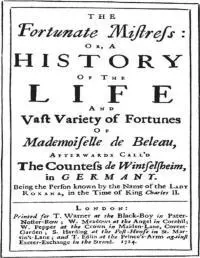
- Название:Roxana
- Автор:
- Издательство:Penguin Books Ltd
- Жанр:
- Год:1981
- ISBN:нет данных
- Рейтинг книги:3 / 5. Голосов: 1
-
Избранное:Добавить в избранное
- Отзывы:
-
Ваша оценка:
Roxana: краткое содержание, описание и аннотация
Предлагаем к чтению аннотацию, описание, краткое содержание или предисловие (зависит от того, что написал сам автор книги «Roxana»). Если вы не нашли необходимую информацию о книге — напишите в комментариях, мы постараемся отыскать её.
Roxana — читать онлайн бесплатно полную книгу (весь текст) целиком
Ниже представлен текст книги, разбитый по страницам. Система сохранения места последней прочитанной страницы, позволяет с удобством читать онлайн бесплатно книгу «Roxana», без необходимости каждый раз заново искать на чём Вы остановились. Поставьте закладку, и сможете в любой момент перейти на страницу, на которой закончили чтение.
Интервал:
Закладка:
I took him up short at the first of these; telling him, He must have base Thoughts of me indeed, to think that I could yield to him in such a Manner as I had done, and continue it with so much Freedom, as he found I did, if I had a Husband, or were engag’d to any other Man; and that he might depend upon it, that was not my Case, nor any Part of my Case.
Why then, said he , as to the other, I have an Offer to make to you, that shall take off all the Objection, viz . That I will not touch one Pistole of your Estate, more, than shall be with your own voluntary Consent; neither now, or at any other time, but you shall settle it as you please, for your Life, and upon who you please after your Death; that I shou’d see he was able to maintain me without it; and that it was not for that, that he follow’d me from Paris .
I was indeed, surpriz’d at that Part of his Offer, and he might easily perceive it; it was not only what I did not expect, but it was what I knew not what Answer to make to: He had indeed, remov’d my principal Objection, nay, all my Objections, and it was not possible for me to give any Answer; for if upon so generous an Offer I shou’d agree with him, I then did as good as confess, that it was upon the Account of my Money that I refus’d him; and that tho’ I cou’d give up my Virtue, and expose myself, yet I wou’d not give up my Money, which, tho’ it was true, yet was really too gross for me to acknowledge, and I cou’d not pretend to marry him upon that Principle neither; then as to having him, and make over all my Estate out of his Hands, so as not to give him the Management of what I had, I thought it would be not only a little Gothick and Inhumane, but would be always a Foundation of Unkindness between us, and render us suspected one to another; so that, upon the whole, I was oblig’d to give a new Turn to it, and talk upon a kind of an elevated Strain, which really was not in my Thoughts at first, at-all; for I own, as above , the divesting myself of my Estate, and putting my Money out of my Hand, was the Sum of the Matter, that made me refuse to marry; but, I say, I gave it a new Turn, upon this Occasion, as follows:
I told him, I had, perhaps, differing Notions of Matrimony, from what the receiv’d Custom had given us of it; that I thought a Woman was a free Agent, as well as a Man, and was born free, and cou’d she manage herself suitably, might enjoy that Liberty to as much Purpose as the Men do; that the Laws of Matrimony were indeed, otherwise, and Mankind at this time, acted quite upon other Principles; and those such, that a Woman gave herself entirely away from herself, in Marriage, and capitulated only to be, at best, but an Upper-Servant , and from the time she took the Man, she was no better or worse than the Servant among the Israelities , [168] the Servant among the Israelites : Exodus 21:5–6.
who had his Ears bor’d, that is , nail’d to the Door-Post; who by that Act, give himself up to be a Servant during Life.
That the very Nature of the Marriage-Contract was, in short, nothing but giving up Liberty, Estate, Authority, and every-thing, to the Man, and the Woman was indeed, a meer Woman ever after, that is to say, a Slave.
He reply’d, that tho’ in some Respects it was as I had said, yet I ought to consider, that as an Equivalent to this, the Man had all the Care of things devolv’d upon him; that the Weight of Business lay upon his Shoulders, and as he had the Trust, so he had the Toil of Life upon him, his was the Labour, his the Anxiety of Living; that the Woman had nothing to do, but to eat the Fat, and drink the Sweet; to sit still, and look round her; be waited on, and made much of; be serv’d, and lov’d, and made easie; especially if the Husband acted as became him ; and that, in general, the Labour of the Man was appointed to make the Woman live quiet and unconcern’d in the World; that they had the Name of Subjection, without the Thing; and if in inferiour Families, they had the Drudgery of the House, and Care of the Provisions upon them; yet they had indeed, much the easier Part; for in general, the Women had only the Care of managing, that is, spending what their Husbands get; and that a Woman had the Name of Subjection indeed, but that they generally commanded not the Men only, but all they had; manag’d all for themselves, and where the Man did his Duty, the Woman’s Life was all Ease and Tranquility; and that she had nothing to do but to be easie, and to make all that were about her both easie and merry.
I return’d, that while a Woman was single, she was a Masculine in her politick Capacity; [169] a Masculine in her politick Capacity : a man in her civil capacity; i.e., she enjoyed the same legal rights as a man.
that she had then the full Command of what she had, and the full Direction of what she did; that she was a Man in her separated Capacity, [170] in her separated Capacity : as a single person. The distinction at law that Roxana is clearly aware of throughout her discussion is between the legal status of the feme sole , who is virtually equal to a man, and the feme covert , or married woman, whose legal status is ‘covered’ by that of her husband.
to all Intents and Purposes that a Man cou’d be so to himself; that she was controul’d by none, because accountable to none, and was in Subjection to none; so I sung these two Lines of Mr.—’s.
O! ’tis pleasant to be free,
The sweetest MISS is Liberty. [171] O! ‘tis pleasant… is Liberty : Charles Cotton, ‘The Joys of Marriage’, II.127–8, in his Poems On Several Occasions (1689), p. 43.
I added, that whoever the Woman was, that had an Estate, and would give it up to be the Slave of a Great Man , that Woman was a Fool, and must be fit for nothing but a Beggar; that it was my Opinion, a Woman was as fit to govern and enjoy her own Estate, without a Man, as a Man was, without a Woman; and that, if she had a-mind to gratifie herself as to Sexes, she might entertain a Man, as a Man does a Mistress; that while she was thus single, she was her own, and if she gave away that Power, she merited to be as miserable as it was possible that any Creature cou’d be.
All he cou’d say, cou’d not answer the Force of this, as to Argument; only this, that the other Way was the ordinary Method that the World was guided by; that he had Reason to expect I shou’d be content with that which all the World was contented with; that he was of the Opinion, that a sincere Affection [172] a sincere Affection : the Dutch Merchant presents Defoe’s own views of the proper relationship of marriage partners. See, for example, his Conjugal Lewdness (1727), IV, esp. pp. 118–19.
between a Man and his Wife, answer’d all the Objections that I had made about the being a Slave, a Servant, and the like ; and where there was a mutual Love, there cou’d be no Bondage; but that there was but one Interest; one Aim; one Design; and all conspir’d to make both very happy.
Ay , said I, that is the Thing I complain of ; the Pretence of Affection, takes from a Woman every thing that can be call’d herself ; she is to have no Interest; no Aim; no View; but all is the Interest, Aim, and View, of the Husband; she is to be the passive Creature you spoke of, said I ; she is to lead a Life of perfect Indolence, and living by Faith (not in God, but) in her Husband, she sinks or swims, as he is either Fool or wise Man; unhappy or prosperous; and in the middle of what she thinks is her Happiness and Prosperity, she is ingulph’d in Misery and Beggary, which she had not the least Notice, Knowledge, or Suspicion of: How often have I seen a Woman living in all the Splendor that a plentiful Fortune ought to allow her? with her Coaches and Equipages; her Family, and rich Furniture; her Attendants and Friends; her Visiters, and good Company, all about her to-Day; to-Morrow surpriz’d with a Disaster; turn’d out of all by a Commission of Bankrupt; stripp’d to the Cloaths on her Back; her Jointure, suppose she had it , is sacrific’d to the Creditors, so long as her Husband liv’d, and she turn’d into the Street, and left to live on the Charity of her Friends, if she has any , or follow the Monarch, her Husband, into the Mint , [173] the Mint : a sanctuary for insolvent debtors and others in Southwark, so-called because Henry VIII kept a mint there. It was finally suppressed in the reign of George I.
and live there on the Wreck of his Fortunes, till he is forc’d to run away from her, even there; and then she sees her Children starve; herself miserable; breaks her Heart; and cries herself to Death? This, says I , is the State of many a Lady that has had ten Thousand Pound to her Portion.
Интервал:
Закладка:
Похожие книги на «Roxana»
Представляем Вашему вниманию похожие книги на «Roxana» списком для выбора. Мы отобрали схожую по названию и смыслу литературу в надежде предоставить читателям больше вариантов отыскать новые, интересные, ещё непрочитанные произведения.










Обсуждение, отзывы о книге «Roxana» и просто собственные мнения читателей. Оставьте ваши комментарии, напишите, что Вы думаете о произведении, его смысле или главных героях. Укажите что конкретно понравилось, а что нет, и почему Вы так считаете.