Jerome Jerome - Paul Kelver
Здесь есть возможность читать онлайн «Jerome Jerome - Paul Kelver» весь текст электронной книги совершенно бесплатно (целиком полную версию без сокращений). В некоторых случаях можно слушать аудио, скачать через торрент в формате fb2 и присутствует краткое содержание. Город: New York, Год выпуска: 1902, Издательство: Dodd, Mead & Company, Жанр: Классическая проза, на английском языке. Описание произведения, (предисловие) а так же отзывы посетителей доступны на портале библиотеки ЛибКат.
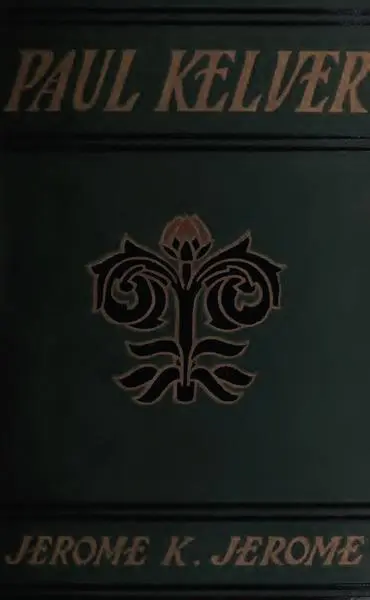
- Название:Paul Kelver
- Автор:
- Издательство:Dodd, Mead & Company
- Жанр:
- Год:1902
- Город:New York
- ISBN:нет данных
- Рейтинг книги:3 / 5. Голосов: 1
-
Избранное:Добавить в избранное
- Отзывы:
-
Ваша оценка:
Paul Kelver: краткое содержание, описание и аннотация
Предлагаем к чтению аннотацию, описание, краткое содержание или предисловие (зависит от того, что написал сам автор книги «Paul Kelver»). Если вы не нашли необходимую информацию о книге — напишите в комментариях, мы постараемся отыскать её.
Paul Kelver — читать онлайн бесплатно полную книгу (весь текст) целиком
Ниже представлен текст книги, разбитый по страницам. Система сохранения места последней прочитанной страницы, позволяет с удобством читать онлайн бесплатно книгу «Paul Kelver», без необходимости каждый раз заново искать на чём Вы остановились. Поставьте закладку, и сможете в любой момент перейти на страницу, на которой закончили чтение.
Интервал:
Закладка:
To differentiate between the essential and the non-essential, that is where woman fails. In the name of common sense, what is the use of washing a cup that half an hour later is going to be made dirty again? If the cat be willing and able to so clean a plate that not one speck of grease remain upon it, why deprive her of pleasure to inflict toil upon yourself? If a bed looks made and feels made, then for all practical purposes it is made; why upset it merely to put it straight again? It would surprise most women the amount of labour that can be avoided in a house.
For needlework, I confess, I never acquired skill. Dan had learnt to handle a thimble, but my own second finger was ever reluctant to come forward when wanted. It had to be found, all other fingers removed out of its way. Then, feebly, nervously, it would push, slip, get itself pricked badly with the head of the needle, and, thoroughly frightened, remain incapable of further action. More practical I found it to push the needle through by help of the door or table.
The opera, as Dan had predicted, ran far into the following year. When it was done with, another—in which “Goggles” appeared as one of the principals—took its place, and was even more successful. After the experience of Nelson Square, my present salary of thirty-five shillings, occasionally forty shillings, a week seemed to me princely. There floated before my eyes the possibility of my becoming a great opera singer. On six hundred pounds a week, I felt I could be content. But the O'Kelly set himself to dispel this dream.
“Ye'd be making a mistake, me boy,” explained the O'Kelly. “Ye'd be just wasting ye're time. I wouldn't tell ye so if I weren't convinced of it.”
“I know it is not powerful,” I admitted.
“Ye might almost call it thin,” added the O'Kelly.
“It might be good enough for comic opera,” I argued. “People appear to succeed in comic opera without much voice.”
“Sure, there ye're right,” agreed the O'Kelly, with a sigh. “An' of course if ye had an exceptionally fine presence and were strikingly handsome—”
“One can do a good deal with make-up,” I suggested.
The O'Kelly shook his head. “It's never quite the same thing. It would depend upon your acting.”
I dreamt of becoming a second Kean, of taking Macready's place. It need not interfere with my literary ambition. I could combine the two: fill Drury Lane in the evening, turn out epoch-making novels in the morning, write my own plays.
Every day I studied in the reading-room of the British Museum. Wearying of success in Art, I might eventually go into Parliament: a Prime Minister with a thorough knowledge of history: why not? With Ollendorf for guide, I continued French and German. It might be the diplomatic service that would appeal to me in my old age. An ambassadorship! It would be a pleasant termination to a brilliant career.
There was excuse for my optimistic mood about this period. All things were going well with me. A story of mine had been accepted. I forget for the moment the name of the journal: it is dead now. Most of the papers in which my early efforts appeared are dead. My contributions might be likened to their swan songs. Proofs had been sent me, which I had corrected and returned. But proofs are not facts. This had happened to me once before, and I had been lifted to the skies only to fall the more heavily. The paper had collapsed before my story had appeared. (Ah, why had they delayed? It might have saved them!) This time I remembered the proverb, and kept my own counsel, slipping out early each morning on the day of publication to buy the paper, to scan eagerly its columns. For weeks I suffered hope deferred. But at last, one bright winter's day in January, walking down the Harrow Road, I found myself standing still, suddenly stunned, before a bill outside a small news-vendor's shop. It was the first time I had seen my real name in print: “The Witch of Moel Sarbod: a legend of Mona, by Paul Kelver.” (For this I had even risked discovery by the Lady 'Ortensia.) My legs trembling under me, I entered the shop. A ruffianly-looking man in dirty shirt-sleeves, who appeared astonished that any one should want a copy, found one at length on the floor underneath the counter. With it in my pocket, I retraced my footsteps as in a dream. On a seat in Paddington Green I sat down and read it. The hundred best books! I have waded through them all; they have never charmed me as charmed me that one short story in that now forgotten journal. Need I add it was a sad and sentimental composition. Once upon a time there lived a mighty King; one—but with the names I will not bore you; they are somewhat unpronounceable. Their selection had cost me many hours of study in the British Museum reading-rooms, surrounded by lexicons of the Welsh language, gazetteers, translations from the early Celtic poets—with footnotes. He loved and was beloved by a beautiful Princess, whose name, being translated, was Purity. One day the King, hunting, lost his way, and being weary, lay down and fell asleep. And by chance the spot whereon he lay was near to a place which by infinite pains, with the aid of a magnifying glass, I had discovered upon the map, and which means in English the Cave of the Waters, where dwelt a wicked Sorceress, who, while he slept, cast her spells upon him, so that he awoke to forget his kingly honour and the good of all his people, his only desire being towards the Witch of Moel Sarbod.
Now, there lived in this Kingdom by the sea a great Magician; and Purity, who loved the King far better than herself, bethought her of him, and of all she had heard concerning his power and wisdom; and went to him and besought his aid that she might save the King. There was but one way to accomplish this: with bare feet Purity must climb the rocky path leading to the Witch's dwelling, go boldly up to her, not fearing her sharp claws nor her strong teeth, and kiss her upon the mouth. In this way the spirit of Purity would pass into the Witch's soul, and she would become a woman. But the form and spirit of the Witch would pass into Purity, transforming her, and in the Cave of the Waters she must forever abide. Thus Purity gave herself that the King might live. With bleeding feet she climbed the rocky path, clasped the Witch's form within her arms, kissed her on the mouth. And the Witch became a woman and reigned with the King over his people, wisely and helpfully. But Purity became a hideous witch, and to this day abides on Moel Sarbod, where is the Cave of the Waters. And they who climb the mountain's side still hear above the roaring of the cataract the sobbing of Purity, the King's betrothed. But many liken it rather to a joyous song of love triumphant.
No writer worth his salt was ever satisfied with anything he ever wrote, so I have been told, and so I try to believe. Evidently I am not worth my salt. Candid friends, and others, to whom in my salad days I used to show my work, asking for a frank opinion, meaning, of course, though never would they understand me, their unadulterated praise, would assure me for my good, that this, my first to whom the gods gave life, was but a feeble, ill-shaped child: its attempted early English a cross between “The Pilgrim's Progress” and “Old Moore's Almanac;” its scenery—which had cost me weeks of research—an apparent attempt to sum up in the language of a local guide book the leading characteristics of the Garden of Eden combined with Dante's Inferno; its pathos of the penny-plain and two-penny-coloured order. Maybe they were right. Much have I written since that at the time appeared to me good, that I have read later with regret, with burning cheek, with frowning brow. But of this, my first-born, the harbinger of all my hopes, I am no judge. Touching the yellowing, badly-printed pages, I feel again the deep thrill of joy with which I first unfolded them and read. Again I am a youngster, and life opens out before me—inmeasurable, no goal too high. This child of my brain, my work: it shall spread my name throughout the world. It shall be a household world in lands that I shall never see. Friends whose voices I shall never hear will speak of me. I shall die, but it shall live, yield fresh seed, bear fruit I know not of. Generations yet unborn shall read it and remember me. My thoughts, my words, my spirit: in it I shall live again; it shall keep my memory green.
Читать дальшеИнтервал:
Закладка:
Похожие книги на «Paul Kelver»
Представляем Вашему вниманию похожие книги на «Paul Kelver» списком для выбора. Мы отобрали схожую по названию и смыслу литературу в надежде предоставить читателям больше вариантов отыскать новые, интересные, ещё непрочитанные произведения.


Обсуждение, отзывы о книге «Paul Kelver» и просто собственные мнения читателей. Оставьте ваши комментарии, напишите, что Вы думаете о произведении, его смысле или главных героях. Укажите что конкретно понравилось, а что нет, и почему Вы так считаете.