Jerome Jerome - Paul Kelver
Здесь есть возможность читать онлайн «Jerome Jerome - Paul Kelver» весь текст электронной книги совершенно бесплатно (целиком полную версию без сокращений). В некоторых случаях можно слушать аудио, скачать через торрент в формате fb2 и присутствует краткое содержание. Город: New York, Год выпуска: 1902, Издательство: Dodd, Mead & Company, Жанр: Классическая проза, на английском языке. Описание произведения, (предисловие) а так же отзывы посетителей доступны на портале библиотеки ЛибКат.
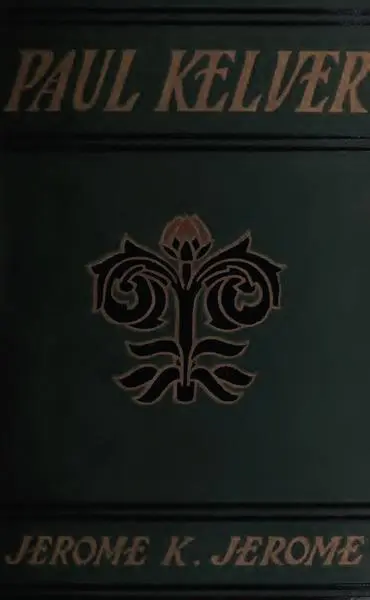
- Название:Paul Kelver
- Автор:
- Издательство:Dodd, Mead & Company
- Жанр:
- Год:1902
- Город:New York
- ISBN:нет данных
- Рейтинг книги:3 / 5. Голосов: 1
-
Избранное:Добавить в избранное
- Отзывы:
-
Ваша оценка:
Paul Kelver: краткое содержание, описание и аннотация
Предлагаем к чтению аннотацию, описание, краткое содержание или предисловие (зависит от того, что написал сам автор книги «Paul Kelver»). Если вы не нашли необходимую информацию о книге — напишите в комментариях, мы постараемся отыскать её.
Paul Kelver — читать онлайн бесплатно полную книгу (весь текст) целиком
Ниже представлен текст книги, разбитый по страницам. Система сохранения места последней прочитанной страницы, позволяет с удобством читать онлайн бесплатно книгу «Paul Kelver», без необходимости каждый раз заново искать на чём Вы остановились. Поставьте закладку, и сможете в любой момент перейти на страницу, на которой закончили чтение.
Интервал:
Закладка:
Before the glass she paused, and with a haughty inclination of her head succeeded for the third time in displacing the intoxicated feather.
“Oh, bother the silly thing!” she said in a voice so natural as to be, by contrast with her previous tone, quite startling.
She fixed it again with difficulty, muttering something inarticulate. Then, her left hand resting on an imaginary coat-sleeve, her right holding her skirt sufficiently high to enable her to move, she commenced to majestically gyrate.
Whether, hampered as she was by excess of skirt, handicapped by the natural clumsiness of her age, catastrophe in any case would not sooner or later have overtaken her, I have my doubts. I have since learnt her own view to be that but for catching sight, in turning, of my face, staring at her through the bars of the easel, all would have gone well and gracefully. Avoiding controversy on this point, the facts to be recorded are, that, seeing me, she uttered a sudden exclamation of surprise, dropped her skirt, trod on her train, felt her hair coming down, tried to do two things at once, and sat upon the floor. I ran to her assistance. With flaming face and flashing eyes she sprang to her feet. There was a sound as of the rushing down of avalanches. The blue flounced skirt lay round her on the floor. She stood above its billowy folds, reminiscent of Venus rising from the waves—a gawky, angular Venus in a short serge frock, reaching a little below her knees, black stockings and a pair of prunella boots of a size suggesting she had yet some inches to grow before reaching her full height.
“I hope you haven't hurt yourself,” I said.
The next moment I didn't care whether she had or whether she hadn't. She did not reply to my kindly meant enquiry. Instead, her hand swept through the air in the form of an ample semi-circle. It terminated on my ear. It was not a small hand; it was not a soft hand; it was not that sort of hand. The sound of the contact rang through the room like a pistol shot; I beard it with my other ear. I sprang at her, and catching her before she had recovered her equilibrium, kissed her. I did not kiss her because I wanted to. I kissed her because I could not box her ears back in return, which I should have preferred doing. I kissed her, hoping it would make her mad. It did. If a look could have killed me, such would have been the tragic ending of this story. It did not kill me; it did me good.
“You horrid boy!” she cried. “You horrid, horrid boy!”
There, I admit, she scored. I did not in the least object to her thinking me horrid, but at nineteen one does object to being mistaken for a boy.
“I am not a boy,” I explained.
“Yes, you are,” she retorted; “a beast of a boy!”
“If you do it again,” I warned her—a sudden movement on her part hinting to me the possibility—“I'll kiss you again! I mean it.”
“Leave the room!” she commanded, pointing with her angular arm towards the door.
I did not wish to remain. I was about to retire with as much dignity as circumstances permitted.
“Boy!” she added.
At that I turned. “Now I won't go!” I replied. “See if I do.”
We stood glaring at each other.
“What right have you in here?” she demanded.
“I came to see Mr. Deleglise,” I answered. “I suppose you are Miss Deleglise. It doesn't seem to me that you know how to treat a visitor.”
“Who are you?” she asked.
“Mr. Horace Moncrieff,” I replied. I was using at the period both my names indiscriminately, but for this occasion Horace Moncrieff I judged the more awe-inspiring.
She snorted. “I know. You're the house-maid. You sweep all the crumbs under the mats.”
Now this was a subject about which at the time I was feeling somewhat sore. “Needs must when the Devil drives;” but as matters were, Dan and I could well have afforded domestic assistance. It rankled in my mind that to fit in with the foolish fad of old Deleglise, I the future Dickens, Thackeray and George Eliot, Kean, Macready and Phelps rolled into one, should be compelled to the performance of menial duties. On this morning of all others, my brilliant literary career just commenced, the anomaly of the thing appeared naturally more glaring.
Besides, how came she to know I swept the crumbs under the mat—that it was my method? Had she and Dan been discussing me, ridiculing me behind my back? What right had Dan to reveal the secrets of our menage to this chit of a school-girl? Had he done so? or had she been prying, poking her tilted nose into matters that did not concern her? Pity it was she had no mother to occasionally spank her, teach her proper behaviour.
“Where I sweep our crumbs is nothing to do with you,” I replied with some spirit. “That I have to sweep them at all is the fault of your father. A sensible girl—”
“How dare you speak against my father!” she interrupted me with blazing eyes.
“We will not discuss the question further,” I answered, with sense and dignity.
“I think you had better not!” she retorted.
Turning her back on me, she commenced to gather up her hairpins—there must have been about a hundred of them. I assisted her to the extent of picking up about twenty, which I handed to her with a bow: it may have been a little stiff, but that was only to be expected. I wished to show her that her bad example had not affected my own manners.
“I am sorry my presence should have annoyed you,” I said. “It was quite an accident. I entered the room thinking your father was here.”
“When you saw he wasn't, you might have gone out again,” she replied, “instead of hiding yourself behind a picture.”
“I didn't hide myself,” I explained. “The easel happened to be in the way.”
“And you stopped there and watched me.”
“I couldn't help it.”
She looked round and our eyes met. They were frank, grey eyes. An expression of merriment shot into them. I laughed.
Then she laughed: it was a delightful laugh, the laugh one would have expected from her.
“You might at least have coughed,” she suggested.
“It was so amusing,” I pleaded.
“I suppose it was,” she agreed, and held out her hand. “Did I hurt you?” she asked.
“Yes, you did,” I answered, taking it.
“Well, it was enough to annoy me, wasn't it?” she suggested.
“Evidently,” I agreed.
“I am going to a ball next week,” she explained, “a grown-up ball, and I've got to wear a skirt. I wanted to see if I could manage a train.”
“Well, to be candid, you can't,” I assured her.
“It does seem difficult.”
“Shall I show you?” I asked.
“What do you know about it?”
“Well, I see it done every night.”
“Oh, yes; of course, you're on the stage. Yes, do.”
We readjusted the torn skirt, accommodating it better to her figure by the help of hairpins. I showed her how to hold the train, and, I humming a tune, we commenced to waltz.
“I shouldn't count my steps,” I suggested to her. “It takes your mind away from the music.”
“I don't waltz well,” she admitted meekly. “I know I don't do anything well—except play hockey.”
“And try not to tread on your partner's feet. That's a very bad fault.”
“I do try not to,” she explained.
“It comes with practice,” I assured her.
“I'll get Tom to give me half an hour every evening,” she said. “He dances beautifully.”
“Who's Tom?”
“Oh, father.”
“Why do you call your father Tom? It doesn't sound respectful.”
“Oh, he likes it; and it suits him so much better than father. Besides, he isn't like a real father. He does everything I want him to.”
“Is that good for you?”
“No; it's very bad for me—everybody says so. When you come to think of it, of course it isn't the way to bring up a girl. I tell him, but he merely laughs—says it's the only way he knows. I do hope I turn out all right. Am I doing it better now?”
Читать дальшеИнтервал:
Закладка:
Похожие книги на «Paul Kelver»
Представляем Вашему вниманию похожие книги на «Paul Kelver» списком для выбора. Мы отобрали схожую по названию и смыслу литературу в надежде предоставить читателям больше вариантов отыскать новые, интересные, ещё непрочитанные произведения.







Обсуждение, отзывы о книге «Paul Kelver» и просто собственные мнения читателей. Оставьте ваши комментарии, напишите, что Вы думаете о произведении, его смысле или главных героях. Укажите что конкретно понравилось, а что нет, и почему Вы так считаете.