Jerome Jerome - Paul Kelver
Здесь есть возможность читать онлайн «Jerome Jerome - Paul Kelver» весь текст электронной книги совершенно бесплатно (целиком полную версию без сокращений). В некоторых случаях можно слушать аудио, скачать через торрент в формате fb2 и присутствует краткое содержание. Город: New York, Год выпуска: 1902, Издательство: Dodd, Mead & Company, Жанр: Классическая проза, на английском языке. Описание произведения, (предисловие) а так же отзывы посетителей доступны на портале библиотеки ЛибКат.
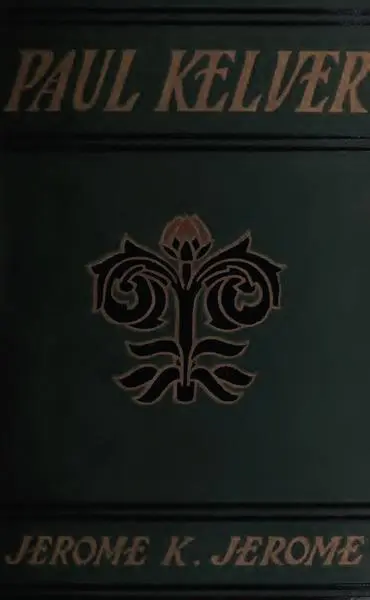
- Название:Paul Kelver
- Автор:
- Издательство:Dodd, Mead & Company
- Жанр:
- Год:1902
- Город:New York
- ISBN:нет данных
- Рейтинг книги:3 / 5. Голосов: 1
-
Избранное:Добавить в избранное
- Отзывы:
-
Ваша оценка:
Paul Kelver: краткое содержание, описание и аннотация
Предлагаем к чтению аннотацию, описание, краткое содержание или предисловие (зависит от того, что написал сам автор книги «Paul Kelver»). Если вы не нашли необходимую информацию о книге — напишите в комментариях, мы постараемся отыскать её.
Paul Kelver — читать онлайн бесплатно полную книгу (весь текст) целиком
Ниже представлен текст книги, разбитый по страницам. Система сохранения места последней прочитанной страницы, позволяет с удобством читать онлайн бесплатно книгу «Paul Kelver», без необходимости каждый раз заново искать на чём Вы остановились. Поставьте закладку, и сможете в любой момент перейти на страницу, на которой закончили чтение.
Интервал:
Закладка:
“We entertained each other,” I said.
“That's all right,” said old Deleglise. “Stop and lunch with us. We will make ourselves a curry.”
Chapter VI.
Of the Glory and Goodness and the Evil that go to the Making of Love.
During my time of struggle I had avoided all communication with old Hasluck. He was not a man to sympathise with feelings he did not understand. With boisterous good humour he would have insisted upon helping me. Why I preferred half starving with Lott and Co. to selling my labour for a fair wage to good-natured old Hasluck, merely because I knew him, I cannot explain. Though the profits may not have been so large, Lott and Co.'s dealings were not one whit more honest: I do not believe it was that which decided me. Nor do I think it was because he was Barbara's father. I never connected him, nor that good old soul, his vulgar, homely wife, in any way with Barbara. To me she was a being apart from all the world. Her true Parents! I should have sought them rather amid the sacred groves of vanished lands, within the sky-domed shrines of banished gods. There are instincts in us not easily analysed, not to be explained by reason. I have always preferred the finding—sometimes the losing—of my way according to the map, to the surer and simpler method of vocal enquiry; working out a complicated journey, and running the risk of never arriving at my destination, by aid of a Continental Bradshaw, to putting myself into the hands of courteous officials maintained and paid to assist the perplexed traveller. Possibly a far-off progenitor of mine may have been some morose “rogue” savage with untribal inclinations, living in his cave apart, fashioning his own stone hammer, shaping his own flint arrow-heads, shunning the merry war-dance, preferring to caper by himself.
But now, having gained my own foothold, I could stretch out my hand without fear of the movement being mistaken for appeal. I wrote to old Hasluck; and almost by the next post received from him the friendliest of notes. He told me Barbara had just returned from abroad, took it upon himself to add that she also would be delighted to see me, and, as I knew he would, threw his doors open to me.
Of my boyish passion for Barbara never had I spoken to a living soul, nor do I think, excepting Barbara herself, had any ever guessed it. To my mother, though she was very fond of her, Barbara was only a girl, with charms but also with faults, concerning which my mother would speak freely; hurting me, as one unwittingly might hurt a neophyte by philosophical discussion of his newly embraced religion. Often, choosing by preference late evening or the night, I would wander round and round the huge red-brick house standing in its ancient garden on the top of Stamford Hill; descending again into the noisome streets as one returning to the world from praying at a shrine, purified, filled with peace, all noble endeavour, all unselfish aims seeming within my grasp.
During Barbara's four years' absence my adoration had grown and strengthened. Out of my memory of her my desire had evolved its ideal; a being of my imagination, but by reason of that, to me the more real, the more present. I looked forward to seeing her again, but with no impatience, revelling rather in the anticipation than eager for the realisation. As a creature of flesh and blood, the child I had played with, talked with, touched, she had faded further and further into the distance; as the vision of my dreams she stood out clearer day by day. I knew that when next I saw her there would be a gulf between us I had no wish to bridge. To worship her from afar was a sweeter thought to me than would have been the hope of a passionate embrace. To live with her, sit opposite to her while she ate and drank, see her, perhaps, with her hair in curl-papers, know possibly that she had a corn upon her foot, hear her speak maybe of a decayed tooth, or of a chilblain, would have been torture to me. Into such abyss of the commonplace there was no fear of my dragging her, and for this I was glad. In the future she would be yet more removed from me. She was older than I was; she must be now a woman. Instinctively I felt that in spite of years I was not yet a man. She would marry. The thought gave me no pain, my feeling for her was utterly devoid of appetite. No one but myself could close the temple I had built about her, none deny to me the right of entry there. No jealous priest could hide her from my eyes, her altar I had reared too high. Since I have come to know myself better, I perceive that she stood to me not as a living woman, but as a symbol; not a fellow human being to be walked with through life, helping and to be helped, but that impalpable religion of sex to which we raise up idols of poor human clay, alas, not always to our satisfaction, so that foolishly we fall into anger against them, forgetting they were but the work of our own hands; not the body, but the spirit of love.
I allowed a week to elapse after receiving old Hasluck's letter before presenting myself at Stamford Hill. It was late one afternoon in early summer. Hasluck had not returned from the City, Mrs. Hasluck was out visiting, Miss Hasluck was in the garden. I told the supercilious footman not to trouble, I would seek her there myself. I guessed where she would be; her favourite spot had always been a sunny corner, bright with flowers, surrounded by a thick yew hedge, cut, after the Dutch fashion, into quaint shapes of animals and birds. She was walking there, as I had expected, reading a book. And again, as I saw her, came back to me the feeling that had swept across me as a boy, when first outlined against the dusty books and papers of my father's office she had flashed upon my eyes: that all the fairy tales had suddenly come true, only now, instead of the Princess, she was the Queen. Taller she was, with a dignity that formerly had been the only charm she lacked. She did not hear my coming, my way being across the soft, short grass, and for a little while I stood there in the shadow of the yews, drinking in the beauty of her clear-cut profile, bent down towards her book, the curving lines of her long neck, the wonder of the exquisite white hand against the lilac of her dress.
I did not speak; rather would I have remained so watching; but turning at the end of the path, she saw me, and as she came towards me held out her hand. I knelt upon the path, and raised it to my lips. The action was spontaneous, till afterwards I was not aware of having done it. Her lips were smiling as I raised my eyes to them, the faintest suggestion of contempt mingling with amusement. Yet she seemed pleased, and her contempt, even if I were not mistaken, would not have wounded me.
“So you are still in love with me? I wondered if you would be.”
“Did you know that I was in love with you?”
“I should have been blind if I had not.”
“But I was only a boy.”
“You were not the usual type of boy. You are not going to be the usual type of man.”
“You do not mind my loving you?”
“I cannot help it, can I? Nor can you.”
She seated herself on a stone bench facing a sun-dial, and leaning hack, her hands clasped behind her head, looked at me and laughed.
“I shall always love you,” I answered, “but it is with a curious sort of love. I do not understand it myself.”
“Tell me,” she commanded, still with a smile about her lips, “describe it to me.”
I was standing over against her, my arm resting upon the dial's stone column. The sun was sinking, casting long shadows on the velvety grass, illuminating with a golden light her upturned face.
“I would you were some great queen of olden days, and that I might be always near you, serving you, doing your bidding. Your love in return would spoil all; I shall never ask it, never desire it. That I might look upon you, touch now and then at rare intervals with my lips your hand, kiss in secret the glove you had let fall, the shoe you had flung off, know that you knew of my love, that I was yours to do with as you would, to live or die according to your wish. Or that you were priestess in some temple of forgotten gods, where I might steal at daybreak and at dusk to gaze upon your beauty; kneel with clasped hands, watching your sandalled feet coming and going about the altar steps; lie with pressed lips upon the stones your trailing robes had touched.”
Читать дальшеИнтервал:
Закладка:
Похожие книги на «Paul Kelver»
Представляем Вашему вниманию похожие книги на «Paul Kelver» списком для выбора. Мы отобрали схожую по названию и смыслу литературу в надежде предоставить читателям больше вариантов отыскать новые, интересные, ещё непрочитанные произведения.

Обсуждение, отзывы о книге «Paul Kelver» и просто собственные мнения читателей. Оставьте ваши комментарии, напишите, что Вы думаете о произведении, его смысле или главных героях. Укажите что конкретно понравилось, а что нет, и почему Вы так считаете.