Jerome Jerome - Paul Kelver
Здесь есть возможность читать онлайн «Jerome Jerome - Paul Kelver» весь текст электронной книги совершенно бесплатно (целиком полную версию без сокращений). В некоторых случаях можно слушать аудио, скачать через торрент в формате fb2 и присутствует краткое содержание. Город: New York, Год выпуска: 1902, Издательство: Dodd, Mead & Company, Жанр: Классическая проза, на английском языке. Описание произведения, (предисловие) а так же отзывы посетителей доступны на портале библиотеки ЛибКат.
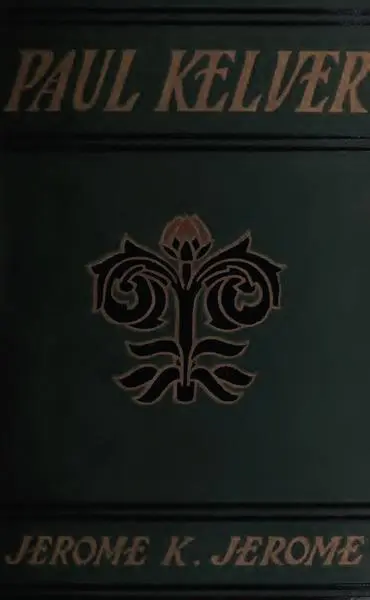
- Название:Paul Kelver
- Автор:
- Издательство:Dodd, Mead & Company
- Жанр:
- Год:1902
- Город:New York
- ISBN:нет данных
- Рейтинг книги:3 / 5. Голосов: 1
-
Избранное:Добавить в избранное
- Отзывы:
-
Ваша оценка:
Paul Kelver: краткое содержание, описание и аннотация
Предлагаем к чтению аннотацию, описание, краткое содержание или предисловие (зависит от того, что написал сам автор книги «Paul Kelver»). Если вы не нашли необходимую информацию о книге — напишите в комментариях, мы постараемся отыскать её.
Paul Kelver — читать онлайн бесплатно полную книгу (весь текст) целиком
Ниже представлен текст книги, разбитый по страницам. Система сохранения места последней прочитанной страницы, позволяет с удобством читать онлайн бесплатно книгу «Paul Kelver», без необходимости каждый раз заново искать на чём Вы остановились. Поставьте закладку, и сможете в любой момент перейти на страницу, на которой закончили чтение.
Интервал:
Закладка:
“A little. Don't be too anxious about it. Don't look at your feet.”
“But if I don't they go all wrong. It was you who trod on mine that time.”
“I know. I'm sorry. It's a little difficult not to.”
“Am I holding my train all right?”
“Well, there's no need to grip it as if you were afraid it would run away. It will follow all right. Hold it gracefully.”
“I wish I wasn't a girl.”
“Oh, you'll get used to it.” We concluded our dance.
“What do I do—say 'Thank you'?”
“Yes, prettily.”
“What does he do?”
“Oh, he takes you back to your chaperon, or suggests refreshment, or you sit and talk.”
“I hate talking. I never know what to say.”
“Oh, that's his duty. He'll try and amuse you, then you must laugh. You have a nice laugh.”
“But I never know when to laugh. If I laugh when I want to it always offends people. What do you do if somebody asks you to dance and you don't want to dance with them?”
“Oh, you say your programme is full.”
“But if it isn't?”
“Well, you tell a lie.”
“Couldn't I say I don't dance well, and that I'm sure they'd get on better with somebody else?”
“It would be the truth, but they might not believe it.”
“I hope nobody asks me that I don't want.”
“Well, he won't a second time, anyhow.”
“You are rude.”
“You are only a school-girl.”
“I look a woman in my new frock, I really do.”
“I should doubt it.”
“You shall see me, then you'll be polite. It is because you are a boy you are rude. Men are much nicer.”
“Oh, are they?”
“Yes. You will be, when you are a man.”
The sound of voices rose suddenly in the hall.
“Tom!” cried Miss Deleglise; and collecting her skirt in both hands, bolted down the corkscrew staircase leading to the kitchen, leaving me standing in the centre of the studio.
The door opened and old Deleglise entered, accompanied by a small, slight man with red hair and beard and somewhat watery eyes.
Deleglise himself was a handsome old fellow, then a man of about fifty-five. His massive, mobile face, illuminated by bright, restless eyes, was crowned with a lion-like mane of iron-grey hair. Till a few years ago he had been a painter of considerable note. But in questions of art his temper was short. Pre-Raphaelism had gone out of fashion for the time being; the tendency of the new age was towards impressionism, and in disgust old Deleglise had broken his palette across his knee, and swore never to paint again. Artistic work of some sort being necessary to his temperament, he contented himself now with engraving. At the moment he was engaged upon the reproduction of Memlinc's Shrine of St. Ursula, with photographs of which he had just returned from Bruges.
At sight of me his face lighted with a smile, and he advanced with outstretched hand.
“Ah; my lad, so you have got over your shyness and come to visit the old bear in his den. Good boy. I like young faces.”
He had a clear, musical voice, ever with the suggestion of a laugh behind it. He laid his hand upon my shoulder.
“Why, you are looking as if you had come into a fortune,” he added, “and didn't know what a piece of bad luck that can be to a young fellow like yourself.”
“How could it be bad luck?” I asked, laughing.
“Takes all the sauce out of life, young man,” answered Deleglise. “What interest is there in running a race with the prize already in your possession, tell me that?”
“It is not that kind of fortune,” I answered, “it is another. I have had my first story accepted. It is in print. Look.”
I handed him the paper. He spread it out upon the engraving board before him.
“Ah, that's better,” he said, “that's better. Charlie,” he turned to the red-headed man, who had seated himself listlessly in the one easy-chair the room contained, “come here.”
The red-headed man rose and wandered towards us. “Let me introduce you to Mr. Paul Kelver, our new fellow servant. Our lady has accepted him. He has just been elected; his first story is in print.”
The red-haired man stretched out his long thin hand. “I have thirty years of fame,” said the red-haired man—“could I say world-wide?”
He turned for confirmation to old Deleglise, who laughed. “I think you can.”
“If I could give it you would you exchange with me—at this moment?”
“You would be a fool if you did,” he went on. “One's first success, one's first victory! It is the lover's first kiss. Fortune grows old and wrinkled, frowns more often than she smiles. We become indifferent to her, quarrel with her, make it up again. But the joy of her first kiss after the long wooing! Burn it into your memory, my young friend, that it may live with you always!”
He strolled away. Old Deleglise took up the parable.
“Ah, yes; one's first success, Paul! Laugh, my boy, cry! Shut yourself up in your room, shout, dance! Throw your hat into the air and cry hurrah! Make the most of it, Paul. Hug it to your heart, think of it, dream of it. This is the finest hour of your life, my boy. There will never come another like it—never!”
He crossed the studio, and taking from its nail a small oil painting, brought it over and laid it on the board beside my paper. It was a fascinating little picture, painted with that exquisite minutiae and development of detail that a newer school was then ridiculing: as though Art had but one note to her voice. The dead figure of an old man lay upon a bed. A child had crept into the darkened room, and supporting itself by clutching tightly at the sheet, was gazing with solemn curiosity upon the white, still face.
“That was mine,” said old Deleglise. “It was hung in the Academy thirty-six years ago, and bought for ten guineas by a dentist at Bury St. Edmunds. He went mad a few years later and died in a lunatic asylum. I had never lost sight of it, and the executors were quite agreeable to my having it back again for the same ten guineas. I used to go every morning to the Academy to look at it. I thought it the cleverest bit of work in the whole gallery, and I'm not at all sure that it wasn't. I saw myself a second Teniers, another Millet. Look how that light coming through the open door is treated; isn't it good? Somebody will pay a thousand guineas for it before I have been dead a dozen years, and it is worth it. But I wouldn't sell it myself now for five thousand. One's first success; it is worth all the rest of life!”
“All?” queried the red-haired man from his easy-chair. We looked round. The lady of the skirt had entered, now her own proper self: a young girl of about fifteen, angular, awkward-looking, but bringing into the room with her that atmosphere of life, of hope, that is the eternal message of youth. She was not beautiful, not then—plain one might almost have called her but for her frank, grey eyes, her mass of dark-brown hair now gathered into a long thick plait. A light came into old Deleglise's eyes.
“You are right, not all,” he murmured to the red-haired man.
She came forward shyly. I found it difficult to recognise in her the flaming Fury that a few minutes before had sprung at me from the billows of her torn blue skirt. She shook hands with the red-haired man and kissed her father.
“My daughter,” said old Deleglise, introducing me to her. “Mr. Paul Kelver, a literary gent.”
“Mr. Kelver and I have met already,” she explained. “He has been waiting for you here in the studio.”
“And have you been entertaining him?” asked Deleglise. “Oh, yes, I entertained him,” she replied. Her voice was singularly like her father's, with just the same suggestion of ever a laugh behind it.
Читать дальшеИнтервал:
Закладка:
Похожие книги на «Paul Kelver»
Представляем Вашему вниманию похожие книги на «Paul Kelver» списком для выбора. Мы отобрали схожую по названию и смыслу литературу в надежде предоставить читателям больше вариантов отыскать новые, интересные, ещё непрочитанные произведения.









Обсуждение, отзывы о книге «Paul Kelver» и просто собственные мнения читателей. Оставьте ваши комментарии, напишите, что Вы думаете о произведении, его смысле или главных героях. Укажите что конкретно понравилось, а что нет, и почему Вы так считаете.