Jerome Jerome - Paul Kelver
Здесь есть возможность читать онлайн «Jerome Jerome - Paul Kelver» весь текст электронной книги совершенно бесплатно (целиком полную версию без сокращений). В некоторых случаях можно слушать аудио, скачать через торрент в формате fb2 и присутствует краткое содержание. Город: New York, Год выпуска: 1902, Издательство: Dodd, Mead & Company, Жанр: Классическая проза, на английском языке. Описание произведения, (предисловие) а так же отзывы посетителей доступны на портале библиотеки ЛибКат.
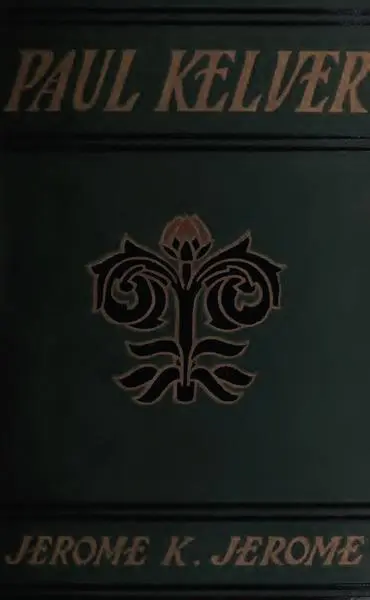
- Название:Paul Kelver
- Автор:
- Издательство:Dodd, Mead & Company
- Жанр:
- Год:1902
- Город:New York
- ISBN:нет данных
- Рейтинг книги:3 / 5. Голосов: 1
-
Избранное:Добавить в избранное
- Отзывы:
-
Ваша оценка:
Paul Kelver: краткое содержание, описание и аннотация
Предлагаем к чтению аннотацию, описание, краткое содержание или предисловие (зависит от того, что написал сам автор книги «Paul Kelver»). Если вы не нашли необходимую информацию о книге — напишите в комментариях, мы постараемся отыскать её.
Paul Kelver — читать онлайн бесплатно полную книгу (весь текст) целиком
Ниже представлен текст книги, разбитый по страницам. Система сохранения места последней прочитанной страницы, позволяет с удобством читать онлайн бесплатно книгу «Paul Kelver», без необходимости каждый раз заново искать на чём Вы остановились. Поставьте закладку, и сможете в любой момент перейти на страницу, на которой закончили чтение.
Интервал:
Закладка:
He sank back on his pillows and laughed and coughed, and laughed and coughed again, till I feared that wild, long, broken laugh would be his last. But it ceased at length, and for awhile, exhausted, he lay silent before continuing.
“Then came the question: how was I to go? She loved me still. He was sure of it, and, for the matter of that, so was I. So long as she thought that I loved her, she would never leave me. Only from her despair could fresh hope arise for her. Would I not make some sacrifice for her sake, persuade her that I had tired of her? Only by one means could she be convinced. My going off alone would not suffice; my reason for that she might suspect—she might follow. It would be for her sake. Again it was the hero that I played, the dear old chuckle-headed hero, Paul, that you ought to have cheered, not hooted. I loved her as much as I ever loved her in my life, that night I left her. I took my boots off in the passage and crept up in my stockinged feet. I told him I was merely going to change my coat and put a few things into a bag. He gripped my hand, and tears were standing in his eyes. It is odd that suppressed laughter and expressed grief should both display the same token, is it not? I stole into her room. I dared not kiss her for fear of waking her; but a stray lock of her hair—you remember how long it was—fell over the pillow, nearly reaching to the floor. I pressed my lips against it, where it trailed over the bedstead, till they bled. I have it still upon my lips, the mingling of the cold iron and the warm, soft silken hair. He told me, when I came down again, that I had been gone three-quarters of an hour. And we went out of the house together, he and I. That is the last time I ever saw her.”
I leant across and put my arms around him; I suppose it was un-English; there are times when one forgets these points. “I did not know! I did not know,” I cried.
He pressed me to him with his feeble arms. “What a cad you must have thought me, Paul,” he said. “But you might have given me credit for better taste. I was always rather a gourmet than a gourmand where women were concerned.”
“You have never seen him either again?” I asked.
“No,” he answered; “I swore to kill him when I learnt the trick he had played me. He commenced the divorce proceedings against her the very morning after I had left her. Possibly, had I succeeded in finding him within the next six months, I should have done so. A few newspaper proprietors would have been the only people really benefited. Time is the cheapest Bravo; a little patience is all he charges. All roads lead to the end, Paul.”
But I tell my tale badly, marring effects of sunlight with the memory of shadows. At the time all promised fair. He was a handsome, distinguished-looking man. Not every aristocrat, if without disrespect to one's betters a humble observer may say so, suggests his title; this man would have suggested his title, had he not possessed it. I suppose he must have been about fifty at the time; but most men of thirty would have been glad to exchange with him both figure and complexion. His behaviour to his fiancee was the essence of good taste, affectionate devotion, carried to the exact point beyond which, having regard to the disparity of their years, it would have appeared ridiculous. That he sincerely admired her, was fully content with her, there could be no doubt. I am even inclined to think he was fonder of her than, divining her feelings towards himself, he cared to show. Knowledge of the world must have told him that men of fifty find it easier to be the lovers of women young enough to be their daughters, than girls find it to desire the affection of men old enough to be their fathers; and he was not the man to allow impulse to lead him into absurdity.
From my own peculiar point of view he appeared the ideal prince consort. It was difficult for me to imagine my queen in love with any mere man. This was one beside whom she could live, losing in my eyes nothing of her dignity. My feelings for her he guessed at our first interview. Most men in his position would have been amused, and many would have shown it. For what reason I cannot say, but with a tact and courtesy that left me only complimented, he drew from me, before I had met him half-a-dozen times, more frank confession than a month previously I should have dreamt of my yielding to anything than my own pillow. He laid his hand upon my shoulder.
“I wonder if you know, my friend, how wise you are,” he said. “We all of us at your age love an image of our own carving. Ah, if only we could be content to worship the white, changeless statute! But we are fools. We pray the gods to give her life, and under our hot kisses she becomes a woman. I also loved when I was your age, Paul. Your countrymen, they are so practical, they know only one kind of love. It is business-like, rich—how puts it your poet? 'rich in saving common sense.' But there are many kinds, you understand that, my friend. You are wise, do not confuse them. She was a child of the mountains. I used to walk three leagues to Mass each day to worship her. Had I been wise—had I so left it, the memory of her would have coloured all my life with glory. But I was a fool, my friend; I turned her into a woman. Ah!”—he made a gesture of disgust—“such a fat, ugly woman, Paul, I turned her into. I had much difficulty in getting rid of her. We should never touch things in life that are beautiful; we have such clumsy hands, we spoil whatever we touch.”
Hal did not return to England till the end of the year, by which time the Count and Countess Huescar—though I had her permission still to call her Barbara, I never availed myself of it; the “Countess” fitted my mood better—had taken up residence in the grand Paris house old Hasluck had bought for them.
It was the high-water mark of old Hasluck's career, and, if anything, he was a little disappointed that with the dowry he had promised her Barbara had not done even better for herself.
“Foreign Counts,” he grumbled to me laughingly, one day, “well, I hope they're worth more in Society than they are in the City. A hundred guineas is their price there, and they're not worth that. Who was that American girl that married a Russian Prince only last week? A million dollars was all she gave for him, and she a wholesale boot-maker's daughter into the bargain! Our girls are not half as smart.”
But that was before he had seen his future son-in-law. After, he was content enough, and up to the day of the wedding, childishly elated. Under the Count's tuition he studied with reverential awe the Huescar history. Princes, statesmen, warriors, glittered, golden apples, from the spreading branches of its genealogical tree. Why not again! its attenuated blue sap strengthened with the rich, red blood, brewed by toil and effort in the grim laboratories of the under world. In imagination, old Hasluck saw himself the grandfather of Chancellors, the great-grandfather of Kings.
“I have laid the foundation, you shall raise the edifice,” so he told her one evening I was spending with them, caressing her golden hair with his blunt, fat fingers. “I am glad you were not a boy. A boy, in all probability, would have squandered the money, let the name sink back again into the gutter. And even had he been the other sort, he could only have been another business man, keeping where I had left him. You will call your first boy Hasluck, won't you? It must always be the first-born's name. It shall be famous in the world yet, and for something else than mere money.”
I began to understand the influences that had gone towards the making—or marring—of Barbara's character. I had never guessed he had cared for anything beyond money and the making of money.
It was, of course, a wedding as ostentatious as possible. Old Hasluck knew how to advertise, and spared neither expense nor labour, with the result that it was the event of the season, at least according to the Society papers. Mrs. Hasluck was the type of woman to have escaped observation, even had the wedding been her own; that she was present at her daughter's, “becomingly dressed in grey veiling spotted white, with an encrustation of mousseline de soie,” I learnt the next day from the Morning Post . Old Hasluck himself had to be fetched every time he was wanted. At the conclusion of the ceremony, seeking him, I found him sitting on the stairs leading to the crypt.
Читать дальшеИнтервал:
Закладка:
Похожие книги на «Paul Kelver»
Представляем Вашему вниманию похожие книги на «Paul Kelver» списком для выбора. Мы отобрали схожую по названию и смыслу литературу в надежде предоставить читателям больше вариантов отыскать новые, интересные, ещё непрочитанные произведения.




Обсуждение, отзывы о книге «Paul Kelver» и просто собственные мнения читателей. Оставьте ваши комментарии, напишите, что Вы думаете о произведении, его смысле или главных героях. Укажите что конкретно понравилось, а что нет, и почему Вы так считаете.