Jerome Jerome - Paul Kelver
Здесь есть возможность читать онлайн «Jerome Jerome - Paul Kelver» весь текст электронной книги совершенно бесплатно (целиком полную версию без сокращений). В некоторых случаях можно слушать аудио, скачать через торрент в формате fb2 и присутствует краткое содержание. Город: New York, Год выпуска: 1902, Издательство: Dodd, Mead & Company, Жанр: Классическая проза, на английском языке. Описание произведения, (предисловие) а так же отзывы посетителей доступны на портале библиотеки ЛибКат.
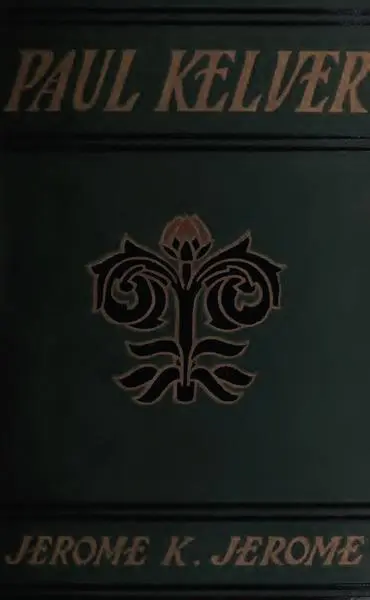
- Название:Paul Kelver
- Автор:
- Издательство:Dodd, Mead & Company
- Жанр:
- Год:1902
- Город:New York
- ISBN:нет данных
- Рейтинг книги:3 / 5. Голосов: 1
-
Избранное:Добавить в избранное
- Отзывы:
-
Ваша оценка:
Paul Kelver: краткое содержание, описание и аннотация
Предлагаем к чтению аннотацию, описание, краткое содержание или предисловие (зависит от того, что написал сам автор книги «Paul Kelver»). Если вы не нашли необходимую информацию о книге — напишите в комментариях, мы постараемся отыскать её.
Paul Kelver — читать онлайн бесплатно полную книгу (весь текст) целиком
Ниже представлен текст книги, разбитый по страницам. Система сохранения места последней прочитанной страницы, позволяет с удобством читать онлайн бесплатно книгу «Paul Kelver», без необходимости каждый раз заново искать на чём Вы остановились. Поставьте закладку, и сможете в любой момент перейти на страницу, на которой закончили чтение.
Интервал:
Закладка:
You, gentle reader of my book, I shall not trouble with second-hand record of that which you can read elsewhere. For me it will be but to write briefly of my own brief glimpse into that charmed circle. Concerning this story more are the afternoon At Homes held by Dan and myself upon the second floor of the old Georgian house in pleasant, quiet Queen Square. For cook and house-maid on these days it would be a busy morning. Failing other supervision, Dan and I agreed that to secure success on these important occasions each of us should criticise the work of the other. I passed judgment on Dan's cooking, he upon my house-work.
“Too much soda,” I would declare, sampling the cake.
“You silly Juggins! It's meant to taste of soda—it's a soda cake.”
“I know that. It isn't meant to taste of nothing but soda. There wants to be some cake about it also. This thing, so far as flavour is concerned, is nothing but a Seidlitz powder. You can't give people solidified Seidlitz powders for tea!”
Dan would fume, but I would remain firm. The soda cake would be laid aside, and something else attempted. His cookery was the one thing Dan was obstinate about. He would never admit that anything could possibly be wrong with it. His most ghastly failures he would devour himself later on with pretended enjoyment. I have known him finish a sponge cake, the centre of which had to be eaten with a teaspoon, declaring it was delicious; that eating a dry sponge cake was like eating dust; that a sponge cake ought to be a trifle syrupy towards the centre. Afterwards he would be strangely silent and drink brandy out of a wine-glass.
“Call these knives clean?” It would be Dan's turn.
“Yes, I do.”
Dan would draw his finger across one, producing chiaro-oscuro.
“Not if you go fingering them. Why don't you leave them alone and go on with your own work?”
“You've just wiped them, that's all.”
“Well, there isn't any knife-powder.”
“Yes, there is.”
“Besides, it ruins knives, over-cleaning them—takes all the edge off. We shall want them pretty sharp to cut those lemon buns of yours.”
“Over-cleaning them! You don't take any pride in the place.”
“Good Lord! Don't I work from morning to night?”
“You lazy young devil!”
“Makes one lazy, your cooking. How can a man work when he is suffering all day long from indigestion?”
But Dan would not be content until I had found the board and cleaned the knives to his complete satisfaction. Perhaps it was as well that in this way all things once a week were set in order. After lunch house-maid and cook would vanish, two carefully dressed gentlemen being left alone to receive their guests.
These would be gathered generally from among Dan's journalistic acquaintances and my companions of the theatre. Occasionally, Minikin and Jarman would be of the number, Mrs. Peedles even once or twice arriving breathless on our landing. Left to myself, I perhaps should not have invited them, deeming them hardly fitting company to mingle with our other visitors; but Dan, having once been introduced to them, overrode such objection.
“My dear Lord Chamberlain,” Dan would reply, “an ounce of originality is worth a ton of convention. Little tin ladies and gentlemen all made to pattern! One can find them everywhere. Your friends would be an acquisition to any society.”
“But are they quite good form?” I hinted.
“I'll tell you what we will do,” replied Dan. “We'll forget that Mrs. Peedles keeps a lodging-house in Blackfriars. We will speak of her as our friend, 'that dear, quaint old creature, Lady P.' A title that is an oddity, whose costume always suggests the wardrobe of a provincial actress! My dear Paul, your society novelist would make a fortune out of such a character. The personages of her amusing anecdotes, instead of being third-rate theatrical folk, shall be Earl Blank and the Baroness de Dash. The editors of society journals shall pay me a shilling a line for them. Jarman—yes, Jarman shall be the son of a South American millionaire. Vulgar? Nonsense! you mean racy. Minikin—he looks much more like forty than twenty—he shall be an eminent scientist. His head will then appear the natural size; his glass eye, the result of a chemical experiment, a touch of distinction; his uncompromising rudeness, a lovable characteristic. We will make him buy a yard of red ribbon and wear it across his shirt-front, and address him as Herr Professor. It will explain slight errors of English grammar and all peculiarities of accent. They shall be our lions. You leave it to me. We will invite commonplace, middle-class folk to meet them.”
And this, to my terror and alarm, Dan persisted in doing. Jarman entered into the spirit of the joke with gusto. So far as he was concerned, our guests, from the beginning to the end, were one and all, I am confident, deceived. The more he swaggered, the more he boasted, the more he talked about himself—and it was a failing he was prone to—the greater was his success. At the persistent endeavours of Dan's journalistic acquaintances to excite his cupidity by visions of new journals, to be started with a mere couple of thousand pounds and by the inherent merit of their ideas to command at once a circulation of hundreds of thousands, I could afford to laugh. But watching the tremendous efforts of my actress friends to fascinate him—luring him into corners, gazing at him with languishing eyes, trotting out all their little tricks for his exclusive benefit, quarrelling about him among themselves—my conscience would prick me, lest our jest should end in a contretemps. Fortunately, Jarman himself, was a gentleman of uncommon sense, or my fears might have been realised. I should have been sorry myself to have been asked to remain stone under the blandishments of girls young and old, of women handsome and once, no doubt, good looking, showered upon him during that winter. But Jarman, as I think I have explained, was no slave to female charms. He enjoyed his good time while it lasted, and eventually married the eldest daughter of a small blacking factory. She was a plain girl, but pleasant, and later brought to Jarman possession of the factory. When I meet him—he is now stout and rubicund—he gives me the idea of a man who has attained to his ideals.
With Minikin we had more trouble. People turned up possessed of scientific smattering. We had to explain that the Professor never talked shop. Others were owners of unexpected knowledge of German, which they insisted upon airing. We had to explain that the Herr Professor was in London to learn English, and had taken a vow during his residence neither to speak nor listen to his native tongue. It was remarked that his acquaintance with colloquial English slang, for a foreigner, was quite unusual. Occasionally he was too rude, even for a scientist, informing ladies, clamouring to know how he liked English women, that he didn't like them silly; telling one gentleman, a friend of Dan, a rather important man who once asked him, referring to his yard of ribbon, what he got it for, that he got it for fourpence. We had to explain him as a gentleman who had been soured by a love disappointment. The ladies forgave him; the gentlemen said it was a damned lucky thing for the girl. Altogether, Minikin took a good deal of explaining.
Lady Peedles, our guests decided among themselves, must be the widow of some one in the City who had been knighted in a crowd. They made fun of her behind her back, but to her face were most effusive. “My dear Lady Peedles” was the phrase most often heard in our rooms whenever she was present. At the theatre “my friend Lady Peedles” became a person much spoken of—generally in loud tones. My own social position I found decidedly improved by reason of her ladyship's evident liking for myself. It went abroad that I was her presumptive heir. I was courted as a gentleman of expectations.
Читать дальшеИнтервал:
Закладка:
Похожие книги на «Paul Kelver»
Представляем Вашему вниманию похожие книги на «Paul Kelver» списком для выбора. Мы отобрали схожую по названию и смыслу литературу в надежде предоставить читателям больше вариантов отыскать новые, интересные, ещё непрочитанные произведения.








Обсуждение, отзывы о книге «Paul Kelver» и просто собственные мнения читателей. Оставьте ваши комментарии, напишите, что Вы думаете о произведении, его смысле или главных героях. Укажите что конкретно понравилось, а что нет, и почему Вы так считаете.