Jerome Jerome - Paul Kelver
Здесь есть возможность читать онлайн «Jerome Jerome - Paul Kelver» весь текст электронной книги совершенно бесплатно (целиком полную версию без сокращений). В некоторых случаях можно слушать аудио, скачать через торрент в формате fb2 и присутствует краткое содержание. Город: New York, Год выпуска: 1902, Издательство: Dodd, Mead & Company, Жанр: Классическая проза, на английском языке. Описание произведения, (предисловие) а так же отзывы посетителей доступны на портале библиотеки ЛибКат.
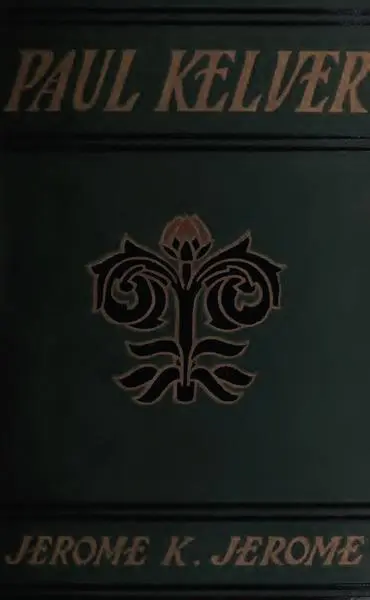
- Название:Paul Kelver
- Автор:
- Издательство:Dodd, Mead & Company
- Жанр:
- Год:1902
- Город:New York
- ISBN:нет данных
- Рейтинг книги:3 / 5. Голосов: 1
-
Избранное:Добавить в избранное
- Отзывы:
-
Ваша оценка:
Paul Kelver: краткое содержание, описание и аннотация
Предлагаем к чтению аннотацию, описание, краткое содержание или предисловие (зависит от того, что написал сам автор книги «Paul Kelver»). Если вы не нашли необходимую информацию о книге — напишите в комментариях, мы постараемся отыскать её.
Paul Kelver — читать онлайн бесплатно полную книгу (весь текст) целиком
Ниже представлен текст книги, разбитый по страницам. Система сохранения места последней прочитанной страницы, позволяет с удобством читать онлайн бесплатно книгу «Paul Kelver», без необходимости каждый раз заново искать на чём Вы остановились. Поставьте закладку, и сможете в любой момент перейти на страницу, на которой закончили чтение.
Интервал:
Закладка:
“Is it over?” he asked. He was mopping his face on a huge handkerchief, and had a small looking-glass in his hand.
“All over,” I answered, “they are waiting for you to start.”
“I always perspire so when I'm excited,” he explained. “Keep me out of it as much as possible.”
But the next time I saw him, which was two or three days later, the reaction had set in. He was sitting in his great library, surrounded by books he would no more have thought of disturbing than he would of strumming on the gorgeous grand piano inlaid with silver that ornamented his drawing-room. A change had passed over him. His swelling rotundity, suggestive generally of a bladder inflated to its extremest limits by excess of self-importance, appeared to be shrinking. I put the idea aside as mere fancy at the time, but it was fact; he became a mere bag of bones before he died. He was wearing an old pair of carpet slippers and smoking a short clay pipe.
“Well,” I said, “everything went off all right.”
“Everybody's gone off all right, so far,” he grunted. He was crouching over the fire, though the weather was still warm, one hand spread out towards the blaze. “Now I've got to go off, that's the only thing they're waiting for. Then everything will be in order.”
“I don't think they are wanting you to go off,” I answered, with a laugh.
“You mean,” he answered, “I'm the goose that lays the golden eggs. Ah, but you see, so many of the eggs break, and so many of them are bad.”
“Some of them hatch all right,” I replied. The simile was becoming somewhat confused: in conversation similes are apt to.
“If I were to die this week,” he said—he paused, completing mental calculations, “I should be worth, roughly speaking, a couple of million. This time next year I may be owing a million.”
I sat down opposite to him. “Why run risks?” I suggested. “Surely you have enough. Why not give it up—retire?”
He laughed. “Do you think I haven't said that to myself, lad—sworn I would a dozen times a year? I can't do it; I'm a gambler. It's the earliest thing I can recollect doing, gambling with brace buttons. There are men, Paul, now dying in the workhouse—men I once knew well; I think of them sometimes, and wish I didn't—who any time during half their life might have retired on twenty thousand a year. If I were to go to any one of them, and settle an annuity of a hundred a year upon him, the moment my back was turned he'd sell it out and totter up to Threadneedle Street with the proceeds. It's in our blood. I shall gamble on my death-bed, die with the tape in my hand.”
He kicked the fire into a blaze. A roaring flame made the room light again.
“But that won't be just yet awhile,” he laughed, “and before it does, I'll be the richest man in Europe. I keep my head cool—that's the great secret.” Leaning over towards me, he sunk his voice to a whisper, “Drink, Paul—so many of them drink. They get worried; fifty things dancing round and round at the same time in their heads. Fifty questions to be answered in five minutes. Tick, tick, tick, taps the little devil at their elbow. This going down, that going up. Rumor of this, report of that. A fortune to be lost here, a fortune to be snatched there. Everything in a whirl! Tick, tick, tick, like nails into a coffin. God! for five minutes' peace to think. Shut the door, turn the key. Out comes the bottle. That's the end. All right so long as you keep away from that. Cool, quick brain, clear judgment—that's the secret.”
“But is it worth it all?” I suggested. “Surely you have enough?”
“It means power, Paul.” He slapped his trousers pocket, making the handful of gold and silver he always carried there jingle musically. “It is this that rules the world. My children shall be big pots, hobnob with kings and princes, slap them on the back and call them by their Christian names, be kings themselves—why not? It's happened before. My children, the children of old Noel Hasluck, son of a Whitechapel butcher! Here's my pedigree!” Again be slapped his tuneful pocket. “It's an older one than theirs! It's coming into its own at last! It's money—we men of money—that are the true kings now. It's our family that rules the world—the great money family; I mean to be its head.”
The blaze died out, leaving the room almost in darkness, and for awhile we sat in silence.
“Quiet, isn't it?” said old Hasluck, raising his head.
The settling of the falling embers was the only sound about us.
“Guess we'll always be like this, now,” continued old Hasluck. “Old woman goes to bed, you see, immediately after dinner. It used to be different when she was about. Somehow, the house and the lackeys and all the rest of it seemed to be a more natural sort of thing when she was the centre of it. It frightens the old woman now she's gone. She likes to get away from it. Poor old Susan! A little country inn with herself as landlady and me fussing about behind the bar; that was always her ambition, poor old girl!”
“You will be visiting them,” I suggested, “and they will be coming to stop with you.”
He shook his head. “They won't want me, and it isn't my game to hamper them. I never mix out of my class. I've always had sense enough for that.”
I laughed, wishing to cheer him, though I knew he was right. “Surely your daughter belongs to your own class,” I replied.
“Do you think so?” he asked, with a grin. “That's not a pretty compliment to her. She was my child when she used to cling round my neck, while I made the sausages, calling me her dear old pig. It didn't trouble her then that I dropped my aitches and had a greasy skin. I was a Whitechapel butcher, and she was a Whitechapel brat. I could have kept her if I'd liked, but I was set upon making a lady of her, and I did it. But I lost my child. Every time she came back from school I could see she despised me a little more. I'm not blaming her; how could she help it? I was making a lady of her, teaching her to do it; though there were moments when I almost hated her, felt tempted to snatch her back to me, drag her down again to my level, make her my child again, before it was too late. Oh, it wasn't all unselfishness; I could have done it. She would have remained my class then, would have married my class, and her children would have been my class. I didn't want that. Everything's got to be paid for. I got what I asked for; I'm not grumbling at the price. But it ain't cheap.”
He rose and knocked the ashes from his pipe. “Ring the bell, Paul, will you?” he said. “Let's have some light and something to drink. Don't take any notice of me. I've got the hump to-night.”
It was a minute or two before the lamp came. He put his arm upon my shoulder, leaning upon me somewhat heavily.
“I used to fancy sometimes, Paul,” he said, “that you and she might have made a match of it. I should have been disappointed for some things. But you'd have been a bit nearer to me, you two. It never occurred to you, that, I suppose?”
Chapter VII.
How Paul set forth upon a Quest.
Of old Deleglise's Sunday suppers, which, costumed from head to foot in spotless linen, he cooked himself in his great kitchen, moving with flushed, earnest face about the gleaming stove, while behind him his guests waited, ranged round the massive oaken table glittering with cut glass and silver, among which fluttered the deft hands of Madeline, his ancient whitecapped Bonne, much has been already recorded, and by those possessed of greater knowledge. They who sat there talking in whispers until such time as old Deleglise turned towards them again, radiant with consciousness of success, the savoury triumph steaming between his hands, when, like the sudden swell of the Moonlight Sonata, the talk would rush once more into a roar, were men whose names were then—and some are still—more or less household words throughout the English-speaking world. Artists, musicians, actors, writers, scholars, droles, their wit and wisdom, their sayings and their doings must be tolerably familiar to readers of memoir and biography; and if to such their epigrams appear less brilliant, their jests less laughable than to us who heard them spoken, that is merely because fashion in humour and in understanding changes as in all else.
Читать дальшеИнтервал:
Закладка:
Похожие книги на «Paul Kelver»
Представляем Вашему вниманию похожие книги на «Paul Kelver» списком для выбора. Мы отобрали схожую по названию и смыслу литературу в надежде предоставить читателям больше вариантов отыскать новые, интересные, ещё непрочитанные произведения.









Обсуждение, отзывы о книге «Paul Kelver» и просто собственные мнения читателей. Оставьте ваши комментарии, напишите, что Вы думаете о произведении, его смысле или главных героях. Укажите что конкретно понравилось, а что нет, и почему Вы так считаете.