Jerome Jerome - Paul Kelver
Здесь есть возможность читать онлайн «Jerome Jerome - Paul Kelver» весь текст электронной книги совершенно бесплатно (целиком полную версию без сокращений). В некоторых случаях можно слушать аудио, скачать через торрент в формате fb2 и присутствует краткое содержание. Город: New York, Год выпуска: 1902, Издательство: Dodd, Mead & Company, Жанр: Классическая проза, на английском языке. Описание произведения, (предисловие) а так же отзывы посетителей доступны на портале библиотеки ЛибКат.
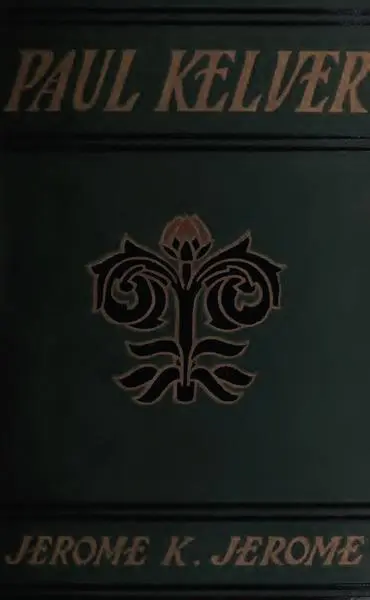
- Название:Paul Kelver
- Автор:
- Издательство:Dodd, Mead & Company
- Жанр:
- Год:1902
- Город:New York
- ISBN:нет данных
- Рейтинг книги:3 / 5. Голосов: 1
-
Избранное:Добавить в избранное
- Отзывы:
-
Ваша оценка:
Paul Kelver: краткое содержание, описание и аннотация
Предлагаем к чтению аннотацию, описание, краткое содержание или предисловие (зависит от того, что написал сам автор книги «Paul Kelver»). Если вы не нашли необходимую информацию о книге — напишите в комментариях, мы постараемся отыскать её.
Paul Kelver — читать онлайн бесплатно полную книгу (весь текст) целиком
Ниже представлен текст книги, разбитый по страницам. Система сохранения места последней прочитанной страницы, позволяет с удобством читать онлайн бесплатно книгу «Paul Kelver», без необходимости каждый раз заново искать на чём Вы остановились. Поставьте закладку, и сможете в любой момент перейти на страницу, на которой закончили чтение.
Интервал:
Закладка:
I felt the anger burning in my eyes. “Yours, his! She is no man's property. She is herself,” I cried.
The wrinkles round his nose and mouth smoothed themselves out. “You need not be afraid,” he sneered. “As you say, she is the Countess Huescar. Can you imagine her as Mrs. Doctor Washburn? I can't.” He took her photograph in his hand again. “The lower part of the face is the true index to the character. It shows the animal, and it is the animal that rules. The soul, the intellect, it comes and goes; the animal remains always. Sensuousness, love of luxury, vanity, those are the strings to which she dances. To be a Countess is of more importance to her than to be a woman. She is his, not mine. Let him keep her.”
“You do not know her,” I answered; “you never have. You listen to what she says. She does not know herself.”
He looked at me queerly. “What do you think her to be?” he asked me. “A true woman, not the shallow thing she seems?”
“A true woman,” I persisted stoutly, “that you have not eyes enough to see.”
“You little fool!” he muttered, with the same queer look—“you little fool. But let us hope you are wrong, Paul. Let us hope, for her sake, you are wrong.”
It was at one of Deleglise's Sunday suppers that I first met Urban Vane. The position, nor even the character, I fear it must be confessed, of his guests was never enquired into by old Deleglise. A simple-minded, kindly old fellow himself, it was his fate to be occasionally surprised and grieved at the discovery that even the most entertaining of supper companions could fall short of the highest standard of conventional morality.
“Dear, dear me!” he would complain, pacing up and down his studio with puzzled visage. “The last man in the world of whom I should have expected to hear it. So original in all his ideas. Are you quite sure?”
“I am afraid there can be no doubt about it.”
“I can't believe it! I really can't believe it! One of the most amusing men I ever met!”
I remember a well-known artist one evening telling us with much sense of humour how he had just completed the sale of an old Spanish cabinet to two distinct and separate purchasers.
“I sold it first,” recounted the little gentleman with glee, “to old Jong, the dealer. He has been worrying me about it for the last three months, and on Saturday afternoon, hearing that I was clearing out and going abroad, he came round again. 'Well, I am not sure I am in a position to sell it,' I told him. 'Who'll know?' he asked. 'They are not in, are they?' 'Not yet,' I answered, 'but I expect they will be some time on Monday.' 'Tell your man to open the door to me at eight o'clock on Monday morning,' he replied, 'we'll have it away without any fuss. There needn't be any receipt. I'm lending you a hundred pounds, in cash.' I worked him up to a hundred and twenty, and he paid me. Upon my word, I should never have thought of it, if he hadn't put the idea into my head. But turning round at the door: 'You won't go and sell it to some one else,' he suggested, 'between now and Monday?' It serves him right for his damned impertinence. 'Send and take it away to-day if you are at all nervous,' I told him. He looked at the thing, it is about twelve feet high altogether. 'I would if I could get a cart,' he muttered. Then an idea struck him. 'Does the top come off?' 'See for yourself,' I answered; 'it's your cabinet, not mine.' I was feeling rather annoyed with him. He examined it. 'That's all right,' he said; 'merely a couple of screws. I'll take the top with me now on my cab.' He got a man in, and they took the upper cupboard away, leaving me the bottom. Two hours later old Sir George called to see me about his wife's portrait. The first thing he set eyes on was the remains of the cabinet: he had always admired it. 'Hallo,' he asked, 'are you breaking up the studio literally? What have you done with the other half?' 'I've sent it round to Jong's—' He didn't give me time to finish. 'Save Jong's commission and sell it to me direct,' he said. 'We won't argue about the price and I'll pay you in cash.'”
“Well, if Providence comes forward and insists on taking charge of a man, it is hardly good manners to flout her. Besides, his wife's portrait is worth twice as much as he is paying for it. He handed me over the money in notes. 'Things not going quite smoothly with you just at the moment?' he asked me. 'Oh, about the same as usual,' I told him. 'You won't be offended at my taking it away with me this evening?' he asked. 'Not in the least,' I answered; 'you'll get it on the top of a four-wheeled cab.' We called in a couple of men, and I helped them down with it, and confoundedly heavy it was. 'I shall send round to Jong's for the other half on Monday morning,' he said, speaking with his head through the cab window, 'and explain it to him.' 'Do,' I answered; 'he'll understand.'”
“I'm sorry I'm going away so early in the morning,” concluded the little gentleman. “I'd give back Jong ten per cent. of his money to see his face when he enters the studio.”
Everybody laughed; but after the little gentleman was gone, the subject cropped up again.
“If I wake sufficiently early,” remarked one, “I shall find an excuse to look in myself at eight o'clock. Jong's face will certainly be worth seeing.”
“Rather rough both on him and Sir George,” observed another.
“Oh, he hasn't really done anything of the kind,” chimed in old Deleglise in his rich, sweet voice. “He made that all up. It's just his fun; he's full of humour.”
“I am inclined to think that would be his idea of a joke,” asserted the first speaker.
Old Deleglise would not hear of it; but a week or two later I noticed an addition to old Deleglise's studio furniture in the shape of a handsome old carved cabinet twelve feet high.
“He really had done it,” explained old Deleglise, speaking in a whisper, though only he and I were present. “Of course, it was only his fun; but it might have been misunderstood. I thought it better to put the thing straight. I shall get the money back from him when he returns. A most amusing little man!”
Old Deleglise possessed a house in Gower Street which fell vacant. One of his guests, a writer of poetical drama, was a man who three months after he had earned a thousand pounds never had a penny with which to bless himself. They are dying out, these careless, good-natured, conscienceless Bohemians; but quarter of a century ago they still lingered in Alsatian London. Turned out of his lodgings by a Philistine landlord, his sole possession in the wide world, two acts of a drama, for which he had already been paid, the problem of his future, though it troubled him but little, became acute to his friends. Old Deleglise, treating the matter as a joke, pretending not to know who was the landlord, suggested he should apply to the agents for position as caretaker. Some furniture was found for him, and the empty house in Gower Street became his shelter. The immediate present thus provided for, kindly old Deleglise worried himself a good deal concerning what would become of his friend when the house was let. There appeared to be no need for worry. Weeks, months went by. Applications were received by the agents in fair number, view cards signed by the dozen; but prospective tenants were never seen again. One Sunday evening our poet, warmed by old Deleglise's Burgundy, forgetful whose recommendation had secured him the lowly but timely appointment, himself revealed the secret.
“Most convenient place I've got,” so he told old Deleglise. “Whole house to myself. I wander about; it just suits me.”
“I'm glad to hear that,” murmured old Deleglise.
“Come and see me, and I'll cook you a chop,” continued the other. “I've had the kitchen range brought up into the back drawing-room; saves going up and down stairs.”
Читать дальшеИнтервал:
Закладка:
Похожие книги на «Paul Kelver»
Представляем Вашему вниманию похожие книги на «Paul Kelver» списком для выбора. Мы отобрали схожую по названию и смыслу литературу в надежде предоставить читателям больше вариантов отыскать новые, интересные, ещё непрочитанные произведения.









Обсуждение, отзывы о книге «Paul Kelver» и просто собственные мнения читателей. Оставьте ваши комментарии, напишите, что Вы думаете о произведении, его смысле или главных героях. Укажите что конкретно понравилось, а что нет, и почему Вы так считаете.