Jerome Jerome - Paul Kelver
Здесь есть возможность читать онлайн «Jerome Jerome - Paul Kelver» весь текст электронной книги совершенно бесплатно (целиком полную версию без сокращений). В некоторых случаях можно слушать аудио, скачать через торрент в формате fb2 и присутствует краткое содержание. Город: New York, Год выпуска: 1902, Издательство: Dodd, Mead & Company, Жанр: Классическая проза, на английском языке. Описание произведения, (предисловие) а так же отзывы посетителей доступны на портале библиотеки ЛибКат.
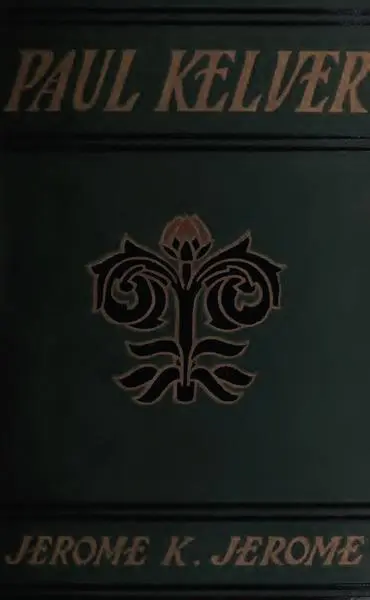
- Название:Paul Kelver
- Автор:
- Издательство:Dodd, Mead & Company
- Жанр:
- Год:1902
- Город:New York
- ISBN:нет данных
- Рейтинг книги:3 / 5. Голосов: 1
-
Избранное:Добавить в избранное
- Отзывы:
-
Ваша оценка:
Paul Kelver: краткое содержание, описание и аннотация
Предлагаем к чтению аннотацию, описание, краткое содержание или предисловие (зависит от того, что написал сам автор книги «Paul Kelver»). Если вы не нашли необходимую информацию о книге — напишите в комментариях, мы постараемся отыскать её.
Paul Kelver — читать онлайн бесплатно полную книгу (весь текст) целиком
Ниже представлен текст книги, разбитый по страницам. Система сохранения места последней прочитанной страницы, позволяет с удобством читать онлайн бесплатно книгу «Paul Kelver», без необходимости каждый раз заново искать на чём Вы остановились. Поставьте закладку, и сможете в любой момент перейти на страницу, на которой закончили чтение.
Интервал:
Закладка:
“The devil you have!” growled old Deleglise. “What do you think the owner of the house will say?”
“Haven't the least idea who the poor old duffer is myself. They've put me in as caretaker—an excellent arrangement: avoids all argument about rent.”
“Afraid it will soon come to an end, that excellent arrangement;” remarked old Deleglise, drily.
“Why? Why should it?”
“A house in Gower Street oughtn't to remain vacant long.”
“This one will.”
“You might tell me,” asked old Deleglise, with a grim smile; “how do you manage it? What happens when people come to look over the house—don't you let them in?”
“I tried that at first,” explained the poet, “but they would go on knocking, and boys and policemen passing would stop and help them. It got to be a nuisance; so now I have them in, and get the thing over. I show them the room where the murder was committed. If it's a nervous-looking party, I let them off with a brief summary. If that doesn't do, I go into details and show them the blood-spots on the floor. It's an interesting story of the gruesome order. Come round one morning and I'll tell it to you. I'm rather proud of it. With the blinds down and a clock in the next room that ticks loudly, it goes well.”
Yet this was a man who, were the merest acquaintance to call upon him and ask for his assistance, would at once take him by the arm and lead him upstairs. All notes and cheques that came into his hands he changed at once into gold. Into some attic half filled with lumber he would fling it by the handful; then, locking the door, leave it there. On their hands and knees he and his friends, when they wanted any, would grovel for it, poking into corners, hunting under boxes, groping among broken furniture, feeling between cracks and crevices. Nothing gave him greater delight than an expedition of this nature to what he termed his gold-field; it had for him, as he would explain, all the excitements of mining without the inconvenience and the distance. He never knew how much was there. For a certain period a pocketful could be picked up in five minutes. Then he would entertain a dozen men at one of the best restaurants in London, tip cabmen and waiters with half-sovereigns, shower half-crowns as he walked through the streets, lend or give to anybody for the asking. Later, half-an-hour's dusty search would be rewarded with a single coin. It made no difference to him; he would dine in Soho for eighteenpence, smoke shag, and run into debt.
The red-haired man, to whom Deleglise had introduced me on the day of my first meeting with the Lady of the train, was another of his most constant visitors. It flattered my vanity that the red-haired man, whose name was famous throughout Europe and America, should condescend to confide to me—as he did and at some length—the deepest secrets of his bosom. Awed—at all events at first—I would sit and listen while by the hour he would talk to me in corners, telling me of the women he had loved. They formed a somewhat large collection. Julias, Marias, Janets, even Janes—he had madly worshipped, deliriously adored so many it grew bewildering. With a far-away look in his eyes, pain trembling through each note of his musical, soft voice, he would with bitter jest, with passionate outburst, recount how he had sobbed beneath the stars for love of Isabel, bitten his own flesh in frenzied yearning for Lenore. He appeared from his own account—if in connection with a theme so poetical I may be allowed a commonplace expression—to have had no luck with any of them. Of the remainder, an appreciable percentage had been mere passing visions, seen at a distance in the dawn, at twilight—generally speaking, when the light must have been uncertain. Never again, though he had wandered in the neighbourhood for months, had he succeeded in meeting them. It would occur to me that enquiries among the neighbours, applications to the local police, might possibly have been efficacious; but to have broken in upon his exalted mood with such suggestions would have demanded more nerve than at the time I possessed. In consequence, my thoughts I kept to myself.
“My God, boy!” he would conclude, “may you never love as I loved that woman Miriam”—or Henrietta, or Irene, as the case might be.
For my sympathetic attitude towards the red-haired man I received one evening commendation from old Deleglise.
“Good boy,” said old Deleglise, laying his hand on my shoulder. We were standing in the passage. We had just shaken hands with the red-haired man, who, as usual, had been the last to leave. “None of the others will listen to him. He used to stop and confide it all to me after everybody else had gone. Sometimes I have dropped asleep, to wake an hour later and find him still talking. He gets it over early now. Good boy!”
Soon I learnt it was characteristic of the artist to be willing—nay, anxious, to confide his private affairs to any one and every one who would only listen. Another characteristic appeared to be determination not to listen to anybody else's. As attentive recipient of other people's troubles and emotions I was subjected to practically no competition whatever. One gentleman, a leading actor of that day, I remember, immediately took me aside on my being introduced to him, and consulted me as to his best course of procedure under the extremely painful conditions that had lately arisen between himself and his wife. We discussed the unfortunate position at some length, and I did my best to counsel fairly and impartially.
“I wish you would lunch with me at White's to-morrow,” he said. “We can talk it over quietly. Say half-past one. By the bye, I didn't catch your name.”
I spelt it to him: he wrote the appointment down on his shirt-cuff. I went to White's the next day and waited an hour, but he did not turn up. I met him three weeks later at a garden-party with his wife. But he appeared to have forgotten me.
Observing old Deleglise's guests, comparing them with their names, it surprised me the disconnection between the worker and the work. Writers of noble sentiment, of elevated ideality, I found contained in men of commonplace appearance, of gross appetites, of conventional ideas. It seemed doubtful whether they fully comprehended their own work; certainly it had no effect upon their own lives. On the other hand, an innocent, boyish young man, who lived the most correct of lives with a girlish-looking wife in an ivy-covered cottage near Barnes Common, I discovered to be the writer of decadent stories at which the Empress Theodora might have blushed. The men whose names were widest known were not the men who shone the brightest in Deleglise's kitchen; more often they appeared the dull dogs, listening enviously, or failing pathetically when they tried to compete with others who to the public were comparatively unknown. After a time I ceased to confound the artist with the man, thought no more of judging the one by the other than of evolving a tenant from the house to which circumstances or carelessness might have directed him. Clearly they were two creations originally independent of each other, settling down into a working partnership for purposes merely of mutual accommodation; the spirit evidently indifferent as to the particular body into which he crept, anxious only for a place to work in, easily contented.
Varied were these guests that gathered round old Deleglise's oak. Cabinet Ministers reported to be in Homburg; Russian Nihilists escaped from Siberia; Italian revolutionaries; high church dignitaries disguised in grey suitings; ex-errand boys, who had discovered that with six strokes of the pen they could set half London laughing at whom they would; raw laddies with the burr yet clinging to their tongues, but who we knew would one day have the people dancing to the music of their words. Neither wealth, nor birth, nor age, nor position counted. Was a man interesting, amusing; had he ideas and thoughts of his own? Then he was welcome. Men who had come, men who were coming, met there on equal footing. Among them, as years ago among my schoolmates, I found my place—somewhat to my dissatisfaction. I amused. Much rather would I have shocked them by the originality of my views, impressed them with the depth of my judgments. They declined to be startled, refused to be impressed; instead, they laughed. Nor from these men could I obtain sympathy in my disappointment.
Читать дальшеИнтервал:
Закладка:
Похожие книги на «Paul Kelver»
Представляем Вашему вниманию похожие книги на «Paul Kelver» списком для выбора. Мы отобрали схожую по названию и смыслу литературу в надежде предоставить читателям больше вариантов отыскать новые, интересные, ещё непрочитанные произведения.











Обсуждение, отзывы о книге «Paul Kelver» и просто собственные мнения читателей. Оставьте ваши комментарии, напишите, что Вы думаете о произведении, его смысле или главных героях. Укажите что конкретно понравилось, а что нет, и почему Вы так считаете.