Jerome Jerome - Paul Kelver
Здесь есть возможность читать онлайн «Jerome Jerome - Paul Kelver» весь текст электронной книги совершенно бесплатно (целиком полную версию без сокращений). В некоторых случаях можно слушать аудио, скачать через торрент в формате fb2 и присутствует краткое содержание. Город: New York, Год выпуска: 1902, Издательство: Dodd, Mead & Company, Жанр: Классическая проза, на английском языке. Описание произведения, (предисловие) а так же отзывы посетителей доступны на портале библиотеки ЛибКат.
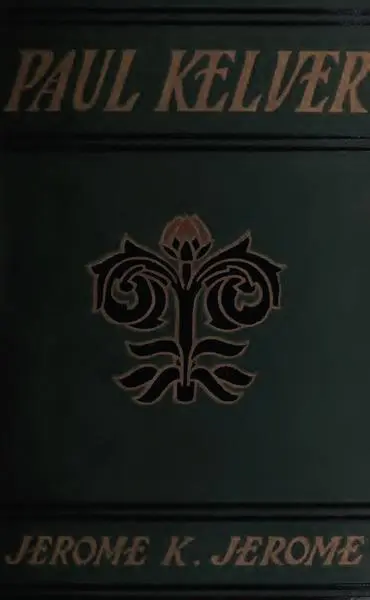
- Название:Paul Kelver
- Автор:
- Издательство:Dodd, Mead & Company
- Жанр:
- Год:1902
- Город:New York
- ISBN:нет данных
- Рейтинг книги:3 / 5. Голосов: 1
-
Избранное:Добавить в избранное
- Отзывы:
-
Ваша оценка:
Paul Kelver: краткое содержание, описание и аннотация
Предлагаем к чтению аннотацию, описание, краткое содержание или предисловие (зависит от того, что написал сам автор книги «Paul Kelver»). Если вы не нашли необходимую информацию о книге — напишите в комментариях, мы постараемся отыскать её.
Paul Kelver — читать онлайн бесплатно полную книгу (весь текст) целиком
Ниже представлен текст книги, разбитый по страницам. Система сохранения места последней прочитанной страницы, позволяет с удобством читать онлайн бесплатно книгу «Paul Kelver», без необходимости каждый раз заново искать на чём Вы остановились. Поставьте закладку, и сможете в любой момент перейти на страницу, на которой закончили чтение.
Интервал:
Закладка:
What would he be, her lover? Some plain, matter-of-fact, business-like young fellow, a good player of cricket and football, fond of his dinner. What a very uninteresting affair the love-making would be! If she liked him—well, she would probably tell him so; if she didn't, he would know it in five minutes.
As for inducing her to change her mind, wooing her, cajoling her—I heard myself laughing at the idea.
There came a quick rap at the door. “Come in,” I cried; and she entered.
“I came to say good-bye to you,” she explained. “I'm just going out. What were you laughing at?”
“Oh, at an idea that occurred to me.”
“A funny one?”
“Yes.”
“Tell it me.”
“Well, it was something in connection with yourself. It might offend you.”
“It wouldn't trouble you much if it did, would it?”
“No, I don't suppose it would.”
“Then why not tell me?”
“I was thinking of your lover.”
It did offend her; I thought it would. But she looked really interesting when she was cross. Her grey eyes would flash, and her whole body quiver. There was a charming spice of danger always about making her cross.
“I suppose you think I shall never have one.”
“On the contrary, I think you will have a good many.” I had not thought so before then. I formed the idea for the first time in that moment, while looking straight into her angry face. It was still a childish face.
The anger died out of it as it always did within the minute, and she laughed. “It would be fun, wouldn't it. I wonder what I should do with him? It makes you feel very serious being in love, doesn't it?”
“Very.”
“Have you ever been in love?”
I hesitated for a moment. Then the delight of talking about it overcame my fear of being chaffed. Besides, when she felt it, nobody could be more delightfully sympathetic. I determined to adventure it.
“Yes,” I answered, “ever since I was a boy. If you are going to be foolish,” I added, for I saw the laugh before it came, “I shan't talk to you about it.”
“I'm not—I won't, really,” she pleaded, making her face serious again. “What is she like?”
I took from my breast pocket Barbara's photograph, and handed it to her in silence.
“Is she really as beautiful as that?” she asked, gazing at it evidently fascinated.
“More so,” I assured her. “Her expression is the most beautiful part of her. Those are only her features.”
She sighed. “I wish I was beautiful.”
“You are at an awkward age,” I told her. “It is impossible to say what you are going to be like.”
“Mamma was a lovely woman, everybody says so; and Tom I call awfully handsome. Perhaps I'll be better when I'm filled out a bit more.” A small Venetian mirror hung between the two windows; she glanced up into it. “It's my nose that irritates me,” she said. She rubbed it viciously, as if she would rub it out.
“Some people admire snub noses,” I explained to her.
“No, really?”
“Tennyson speaks of them as 'tip-tilted like the petals of a rose.'”
“How nice of him! Do you think he meant my sort?” She rubbed it again, but in a kinder fashion; then looked again at Barbara's photograph. “Who is she?”
“She was Miss Hasluck,” I answered; “she is the Countess Huescar now. She was married last summer.”
“Oh, yes, I remember; you told us about her. You were children together. But what's the good of your being in love with her if she's married?”
“It makes my whole life beautiful.”
“Wanting somebody you can't have?”
“I don't want her.”
“You said you were in love with her.”
“So I am.”
She handed me back the photograph, and I replaced it in my pocket.
“I don't understand that sort of love,” she said. “If I loved anybody I should want to have them with me always.”
“She is with me always,” I answered, “in my thoughts.” She looked at me with her clear grey eyes. I found myself blinking. Something seemed to be slipping from me, something I did not want to lose. I remember a similar sensation once at the moment of waking from a strange, delicious dream to find the sunlight pouring in upon me through an open window.
“That isn't being in love,” she said. “That's being in love with the idea of being in love. That's the way I used to go to balls”—she laughed—“in front of the glass. You caught me once, do you remember?”
“And was it not sweeter,” I argued, “the imagination? You were the belle of the evening; you danced divinely every dance, were taken in to supper by the Lion. In reality you trod upon your partner's toes, bumped and were bumped, were left a wallflower more than half the time, had a headache the next day. Were not the dream balls the more delightful?”
“No, they weren't,” she answered without the slightest hesitation. “One real dance, when at last it came, was worth the whole of them. Oh, I know, I've heard you talking, all of you—of the faces that you see in dreams and that are ever so much more beautiful than the faces that you see when you're awake; of the wonderful songs that nobody ever sings, the wonderful pictures that nobody ever paints, and all the rest of it. I don't believe a word of it. It's tommyrot!”
“I wish you wouldn't use slang.”
“Well, you know what I mean. What is the proper word? Give it me.”
“I suppose you mean cant,” I suggested.
“No, I don't. Cant is something that you don't believe in yourself. It's tommyrot: there isn't any other word. When I'm in love it will be with something that is real.”
I was feeling angry with her. “I know just what he will be like. He will be a good-natured, commonplace—”
“Whatever he is,” she interrupted, “he'll be alive, and he'll want me and I shall want him. Dreams are silly. I prefer being up.” She clapped her hands. “That's it.” Then, silent, she looked at me with an expression of new interest. “I've been wondering and wondering what it was: you are not really awake yet. You've never got up.”
I laughed at her whimsical way of putting it; but at the back of my brain was a troubled idea that perhaps she was revealing to me the truth. And if so, what would “waking up,” as she termed it, be like? A flash of memory recalled to me that summer evening upon Barking Bridge, when, as it had seemed to me, the little childish Paul had slipped away from me, leaving me lonely and bewildered to find another Self. Was my boyhood in like manner now falling from me? I found myself clinging to it with vague terror. Its thoughts, its feelings—dreams: they had grown sweet to me; must I lose them? This cold, unknown, new Self, waiting to receive me: I shrank away from it with fear.
“Do you know, I think you will be rather nice when you wake up.”
Her words recalled me to myself. “Perhaps I never shall wake up,” I said. “I don't want to wake up.”
“Oh, but one can't go on dreaming all one's life,” she laughed. “You'll wake up, and fall in love with somebody real.” She came across to me, and taking the lapels of my coat in both her hands, gave me a vigorous shake. “I hope she'll be somebody nice. I am rather afraid.”
“You seem to think me a fool!” I was still angry with her, without quite knowing why.
She shook me again. “You know I don't. But it isn't the nice people that take best care of themselves. Tom can't. I have to take care of him.”
I laughed.
“I do, really. You should hear me scold him. I like taking care of people. Good-bye.”
She held out her hand. It was white now and shapely, but one could not have called it small. Strong it felt and firm as it gripped mine.
Chapter VIII.
Интервал:
Закладка:
Похожие книги на «Paul Kelver»
Представляем Вашему вниманию похожие книги на «Paul Kelver» списком для выбора. Мы отобрали схожую по названию и смыслу литературу в надежде предоставить читателям больше вариантов отыскать новые, интересные, ещё непрочитанные произведения.








Обсуждение, отзывы о книге «Paul Kelver» и просто собственные мнения читателей. Оставьте ваши комментарии, напишите, что Вы думаете о произведении, его смысле или главных героях. Укажите что конкретно понравилось, а что нет, и почему Вы так считаете.