Gyula Krudy - Sunflower
Здесь есть возможность читать онлайн «Gyula Krudy - Sunflower» весь текст электронной книги совершенно бесплатно (целиком полную версию без сокращений). В некоторых случаях можно слушать аудио, скачать через торрент в формате fb2 и присутствует краткое содержание. Город: New York, Год выпуска: 2007, Издательство: New York Review Books, Жанр: Классическая проза, на английском языке. Описание произведения, (предисловие) а так же отзывы посетителей доступны на портале библиотеки ЛибКат.
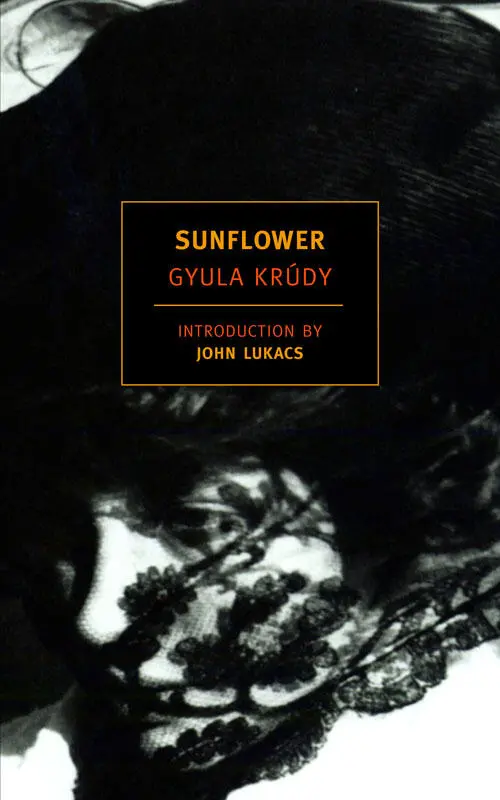
- Название:Sunflower
- Автор:
- Издательство:New York Review Books
- Жанр:
- Год:2007
- Город:New York
- ISBN:нет данных
- Рейтинг книги:4 / 5. Голосов: 1
-
Избранное:Добавить в избранное
- Отзывы:
-
Ваша оценка:
Sunflower: краткое содержание, описание и аннотация
Предлагаем к чтению аннотацию, описание, краткое содержание или предисловие (зависит от того, что написал сам автор книги «Sunflower»). Если вы не нашли необходимую информацию о книге — напишите в комментариях, мы постараемся отыскать её.
In
young Eveline leaves the city and returns to her country estate to escape the memory of her desperate love for the unscrupulous charmer Kálmán. There she encounters the melancholy Álmos-Dreamer, who is languishing for love of her, and is visited by the bizarre and beautiful Miss Maszkerádi, a woman who is a force of nature. The plot twists and turns; elemental myth mingles with sheer farce: Krúdy brilliantly illuminates the shifting contours and acid colors of the landscape of desire.
John Bátki’s outstanding translation of
is the perfect introduction to the world of Gyula Krúdy, a genius as singular as Robert Walser, Bruno Schulz, or Joseph Roth.
Sunflower — читать онлайн бесплатно полную книгу (весь текст) целиком
Ниже представлен текст книги, разбитый по страницам. Система сохранения места последней прочитанной страницы, позволяет с удобством читать онлайн бесплатно книгу «Sunflower», без необходимости каждый раз заново искать на чём Вы остановились. Поставьте закладку, и сможете в любой момент перейти на страницу, на которой закончили чтение.
Интервал:
Закладка:
“I don’t really like them and yet they fascinate me like travel descriptions of distant continents. For me to be alive means coming across ever new acquaintances, new voices, new names, new faces. Even each handshake can be so different. And people’s lies make the most beautiful fairy tales. Everybody tells such lies.” Meanwhile the bachelor made himself at home in her dining room. He opened the cupboard, found the bottle of plum brandy, cut himself a slice of ham, sniffed the aroma of the bread loaf, and proceeded to have himself a leisurely and self-indulgent snack.
“Men aren’t worth a pipeful of tobacco, mark my words. You are twenty-two now. You love travel and travelers, fair-grounds and market women, stylish overcoats and flashy lights. You’ll go back a few more times for a taste of that sorry masked ball. You’ll need life’s disappointments and storms to find the path to happiness. Yes, go on and step out, have a good time and laugh a lot, dazzle and dance on. Sooner or later you’ll have your fill of the masquerade. I’ll be here waiting for you, I won’t go anywhere. But bear in mind that if you decided not to come back one year…I’d be very sad ever after.” So spoke Andor Álmos-Dreamer.
He said his good-byes and set out. The horseman’s snow-laden figure soon disappeared into the white night.
Three days later on his island he received a letter from Eveline, requesting Mr. Álmos-Dreamer’s presence at once, for she had important things to tell him. And so the recluse again abandoned his tame otters to find Eveline sitting by her stove, as pale as one afflicted with an ailment of the heart.
“I seem to have become quite a coward. At night I keep hearing footsteps around the house. I wake up and stare at the door as if somebody were here, who won’t let me sleep. I fear the bell-jar silence of the winter night, the noiseless dying of the embers, the shadows of antique furniture, this treacherous provincial house with its lazy hounds and indolent servants. I could be murdered in my sleep, for all they care.”
Andor Álmos-Dreamer growled in response.
“You’ll get used to the quiet. Soon you won’t mind the moaning of the wind. Part of you is still in the big city.”
“Mademoiselle Montmorency, my paid companion, sleeps as soundly as an aged nun, while my aunt enjoys happy dreams about the gallants of her youth. My maids scribble love letters to Budapest. The bailiff gets drunk every night. I am all alone here, and I am afraid. Someone is lurking around my house. Maybe a vagabond or a highwayman, or else a…”
Mr. Álmos-Dreamer smiled. “A lover…Just leave it to me, I’ll take care of it. I’ll come back at night and patrol the neighborhood on horseback.”
That night the moon shone as radiant as a carnival clown. The snow-covered landscape sparkled with built-in stars. The groves stood immobile in their shrouds. It was a blessed winter night, the crowing of the rooster still a long way off. Time to die a hundred deaths until then. A mounted figure resembling a highwayman passed in front of the house and surveyed the moonlit landscape. His horse snorted smoky clouds into the bitter cold air. There came the windowpane-shattering report of a firearm.
Eveline, trembling from head to foot, opened her shutters and called out.
“Is that you, Mr. Álmos-Dreamer?”
“Yes, it’s me,” his hoarse voice replied. “You can sleep without fear, my angel. The ghost is laid to rest.”
“Give me your hand, my good sir.”
Andor reached in through the cast-iron bars of the window.
Eveline slowly pulled off the fur glove and bestowed a lingering fervent kiss on his hand.
“I thank you,” she whispered.
The warmth emanating from her nightgown, the gentle nestling caress of her kiss, the fervid grasp of her hand, the fragrance of the night befuddled the middle-aged knight errant. Leaning from his saddle, he regarded the young woman with shining eyes.
“My angel,” he mumbled, blushing, and caressed the girl’s exposed neck.
Uttering a quick oath, he snatched back his hand and spurred his long-maned little horse. Enormous wolfhounds mutely sped through the swirling snow in his wake like the hounds of night.
Eveline’s insomnia proved to be of long duration.
If you are sleepless in the big city you may gain some consolation from street noises that tell you there are others who find no relief in the night. But in the village the midnight hours can drive you to distraction, their slow passage as sluggish as the creaking of the deathwatch beetle. You may well imagine yourself a portrait of an antique ancestor hanging on the wall, whose wide-open eyes must contemplate one generation after another. The years whiz by with the wind and the rain, the rumbling storms, the migrating birds, the unctuous words of the priest and the mourners’ bent heads by the open grave, stallions collapsing in a heap and fine old watchdogs laid low to rest, serving maids who were once young and fair, and tumbledown fences, desolate wishing wells and overgrown gardens… One after another, the years whoosh by. Only the insomniac looks on with open eyes, like a cadaver who forgot to die. A fine dust descends from the moldering ceiling to cover everything: bright faces and haymaking hips, merry neighbors, springtime smiles, flashing white teeth. Transience squats by the foot of the bed like a moribund, faithful old servitor. And the hand reaches less often for the thirst-quenching goblet.
At last the roosters began to crow.
And night shatters like a worn-out curse. At the call of that crazy bird, the sluggish, motionless curtain of darkness begins to stir. Other sounds filter from the far distances. Perhaps it is the wild geese passing high overhead, following their obscure paths, obeying a mysterious command to cross night’s vast gulf like wandering souls conversing in otherworldly tongues.
But cock’s crow signals the arrival of those never-glimpsed vagabonds who stand stock still under your window in the dead of night, with murder in their hearts, guilt and terror in their eyes. Come morning, they regain their original shapes and turn into solitary trees at crossroads or hat-waving, curly-haired young travelers with small knapsacks and large staffs, humming a merry tune and marching bright-eyed toward distant lands to bring glad tidings, fun and games, new songs and youthful flaring passions to small houses that somnolently await them. There they sit down at the kitchen table, earn their dinner by telling glorious tall tales, help pour the wine, chop the wood, nab the fattened pig by the ear; they also repair the grandfather clock that had not chimed in forty years and leave in the middle of the night, taking along the young miss’s heart as well as her innocence. How enviably cheerful the lives of these vagabonds who pass your house at cock’s crow after a night of sleeplessness…As if their knee-deep pockets contained some seed they drop in front of the window, to sprout into a yellow-crowned sunflower; no sooner are they gone than it is already tall enough to peek through the window pane. While, inside, the young lady of the house is already fast asleep, like Aladdin in the enchanted cave.
In the daytime Eveline dared not think of the night. Like a good child or an old-fashioned bride, she preferred to listen to tales told by Mr. Álmos-Dreamer who, being the village beau that he was, in order to keep the thread of conversation going, surely must have conned a page or two in some antique tome before leaving his island.
Mr. Álmos-Dreamer brought into the house a fresh winter scent that smacked of plain everyday life and prompted one to quickly confess everything — sins, diseases, meanness, weakness, desperation and bitterness — and rapidly reel off one thing after the other, to be absolved as quickly as possible, so that refreshed, reformed and bathed clean, one might turn a new leaf, and launch upon a carefree, openly selfish, relaxed and ordinary life. It meant leaving behind forever the curses of civilized life, its soulless pleasures, exotic agonies and neurotic dances. It meant pulling on a pair of peasant boots, biting into a garlic sausage, and joining the washerwomen on the frozen river by the hole cut into the ice; it meant lugging grimy little kids in a knapsack on one’s back. It meant eating plenty and squatting on the snow like the nomadic Gypsy women who can run like gazelles, and give birth and die in birch groves, where crows congregate.
Читать дальшеИнтервал:
Закладка:
Похожие книги на «Sunflower»
Представляем Вашему вниманию похожие книги на «Sunflower» списком для выбора. Мы отобрали схожую по названию и смыслу литературу в надежде предоставить читателям больше вариантов отыскать новые, интересные, ещё непрочитанные произведения.












Обсуждение, отзывы о книге «Sunflower» и просто собственные мнения читателей. Оставьте ваши комментарии, напишите, что Вы думаете о произведении, его смысле или главных героях. Укажите что конкретно понравилось, а что нет, и почему Вы так считаете.