Gyula Krudy - Sunflower
Здесь есть возможность читать онлайн «Gyula Krudy - Sunflower» весь текст электронной книги совершенно бесплатно (целиком полную версию без сокращений). В некоторых случаях можно слушать аудио, скачать через торрент в формате fb2 и присутствует краткое содержание. Город: New York, Год выпуска: 2007, Издательство: New York Review Books, Жанр: Классическая проза, на английском языке. Описание произведения, (предисловие) а так же отзывы посетителей доступны на портале библиотеки ЛибКат.
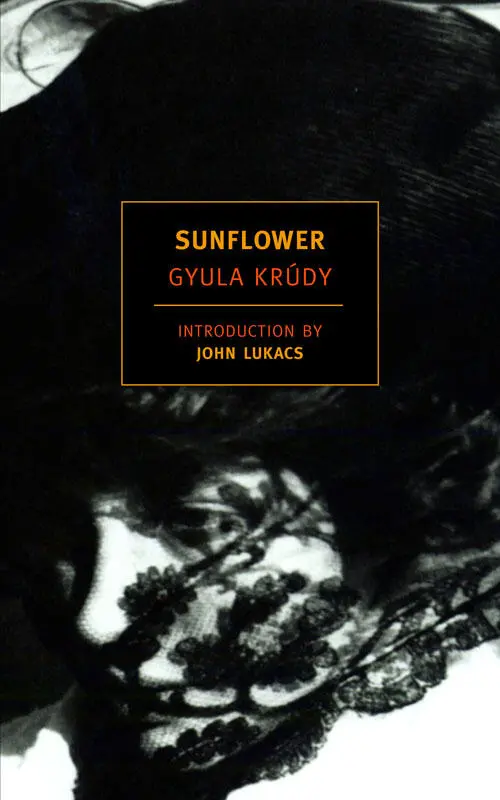
- Название:Sunflower
- Автор:
- Издательство:New York Review Books
- Жанр:
- Год:2007
- Город:New York
- ISBN:нет данных
- Рейтинг книги:4 / 5. Голосов: 1
-
Избранное:Добавить в избранное
- Отзывы:
-
Ваша оценка:
Sunflower: краткое содержание, описание и аннотация
Предлагаем к чтению аннотацию, описание, краткое содержание или предисловие (зависит от того, что написал сам автор книги «Sunflower»). Если вы не нашли необходимую информацию о книге — напишите в комментариях, мы постараемся отыскать её.
In
young Eveline leaves the city and returns to her country estate to escape the memory of her desperate love for the unscrupulous charmer Kálmán. There she encounters the melancholy Álmos-Dreamer, who is languishing for love of her, and is visited by the bizarre and beautiful Miss Maszkerádi, a woman who is a force of nature. The plot twists and turns; elemental myth mingles with sheer farce: Krúdy brilliantly illuminates the shifting contours and acid colors of the landscape of desire.
John Bátki’s outstanding translation of
is the perfect introduction to the world of Gyula Krúdy, a genius as singular as Robert Walser, Bruno Schulz, or Joseph Roth.
Sunflower — читать онлайн бесплатно полную книгу (весь текст) целиком
Ниже представлен текст книги, разбитый по страницам. Система сохранения места последней прочитанной страницы, позволяет с удобством читать онлайн бесплатно книгу «Sunflower», без необходимости каждый раз заново искать на чём Вы остановились. Поставьте закладку, и сможете в любой момент перейти на страницу, на которой закончили чтение.
Интервал:
Закладка:
“Spring!” thought Miss Maszkerádi. “You are an idiot. I just don’t believe in you!”
And yet she must have believed in it a tiny little bit, for she searched out the tree she had been in love with for years.
It was a dwarf willow up on the bank of a stream gone dry, highly solemn, determined to hold its ground like some watchman. Its twigs had long ago gone with the wind, like unfaithful, flighty women from an old man’s side. But the ancient tree maintained a virile, calm, patriarchal equanimity. This was one somber, manly male who never showed any hurt, rejoiced not at Eastertime, nor did it celebrate the coming and going of evanescent life all around.
Miss Maszkerádi had sought precisely such a gruff, ancient tree-like male all her life, to whom she could have been as faithful as to this rooted, bark-bound, impassive trunk that had a face, as in fabled forests of old, hands in pockets, and a waist aslant, in a bored pose. At times she fancied the tree as an aging vagabond who had weathered many a hardship in his wifeless life, tramped about aimless as a muddy dog, the kept lover of man-hungry females; he despised love’s joys and woes, had plucked his share of triumph and hopelessness, taken quiet delight in success, had women on their knees to kiss his hand; passionless, not even pretending a semblance of emotion, he seduced the women in his path, then sent them packing, so many used-up playmates; they had loved and hated him, caressed him with trembling hands, then flung curses at his head, the way chambermaids in Pest toss trash out of a window…This manly one stayed calm and collected by living the inward life, thinking his own thoughts and always doing whatever felt good. He never kept a flower, a lock of hair, or remembrance of a kiss. He dealt with women as they deserved. Never did he wander with aching heart on moonlit nights, under anyone’s window, no matter how much awaited…He might prowl about for a week or two like a dog in springtime, then, all skin and bones and weary of the world, he would return from his wanderings and never recall what happened to him, what women had said, what they smelled and tasted like…Miss Maszkerádi positively abhorred novelists who always write about old men remembering youthful adventures. Thus she could not stand Turgenev, whom Eveline would have read night and day.
The old rogue pretended not to notice last year’s lover, Miss Maszkerádi. Indifferent and cool, he stood his ground by the vanished creek whose bed had perhaps drained off his very life, never to return, flighty foam, playful wavelet, rainbow spray.
“Here I am, grandpa,” Maszkerádi whispered, sliding from her saddle.
She beheld the ancient tree’s inward-glancing eye, compressed, cold mouth, thick-skinned, impassive waist, and pocketed hands.
“I am here and I am yours,” she went on, after embracing the tree as an idol is embraced by some wild tribeswoman who can no longer find a mate that’s man enough in her own nation.
The old willow’s knotted gnarls and stumps, like so many hands, palpated all over Miss Maszkerádi’s steel-spring body. The mossy beard stuck to the frost-nipped girl-cheek already quite cool to start with. Who knows, the old willow might even have reciprocated her embrace.
“I know you can keep a secret,” she mumbled. “Please don’t tell anyone I love you.”
She hugged that tree as she had never dared to hug a man. Her arms and legs wound around the trunk, her incandescent forehead pressed against the ancient idol, this offshoot of Roman Priapus that had escaped being daubed in cinnabar by womenfolk.
“As long as I’m around, I’ll visit you, old partner in crime,” she said.
Kati, the shaggy yellow mare, wearily lowered her head, suffered Miss Maszkerádi in the saddle, and carried her homeward, morose head hung low, as if they had been beaten up at a wedding.
In the afternoon a fog settled over the fields, like gray souls assembled to rehash the mournful circumstances of their demise. Madmen made of mist occupied the upper galleries… apparently unable to recall how they had died.
Back at the country house, Miss Maszkerádi smoked one cigarette after another as she paced the rooms under the century-old vaults. She marched tall like a soldier, and appeared to be content, even happy. Yet when she spoke, her voice sounded weary:
“Good God, to think that some people live their whole lives unvisited by illness, accident, misfortune. Sometimes I think I’ll be mauled to death by tigers.”
Eveline sat in the rocking chair, reading a novel: Sir Walter Scott’s Ivanhoe . From reveries of medieval knighthood she glanced up at her friend.
“You should read a good book, Malvina…We all die in the end…”
“But how?…You imagine yourself as mistress of a castle, because you have swallowed men’s lies. Your death, too, will be theatrical, complete with the whole works: candelabras, priests praying, funeral bells, servants sobbing outside the door, a towering catafalque. A whole production with you in the leading role, you hope. But I just can’t think that way, I’m a coward, a city bourgeoise, a Bürgerin of the Josephstadt…I am afraid of death.”
Miss Maszkerádi stood on feet wide apart in front of the window, like some actress in tights. (She would have felt tremendously embarrassed if someone had told her this.) On her forehead a brown curl stirred during her cogitations as if blown by a breeze. Her slender body was like a solitary fencing sabre stuck into the floor of the salle . She swayed and quivered, as if the pulsing of her blood moved steel springs coiled within her body. On foggy days she was always tense and she anxiously racked her brain as if her life depended on thinking of something new.
“I can’t resign myself to the fact that I live in order to die some day. I’d love to step off this well-trodden straight and boring path. To somehow live differently, think different thoughts, feel different feelings than others. It wouldn’t bother me to be as alone as a tree on the plains. My leaves would be like no other tree’s. What I dread most is a fate like my alter ego’s.”
Eveline finally gave up trying to follow the wanderings of the magnificent knight Ivanhoe in the Holy Land. The exotic mediaeval ladies flew up from her side like a covey of partridges, and Old England’s oak forests receded, to murmur from far off, on the edge of the horizon.
“You mean to tell me you have alter egos?” she asked, as if discovering some dark secret here, of all places, on a boring village afternoon.
Miss Maszkerádi’s steely-glinting eyes appeared as serene as an idol’s or a maniac’s.
“Yes, and I ran into one of them abroad, you know, the time I wintered in Egypt. This was a lady of distinction, a soulless vulgarian; she had both camel drivers and officers in red coats for lovers. She was sad only to the extent that a hotel orchestra’s tunes remind you of sadness, and she was cheerful to the extent that life in Cairo, the nightly balls, the various entertainments devised against ennui, formal dinners and excursions into the desert are calculated to cheer you, with a hypnotic power that every rich and idle traveler surrenders to. She lived a life as inhuman, as empty of inner content as any of the society ladies who stay at the gilded white hotels down there, and can be seen tapping the caged parrot’s beak with a finger that young men dream about. Perhaps her senses could only be aroused after she had gorged herself on rich, spicy dishes, danced at a ball, and listened to cold-blooded males calmly drawl incendiary words in her ear. She would settle into her seat at the theater with the indifference of an egret feather in a diamond hairpin. Sometimes she would leaf through a light French novel; among all those bald, grumpy, tired men she trod with silken footsteps. She had Creole or Gypsy blood, and she bore the name of a French prince who must have passed his days, advancing them like chessmen, in God knows what remote part of the globe.
Читать дальшеИнтервал:
Закладка:
Похожие книги на «Sunflower»
Представляем Вашему вниманию похожие книги на «Sunflower» списком для выбора. Мы отобрали схожую по названию и смыслу литературу в надежде предоставить читателям больше вариантов отыскать новые, интересные, ещё непрочитанные произведения.









Обсуждение, отзывы о книге «Sunflower» и просто собственные мнения читателей. Оставьте ваши комментарии, напишите, что Вы думаете о произведении, его смысле или главных героях. Укажите что конкретно понравилось, а что нет, и почему Вы так считаете.