Gyula Krudy - Sunflower
Здесь есть возможность читать онлайн «Gyula Krudy - Sunflower» весь текст электронной книги совершенно бесплатно (целиком полную версию без сокращений). В некоторых случаях можно слушать аудио, скачать через торрент в формате fb2 и присутствует краткое содержание. Город: New York, Год выпуска: 2007, Издательство: New York Review Books, Жанр: Классическая проза, на английском языке. Описание произведения, (предисловие) а так же отзывы посетителей доступны на портале библиотеки ЛибКат.
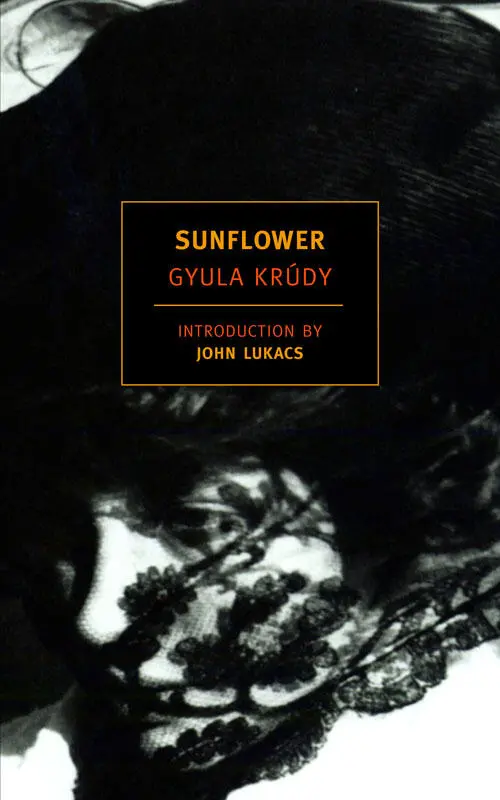
- Название:Sunflower
- Автор:
- Издательство:New York Review Books
- Жанр:
- Год:2007
- Город:New York
- ISBN:нет данных
- Рейтинг книги:4 / 5. Голосов: 1
-
Избранное:Добавить в избранное
- Отзывы:
-
Ваша оценка:
Sunflower: краткое содержание, описание и аннотация
Предлагаем к чтению аннотацию, описание, краткое содержание или предисловие (зависит от того, что написал сам автор книги «Sunflower»). Если вы не нашли необходимую информацию о книге — напишите в комментариях, мы постараемся отыскать её.
In
young Eveline leaves the city and returns to her country estate to escape the memory of her desperate love for the unscrupulous charmer Kálmán. There she encounters the melancholy Álmos-Dreamer, who is languishing for love of her, and is visited by the bizarre and beautiful Miss Maszkerádi, a woman who is a force of nature. The plot twists and turns; elemental myth mingles with sheer farce: Krúdy brilliantly illuminates the shifting contours and acid colors of the landscape of desire.
John Bátki’s outstanding translation of
is the perfect introduction to the world of Gyula Krúdy, a genius as singular as Robert Walser, Bruno Schulz, or Joseph Roth.
Sunflower — читать онлайн бесплатно полную книгу (весь текст) целиком
Ниже представлен текст книги, разбитый по страницам. Система сохранения места последней прочитанной страницы, позволяет с удобством читать онлайн бесплатно книгу «Sunflower», без необходимости каждый раз заново искать на чём Вы остановились. Поставьте закладку, и сможете в любой момент перейти на страницу, на которой закончили чтение.
Интервал:
Закладка:
“Malvina, you’ll never be happy,” prophesied Eveline, speaking as if from the pages of some novel.
“I must always look within myself, for everything. I believe only in myself, and myself alone, and don’t give a damn about others’ opinions. I view each of my acts as if I were reading about it fifty years from now, in a newly found diary. Did I do something ridiculous and dumb? I ask myself each night when I close my eyes. I think over each word, each act: will I regret it, come tomorrow? I am my own judge and I judge myself as harshly as if I’d been lying in my grave these hundred years, my life a yellowed parchment diary, its end known in advance. I will not tolerate being laughed at or cheated. I want to know this very minute what I will think ten years from now about today, about today’s weather and about this night…Will I have to be ashamed of some weakness or tenderness? Is there one circumstance worth disrupting my life for, rising an hour earlier, or using more words than usual? I try to modulate my decisions and my emotions by looking ahead and seeing whether I’d regret it tomorrow. And I’m never nervous, it’s simply not worth it.
“Had I been born a man, I would have been a Talmudist, an Oriental sage, a scholar who delves into decaying millennial mysteries. Too bad, I was not admitted at the university. But if possible, I would still marry a great, gray-bearded, immensely wise rabbi or Oriental scholar. Possibly Schopenhauer…or my first teacher, Gyula Sámuel Spiegler, if that little old Jew were still alive…Oh, you won’t catch me crying on account of rival women, actresses, danseuses! The hell with the strumpets! What do I care if my husband sometimes sees them? As long as they stay away from me with their dirt.”
Eveline heard out these words of wisdom with eyes closed. All her life repelled by women of easy virtue, she still envisioned them to be like the first one she had ever seen, in her childhood in the Inner City, near her convent school. A fat, ungainly, wide-mouthed, coarsely painted towering idol of flesh that passed by with petticoats lifted, like a killer of men, cruelly smiling. The little schoolgirls had nightmares about this other-worldly monster who probably roamed the town to entice inexperienced men to her cave in the mountains where she would devour them like a dragon. Ever after, the educated, curious and clairvoyant young woman still imagined fallen women to be like that. (She was most amazed at the Pest racing turf one summer Sunday when she attended the St. Stephen’s Cup races with her lady companion, and Kálmán pointed out from afar a gentle, unimpeachably clean-cut angel, all blonde English-style curls, as one of the city’s most depraved creatures who spent her days in the company of elderly counts.)
Miss Maszkerádi, all her Talmudic wisdom notwithstanding, loved to refer to women of easy virtue as wondrous creatures who lived off their bodies. She preferred French novels that described life in brothels, and would have given much to clandestinely observe the goings-on at some sordid club one night. She was convinced that the best way to get to know a man was by witnessing his coarsest words and acts.
“Had I a father or brother, I would send them to accompany my would-be fiancé on a visit to the filles de joie . I’d want to know how my future life-companion acted, how he behaved there…” Miss Maszkerádi insisted. “But I don’t want to get married. Because then I’d have long ago become an expert in midwifery, and in all the seductive practices of loose women.”
And on this childish note the wise Miss Maszkerádi closed the evening’s proceedings. She went to bed in her room, smiling in quiet scorn at Eveline, who would listen all night long for the sound of footsteps coming and going around the house. She knew it was nothing but the spring wind fidgeting out there.
***
In the morning Miss Maszkerádi went horseback riding. (Actually, the real reason she liked to sojourn at Eveline’s Bujdos estate was because it offered wide meadows and endless country roads for indulging in her passionate pastime. Back in Pest she rarely showed herself on the Stefánia Road promenade among the nannies, small children and the multitudes of happy or unhappy lovers. “Someone might think I’m trying to show off,” she thought and was always annoyed whenever some man stared too long at her willowy equestrienne waist and her silver-spurred little riding boots. As if she were trying to impress anyone!)
At Bujdos-Hideaway a fat mare named Kati was Miss Maszkerádi’s mount. This saddle horse had ears as long as a donkey’s. She had a shifty way of eavesdropping on conversations around her, pricked up her ears at approaching footsteps, and assiduously whisked her short tail like a housemaid shaking a dust rag. At times she was as obedient as a trained circus horse. Then in one of her capricious moods she threw Miss Maszkerádi, and, maliciously satisfied, ran off. She was as old as the chief steward’s wife, and as gluttonous, doleful and impetuous as a frustrated spinster.
Miss Maszkerádi rode over hill and dale, resting her eyes on the colors of the early spring landscape that alternated with the humdrum monotony of an aging chorus singer’s costume changes. It is only human to be constantly astounded by springtime; sixty or seventy years are not enough to make you tire of it. Each spring a new card game begins with life itself; you may win or you may lose. Secretly everyone starts life anew each spring. Only thing is, no one has the courage to admit wanting to be born again, to start everything all over: love, marriage, lifelong projects. To throw off the shabby old clothes and those dented decorations. Oh to run, run naked and devour buds, trees, girls, pale boys in the woods, and quickly lay to rest the old folks wrapped in their lynx furs, still mumbling about winter. — Miss Maszkerádi had never in her life read a springtime lyric, and despised people who delighted in the weather. Wasn’t it all the same, a screeching snowstorm or a mild lingering breeze, once you lay in your grave? Why bother to set out in life when it was over so soon?
So she whacked the melancholy mare Kati, and, flushed in the heat of excitement, cantered through birch woods, where the aftereffects of melted snow, blackened nests and globular growths hung from bare branches like so many hanged men slain by spring for being no longer fit to live.
The wily mare cantered on the wet road, past deep ditches as dark as grave pits whose dead had escaped to become ghosts; the meadows, convalescent after their long confinement, looked as feeble as a nonambulatory patient sitting on the edge of the bed. Birds: crows and magpies wheeled in the air as if newly acquainting themselves with the land below; spring was sprung with a vengeance, as if hardy hands were prying some vast door open a crack, allowing to slip back into this world those meteorological exiles, those playful roués and screeching, shameless hussies, clowns and paunchy rakes: the lock is creaking, there is a great rush as the stag-headed, mossy-bearded stable master sweeps over the land, horsewhips and expels winter’s lingering leftovers, kicks the dead into the ditch, cracks the whip at wandering minstrels and unrolls the meadows’ endless carpets for the upcoming catastrophic onrush.
On buds, naked little fairies seat themselves astraddle (till now they were mute shadows in hidden groves); in the air, snaps and creaks, voices of unknown origin, as if underground germs and seeds sang a grand chorale; gusts of air scamper like crazed wheels, whistling clouds whoosh by streaming overland, solemnly still waters for no particular reason stir now as if they, too, wanted a part in the Spring Ball; it is a miracle that strident, bleating billy goats don’t flood the field where everyone and everything aches to play. And still, in abandoned little autumnal niches hidden among trees in the depths of sad copses that seem to be created for solitary ghostly reveries with bent head — someone must certainly be sitting there, in a clearing that no one ever sees. But even such solitudes are approached by young snoopers on tiptoes, eager to spy on saddish old folks’ thoughts.
Читать дальшеИнтервал:
Закладка:
Похожие книги на «Sunflower»
Представляем Вашему вниманию похожие книги на «Sunflower» списком для выбора. Мы отобрали схожую по названию и смыслу литературу в надежде предоставить читателям больше вариантов отыскать новые, интересные, ещё непрочитанные произведения.












Обсуждение, отзывы о книге «Sunflower» и просто собственные мнения читателей. Оставьте ваши комментарии, напишите, что Вы думаете о произведении, его смысле или главных героях. Укажите что конкретно понравилось, а что нет, и почему Вы так считаете.