Gyula Krudy - Sunflower
Здесь есть возможность читать онлайн «Gyula Krudy - Sunflower» весь текст электронной книги совершенно бесплатно (целиком полную версию без сокращений). В некоторых случаях можно слушать аудио, скачать через торрент в формате fb2 и присутствует краткое содержание. Город: New York, Год выпуска: 2007, Издательство: New York Review Books, Жанр: Классическая проза, на английском языке. Описание произведения, (предисловие) а так же отзывы посетителей доступны на портале библиотеки ЛибКат.
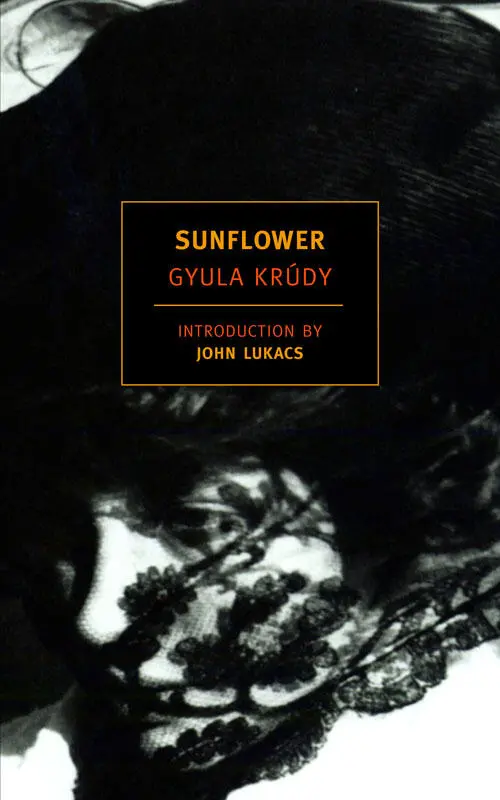
- Название:Sunflower
- Автор:
- Издательство:New York Review Books
- Жанр:
- Год:2007
- Город:New York
- ISBN:нет данных
- Рейтинг книги:4 / 5. Голосов: 1
-
Избранное:Добавить в избранное
- Отзывы:
-
Ваша оценка:
Sunflower: краткое содержание, описание и аннотация
Предлагаем к чтению аннотацию, описание, краткое содержание или предисловие (зависит от того, что написал сам автор книги «Sunflower»). Если вы не нашли необходимую информацию о книге — напишите в комментариях, мы постараемся отыскать её.
In
young Eveline leaves the city and returns to her country estate to escape the memory of her desperate love for the unscrupulous charmer Kálmán. There she encounters the melancholy Álmos-Dreamer, who is languishing for love of her, and is visited by the bizarre and beautiful Miss Maszkerádi, a woman who is a force of nature. The plot twists and turns; elemental myth mingles with sheer farce: Krúdy brilliantly illuminates the shifting contours and acid colors of the landscape of desire.
John Bátki’s outstanding translation of
is the perfect introduction to the world of Gyula Krúdy, a genius as singular as Robert Walser, Bruno Schulz, or Joseph Roth.
Sunflower — читать онлайн бесплатно полную книгу (весь текст) целиком
Ниже представлен текст книги, разбитый по страницам. Система сохранения места последней прочитанной страницы, позволяет с удобством читать онлайн бесплатно книгу «Sunflower», без необходимости каждый раз заново искать на чём Вы остановились. Поставьте закладку, и сможете в любой момент перейти на страницу, на которой закончили чтение.
Интервал:
Закладка:
That ceaseless Gypsy prankishness, the horselaugh unique to this tribe, the chortling delight in each and every hour, the devil-may-care, self-indulgent, proud music of the moment, that buck-naked humor and animal delight in each breath of life: all of this appeared on that provincial hackney cab, as if Noah’s ark had spilled forth these human beings from another world. The dark-skinned, gamey village Gypsy, raised on the meat of fallen animals, is worlds apart from his city kin. Although, like poor relations, they are well aware of their city cousins’ living like lords in Budapest or Paris, and know the greats of the profession by name, they remain free nomads who possess nothing but disdain for an orderly world and laws of any kind. They live by their own lights, cling to their superstitions more than to life itself, see illness, the devil and death in their blue moods — yet among them suicide is rare as a white crow. They live in bands, the better to bear their poverty. Their boys are educated by older women, girls by older men. They use wild herbs to heal themselves, like stray dogs.
Mr. Pistoli was a patron of village Gypsies. He spent his entire life among Gypsies, returning home only to calm the wife of the moment, tint his mustache, clip the bristles sprouting from his warts, rub pomade in his hair, toss creditors’ letters into the trash, and off he was again, in search of the band. If a wife became a burden to him, he eased her out as best as he could and took on a new woman. This half-mad country squire was a leftover from the Hungary of old, where menfolk even in extreme old age refused to be incapacitated. He waltzed merrily with willing women, like a dance instructor giving an apprentice girl a whirl. His big buck teeth, protuberant bullish eyes, lowering, growling voice, oversized, meaty ears, calloused knuckles and pipe-stem legs altogether produced a peculiar effect on the females of the region. For there are still many women around who will kiss the spot where her man has hit her; who will put up with years of suffering to receive a kind word at the last hour; who will cut off her hair, pull out her teeth, put out her bright eyes, clench down her empty stomach, ignore her tormenting passion, say goodbye to springtime, beauty, life itself — if her man so commands. Pistoli went about growling like a wild boar, and women wiggled their toes at him, to tease the monster. Thus he lived to bury three wives.
“Let’s go see the beast,” quoth Pistoli to his Gypsies, solemnly convinced that Miss Maszkerádi had arrived at Bujdos solely for his sake. He had prepared and pocketed his infallible tools: the meerschaum cigar holder embellished with naked lovers embracing, the silver cigarette case chased with bathing beauties. He made sure to bring his trick penholder (its glass compartment a peep show of nude dancers), nor did he leave behind those lithographs guaranteed to make females flush and blush and fantasize. He brought a tiny cap to pull on his index finger for all kinds of silly puppet acts. So, having earlier soaked his feet and cleared his throat, Pistoli set out “to conquer the beast.”
In rollicking good humor, a song tickling his palate, whistling, he roamed with the Gypsies like a bridegroom who had a bride waiting in each village. His unruly animal spirits resembled the moods of convicts on certain days, or that of inmates at the Nagykálló madhouse where he had once spent half a year. He had abducted his first wife from there, a silent queen as beautiful as memory itself. From under her boyish haircut she had sent him many tantalizing looks, a temptress clad in white linen. Her name was Izabella, unforgettable as the mediaeval princess whose image comes to the dying mercenary on the battlefield. Back then Pistoli would still grovel on his knees, his hair grew thick and fast, his mood was like a young bull’s. He would gladly creep under the bed at Izabella’s behest. This romantic heroine remained his lifelong true love. When one day she hung herself, Pistoli swore beside her corpse he would soon follow her to the grave. That had been twenty years ago. Since then, Pistoli had gotten drunk, married, buried wives, slept in muddy ditches and flower beds, his memory had stored the scents of as many women as the nose of a dog in a metropolis; he had loved ladies’ shoes, flouncy skirts, shirts and exposed napes; had danced attendance like a madman around barefoot servant girls and saintly matrons; had howled his love’s name out on the street in front of houses lit by the red light; had night after night climbed through the window into rooms where he surmised a female might be sleeping; there came screams, alarums, gunshots and wild escapes from stake-toting retainers, followed by triumph on the morrow in the bed of a kitchen wench, after his face had been bloodied by jealous rivals: such had been his life…And when he at last found himself alone, like a condemned man in his cell, by the moonglow of a candle or the sooty flame of an oil lamp, he felt the funerary wrinkles of the pillow, the deafening silence after the revelry overwhelm him with a drowning sensation…Startled, frightened of imminent death, he felt Izabella’s hand pulling him into the beyond. So he no longer slept at night, but only in daytime, near lit candles, surrounded by wardrobes, chests and drawers he had emptied. Snakes slithered past on the carpet and he felt like howling, but he was stopped by the memory of his former roommate, the colonel who would howl all day, confined in a straightjacket.
So this was the satyr Pistoli who rolled about in the Gypsies’ laps, cackling so loudly that the crossroads, momentarily empty, resounded with the ghostly echo of his laughter. The mute trees stood somber, like gibbets awaiting some escaped criminal. Shadowy hedges, that must surely shelter Death stopping to write down the lottery numbers he dreams of, ominously pricked up their ears, as if waiting for Pistoli to leap, tired of laughter, over them at a single bound into the wild blue yonder. Roadside wells, so many taciturn accomplices, were passed one after another by the Gypsy-laden coach. Women had thrown themselves into these wells, women to whom Pistoli in his manic moods had irresponsibly promised the world, as nonchalantly as he pledged payments to creditors. The ladies had adored his extravagant promises, and became unhinged when none were kept. The wells in the fields, like passive abettors of the crime, persisted like so many monuments to monotonous existence. No inquest would ever hold them responsible. Meanwhile Pistoli needed constant giggles, nothing short of sheer raving manic glee, just to make it through the night, just to see another day. Once he rejoiced exceedingly when he broke a leg jumping from a window. He considered it a small payment on Izabella’s account.
But let us go in the moonlit spring night, along with those dusky Gypsy lads, their silent melancholy instruments, the contrabass that had danced at silver jubilees, and let us leave the disappointed roadside trees behind, trees ever pining after wanderers, like so many deranged old women…yearning for a traveler who would stop to eat his supper under their shelter, drink a bottle of wine, sing the song dearest to his heart, then tie his belt on the sturdiest limb, to go into the long night undisturbed, in peace. (Pistoli had always detested, as much as he did the tomcat-whiskered, avuncular bailiff, each jutting branch of every tree spreading its boughs his way, offering a suitable occasion to carry out his long-standing resolve. He would much rather have looked at the bedsteads carved from these trees, and the women who sat up on the beds, forever waking, ever watchful, caressing and sheltering Pistoli while he battled the wraiths from the nether world that frequented his dreams.)
The ghostly company at last arrived at Bujdos-Hideaway.
Читать дальшеИнтервал:
Закладка:
Похожие книги на «Sunflower»
Представляем Вашему вниманию похожие книги на «Sunflower» списком для выбора. Мы отобрали схожую по названию и смыслу литературу в надежде предоставить читателям больше вариантов отыскать новые, интересные, ещё непрочитанные произведения.












Обсуждение, отзывы о книге «Sunflower» и просто собственные мнения читателей. Оставьте ваши комментарии, напишите, что Вы думаете о произведении, его смысле или главных героях. Укажите что конкретно понравилось, а что нет, и почему Вы так считаете.