Gabriel Chevallier - Fear
Здесь есть возможность читать онлайн «Gabriel Chevallier - Fear» весь текст электронной книги совершенно бесплатно (целиком полную версию без сокращений). В некоторых случаях можно слушать аудио, скачать через торрент в формате fb2 и присутствует краткое содержание. Город: New York, Год выпуска: 2014, Издательство: New York Review Books, Жанр: Классическая проза, на английском языке. Описание произведения, (предисловие) а так же отзывы посетителей доступны на портале библиотеки ЛибКат.
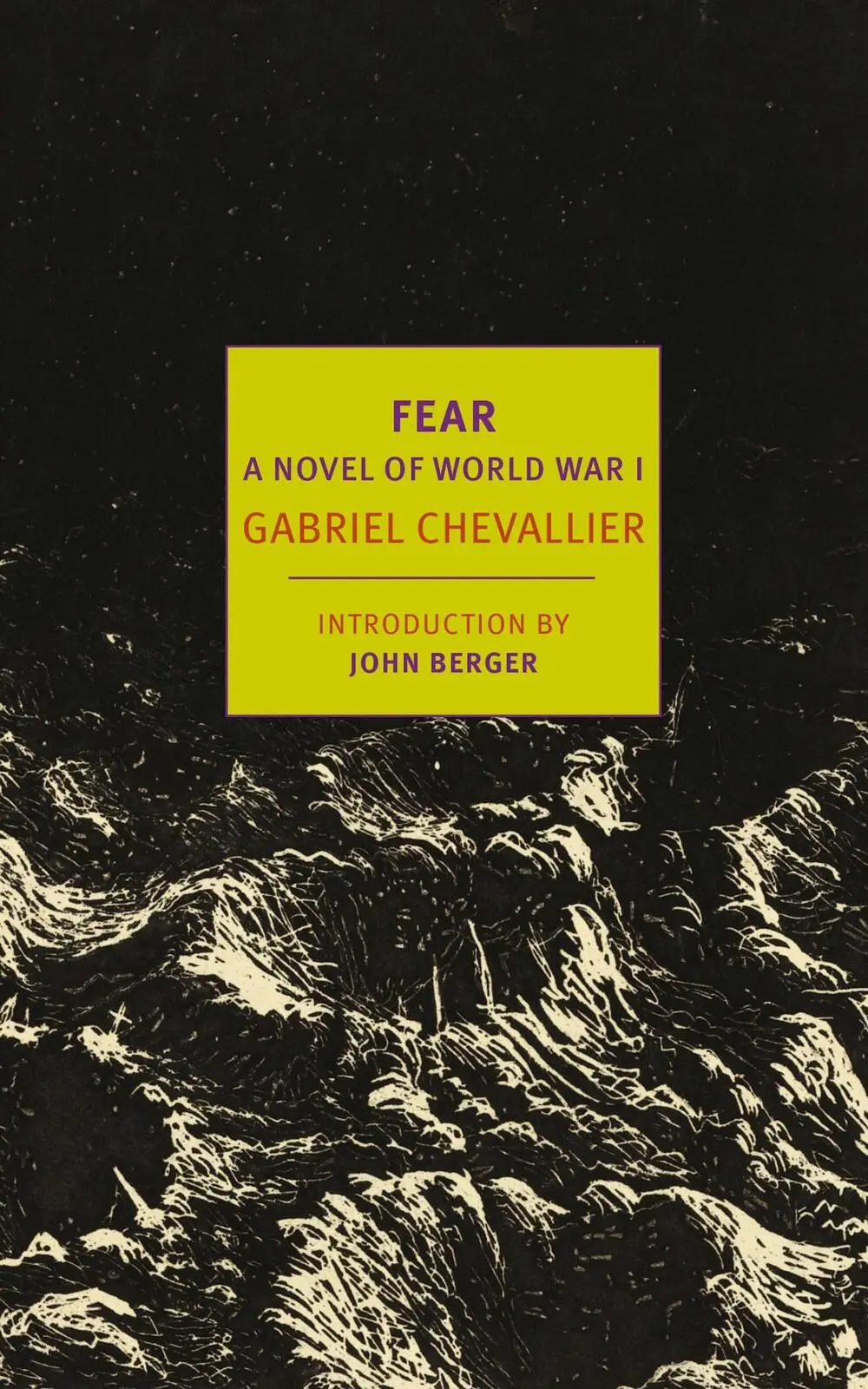
- Название:Fear
- Автор:
- Издательство:New York Review Books
- Жанр:
- Год:2014
- Город:New York
- ISBN:нет данных
- Рейтинг книги:3 / 5. Голосов: 1
-
Избранное:Добавить в избранное
- Отзывы:
-
Ваша оценка:
Fear: краткое содержание, описание и аннотация
Предлагаем к чтению аннотацию, описание, краткое содержание или предисловие (зависит от того, что написал сам автор книги «Fear»). Если вы не нашли необходимую информацию о книге — напишите в комментариях, мы постараемся отыскать её.
1915: Jean Dartemont heads off to the Great War, an eager conscript. The only thing he fears is missing the action. Soon, however, the vaunted “war to end all wars” seems like a war that will never end: whether mired in the trenches or going over the top, Jean finds himself caught in the midst of an unimaginable, unceasing slaughter. After he is wounded, he returns from the front to discover a world where no one knows or wants to know any of this. Both the public and the authorities go on talking about heroes — and sending more men to their graves. But Jean refuses to keep silent. He will speak the forbidden word. He will tell them about fear.
John Berger has called
“a book of the utmost urgency and relevance.” A literary masterpiece, it is also an essential and unforgettable reckoning with the terrible war that gave birth to a century of war.
Fear — читать онлайн бесплатно полную книгу (весь текст) целиком
Ниже представлен текст книги, разбитый по страницам. Система сохранения места последней прочитанной страницы, позволяет с удобством читать онлайн бесплатно книгу «Fear», без необходимости каждый раз заново искать на чём Вы остановились. Поставьте закладку, и сможете в любой момент перейти на страницу, на которой закончили чтение.
Интервал:
Закладка:
‘And what happened to you in all this?’
‘By the day of the attack I’d been waiting in the line for more than a week. The caves and countryside all round, the “Creutes marocaines,”[32] Paissy, Pargnan, etc., were all bursting with troops. Shiny new heavy artillery had been put in position in the ravine, three hundred metres from the trenches. Men and wagons and artillery everywhere: it was a fairground. The Boches did nothing, but their aeroplanes flew over very low and calmly noted all this movement, all our guns, our stores, our assembly points… At seven in the morning on 16 April we went over the top. At first we were unopposed, and their forward trenches were empty. We moved across the rest of the plateau and went down into the German ravine. The Boches had evacuated and then dug in at their undamaged second lines on the ridges on the other side. They let us rush down the slope and get to the bottom. And then they unleashed their barrages of artillery and machine-gun fire. Nivelle’s great offensive was broken there, less than a kilometre from its start, without having engaged the enemy at all.’
‘How did you get out of there?’
‘In the night.’
‘You were stuck in there all day long?’
‘There was no way of doing anything else. Those who hadn’t been cut down had dug themselves into shell holes to escape the bullets. We couldn’t move. We had literally buried ourselves right in the middle of a shooting range.’
‘What was Colonel J. saying?’
‘He was in a tight spot! He’d sent black soldiers to the rear to ask for reinforcements several times but never saw any of them again. Then we heard the sound of grenades which meant the Germans must be counter-attacking nearby. “Do you know this sector?” the colonel asked me. “Not well, sir.” “Too bad! You’re going to take this note to the general.” He gave me a big black soldier to accompany me. But we had to get through this wall of fire. We crawled from hole to hole, clambering over the corpses…’
‘A lot of corpses?’
‘Lines of them, piles of them! There is only one way to describe it: we were walking through meat… At last I managed to reach the plateau with no other damage than having my kit bag smashed by a bullet; I lost my revolver, my gas mask, my field glasses… Once on the plateau we hurried along the trenches to the divisional command post, in a cave in the Troyon ravine. The cave was full of officers, all shouting at each other because they were so afraid. Quite a comedy! I show them my note and they start to shout at me, too: “First of all, where have you come from?” “Where were you?” “With Colonel J., sir.” “That’s a lie, Colonel J. was taken prisoner at nine this morning… ” These chaps were completely crazy! “No, sir, I have just left the colonel, who is afraid of being surrounded and sent me to ask you for reinforcements.” “What reinforcements? I have no men left… ” “There are still a few territorials,” said another. “We’ll have to see… ” I wait for maybe an hour… Finally a captain comes up to me, looking suspicious: “Are you sure you can find Colonel J. again?” “I think so, sir.” “In that case, you will take the detachment that is waiting outside.” Outside, I find about forty territorials, led by an adjutant, their faces drawn in terror, carrying boxes of grenades. And all these poor buggers start to curse me: “Shitty little artilleryman, fucking bastard! Why couldn’t you keep your mouth shut? What do you think we’re going to do down there? That’s not where we should be, at our age… ” What a bloody mess! I tell them: “Look, if you don’t want to come, stay here. But I’ve got to go back.” Their adjutant decided: “Go in front. I’ll follow at the back to make them march.” I set off once more through the bombardment, at the head of forty old codgers, more dead than alive, moaning and wailing and stopping every twenty metres to make up their minds. We arrived in the night, just in time to join the retreat.’
‘You left your dead on the field?’
‘Of course we did. There were a few hundred of us survivors and there were thousands of dead and wounded.’
‘And then?’
‘Nothing, all over! The Boche took back their old positions with no opposition from us. If in turn they’d attacked seriously they would have driven us right off the Chemin des Dames, no doubt about it. But they were happy enough just to shell us heavily.’
‘A real disaster?’
‘You could say so. A shameful business, enough to ruin the French army.’
‘Did this disaster provoke the mutinies, do you think?’[33]
‘For sure. You know how passive the men are. They’ve all been sick of the war for a very long time, but they still follow orders. For the troops to actually revolt, they had to have been pushed to the absolute limit.’
‘Wasn’t there talk of traitors?’
‘I can’t comment on that, I can only tell you what I saw. As always a host of contradictory rumours were going round. It seems to me it can all be explained quite simply. When they wanted to make them attack again, the poilus felt they were lost, thrown into the slaughterhouse by pig-headed incompetents. The cannon fodder rebelled, because they had waded through too many pools of blood and they couldn’t see any other way of saving themselves. It was their leaders, some of their leaders, who provoked them. Just think how they sent poor chaps to the firing squad, men who had already endured years of suffering, but not one single general was condemned. The revolt was a consequence of the massacre and you have to seek those responsible for it among the General Staff.’
‘I’ve heard vague claims that it was the politicians who hindered the military action and without this we’d have been successful.’
‘No, absolutely not! People can argue the toss as much as they like but one fact remains: the sixteenth of April cost the lives of 80,000 men in the French army. After such a bloodbath, there could be no question of going any further. I’ve seen what happens when you are led by raving lunatics only too closely!’
‘None of this is exactly cheering news!’
‘You don’t still believe that intelligence plays any great part in war, do you? You would be the only one…’
‘Sure. It’s just that we are heading for the Chemin des Dames…’
‘Don’t panic. Look at me, I came back OK. Have another drink!’
Back at camp, I am discussing how long we’ll be on the front line with a couple of runners. A cyclist turns up bearing new information, gathered here and there. He says:
‘It isn’t a question of time, nor of whether an attack succeeds. To be relieved, units must have suffered at least fifty per cent losses.’
This news hits us hard. Losses of half our men! I think about this: there are four of us here, none older than twenty-five. Two must die. Which two? Despite myself, I look at the others for fatal signs, something which might mark out people chosen for a tragic destiny. I’m picturing their waxy, lifeless faces, I’m choosing two comrades in our group to become corpses…
Of course this logic can be wrong, and it could be that all four of us come back. But if you stick to the figures, it’s accurate.
Since this conversation I’m unable to be with a man from our unit without asking the question: him or me? If I want to live I have to condemn him resolutely, mentally kill my brother in arms…
This is what they call the war of attrition .
We’re on our way.
The regiment goes through Fismes one last time, at a quick march with a band in front. A macabre parade before civilians who’ve seen plenty of them already and are only staying here to make money.
And suddenly: ‘Present… arms! Eyes right!’ On a little mound stands a general with shiny boots on his legs, a fearless expression on his face, and his hand on his képi. Something strikes me about that hand: his thumb is turned down, like the sign made by the emperor in ancient arenas…
Читать дальшеИнтервал:
Закладка:
Похожие книги на «Fear»
Представляем Вашему вниманию похожие книги на «Fear» списком для выбора. Мы отобрали схожую по названию и смыслу литературу в надежде предоставить читателям больше вариантов отыскать новые, интересные, ещё непрочитанные произведения.







Обсуждение, отзывы о книге «Fear» и просто собственные мнения читателей. Оставьте ваши комментарии, напишите, что Вы думаете о произведении, его смысле или главных героях. Укажите что конкретно понравилось, а что нет, и почему Вы так считаете.