Gabriel Chevallier - Fear
Здесь есть возможность читать онлайн «Gabriel Chevallier - Fear» весь текст электронной книги совершенно бесплатно (целиком полную версию без сокращений). В некоторых случаях можно слушать аудио, скачать через торрент в формате fb2 и присутствует краткое содержание. Город: New York, Год выпуска: 2014, Издательство: New York Review Books, Жанр: Классическая проза, на английском языке. Описание произведения, (предисловие) а так же отзывы посетителей доступны на портале библиотеки ЛибКат.
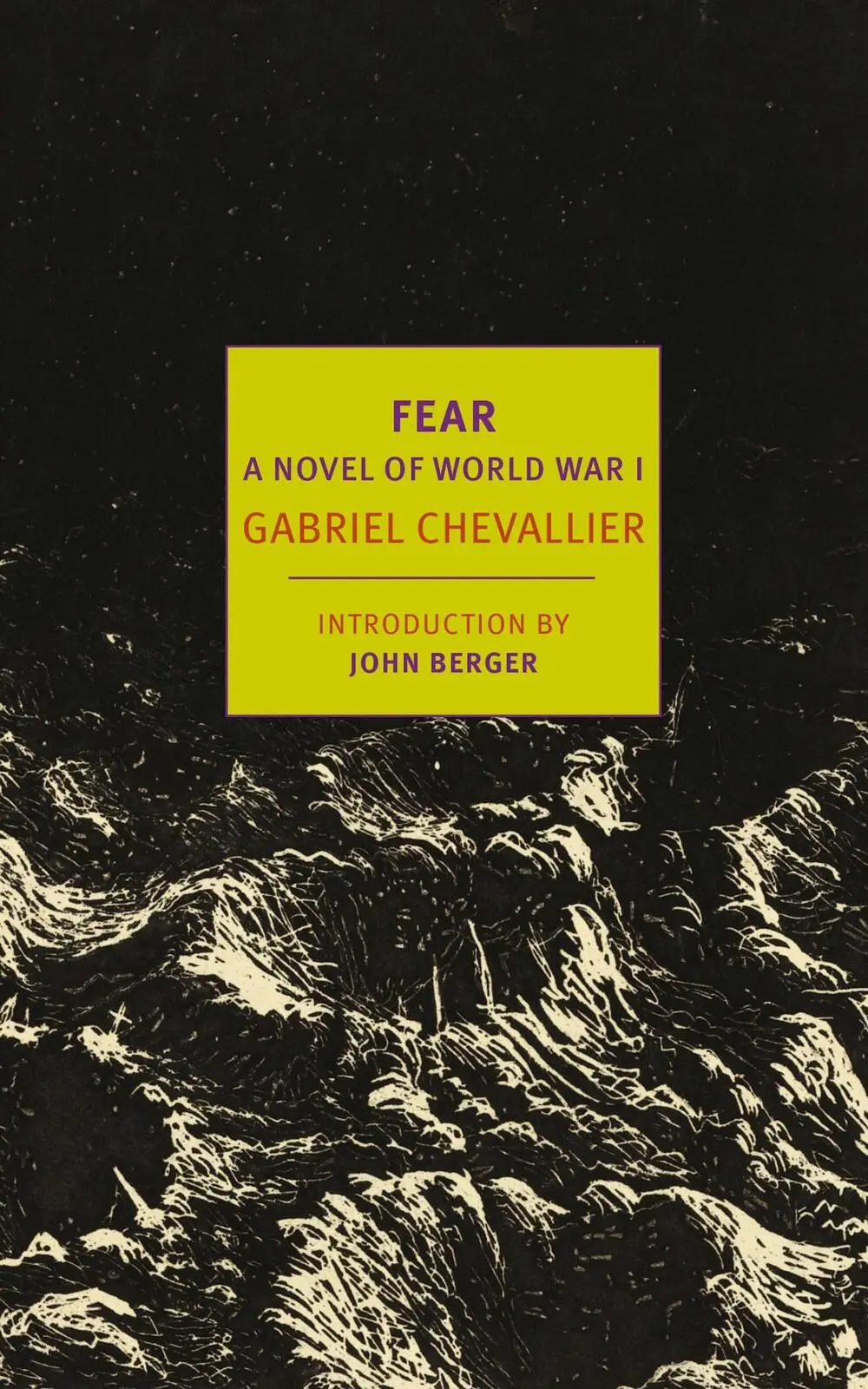
- Название:Fear
- Автор:
- Издательство:New York Review Books
- Жанр:
- Год:2014
- Город:New York
- ISBN:нет данных
- Рейтинг книги:3 / 5. Голосов: 1
-
Избранное:Добавить в избранное
- Отзывы:
-
Ваша оценка:
Fear: краткое содержание, описание и аннотация
Предлагаем к чтению аннотацию, описание, краткое содержание или предисловие (зависит от того, что написал сам автор книги «Fear»). Если вы не нашли необходимую информацию о книге — напишите в комментариях, мы постараемся отыскать её.
1915: Jean Dartemont heads off to the Great War, an eager conscript. The only thing he fears is missing the action. Soon, however, the vaunted “war to end all wars” seems like a war that will never end: whether mired in the trenches or going over the top, Jean finds himself caught in the midst of an unimaginable, unceasing slaughter. After he is wounded, he returns from the front to discover a world where no one knows or wants to know any of this. Both the public and the authorities go on talking about heroes — and sending more men to their graves. But Jean refuses to keep silent. He will speak the forbidden word. He will tell them about fear.
John Berger has called
“a book of the utmost urgency and relevance.” A literary masterpiece, it is also an essential and unforgettable reckoning with the terrible war that gave birth to a century of war.
Fear — читать онлайн бесплатно полную книгу (весь текст) целиком
Ниже представлен текст книги, разбитый по страницам. Система сохранения места последней прочитанной страницы, позволяет с удобством читать онлайн бесплатно книгу «Fear», без необходимости каждый раз заново искать на чём Вы остановились. Поставьте закладку, и сможете в любой момент перейти на страницу, на которой закончили чтение.
Интервал:
Закладка:
‘ Ave , old man! Morituri te salutant .’
We’re approaching the explosions. At the entrance to the village of Euilly we have to go over a canal on a wooden bridge surrounded by debris from shelling. Crossing the Styx.
Leaving the village, the road is full of craters, the newest distinguished by the colour of the earth. At any second a shell could come down on us. There’s nothing to do but advance as fast as we can. Model T Ford ambulances driven by Americans pass us by, creaking and clattering and looking as if they’re about to topple over. We can hear the groans from inside. As they jolt across the bumps their canvas covers flap up, affording us a glimpse of the ashen-faced wounded, and their bloodstained bandages.
A lull allows us to reach unharmed the foot of a steep escarpment below a spur of the Chemin des Dames ridge. Our commandant halts the battalion to get his bearings. But others passing shout to us that we should not stay there. So we rush up the slope, bent over with our heavy loads, using our hands to get a grip where the ground is slippery.
Twenty metres from the top we find the entrance to a vast cave system, big enough to shelter several battalions. As the last men get inside, a furious bombardment comes down above and below us. We were just in time.
In this bandits’ lair we await our turn to move up to the front. Shells whistle down outside the cave entrances, all day and all night.
Two a.m.
Leaning on my elbows on a little table with a candle, I’m keeping watch in the depths of the shelter. We relieved our comrades a few minutes ago. Battalion command has been set up in a very long sap, a kind of narrow gallery with a couple of sharp corners, ten metres underground. The reserve sections are also sheltering in the same sap. Everyone is asleep, except the lookouts at the cave mouths, and me, separated from them by the steps down and the turnings in the tunnel, and by groups of soldiers lying on the ground, curled up in jumbled heaps in the shadows, dead to the world. There must be a hundred men in the sap and you have to walk over them to get through. I feel their heavy presence, and their trust in me; it’s a lonely feeling. Some of them toss and turn violently in their sleep, start and shudder, or suddenly cry out in anguish, which makes me jump.
While watching over these sleeping minds, my own mind, working feebly, considers our situation. We are at the Chemin des Dames. I read the names we all know: Cerny, Ailles, Craonne, terrible names… I study our position. Our front lines are at most a hundred metres in front of us, and behind us there is less than fifty metres before the ravine into which the Germans are trying to push us. At the foot of the ravine, the plain stretches off into the distance, a plain so pulverized and desolate that it looks like a sea of sand (I looked at it when we were coming to find the battalion command). Recently the enemy has been attacking strongly in an attempt to take possession of the whole line of plateaus, and these attacks have advanced. At the point we are defending we’ve just a hundred and thirty metres left in which to hang on to the heights. We’re at the mercy of a well-organised major attack. And here, deep in the shelter, if the front line breaks we are powerless — with fifty steps to climb to reach the surface — and would be captured or suffocated by grenades. Not a happy situation…
Three a.m. Absolute silence…
A lead-tipped cane whacks me on the head, makes my ears ring, sets off the visceral panic that I know only too well. A violent gust of air slaps me in the face, blows out the candle and plunges me into the darkness of the grave. A furious bombardment is crashing down on us, ploughing into us, making the timbers of the sap creak. I hunt for matches, relight the candle, shaking like an alcoholic. Up above me it must be total destruction. The bombardment reaches an extraordinary intensity, then takes on the rhythm of machine-gun fire, like a kind of backbeat broken by the deep explosions of big time-shells, seeking us out in our caves.
My comrades, shielded by the thick walls of the sap that muffle the sound, are still sleeping, exhausted, like sleeping soldiers everywhere. I leave them in their unconsciousness for a while, face the fear alone. The violent bombardment surely means an attack is coming. Will the sections at the front hold out?… We’ll have to fight. Fight? I click off the safety catch on my automatic pistol.
A powerful explosion makes the flame tremble once more. I hear cries of panic from the depths of the darkness: ‘Gas! Gas!’ Then I shake those around me: gas! We put our masks on, pigs’ muzzles that make us monstrous and grotesque. We look especially pathetic with our heads bowed down on our chests. Now a hundred of us in this pit are listening to the destruction above us, and inside us, listening to the prompts of fear eating away our nerves. Will it be this time, any moment now, that we will die, like you die at the front, torn to pieces?
We hear other voices:
‘One entrance has collapsed — pass it on!’
The mortar shell has buried the two lookouts. The horror commences…
‘Who was on lookout?’
We wait to hear their names, like the numbers in a funeral lottery. Their bodies must be disinterred, right away.
The battalion commander occupies a niche at the side of the trench, a little underground cabin that he shares with his adjutant. We hear him asking:
‘What’s happening?’
‘We don’t know, sir.’
‘Send out runners.’
Men draw back rapidly, try to hide themselves, trembling with fear.
The adjutant gets angry:
‘Runners, now, jump to it!’
The men reappear, with ghastly faces.
‘Find out what’s going on with the other companies, go in twos.’
‘We’ll be blown to pieces for sure!’
‘Wait by the entrance till things calm down a bit,’ he adds.
They go off to their position.
Machine guns!… The rattle of machine guns. The sound of these terrible weapons cuts through all the other noise, stands out from the bombardment… We go quiet, our hearts constricted: now it starts…
‘Are the runners back?’
‘Not yet, sir.’
‘Send more.’
‘He’s mad!’
Two ashen-faced men move off slowly, hunched over. The adjutant holds up his finger, cocks his ear:
‘It’s getting quieter, isn’t it?’
Yes… so it would seem. The bombardment is slowing down. The rumbling is replaced by bursts of firing. But nothing is sure in this unknown sector.
There’s a clatter on the stairs. Two runners have returned, streaming with sweat, eyes vacant. They give their news to the commander:
‘The Boche advanced on the 9th. They were stopped.’
‘Were the companies badly hit?’
‘Badly enough, sir. Several shells in the trench. They’re calling for stretcher-bearers.’
‘Is Larcher OK?’
‘Yes, sir. He says there’s no danger for the time being and if the Boche come back, they’ll be ready for them.’
Saved, this time! We get the list of casualties: eleven men out of action in the 9th and seven in the 10th.
Around nine o’clock, the adjutant takes advantage of a lull to inspect the sector. While he’s away the bombardment starts again. He is brought back wounded, gravely, it seems. The battalion doctor comes to attend to him and he is carried away. The run of misfortune continues… We stay with the commandant. Our fate depends on his decisions. In the quiet sectors his attitude was more than cautious, it made us smile. This may be good: he won’t lead us into any reckless actions.
The bombardment rumbles on, but it has slowed down.
On the second night I have to go and fetch provisions from the edge of the Troyon ravine, and I return loaded with loaves of bread wrapped in a tent canvas. A cluster of trench mortars nearly catches us just outside the entrance to the shelter. By the light of a flare we can make out Frondet, on guard duty, who is crossing himself whenever there’s an explosion, like an old woman in a thunderstorm. My comrades laugh as they tumble on to the stairs. And I am thinking: ‘Prayers, intercessions, get whatever consolation you can, you poor old man!’ Frondet is a well-bred chap of thirty-two, who had a good job in industry abroad, and he has kept his good manners here. He endures without complaint the promiscuity that war inflicts and the coarseness of his companions. But his well-known piety does not save him from being afraid. On some days he looks like an old man. He has one of those lined faces with sad eyes and a desperate smile that mark out a man consumed by an obsession. When fear becomes chronic it turns an individual into a kind of monomaniac. Soldiers call this being down in the dumps. But in reality it is a type of neurasthenia that follows excessive nervous strain. Many of the men are sick, without being aware of it, and their febrile state can make them disobey orders or abandon their posts just as much as it can drive them to fatally rash deeds. It is often the only reason for certain acts of bravery.
Читать дальшеИнтервал:
Закладка:
Похожие книги на «Fear»
Представляем Вашему вниманию похожие книги на «Fear» списком для выбора. Мы отобрали схожую по названию и смыслу литературу в надежде предоставить читателям больше вариантов отыскать новые, интересные, ещё непрочитанные произведения.










Обсуждение, отзывы о книге «Fear» и просто собственные мнения читателей. Оставьте ваши комментарии, напишите, что Вы думаете о произведении, его смысле или главных героях. Укажите что конкретно понравилось, а что нет, и почему Вы так считаете.