Gabriel Chevallier - Fear
Здесь есть возможность читать онлайн «Gabriel Chevallier - Fear» весь текст электронной книги совершенно бесплатно (целиком полную версию без сокращений). В некоторых случаях можно слушать аудио, скачать через торрент в формате fb2 и присутствует краткое содержание. Город: New York, Год выпуска: 2014, Издательство: New York Review Books, Жанр: Классическая проза, на английском языке. Описание произведения, (предисловие) а так же отзывы посетителей доступны на портале библиотеки ЛибКат.
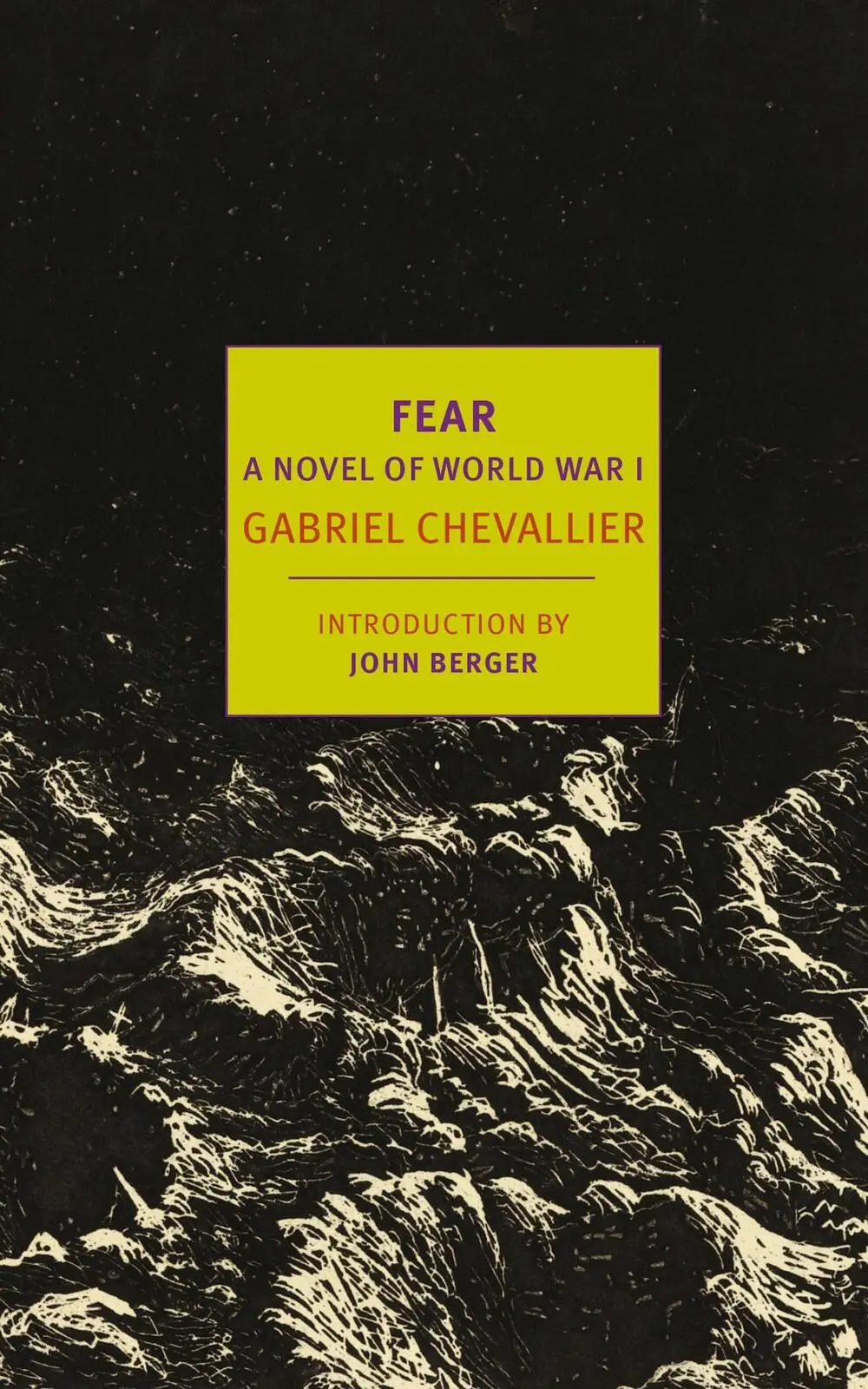
- Название:Fear
- Автор:
- Издательство:New York Review Books
- Жанр:
- Год:2014
- Город:New York
- ISBN:нет данных
- Рейтинг книги:3 / 5. Голосов: 1
-
Избранное:Добавить в избранное
- Отзывы:
-
Ваша оценка:
Fear: краткое содержание, описание и аннотация
Предлагаем к чтению аннотацию, описание, краткое содержание или предисловие (зависит от того, что написал сам автор книги «Fear»). Если вы не нашли необходимую информацию о книге — напишите в комментариях, мы постараемся отыскать её.
1915: Jean Dartemont heads off to the Great War, an eager conscript. The only thing he fears is missing the action. Soon, however, the vaunted “war to end all wars” seems like a war that will never end: whether mired in the trenches or going over the top, Jean finds himself caught in the midst of an unimaginable, unceasing slaughter. After he is wounded, he returns from the front to discover a world where no one knows or wants to know any of this. Both the public and the authorities go on talking about heroes — and sending more men to their graves. But Jean refuses to keep silent. He will speak the forbidden word. He will tell them about fear.
John Berger has called
“a book of the utmost urgency and relevance.” A literary masterpiece, it is also an essential and unforgettable reckoning with the terrible war that gave birth to a century of war.
Fear — читать онлайн бесплатно полную книгу (весь текст) целиком
Ниже представлен текст книги, разбитый по страницам. Система сохранения места последней прочитанной страницы, позволяет с удобством читать онлайн бесплатно книгу «Fear», без необходимости каждый раз заново искать на чём Вы остановились. Поставьте закладку, и сможете в любой момент перейти на страницу, на которой закончили чтение.
Интервал:
Закладка:
‘I’m observing. First of all I observe the places where shells fall, so that I don’t go near them. Wisdom teaches us: God saves those who save themselves. For save yourself read keep a low profile. You understand that I’m too interested in the war not to want to see it through to the end… And then, during quiet periods, I observe what the Barbarians are up to with my little lorgnette.’
‘Nègre, I’d like to ask you a question that still bothers me. What do you think of courage?’
‘You’re still stuck on that one! That question has now been definitively answered. Specialists were closeted away working on it. So here’s what you need to know: a Frenchman is naturally courageous; no one else is. Technicians have proved that the only way to get a German into combat is to give him ether. This artificial courage is not the real thing. And what are you up to?’
‘Me? Between you and me, I’m working like a dog.’
I ask Nègre to recommend me as an observer. He promises to do his best, and to come back and see me.
After two months in the bunker, we are relieved, just as it’s getting warmer. We are almost sorry to leave the mountain peaks. Life was very tough but we were not in any real danger. Down in the valley we learn that Captain Bovin is on sick leave. The men sneer at the news:
‘He’s scared of going to a sector where things are hot! Rule number one: you can always be sure that a bastard who does his service at the rear will be yellow when it comes to fighting.’
A young reserve lieutenant by the name of Larcher, a cheerful, cordial man, comes to take command of the 9th. We return to our old sector and find the battalion resting in a village at the foot of the mountain.
The company adjutant, whom I knew when I was a runner, attaches me to command HQ as a secretary-topographer. Once again I’ve been saved from the squad, once again I’ve got myself a cushy job.
We soon go back up to the front lines. This time I’m staying in an encampment in the forest, with comfortable log cabins for shelter. The windows look out on to a clearing at the top of which are the trenches leading to the front line. I’ve got a basic office job: I transcribe orders in several copies, prepare summaries for the colonel, keep the campaign plans up to date.
Weeks go by quietly, disturbed only by the usual surprise attacks. For a couple of hours, the mountain is shaken, the ridge breaks up under an avalanche of mortar shells, our batteries roar in response, explosions resound in the mountain gorges, and heavy artillery shells burst in our vicinity. In the evening we draw up lists of our losses in men and matériel. Thus we learn of the fatalities, rather inattentively, like town-hall clerks registering deaths.
It’s not so cold now. The sun is getting its strength back. The snow melts, the forest turns a darker green; we splash about in the mud. Contingents of birds set up camp in the pine branches, green shoots pierce the soil. The coming of spring cheers us up and also secretly worries us. Springtime brings the start of fresh battles; it is the harbinger of new hecatombs. We hardly believe in decisive victories any more and we know that offensives are usually more costly for the attackers than the defenders. The chances of getting killed remain our overwhelming concern.
Nonetheless, on the front line where I sometimes go to note down some organisational detail, the lookouts are happier because they’re not suffering so much. They stand around outside their little huts, chatting and joking, living in the present for fear of imagining the future. They play games for pennies with cards or counters. They smoke a lot and always keep their friend, their wine flask, close at hand.
3. THE CHEMIN DES DAMES
‘Man in battle. . is a being in whom the instinct of self-preservation dominates, at certain moments, all other sentiments. Discipline has for its aim the domination of that instinct by a greater terror.
Man taxes his ingenuity to be able to kill without running the risk of being killed. His bravery is born of his strength and it is not absolute. Before a stronger, he flees without shame.’
Lieutenant-Colonel Ardant du Picq, Etudes sur le combat (1880), trans. Col. John N. Greely and Major Robert C. Cotton (1921)WE ARE IN THE TOWN OF Fismes, an accursed place, with the sad, forbidding aspect of any large industrial centre. This one is a centre of the war industry, surrounded by railway tracks, bays and platforms for loading and unloading, encampments of Moroccan soldiers, and aerodromes; a centre which is a convergence point for endless columns of lorries, artillery, ambulances, etc. Long processions of men remind you of shifts leaving factories, and through them weave the motorcars of the generals, the ironmasters. Their foundries glow before us, up on the ridges, and the noise of their huge anvils fills the sky as their heavy hammers pulverise human flesh.
Our billets are disgustingly dirty but they are only there to provide a day or two’s shelter for men passing through, human sacrifices whom there’s no need to bother about. Mere cattle pens. We are in Fismes, gateway to death.
We are also in Fismes, the town of total debauchery. All along the streets there is nothing but grocery shops spilling out on to the pavement. We’ve never seen such great pyramids of mouth-watering charcuterie, of tins with gold labels, such a choice of wines, spirits, fruit. Not many objects, though, for this is not the place to buy things which last. Just food and drink, everywhere. The sharks who run these shops treat us like scum and announce their prices defiantly. We’ve never paid such prices and the soldiers complain. The salesmen reply with a cold, implacable look that says: what use is your money if you’re not coming back? A good point! A particularly large explosion in the distance decides matters for even the most economical; they fill their arms and offer their money.
Let’s eat and drink ourselves to death…
Since die we must!
In the street I stop an artillery NCO whom I knew in civilian life. He’s a tall, calm lad, a little older than me, with the direct gaze of a child. In the past, I’d never seen him angry, or even irritated. He doesn’t seem to have changed. We find a table in a café and I question him. He tells me he’s acting as a detached observer, alongside the infantry, living in the trenches with the men. I ask him:
‘Do you know the sector?’
‘Only too well! I took part in the attacks of 16 April.’[30]
‘Where was that?’
‘Outside Troyon. I set off with the African troops, Mangin’s famous army.’
‘Is it true that they were massacred?’
‘You know how it is. No one sees any more than their own patch. But in mine it was slaughter. I can tell you about it, I was part of the waves of assault under Colonel J—. In the battalion we marched with, only about twenty men came back.’[31]
‘Why did it fail?’
‘Simple enough: the Boche were waiting for us. Our attack had been planned for months, and everyone knew about it.’
‘Yes, I’d heard that. In the Vosges they announced that we were planning something very big in the Aisne, that Nivelle had decided to blast through German lines with his artillery. In short, all-out attack, without any attempt at hiding.’
‘Imagine it! The Boche also had artillery, and several divisions of troops. They brought them up. While we were making roads and paths and setting up munitions depots, they were installing armoured turrets for their machine gunners, they were constructing entrenchments, tunnels, and concrete bunkers, they were putting up new lines of barbed wire. They had all the time in the world to prepare their trap. The day of our assault, they just fired at will. In two hours our offensive had stopped dead. In two hours fifty to a hundred thousand of our men were out of action. We’ll never know the exact number.’
Читать дальшеИнтервал:
Закладка:
Похожие книги на «Fear»
Представляем Вашему вниманию похожие книги на «Fear» списком для выбора. Мы отобрали схожую по названию и смыслу литературу в надежде предоставить читателям больше вариантов отыскать новые, интересные, ещё непрочитанные произведения.








Обсуждение, отзывы о книге «Fear» и просто собственные мнения читателей. Оставьте ваши комментарии, напишите, что Вы думаете о произведении, его смысле или главных героях. Укажите что конкретно понравилось, а что нет, и почему Вы так считаете.