Gabriel Chevallier - Fear
Здесь есть возможность читать онлайн «Gabriel Chevallier - Fear» весь текст электронной книги совершенно бесплатно (целиком полную версию без сокращений). В некоторых случаях можно слушать аудио, скачать через торрент в формате fb2 и присутствует краткое содержание. Город: New York, Год выпуска: 2014, Издательство: New York Review Books, Жанр: Классическая проза, на английском языке. Описание произведения, (предисловие) а так же отзывы посетителей доступны на портале библиотеки ЛибКат.
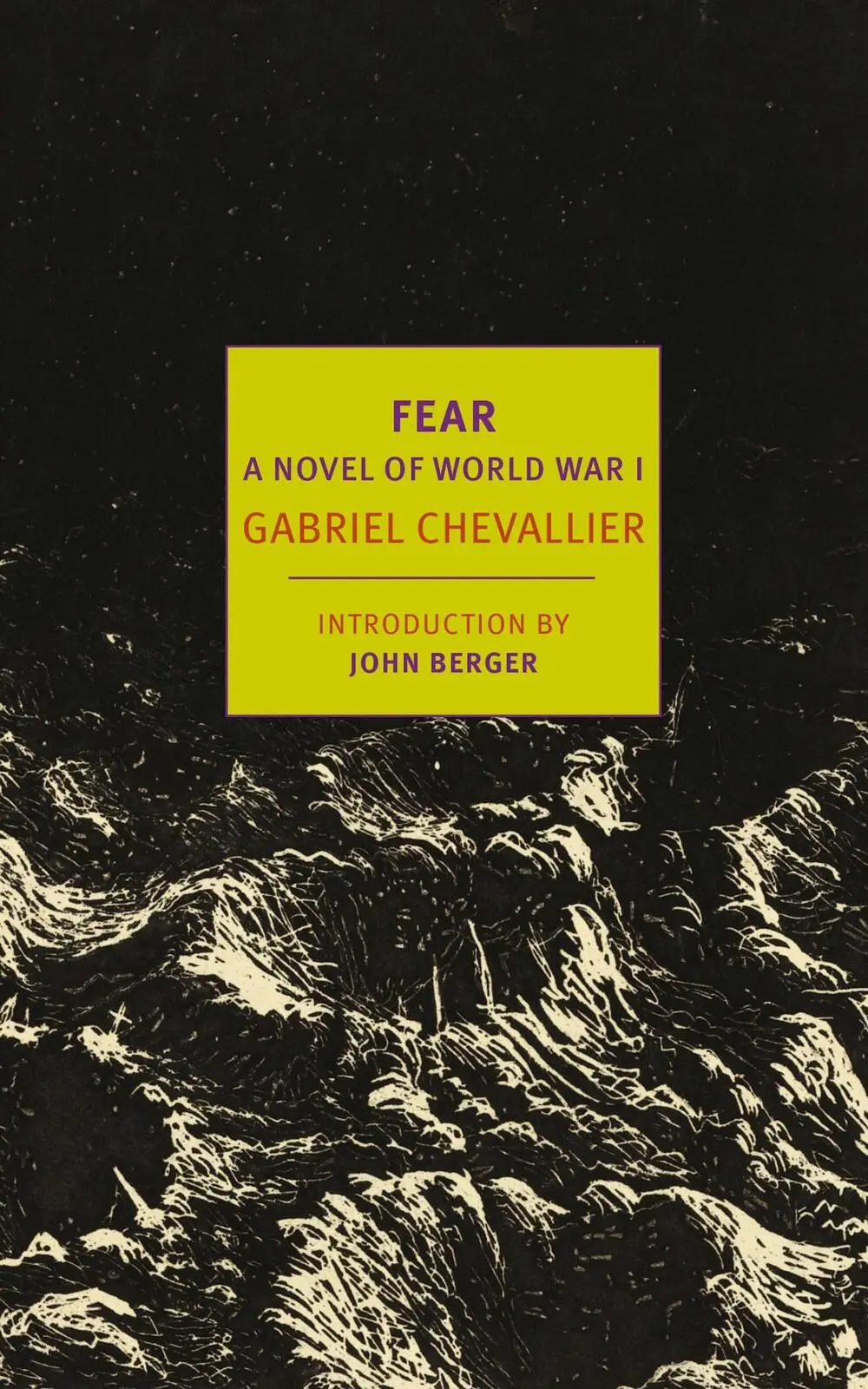
- Название:Fear
- Автор:
- Издательство:New York Review Books
- Жанр:
- Год:2014
- Город:New York
- ISBN:нет данных
- Рейтинг книги:3 / 5. Голосов: 1
-
Избранное:Добавить в избранное
- Отзывы:
-
Ваша оценка:
Fear: краткое содержание, описание и аннотация
Предлагаем к чтению аннотацию, описание, краткое содержание или предисловие (зависит от того, что написал сам автор книги «Fear»). Если вы не нашли необходимую информацию о книге — напишите в комментариях, мы постараемся отыскать её.
1915: Jean Dartemont heads off to the Great War, an eager conscript. The only thing he fears is missing the action. Soon, however, the vaunted “war to end all wars” seems like a war that will never end: whether mired in the trenches or going over the top, Jean finds himself caught in the midst of an unimaginable, unceasing slaughter. After he is wounded, he returns from the front to discover a world where no one knows or wants to know any of this. Both the public and the authorities go on talking about heroes — and sending more men to their graves. But Jean refuses to keep silent. He will speak the forbidden word. He will tell them about fear.
John Berger has called
“a book of the utmost urgency and relevance.” A literary masterpiece, it is also an essential and unforgettable reckoning with the terrible war that gave birth to a century of war.
Fear — читать онлайн бесплатно полную книгу (весь текст) целиком
Ниже представлен текст книги, разбитый по страницам. Система сохранения места последней прочитанной страницы, позволяет с удобством читать онлайн бесплатно книгу «Fear», без необходимости каждый раз заново искать на чём Вы остановились. Поставьте закладку, и сможете в любой момент перейти на страницу, на которой закончили чтение.
Интервал:
Закладка:
Our worst enemy now is our captain. We fear him more than German patrols and during the night we’re more alert to noise from behind than in front. Through his tyranny he has managed to produce the ridiculous result that we turn our attention from the enemy facing us to focus it in our own camp. Two guards who warmed themselves up, with the approval of their comrades, were court-martialled for abandoning their post in the face of the enemy, and NCOs have been reduced to the ranks for pointless reasons. It has reached a point where we’ve set up a system of alarms to protect ourselves from our leader. As soon as he pops up somewhere, his presence is announced through a network of strings, hidden in the barbed wire, linking the positions, which rattle empty bully beef tins. The garrisons on the slope also pour water down the trench every evening so as to add to the layer of ice that makes the approach to the bunkers hazardous. We’re the first to suffer from this, but it obtained the desired result. During one of his rounds, the captain slipped and fell heavily, injuring his back. His runners had to hold him up so he could get back to his command post. This news was greeted with whooping and firing in the air, rather like an Arab equestrian fantasia. After that, the tyrant doesn’t show himself in our patch. But he takes his revenge by leaving us no respite.
Our silent hatred for the captain continues to grow. Here is a man who should be helping us to bear our suffering and instead is causing us more misery than the enemy. The soldiers would kill him more readily than a German — and with more reason, they believe.
I’m living like an animal, an animal who has to eat and then sleep. I have never felt so stupefied, so blank, and I realise that wearing people out, leaving them no time to think, reducing them to a state where they feel nothing but the most basic needs, is the surest way of controlling them. I understand now how slaves submit so easily, because they have no strength left for revolt, nor imagination to conceive it, nor energy to organise it. I understand the wisdom of oppressors who prevent those they exploit from using their brains by crushing them with exhausting labour. I sometimes feel I’ve almost reached that state of utter subjection that comes from weariness and monotony, that animal passivity that accepts anything. I feel close to submission, which destroys the individual. My critical faculties are dulled; I hesitate, waver, and capitulate. Military routine, with all its petty rules and regulations, doesn’t need my consent and drafts me into the herd. I am becoming a true infantryman, one whose intellect stands permanently to attention; I do what I’m told, one little cog in the machine. Everyone, from a general down to a corporal, gives me orders by right, absolute and unquestionable, and can strike me off the list of the living. In the field of human activities, mine consist of digging a latrine or carrying a tree trunk. Could I tell an NCO that these things are harder for me than for others? It would be useless for he’d probably misunderstand me; it would be unwise because he’d take advantage of it. Captain Bovin had certainly guessed it, and he put me here. (And consequently he’s the only person in front of whom I’ll slave away with a cheerful smile on my face.)
And first and foremost I have to mix in with, identify with, those with whom I share my life, to whom I am bound by a pact of self-preservation. I must go back to being a caveman and make my contribution to sating the appetites of my horde. I must dig and saw and carry and clean and make fire, think only of my body. How can I explain to my comrades that in the conflict between body and mind, in my case the latter is usually the winner? But my mind, here, is a privilege and it has been withdrawn; it is out of line, it causes a nuisance to the squad. The riches of the mind are monopolised by the General Staff, who redistribute them as shells showered down on the rabble.
And yet sometimes at night, looking out at the snow shining into infinity beneath dazzling moonlight like an aurora borealis, I come to think that there, alone before my icy ramparts, I am watching over the sleeping country, that it depends on me for some part of its security, that my chest is its frontier, and I feel a little bit of pride in keeping with the traditions of GCHQ. To while away the hours I experiment with noble motives, try out the joys of simple patriotism. But I’m already quite aware that a well-aimed burst of gunfire will restore my disgust for such fine sentiments.
If a German should come to attack me, I know for sure that I will do all I can to kill him. So that he doesn’t kill me, above all; and then because I am responsible for the safety of four men in our bunker, and if I don’t shoot I could expose them to danger. I am bound to these farmers who are always bullying me for being lazy. The solidarity of a chain gang.
But in the daytime if I looked down the sight of my rifle and saw an exposed German at 150 metres, who didn’t know that I could see him, it’s very unlikely I’d shoot. I don’t see how I could kill someone like that, in cold blood, my rifle resting comfortably on my elbows while I slowly take aim, how I could kill with premeditation and not as a reflex.
Fortunately there is so little question of killing that we don’t even bother to hide the lights of our cigarettes. Perhaps we risk a bullet. But there’s something in the little act of defiance of smoking openly that avenges the terrible biting cold.
Now that I’m a soldier of the trenches once more, I can understand the kind of fatalism to which my comrades succumb, in this war where nothing ever happens, nothing changes, everything looks the same; a war where all we do is keep watch and dig ditches, suffer silently in the muck and mud; a war without limit or respite, where we don’t do anything, don’t even defend ourselves, just wait for the chance shell that has our name on it. I can understand what these two long years, the hundreds of nights on sentry duty, the thousands of endless hours looking out into the dark, what they represent for those who’ve endured them. I can understand that they have stopped asking themselves questions. And yet it still amazes me that this herd of cattle, of which I have become a part, still struggles so much against death.
As I’m ferrying back supplies, I go past the highest point of the position, bent down from the weight of a dixie in each hand and a large haversack on my back. In a trench I bump into an NCO. We’re in each other’s way, I raise my head. Oh…
‘Nègre!’
‘Hey, my old son!’
Once we’ve stopped telling each other how happy we are to meet again, my old neighbour from hospital explains that he’s been in the same regiment as me for the last two months, as a sergeant-observer working with the colonel. But he was detached to the 1st battalion, which explains why I hadn’t bumped into him before.
‘Incidentally, how’s our dear friend Poculotte doing?’
‘Very well, thank you.’
‘And what’s he saying?’
‘Sssh! The general has become very circumspect. But between you and me, I think he’s got something big planned.’
‘So, still going on the offensive?’
‘More than ever! We are preparing Austerlitz.’
‘What are we waiting for?’
‘Sunshine. We have to wait till spring.’
‘And in the meantime?’
‘In the meantime, the general is busy raising the pay of NCOs. He sets great store by this measure for the maintenance of morale, based on the principle that a factory’s output is always highest when the foremen are well paid.’
‘And the workers?’
‘They are far less important. The baron is truly becoming a great politician and a profound thinker!’
‘And what about you, what are you doing?’
Читать дальшеИнтервал:
Закладка:
Похожие книги на «Fear»
Представляем Вашему вниманию похожие книги на «Fear» списком для выбора. Мы отобрали схожую по названию и смыслу литературу в надежде предоставить читателям больше вариантов отыскать новые, интересные, ещё непрочитанные произведения.








Обсуждение, отзывы о книге «Fear» и просто собственные мнения читателей. Оставьте ваши комментарии, напишите, что Вы думаете о произведении, его смысле или главных героях. Укажите что конкретно понравилось, а что нет, и почему Вы так считаете.