Gabriel Chevallier - Fear
Здесь есть возможность читать онлайн «Gabriel Chevallier - Fear» весь текст электронной книги совершенно бесплатно (целиком полную версию без сокращений). В некоторых случаях можно слушать аудио, скачать через торрент в формате fb2 и присутствует краткое содержание. Город: New York, Год выпуска: 2014, Издательство: New York Review Books, Жанр: Классическая проза, на английском языке. Описание произведения, (предисловие) а так же отзывы посетителей доступны на портале библиотеки ЛибКат.
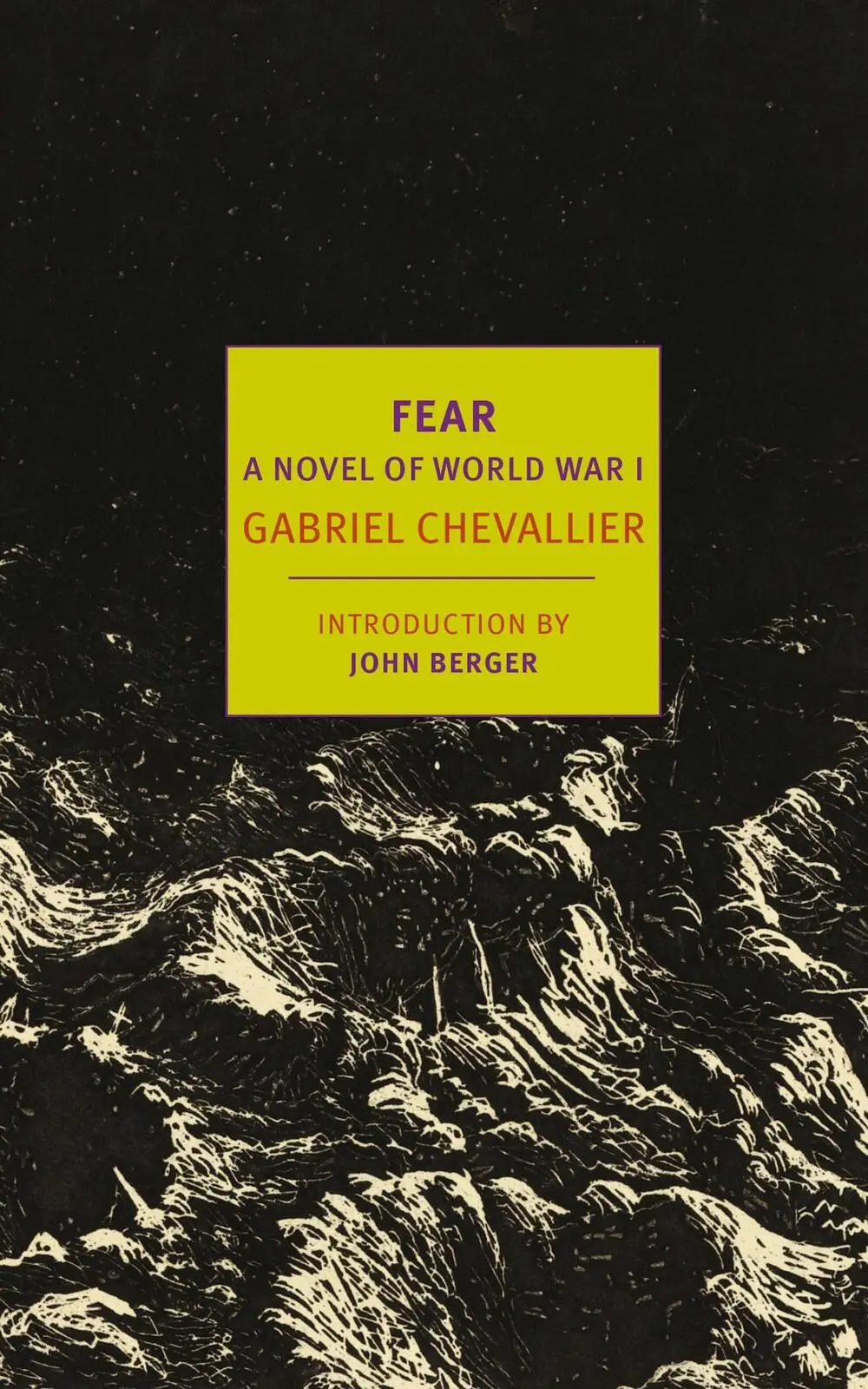
- Название:Fear
- Автор:
- Издательство:New York Review Books
- Жанр:
- Год:2014
- Город:New York
- ISBN:нет данных
- Рейтинг книги:3 / 5. Голосов: 1
-
Избранное:Добавить в избранное
- Отзывы:
-
Ваша оценка:
Fear: краткое содержание, описание и аннотация
Предлагаем к чтению аннотацию, описание, краткое содержание или предисловие (зависит от того, что написал сам автор книги «Fear»). Если вы не нашли необходимую информацию о книге — напишите в комментариях, мы постараемся отыскать её.
1915: Jean Dartemont heads off to the Great War, an eager conscript. The only thing he fears is missing the action. Soon, however, the vaunted “war to end all wars” seems like a war that will never end: whether mired in the trenches or going over the top, Jean finds himself caught in the midst of an unimaginable, unceasing slaughter. After he is wounded, he returns from the front to discover a world where no one knows or wants to know any of this. Both the public and the authorities go on talking about heroes — and sending more men to their graves. But Jean refuses to keep silent. He will speak the forbidden word. He will tell them about fear.
John Berger has called
“a book of the utmost urgency and relevance.” A literary masterpiece, it is also an essential and unforgettable reckoning with the terrible war that gave birth to a century of war.
Fear — читать онлайн бесплатно полную книгу (весь текст) целиком
Ниже представлен текст книги, разбитый по страницам. Система сохранения места последней прочитанной страницы, позволяет с удобством читать онлайн бесплатно книгу «Fear», без необходимости каждый раз заново искать на чём Вы остановились. Поставьте закладку, и сможете в любой момент перейти на страницу, на которой закончили чтение.
Интервал:
Закладка:
But his favoured position had just come to an end. The regiment had a new colonel at its head and this colonel considered that a captain with his eye on a commandant’s shoulder stripes needed to have served at the front.
Captain Bovin lives up to his reputation in his appearance and behaviour. He’s about fifty, very tall, with a jaundiced complexion. He has yellow teeth, the cruel smile of a Moor, the eyes of a Chinaman; he is bearded, greying, with a slow, solemn walk, and a hypocritical air of austerity. I find him mediocre, fussy, mean-spirited: he has the mind of an office manager combined with that of a barracks adjutant, with full power over a hundred and fifty men. The type of man you loathe at first sight, a man who likes to intimidate people, and who also likes — more seriously and always a bad sign — servility in his subordinates. In short, we all knew it was a bad day for the company when he turned up. We also got the strong impression that his batman was spying on us.
My own relations with such a man could only be difficult and were unlikely to end well. He ordered me to draw up a map of the entire sector, a task which cost me ten days’ torture. In a temperature of twenty below, I had to measure abandoned trenches, with the snow up to my knees, and stand still on the ground checking deviations and noting down figures. My shoes froze to my feet. Once I’d completed the map, the captain sent me straight back to the front line. I was back in the squad.
This sector lies at an altitude of about 1,000 metres. Our company is attached to the other battalion, on the top of the mountain, a part of whose slopes we hold. Our positions consist of a single line of trenches, well protected by barbed wire. Along the whole length of this line, every 150 metres, short trenches lead out to bunkers at a salient, which function as ‘holding points’. Each of these little forts has a steel-barred door, so that the garrison can close itself off in the case of any attack from the rear by enemy units who have infiltrated our main trenches. It’s a weak defence system, suitable for a quiet sector. We’re on the edge of the forest. The road comes almost to the trench and along this road, behind our posts, there are shelters for company command, for the quartermasters and so on, hidden by the trees. In fact the rear of the position, inadequately prepared, would become untenable under bombardment. But our only serious enemy is the cold.
We hold the last position on the left of the company. It’s a narrow shelter, dug out to the same depth as the trench and covered over with rows of logs. Furniture consists of a sleeping platform, a metal stove, and a little bench. Five of us live there: four privates and a corporal. Lookouts stand in front of the shelter on a kind of platform protected by shoulder-high gabions.[29] In the daytime the sentry stands in the trench. Keeping guard is our chief duty, and it’s a very tough one. From dusk to dawn we have to cover fourteen hours of sentry duty between us, two men at a time, making seven hours per team. Our sleep is thus interrupted every two hours.
The temperature has dropped even lower. At night it varies between minus 25 and minus 30 degrees. The sentries keep the fire burning in the shelter but the stove only works if it stays red hot. Thus we go straight from the inside temperature, about 25 degrees, to the temperature outside, where we stand still in the trench looking out for enemies who cannot possibly come and who, just like us, are only thinking about how to keep warm. And since on the front line we have to sleep fully clothed and kitted, we endure the jump of fifty degrees with no other protection than the blanket we keep tightly wrapped around us.
No one can endure this torture for two hours, and our cramped position does not even allow us the space to walk up and down to stop freezing again. So we have a private arrangement to take it in turns as lookout every half hour. One watches while the other warms up. If you need help you pull a wire which rings a bell in the shelter.
We fight against the cold as best we can. The icy north wind pierces and slashes us with blades of steel. Our woollen caps protect our heads and ears, we wrap mufflers round our faces leaving only our eyes uncovered and our corneas freeze so that all we see is blurred as if we were looking through water. Above this construction of scarves we balance our helmets and sometimes add a blanket over them which hangs down on to our shoulders like a big hood. We’ve been given rubber mountain boots which we wear over felt slippers. But the boots are uncomfortable and dangerous, the insides get soaked with sweat and they cause us to fall over on the slippery snow. I have found another way of protecting myself from the cold, less effective but sufficient as long as I jump up and down on the spot every now and then. I keep my shoes on and put my legs inside two empty sandbags which I tie on at the knees. Then I take other sacks from which I’ve cut out the bottoms and make myself thigh covers. This outfit has the advantage of giving a surer grip on ice; it allows you to run and I am well aware that running is the first necessity for a fighter, who must always be prepared for a rapid retreat. On my hands I wear three pairs of gloves on top of each other.
The nights seem to last forever. Cracking ice mimics the sound of wire cutters but we have stopped worrying about it. We concentrate on guarding ourselves, on the sectors of our bodies which stiffen up as if our arteries were carrying ice floes. Standing still gives us a treacherous sense of warmth, wraps us in a dangerous fleece of inertia, and it takes an effort of will to start moving again, which stirs up the cold before rekindling the fires of our blood. The first glimmers of dawn seem like deliverance.
Around seven we get coffee, frozen wine which tinkles in the cans, and loaves of bread that’s so hard you’d need an axe to cut it. We put the loaves on the stove where they soften and give out water, then gorge ourselves on the tepid, spongy bread. And we take little sips of the boiling hot coffee heated up in our tin mugs. After a winter night, a polar night, it’s life itself that we’re gulping down.
It didn’t take Captain Bovin long to show his measure. The Germans leave us in peace on our mountain, but he has burdened us with more and more duties that can only add to our suffering without having any military benefit whatsoever. Profiting from the passivity that the low temperatures have imposed on all soldiers, he has transformed our sector into a barracks. He swamps us with tasks that aren’t urgent, takes no account of our exhaustion, and robs us of the scant free time that would be left to us by duties that are already quite onerous enough.
Several times a week, he summons the company to alert in the middle of the night. All the men have to line up in the trenches and await his inspection. He thus makes us endure two extra hours of cold. These alerts have no value. Most of the men are old hands by now and know far better than the captain how to defend a forward post like ours. In any case, we have the feeling that a few shells would quickly take the wind out of his sails, and we wait for the time when we’re in an active sector so that we can show what we think of him. The men respect a leader who is strict in critical moments and risks his own skin, but they have the deepest contempt for one who persecutes them without having proved himself.
During the day the captain puts us to work on the grounds that we should not be idle: maintaining the trenches, digging latrines, cleaning anything that can be cleaned — the results of which are soon covered by the snow. He has also come up with the idea of sending detachments to the rear for training exercises, something unheard of until now.
Getting fuel is enough to keep us busy in the afternoons. We get through a great deal of wood. Every day we have to cut down a pine in the forest and carry it piece by piece to the shelter where we saw it into smaller sections and then chop these into logs before stacking them up inside. Always busy, we are also always tired since we can only sleep for short periods between our turns at guard duty.
Читать дальшеИнтервал:
Закладка:
Похожие книги на «Fear»
Представляем Вашему вниманию похожие книги на «Fear» списком для выбора. Мы отобрали схожую по названию и смыслу литературу в надежде предоставить читателям больше вариантов отыскать новые, интересные, ещё непрочитанные произведения.








Обсуждение, отзывы о книге «Fear» и просто собственные мнения читателей. Оставьте ваши комментарии, напишите, что Вы думаете о произведении, его смысле или главных героях. Укажите что конкретно понравилось, а что нет, и почему Вы так считаете.