Gabriel Chevallier - Fear
Здесь есть возможность читать онлайн «Gabriel Chevallier - Fear» весь текст электронной книги совершенно бесплатно (целиком полную версию без сокращений). В некоторых случаях можно слушать аудио, скачать через торрент в формате fb2 и присутствует краткое содержание. Город: New York, Год выпуска: 2014, Издательство: New York Review Books, Жанр: Классическая проза, на английском языке. Описание произведения, (предисловие) а так же отзывы посетителей доступны на портале библиотеки ЛибКат.
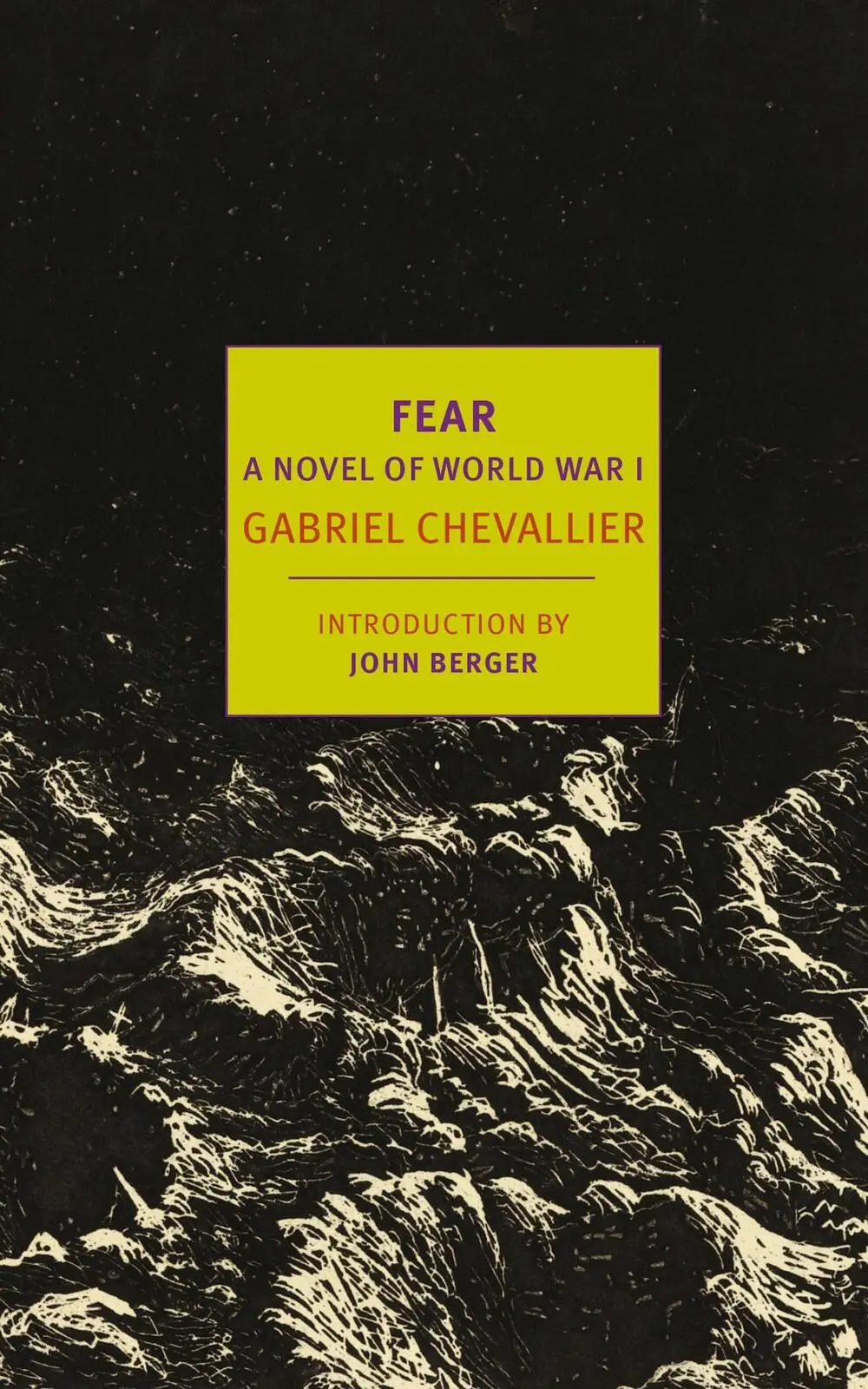
- Название:Fear
- Автор:
- Издательство:New York Review Books
- Жанр:
- Год:2014
- Город:New York
- ISBN:нет данных
- Рейтинг книги:3 / 5. Голосов: 1
-
Избранное:Добавить в избранное
- Отзывы:
-
Ваша оценка:
Fear: краткое содержание, описание и аннотация
Предлагаем к чтению аннотацию, описание, краткое содержание или предисловие (зависит от того, что написал сам автор книги «Fear»). Если вы не нашли необходимую информацию о книге — напишите в комментариях, мы постараемся отыскать её.
1915: Jean Dartemont heads off to the Great War, an eager conscript. The only thing he fears is missing the action. Soon, however, the vaunted “war to end all wars” seems like a war that will never end: whether mired in the trenches or going over the top, Jean finds himself caught in the midst of an unimaginable, unceasing slaughter. After he is wounded, he returns from the front to discover a world where no one knows or wants to know any of this. Both the public and the authorities go on talking about heroes — and sending more men to their graves. But Jean refuses to keep silent. He will speak the forbidden word. He will tell them about fear.
John Berger has called
“a book of the utmost urgency and relevance.” A literary masterpiece, it is also an essential and unforgettable reckoning with the terrible war that gave birth to a century of war.
Fear — читать онлайн бесплатно полную книгу (весь текст) целиком
Ниже представлен текст книги, разбитый по страницам. Система сохранения места последней прочитанной страницы, позволяет с удобством читать онлайн бесплатно книгу «Fear», без необходимости каждый раз заново искать на чём Вы остановились. Поставьте закладку, и сможете в любой момент перейти на страницу, на которой закончили чтение.
Интервал:
Закладка:
In short, this front is protected by a very thin line of troops. This light deployment allows divisions to be concentrated in active sectors. Here we rely on the towering bulwark of the mountains which would make any big offensive difficult. We are here to watch over these natural fortifications.
At about five in the evening a series of violent explosions shakes the entire sector, prolonged explosions accompanied by the sound of tearing metal that characterises trench torpedoes. Here we go! Immediately the bombardment takes on the rapid rhythm of a barrage, the explosions forming a background rumble broken at regular intervals by the impact of the heavy projectiles, enough to shake the mountain. Our own trench artillery responds rapidly. We quickly grab our weapons and run from the command post, on a narrow spur where we risk being surrounded. We must get through the first detonations before it’s too late and the entrance to our trench is cut off. The reserve platoon, who have just climbed up a slope to join us, are pushing and stumbling behind, gasping for breath, shouting, rattling their weapons. We run under the whistling shells, through the yellow smoke, with huge pieces of shrapnel whizzing past like axes and smashing into the ground around us. For thirty metres the trench is as hot as an oven. Then we breathe cooler air, the menace of the flying cleavers is lifted from our necks, and we can see daylight. We’re in the communication trench.
As this trench pushes on towards the rear, skirting the flank of a spur, the mountain itself rises up and protects us with a steep slope still densely covered with trees. There are now forty of us with a lieutenant, three hundred metres from our positions in a place that is almost completely sheltered. Shells seek us out but they burst above us or drop down into the gulley. They’d be very lucky to hit us in this dead angle. We just have to wait patiently.
The front-line platoons are ordered to fall back laterally at the first bombardment, closing up with the neighbouring companies. We aren’t thinking about them, and it would be mad to try to link up with them right now. Each group is looking after itself, following set rules. Since shelling makes it impossible to hold this sector, the command has judged it preferable to abandon it altogether, then take it back afterwards with a counter-attack. But we know that this is simply a raid by an enemy group hoping to take prisoners. Caught by our own fire and finding the trenches empty, they’ll clear out.
We listen to the bombardment. Violent explosions shake the ground even here. Shells that pass too low make us duck. A cloud of smoke hides our positions and despite our relative security, we’re anxious.
After an hour, there are distinct gaps in the rumbling of explosions. The shelling gets less intense, falters, and quickly dies away. There are a few bursts of gunfire, then silence. Twilight descends. The reserve platoon forms up in battle order and advances cautiously. They don’t encounter anyone. We get back to the command post, jumping over a few shell-holes.
Runners are sent off straight away to gather information from each platoon. The sector is unrecognisable. Trenches are blocked and I often have to walk along the parapets. Nearing the front line I call out to avoid walking into trouble. I reach the shelter on the far right of the company, its entrance facing the Germans, and climb down the rickety ladder. I find a few men with their sergeant.
‘So, nothing serious?’
‘Look!’ says the sergeant.
I see a shape stretched out on the ground in a corner of the dugout, a broken body. One leg must be broken off at the hip because it’s pointing in the wrong direction. The trousers are torn and reveal the pale thigh, almost cut off, which hasn’t even bled. The other leg is also cut open.
‘Who is it?’
‘Sorlin.’
Sorlin, yes, I know him. A young man from class 16 who always gave me a friendly smile on my rounds… I bend down to look more closely. His eyes are shut but his mouth, that mouth that used to call out to me, is open and twisted. That young face that was always so cheerful bears an expression of terror. I hear the sergeant, a man of forty:
‘A good kid, in this state! This war’s a bloody disgrace!’
Stupidly, I ask:
‘No other trouble?’
‘Maybe you don’t think this is enough!’ he responds furiously.
I can feel how grief-stricken these men are, and their sadness is making them bitterly angry. I imagine what they’ve been through just now, the fear and panic under the bombardment, while I was back there in the trench, under cover…
‘Look, sergeant, I think it’s far too much, you know that. But I have to take back a report, they’re waiting for me. I’ll send stretcher-bearers.’
The other runners are also coming back to the command post. Two dead and four wounded in the platoon in the centre, none in the platoon on the left flank. In this now quiet sector, it’s another evening of war, an evening of mourning. The lieutenant dictates a report which I write down to take to the battalion. Outside stretcher-bearers are asking where the wounded are. We guide them, in the darkness.
Later on I make my rounds. There’s nothing but mounds of mud everywhere. Everyone is on the parapets, working. The trench, almost levelled, is being pegged out by a working party in a long line, their rifles lying on the ground beside them. Twenty metres away other shovels are clanging and you can clearly see shadows bending over the ground. The Germans are working on their side, and this whole part of the front is just one big building site.
Accompanied by a sergeant, we walk several metres out beyond our working party, driven by curiosity as much as bravado. A German shadow begins to cough loudly, to point out that we’re breaking the rules, going beyond the limits of neutrality. We cough in our turn to reassure this vigilant watchman, and go back to our side. With no trenches separating them, these enemies, who could surprise their adversaries with a couple of leaps, respect the truce. Is this from a sense of fair play? Isn’t it rather the wish, equal in both camps, to stop fighting?
About twice a month, our sectors get badly damaged by surprise attacks. Field guns and trench artillery, concentrating their fire on a narrow area, achieve a devastating density. Several thousand projectiles may be fired in just a couple of hours. Helped by the panic this creates and hidden by smoke, detachments penetrate the enemy lines with the aim of bringing back prisoners. In our first surprise attack we captured five Germans. Since then all our attempts have failed; it seems most probable that the enemy has adopted our method of evacuation, the only prudent one, and one which saves lives since units that remain in position will be annihilated. The Germans have never captured any of us.
A troop of about fifty men led by a sub-lieutenant, all volunteers, whom we call ‘trench raiders’, specialise in these little attacks. They live apart from the rest of us in the forest, and are exempt from other duties. They often go halfway down the valley where there’s an inn run by three women, known to us by the name The Six Buttocks . The inn often echoes with the noise of their arguments, their quarrels with the artillerymen, which are often ended by pistols or knives when they are drunk. We shut our eyes to their exploits, because of their dangerous mission. It is understood that a good warrior must be a bit of an outlaw.
In between surprise attacks, the sector slumbers. The first mortar shells always indicate the start of a raid, and we expect them an hour or two before nightfall. With every raid there will be casualties among the lookouts responsible for warning of an enemy approach.
A general of rather martial bearing, escorted by a battalion runner, turns up unexpectedly at the command post, and declares: ‘I have come to have a little look at your sector’. Giving me a wink, our lieutenant replies:
Читать дальшеИнтервал:
Закладка:
Похожие книги на «Fear»
Представляем Вашему вниманию похожие книги на «Fear» списком для выбора. Мы отобрали схожую по названию и смыслу литературу в надежде предоставить читателям больше вариантов отыскать новые, интересные, ещё непрочитанные произведения.






Обсуждение, отзывы о книге «Fear» и просто собственные мнения читателей. Оставьте ваши комментарии, напишите, что Вы думаете о произведении, его смысле или главных героях. Укажите что конкретно понравилось, а что нет, и почему Вы так считаете.