Gabriel Chevallier - Fear
Здесь есть возможность читать онлайн «Gabriel Chevallier - Fear» весь текст электронной книги совершенно бесплатно (целиком полную версию без сокращений). В некоторых случаях можно слушать аудио, скачать через торрент в формате fb2 и присутствует краткое содержание. Город: New York, Год выпуска: 2014, Издательство: New York Review Books, Жанр: Классическая проза, на английском языке. Описание произведения, (предисловие) а так же отзывы посетителей доступны на портале библиотеки ЛибКат.
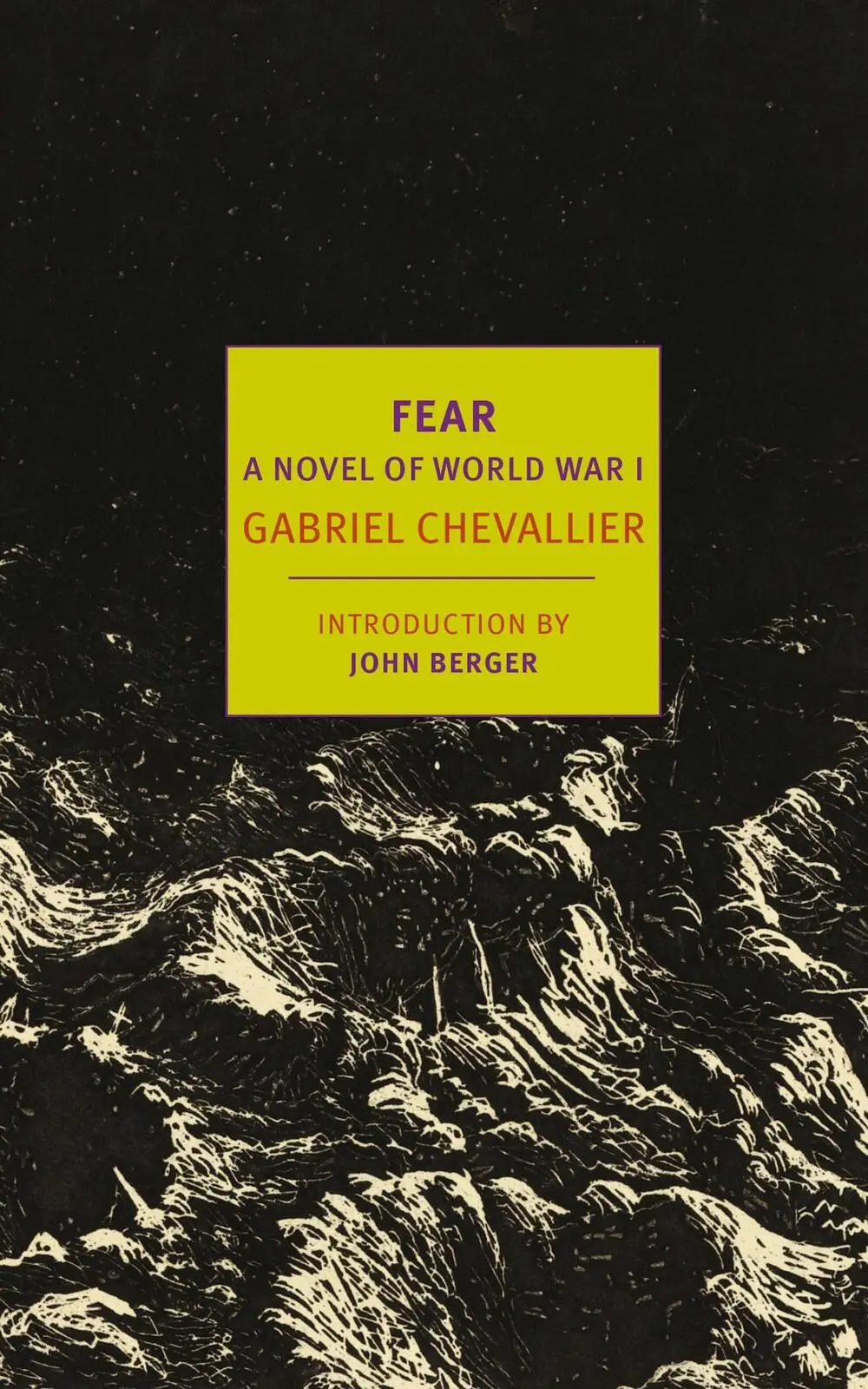
- Название:Fear
- Автор:
- Издательство:New York Review Books
- Жанр:
- Год:2014
- Город:New York
- ISBN:нет данных
- Рейтинг книги:3 / 5. Голосов: 1
-
Избранное:Добавить в избранное
- Отзывы:
-
Ваша оценка:
Fear: краткое содержание, описание и аннотация
Предлагаем к чтению аннотацию, описание, краткое содержание или предисловие (зависит от того, что написал сам автор книги «Fear»). Если вы не нашли необходимую информацию о книге — напишите в комментариях, мы постараемся отыскать её.
1915: Jean Dartemont heads off to the Great War, an eager conscript. The only thing he fears is missing the action. Soon, however, the vaunted “war to end all wars” seems like a war that will never end: whether mired in the trenches or going over the top, Jean finds himself caught in the midst of an unimaginable, unceasing slaughter. After he is wounded, he returns from the front to discover a world where no one knows or wants to know any of this. Both the public and the authorities go on talking about heroes — and sending more men to their graves. But Jean refuses to keep silent. He will speak the forbidden word. He will tell them about fear.
John Berger has called
“a book of the utmost urgency and relevance.” A literary masterpiece, it is also an essential and unforgettable reckoning with the terrible war that gave birth to a century of war.
Fear — читать онлайн бесплатно полную книгу (весь текст) целиком
Ниже представлен текст книги, разбитый по страницам. Система сохранения места последней прочитанной страницы, позволяет с удобством читать онлайн бесплатно книгу «Fear», без необходимости каждый раз заново искать на чём Вы остановились. Поставьте закладку, и сможете в любой момент перейти на страницу, на которой закончили чтение.
Интервал:
Закладка:
‘You ever hear about that adjutant they used to call Tapioca?’
Once they start a discussion like this it can go on forever. Everyone has his own store of tales to contribute and barracks life provides a large supply of them. It’s strange to see how often these memories, that one would think were a bit out of date, keep coming up in conversations at the front. Poilus like to recall the days of their training (now seen as ‘the good old days’ in comparison to the present) and the reproach they always make to the new recruits among their comrades, young lads who are generally undisciplined, is the following: ‘You can see that you’ve never done active service!’ Another thing is that most of their memories are coarse ones. That’s not because they choose those especially — it’s because they do not have any others. Military life has always offered them far more vulgarity than nobility, and they would be hard put to find any ideal role models — whether corporals or adjutants, those above them are their oppressors, not necessarily evil but always as ridiculous as they are ignorant. And as for the senior ranks, apart from line officers who share their dangers to a certain extent, they are all upper-crust types whose follies are frequent, dangerous and protected by divine right.
Still in the Vosges, we are now in a new sector, tougher than the last one, on the summit of a mountain whose ridges we also hold. Throughout this region the two sides have fought to control the mountain tops, which provide commanding views, and bombardments have left many bald patches on the pine-covered slopes. The names of these peaks have all earned mentions in dispatches: Hartmann, Syudel, Linge, Metzeral, La Fontenelle, Teischaker, etc. We are above the valley of Sainte-Marie-aux-Mines.
The battalion HQ and the reserve company are stationed on the reverse slope of the mountain, in camps along the road running up from the valley on the French side of the border. The line companies hold two adjacent sectors, one on the high point of the mountain, the other which follows the descending contours of the terrain and runs off towards the German lines. This second sector, which is ours, is more dangerous because the position has no depth. An attack which advances 150 metres would push us back into the gulley right behind us. At the bottom of this gulley we would be at the mercy of enfilade fire from the German machine guns, and no fallback position has been created on the opposite slope. Fortunately, the sector is quiet. But if there was a surprise attack, our situation would be terribly precarious.
The ground has been pulverised hundreds of times by trench mortars. Nothing remains of the forest but a few tree trunks stripped of their bark that look like fence posts. We made ourselves as comfortable as we could. The platoons have a few covered saps in the front line. Further back, shelters are rare, rickety, and uncomfortable. In general, our shelters aren’t as good as the German ones. This is probably because we thought we would be on the offensive. Our troops always believed they were holding their trenches temporarily and so it wasn’t worth the effort of undertaking major work.
I have started my nightly rounds again. This time they are rather more exciting since the German lines are very close to ours — around twenty or thirty metres away. And at one point the gap is only eight metres. This proximity prevents the construction of any solid defences. So, given the way our sentries are spread out, I find myself alone in the darkness, closer to the Germans than the French. The watchers opposite can hear me walking and at any moment I could be seized by men positioned by their parapet, who would only have to reach out their arm to grab me. I hold my revolver at the ready and I’ve got a couple of grenades in my pockets. Any confidence these weapons give me is completely illusory; they would be of no help at all against several assailants, leaping out of the shadows, able to get back to their trenches in a few steps, taking me with them, before our lads had the time to intervene. In any case, our front line is guarded by eight double sentry posts, that is, sixteen men in all, spread out over five or six hundred metres. Before running to my aid they would first have to alert their comrades, always slow to get going after being woken up.
On very dark nights, when I have to feel my way along the trenches, there are occasionally heart-stopping moments when something makes a noise in the blackness. Night distorts things, makes them bigger, lends them shapes that can be disturbing or menacing; the least breath of air can bring them to life. Objects take on enemy silhouettes, and I imagine soldiers holding their breath all around me, eyes peering to seek me out, fingers on triggers; at any second I expect the blinding flash of a gunshot. They could kill me for the sheer pleasure of killing. I know this sector quite well but I keep stopping, wondering if I haven’t got lost, and everything around me is strange, shifting, oneiric. A distance that I covered the day before without noticing now goes on forever, to the point where I begin to think our trenches are empty. But I am not here to be prey to childish fears: I try to laugh myself out of it… And at long last I find our sentries and go down into the warmth of an underground shelter where a candle is flickering and sleepers snore and splutter. I wake up the platoon leader, who signs my papers and gives me his. We exchange a few words and then here I am again facing the traps in the silent shadows. I stride off into the gloom, walking noisily, whistling a marching tune in the Germans’ direction, hoping that my confidence will impress any enemies who are waiting to ambush me. I make my presence known before reaching the point where the lines almost touch: I’m fooling them … All this noise, I’m thinking, must surely make the enemies who are there, a few metres way, think that those who are advancing are unafraid, and it would not be a very good idea to attack them. I think the noise is multiplying me, making me seem like a crowd…
Back at HQ, the lieutenant greets me normally, seemingly unaware that I have just fought a terrible battle with the phantoms of the night and my imagination, and my heart is still pounding in my chest… And I smile cheerfully as if I’ve come back from a pleasant stroll in the country. But one day I may well not come back. I may not have had any trouble on my rounds so far, but nonetheless I only survive them thanks to the goodwill of the Germans. Still, I don’t seriously think I am going to get killed. And when it’s a fine night, and my path is illuminated only by the searchlight of the moon, that friendly and vigilant sentry, then this walk has a certain charm, along the side of these silent, disdainful mountains.
In the end we are only fighting a little war here, a war of convention, entirely regulated by tacit agreements. It’s not to be taken too seriously, nothing to boast of. Very occasionally we face bursts of shellfire, coming from a ridge higher up where the Germans have their artillery. The noise of the explosions rolls around the valleys, making an avalanche of sound that crashes against the side of a distant mountain, which sends it on to another, until it is completely dispersed. Sometimes, too, we get attacked with hand- and rifle-grenades, to which we respond half-heartedly so as not to aggravate matters. In positions that are so close, so narrow, these things could quickly become very bloody. We never initiate any action ourselves. The regiment does its job decently enough but avoids any excess of enthusiasm like the plague. We leave feats of valour to others.
Every now and then one of our aeroplanes will fly over. They are Farman biplanes, old models, deplorably slow, known as ‘chicken coops’. We feel sorry for their pilots and have the feeling the Germans must laugh at the sight of such ancient machines, which seem to date to the beginnings of aviation.
Читать дальшеИнтервал:
Закладка:
Похожие книги на «Fear»
Представляем Вашему вниманию похожие книги на «Fear» списком для выбора. Мы отобрали схожую по названию и смыслу литературу в надежде предоставить читателям больше вариантов отыскать новые, интересные, ещё непрочитанные произведения.







Обсуждение, отзывы о книге «Fear» и просто собственные мнения читателей. Оставьте ваши комментарии, напишите, что Вы думаете о произведении, его смысле или главных героях. Укажите что конкретно понравилось, а что нет, и почему Вы так считаете.