Gabriel Chevallier - Fear
Здесь есть возможность читать онлайн «Gabriel Chevallier - Fear» весь текст электронной книги совершенно бесплатно (целиком полную версию без сокращений). В некоторых случаях можно слушать аудио, скачать через торрент в формате fb2 и присутствует краткое содержание. Город: New York, Год выпуска: 2014, Издательство: New York Review Books, Жанр: Классическая проза, на английском языке. Описание произведения, (предисловие) а так же отзывы посетителей доступны на портале библиотеки ЛибКат.
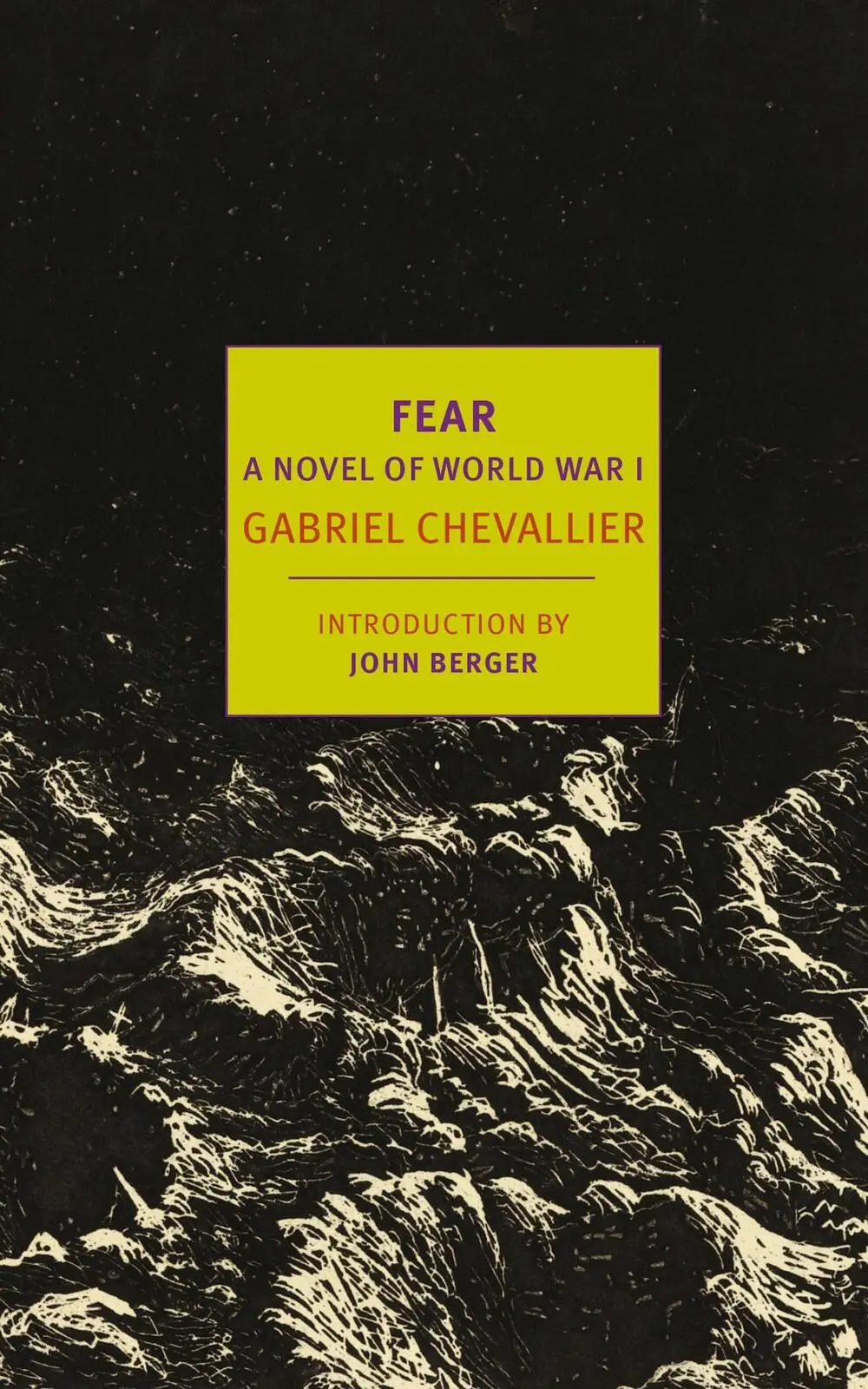
- Название:Fear
- Автор:
- Издательство:New York Review Books
- Жанр:
- Год:2014
- Город:New York
- ISBN:нет данных
- Рейтинг книги:3 / 5. Голосов: 1
-
Избранное:Добавить в избранное
- Отзывы:
-
Ваша оценка:
Fear: краткое содержание, описание и аннотация
Предлагаем к чтению аннотацию, описание, краткое содержание или предисловие (зависит от того, что написал сам автор книги «Fear»). Если вы не нашли необходимую информацию о книге — напишите в комментариях, мы постараемся отыскать её.
1915: Jean Dartemont heads off to the Great War, an eager conscript. The only thing he fears is missing the action. Soon, however, the vaunted “war to end all wars” seems like a war that will never end: whether mired in the trenches or going over the top, Jean finds himself caught in the midst of an unimaginable, unceasing slaughter. After he is wounded, he returns from the front to discover a world where no one knows or wants to know any of this. Both the public and the authorities go on talking about heroes — and sending more men to their graves. But Jean refuses to keep silent. He will speak the forbidden word. He will tell them about fear.
John Berger has called
“a book of the utmost urgency and relevance.” A literary masterpiece, it is also an essential and unforgettable reckoning with the terrible war that gave birth to a century of war.
Fear — читать онлайн бесплатно полную книгу (весь текст) целиком
Ниже представлен текст книги, разбитый по страницам. Система сохранения места последней прочитанной страницы, позволяет с удобством читать онлайн бесплатно книгу «Fear», без необходимости каждый раз заново искать на чём Вы остановились. Поставьте закладку, и сможете в любой момент перейти на страницу, на которой закончили чтение.
Интервал:
Закладка:
‘He unrolls his map. “You’re there, see? There, on the side, is, er, Permezel (another NCO). Good! You see? And there is a Boche machine gun that’s bothering us. Now, you go and work it out with Permezel. You’ll come from the front with your chaps, and he’ll, er, come from the right with his. And at midnight, you blow the bloody machine gun to hell. Understood?” “Understood, sir!”
‘You can’t argue with the old buffer! So off I go and find Permezel, tell him the plan, sort out the details and synchronise watches. I pick three blokes to come with me: Rondin, a tall, beefy chap, Cartouchier, a miner from the north, and Zigg, an ace with the knife. Choice of weapons: bombs, shooters and shivs. We crawl forwards, hopping from one hole to the next, guided by flares. The racket from the bombardment helps a bit. The further we get from our side, the slower we go. It takes us a good hour. All of a sudden, Zigg tugs at my arm, makes a sign. I poke my head out of the hole, very carefully, and I see two helmets, maybe six metres away, Boche heads. I tell you, we were eye to eye, without making a peep. We all huddle down in our holes but don’t take our eyes off each other. Don’t stop to think! I give the nod to the others and, hop! with one move we pile into them. There were three Boche, two get away and we nab the other one. But the pig rolls on the ground, trying to grab his rifle. Rondon catches him, gives him half a dozen good kicks in the ribs to calm him down and then we all get out quick, back to the commandant’s dugout. Once inside we take a good look at our Fritz, a young bloke, brand new uniform, his mug a bit the worse for wear thanks to Rondin. Old man Moricault interrogates him in German but he’s not saying anything. So our quartermaster captain gets up, and puts his revolver against his temple. My god, did he go white! And then he told us everything: they were all behind the ridge and were supposed to attack at four in the morning. That saved our bacon. The machine gunners put one belt through after another and at ten to four started firing even faster.’
‘So the Germans didn’t attack?’
‘Not at four they didn’t, but at nine. We were knackered, half-asleep. Only old father Moricault was up and about, with his pipe and cane and big mouth. He was the one who sounded the alarm, and then he grabbed hold of a machine gun. He had balls, that old bloke. The Boche were swarming around only sixty metres away and they were coming up fast.’
‘They didn’t get there?’
‘No chance. We had six machine guns in action right off. Can’t do anything against machine guns!… I never seen so many going down as I did then!’
‘Not as many as I have’, says the machine gunner sergeant who is listening to us. ‘When we were fighting in open country, I was with the Zouaves. There was one time when there were three of us gunners dug in behind tree trunks on the edge of a forest, on a little rise. We opened fire on battalions that were coming out at four hundred metres, and we didn’t stop firing. A surprise attack. It was frightful. The terrified Boche couldn’t get out of the way of our bullets. Bodies piled up in heaps. Our gun crews were shaking with horror and wanted to run. Killing made us afraid! … I’ve never seen such a massacre. We had three Saint-Étiennes, they spit out six hundred a minute. Imagine it.’
‘But when you saw the Boche six metres away in the shell-hole’, I asked the grenadier sergeant, curious to know more, ‘how did you decide to rush them?’
‘It just needs a nod and a wave, like I say. We know the way it works. While the Boche were still making up their minds, we got going. It’s the ones with balls that scare the others, and the ones who are scared most are buggered. You mustn’t think in a situation like that. It’s all bluff, war!’
Before moving to Verdun, for a long time the regiment had held the F— sector, which was so dangerous that units were replaced after three days on the front line. The men all tell me that during those three days they had practically no sleep at all, because of the great quantity of German trench mortars that were smashing up their positions. The ‘aerial torpedoes’ and heavy trench mortar shells are stealthy projectiles which cause terrible damage because of their considerable explosive charge. The explosion is not preceded by the whistle that alerts you to incoming shells. The only way to avoid falling victim to them is to spot them in the air after the small bang when they’re launched, and try to work out where they will land, so as to get out the way. At night they provoke an obsessive fear that makes this method of attack the most demoralising of all. And on top of all this the mortar shells necessitate an exhausting amount of digging in order to repair collapsed trenches; cases of men being buried alive are common. Nerves are strained to breaking point. After a while, depression makes soldiers capable of just about anything. It’s an open secret that at F— there were cases of soldiers deliberately injuring themselves. Many wounds were so suspicious that one brutal army doctor kept corpses on which to test the effects of projectiles fired at short range so that he could spot similar results on the injured men who were brought to him. This same doctor had some men court-martialled for having frostbitten feet. The soldiers who admit self-injury consider this is iniquitous: frostbite is an involuntary result of standing in frozen mud.
Initially, the easiest way of getting a good wound was to place your hand over a lookout slit that had been targeted by snipers. This had been used in several places. But bullets in the hand, particularly the left hand, quickly became inadmissible. Another method was to ignite the fuse on a grenade and put it and your own hand on one side of a splinter-proof shield: your forearm is blown off. It seems that some men had recourse to this. It could not be denied that to perform such an act of cowardice requires considerable courage and terrible despair. Despair, in the most punishing sectors, can provoke the most absurd decisions; men have assured me that at Verdun soldiers killed themselves for fear of suffering an agonising death. It is also whispered that at F— some veterans from the Bat d’Af wounded their own comrades. They polished shell shrapnel to make it look new, put it in a cartridge from which they had removed the bullet and then fired it into the person’s leg at a spot agreed on in advance. They charged for it, and made a bit of money out of this dirty work. I have certainly heard soldiers expressing the wish to have a limb amputated to escape the front line. In general, the rougher, simpler men fear death but can bear pain and mutilation. Whereas the more sensitive ones are less afraid of death itself than the forms it takes here, of the agony and suffering that precedes it.
Soldiers talk plainly of these things, without approving or condemning, because war has accustomed them to seeing what is monstrous as natural. To them, the greatest injustice is that others dispose of their lives without asking them, and have lied to them in bringing them here. This legalised injustice cancels out all morality, and in their opinion all conventions decreed by those far away from the fighting concerning honour, courage, noble attitudes, and so on, cannot concern them, soldiers on the front line. The shellfire zone has its own laws, of which they are the only judges. They declare, without the slightest trace of shame: ‘We’re only there because we don’t have any choice!’ They are the navvies of war, and they know that the only person who profits from their labour is the boss. The dividends will go the generals, the politicians, the factory owners. The heroes will return to the plough and the work bench, as poor as before. They laugh bitterly when they hear that word, ‘heroes’. They refer to themselves as good lads , that is, ordinary chaps, neither bellicose nor aggressive, the ones who march and kill without knowing why. The good lads, that is, the pitiful, mud-caked, moaning, bleeding brotherhood of the P.C.D.F.,[26] as they call themselves sarcastically. Cannon fodder, in short. ‘Coffin candidates’, as Chassignole puts it.
Читать дальшеИнтервал:
Закладка:
Похожие книги на «Fear»
Представляем Вашему вниманию похожие книги на «Fear» списком для выбора. Мы отобрали схожую по названию и смыслу литературу в надежде предоставить читателям больше вариантов отыскать новые, интересные, ещё непрочитанные произведения.






Обсуждение, отзывы о книге «Fear» и просто собственные мнения читателей. Оставьте ваши комментарии, напишите, что Вы думаете о произведении, его смысле или главных героях. Укажите что конкретно понравилось, а что нет, и почему Вы так считаете.