Gabriel Chevallier - Fear
Здесь есть возможность читать онлайн «Gabriel Chevallier - Fear» весь текст электронной книги совершенно бесплатно (целиком полную версию без сокращений). В некоторых случаях можно слушать аудио, скачать через торрент в формате fb2 и присутствует краткое содержание. Город: New York, Год выпуска: 2014, Издательство: New York Review Books, Жанр: Классическая проза, на английском языке. Описание произведения, (предисловие) а так же отзывы посетителей доступны на портале библиотеки ЛибКат.
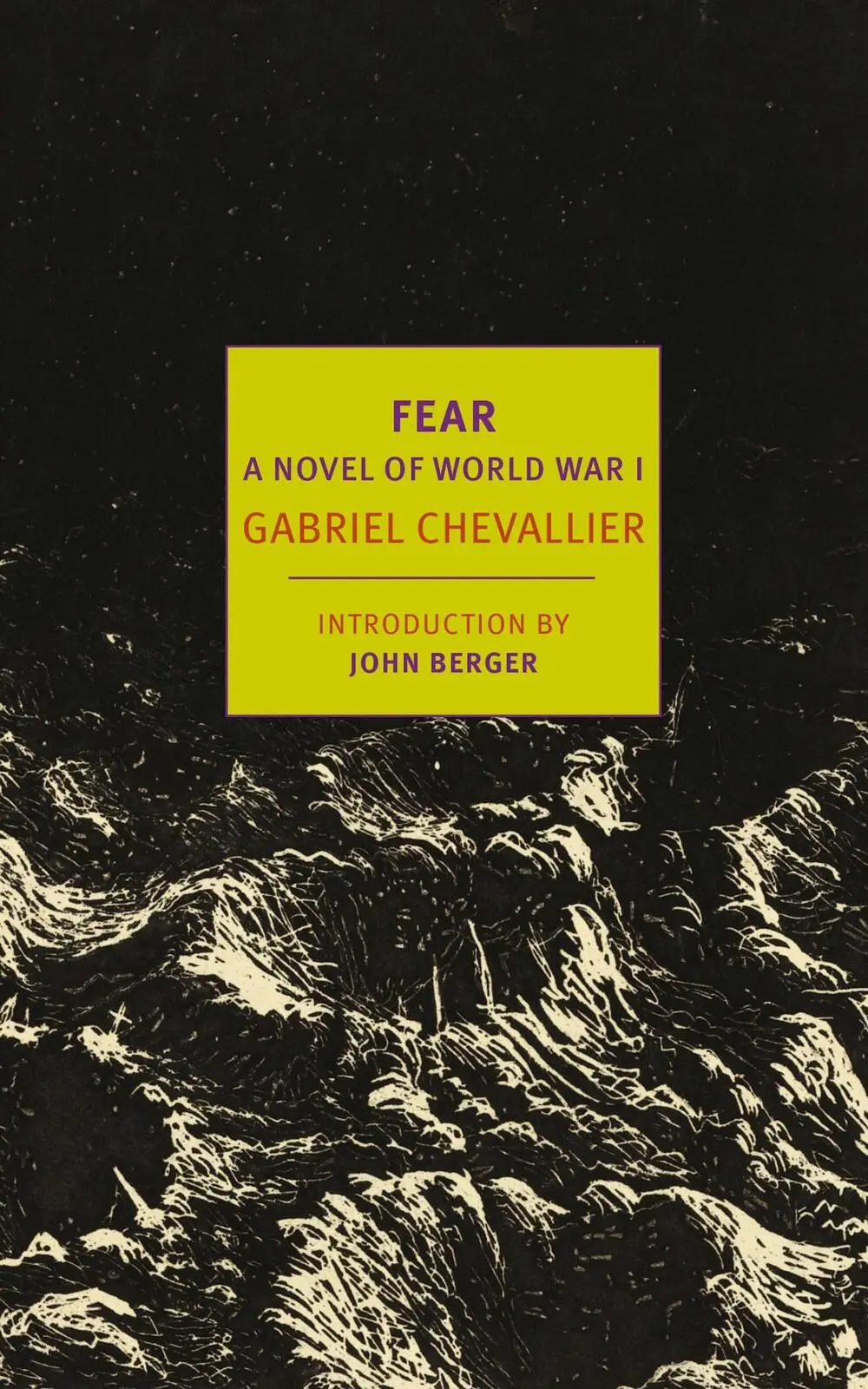
- Название:Fear
- Автор:
- Издательство:New York Review Books
- Жанр:
- Год:2014
- Город:New York
- ISBN:нет данных
- Рейтинг книги:3 / 5. Голосов: 1
-
Избранное:Добавить в избранное
- Отзывы:
-
Ваша оценка:
Fear: краткое содержание, описание и аннотация
Предлагаем к чтению аннотацию, описание, краткое содержание или предисловие (зависит от того, что написал сам автор книги «Fear»). Если вы не нашли необходимую информацию о книге — напишите в комментариях, мы постараемся отыскать её.
1915: Jean Dartemont heads off to the Great War, an eager conscript. The only thing he fears is missing the action. Soon, however, the vaunted “war to end all wars” seems like a war that will never end: whether mired in the trenches or going over the top, Jean finds himself caught in the midst of an unimaginable, unceasing slaughter. After he is wounded, he returns from the front to discover a world where no one knows or wants to know any of this. Both the public and the authorities go on talking about heroes — and sending more men to their graves. But Jean refuses to keep silent. He will speak the forbidden word. He will tell them about fear.
John Berger has called
“a book of the utmost urgency and relevance.” A literary masterpiece, it is also an essential and unforgettable reckoning with the terrible war that gave birth to a century of war.
Fear — читать онлайн бесплатно полную книгу (весь текст) целиком
Ниже представлен текст книги, разбитый по страницам. Система сохранения места последней прочитанной страницы, позволяет с удобством читать онлайн бесплатно книгу «Fear», без необходимости каждый раз заново искать на чём Вы остановились. Поставьте закладку, и сможете в любой момент перейти на страницу, на которой закончили чтение.
Интервал:
Закладка:
When I got back to the front I was lucky enough to find a job which I owe to my social status, something that had already gained me the attention of the nurses in the hospital. I also owe it to the skeletal state of the company to which I was attached. We are reinforcements, sent to fill the holes in a regiment that has returned from Verdun, where it suffered great losses. To restore the regiment’s structure, they drew on the new arrivals, relying on the information contained in the regimental roll. The lieutenant summoned me to check that I matched my profession, and made me a runner.
Being is a runner is far better than being an ordinary squad soldier, which is ‘the lowest of trades’. Every man’s ambition is to get out of the squad. There are only two ways: get some stripes or get a job. In the middle of 1916 it’s too late to try to move up through the ranks and the only chance of rapid promotion is in the attack units, where NCOs and officers are quickly decimated. But in units like these, being an NCO or junior officer does nothing to reduce the risks and offers few advantages. And anyway we’re all civilians, only temporary soldiers, and whatever rank we may reach, our intention is to go home when the war is over — soon, we hope. The ambition that might have driven a sergeant in 1800 is denied us: field-marshals don’t come from the ranks any more. This war brings no distinction, no advancement to those who risk their lives, it doesn’t pay. For all these reasons, jobs are more sought-after than stripes. A cook is considered better off than the leader of a battalion in a great many cases and a company commandant can envy a colonel’s secretary. A man who leaves for divisional headquarters is considered saved, without any doubt. He may still get killed, but it would be accidentally, by fate, like civilians can get run over or die in an earthquake. The problem for soldiers was how to get away from the front line, from the parapets and loopholes, how to avoid lookout duty, grenades, bullets, shells, to find a way back through the lines to the rear. You do this, and get a degree of safety, by becoming a telephonist, a signaller, a carrier pigeon handler, cyclist, observer, secretary, cook, interpreter, stretcher-bearer, sapper, etc. Those who got such jobs, ‘cushy numbers’, were called dug-ins [25] by the men of the forward pickets beyond the front lines. As soon as you leave the front line, you belong to the dug-ins, a category with many branches extending right up to the Ministry of War and General Army HQ. Once you’ve been ‘dug in’ your greatest dread is to be sent back to the squad.
So I am, to an extent, a dug-in. And therefore, unless something unexpected happens, my days as a bomber are over. I thank my lucky stars, because my unfortunate initiation the previous year has put me off fighting with hand grenades for good.
There are four runners (one per platoon), always at the beck and call of the company commandant, either to accompany him or to take his orders to the front line and bring back information. I am also secretary and topographer, when needed. These extra duties got me dispensation from fatigues.
Every evening at about six o’clock I go to battalion HQ to make a copy of the day’s report for the company logbook. It’s a twenty-minute walk through a deserted zone.
I return later along a pleasant path known as the Reaper Trench . There’s nothing grim about this reaper — the name comes from an old piece of farm machinery half-buried in the ground. The trench isn’t deep and on one side you have a view across a broad meadow covered in wild flowers; in this month of June you can breathe in the sweet scent of the countryside. Mountain breezes make the grass ripple and wave like corn before harvest in peacetime. On the horizon the sun goes down over the dark pine forests like a hot-air balloon in flames on a holiday evening. On the other side of the trench the war is slumbering, but the sleeper can awake at any moment and treacherously dispatch the bucolic calm of the sunset, like a sentry caught unawares, crowning our positions with fire. This constant menace adds to the solemnity of the dusk.
We are occupying a rest sector in the Vosges where there was a lot of fighting a few months ago for possession of a few ridges that we now hold. This battle has lent a tragic aspect to the landscape, with piles of broken, twisted equipment and collapsed shelters, mysterious and silent like ancient burial grounds, dark and damp as catacombs. But still the men have got a bit of peace, and vegetation has reconquered the land, covering it with creepers and shoots and pistils and colours, spreading its blanket of perfumes that have driven out the smell of corpses, bringing its train of insects, butterflies, birds and lizards to dart and dance across this now benevolent battlefield.
Along the trenches overhanging plants brush our faces, and on the right of the sector, well back from the lines, I’ve found a place where no one goes, a place so green it dazzles you. The wind murmurs in the leaves of tall trees, still standing, and a pure stream cascades merrily over the rocks, before disappearing into the brush. It is there I live out the hours I steal from the war.
Down in the valley a road runs between the German trenches and ours, a distance of three hundred metres, a pretty, country road, bordered with spindly plane trees and covered with the fallen leaves from last autumn, a road forbidden on pain of death.
This empty highway has great charm and though men cannot venture on to it, their thoughts can wander there. As the mist of morning clears, the ploughmen in their look-out posts must be waiting for the crack of whips and clanking of harnesses as the horses are led to the fields. In the evening it can become a forsaken avenue leading to some mysterious castle, where ancient shades roam in the twilight beneath the trees. What makes this road so striking is that it leads nowhere, if not to the unreal, to peaceful places that now exist only in memory. Between the two armies, the phantom road offers a silent path for dreams.
At a desolate crossroads, I found an old metal Christ-figure, stained with rust like dried blood. On its stone plinth, scarred by bullets, a clumsy hand had scrawled: ‘evacuate to rear’. I do not think there was anything blasphemous in it, no allusion to the divinity of the subject. The soldier wanted to say that the man on the cross had already paid his debt and had no further reason to remain at the front. Or perhaps he had wanted to show that, to have the right to be evacuated, you must have suffered agony, like the agony of Christ, in all your limbs, in your body and your heart.
Our front line runs along the foot of the mountain whose heights we control. Battalion and company HQs are spread out on the plateau, and a reserve company is stationed behind, in the forest. We overlook the German trenches that run round the ruins of the hamlet of Launois. Our over-extended sector is defended by sentries provided by the platoons to cover the flanks, posted at fifty to hundred-metre intervals. Very little artillery fire comes our way. Once a week, four German guns sprinkle us with about thirty shells. Once that’s over, we can be sure we will be undisturbed for another week. Our own shelling is more random. From our second lines that snake round the cornice, I sometimes see shells from our 75s hitting the German earthworks or bursting in the countryside. But neither side is trying desperately hard; the gunners are simply carrying out exercises, because it is still a war and in war you fire guns. Nonetheless, one has to watch out for an unlucky shell: ‘Those stupid bastards are quite capable of blowing you up for a laugh!’ And recently we were almost victims of our own stupid carelessness for scorning these periodic bombardments: a 77 burst in the wall of the trench, three metres from where we were standing.
Читать дальшеИнтервал:
Закладка:
Похожие книги на «Fear»
Представляем Вашему вниманию похожие книги на «Fear» списком для выбора. Мы отобрали схожую по названию и смыслу литературу в надежде предоставить читателям больше вариантов отыскать новые, интересные, ещё непрочитанные произведения.






Обсуждение, отзывы о книге «Fear» и просто собственные мнения читателей. Оставьте ваши комментарии, напишите, что Вы думаете о произведении, его смысле или главных героях. Укажите что конкретно понравилось, а что нет, и почему Вы так считаете.