Gabriel Chevallier - Fear
Здесь есть возможность читать онлайн «Gabriel Chevallier - Fear» весь текст электронной книги совершенно бесплатно (целиком полную версию без сокращений). В некоторых случаях можно слушать аудио, скачать через торрент в формате fb2 и присутствует краткое содержание. Город: New York, Год выпуска: 2014, Издательство: New York Review Books, Жанр: Классическая проза, на английском языке. Описание произведения, (предисловие) а так же отзывы посетителей доступны на портале библиотеки ЛибКат.
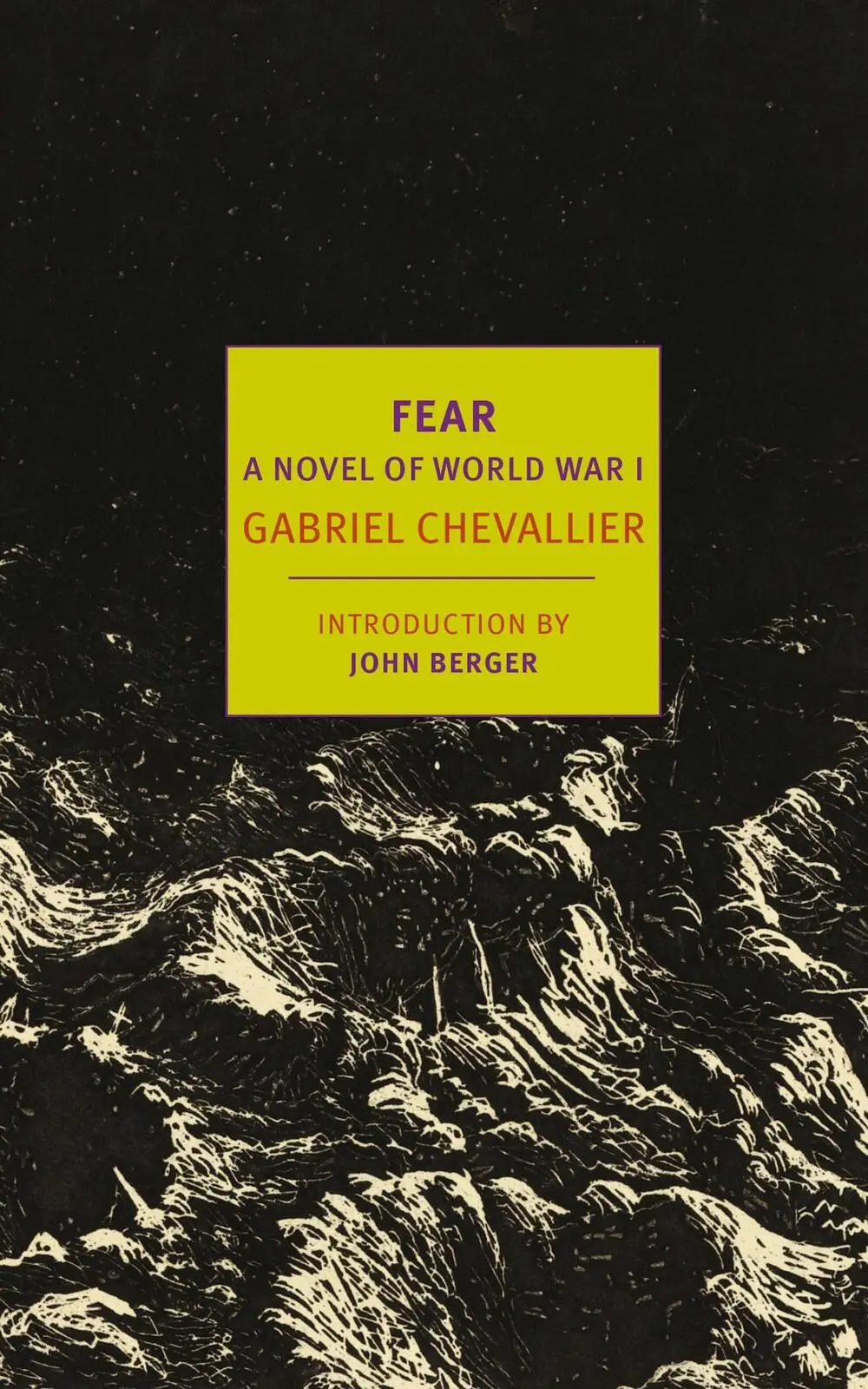
- Название:Fear
- Автор:
- Издательство:New York Review Books
- Жанр:
- Год:2014
- Город:New York
- ISBN:нет данных
- Рейтинг книги:3 / 5. Голосов: 1
-
Избранное:Добавить в избранное
- Отзывы:
-
Ваша оценка:
Fear: краткое содержание, описание и аннотация
Предлагаем к чтению аннотацию, описание, краткое содержание или предисловие (зависит от того, что написал сам автор книги «Fear»). Если вы не нашли необходимую информацию о книге — напишите в комментариях, мы постараемся отыскать её.
1915: Jean Dartemont heads off to the Great War, an eager conscript. The only thing he fears is missing the action. Soon, however, the vaunted “war to end all wars” seems like a war that will never end: whether mired in the trenches or going over the top, Jean finds himself caught in the midst of an unimaginable, unceasing slaughter. After he is wounded, he returns from the front to discover a world where no one knows or wants to know any of this. Both the public and the authorities go on talking about heroes — and sending more men to their graves. But Jean refuses to keep silent. He will speak the forbidden word. He will tell them about fear.
John Berger has called
“a book of the utmost urgency and relevance.” A literary masterpiece, it is also an essential and unforgettable reckoning with the terrible war that gave birth to a century of war.
Fear — читать онлайн бесплатно полную книгу (весь текст) целиком
Ниже представлен текст книги, разбитый по страницам. Система сохранения места последней прочитанной страницы, позволяет с удобством читать онлайн бесплатно книгу «Fear», без необходимости каждый раз заново искать на чём Вы остановились. Поставьте закладку, и сможете в любой момент перейти на страницу, на которой закончили чтение.
Интервал:
Закладка:
In my case, having been lucky enough to hit the battlefield jackpot with a ‘lucky wound’, my stay in hospital is rather like spending the winter in the Midi. After I’ve paid my debt of pain every morning (the cost of my board and lodging), I really do feel as if I’m on holiday, and the presence of young, graceful nurses, along with the attentions of Mademoiselle Nancey, complete the illusion. What do I need to do, apart from eat, smoke and read? When I tire of reading, I let myself slip into that state of extreme lassitude that comes from excessive rest, I rest from the rest… I plump up my weakness like cushions and lie back in comfort. I bask in the pleasure of not having to do anything, of my right — which I owe to a grenade — to be feeble. And I don’t mind the shivers of the mild fever that comes with a long stay in bed.
And so, in my weak state, my eyes closed, I dream. But I don’t dream of the future, which is very uncertain. Safe in the dark behind my lowered eyelids, I can listen to the great rumble of war, echoing in the depths of my ears, like the roar of the waves you can hear in a seashell. Despite myself, I think of the surprising chain of events that has brought me here, and it still amazes me.
7. CONVALESCENCE
MY WOUNDS HAVE HEALED and the moment has come when I must take my leave of the nurses in ward 11 at Saint-Gilbert where I have spent the best days of my life as a soldier. Mademoiselle Nancey entreated me to keep in touch: ‘Don’t forget to write to us. We like to know what happens to our patients after they leave us. And should misfortune strike you a second time, you know where we are.’ With uncharacteristic gravity, Nègre said simply: ‘Do your best to save your skin!’
We hear the familiar sound of the letterbox on the path opening and closing, and then a key turns in the door. Our father has come home for supper. Wiping his feet on the mat, as always, he asks my sister:
‘Is your brother back?’
I come out into the corridor.
‘There you are!’ he says. ‘We got your letter and we’ve been waiting for you every day.’
We embrace, somewhat ritually: a trial kiss, He must be wondering: has the war changed him? Our relationship has never been warm. My father expected better of me, and I expected better of him. I failed to pay sufficient heed to his advice, but then it seemed to me that the results he had achieved, with his much-vaunted experience, gave me the right to be wary. No doubt he loves me in his own way but unfortunately his manner of showing this when I was a child was never very convincing, and that impression stayed with me ever after. You could say we don’t understand each other. A father has to put a lot into it if he and his son are going to understand each other, to find a way across the quarter century that separates them. This did not happen. In 1914 we were more or less at loggerheads. But when war came we extended the spirit of national unity to our family. Decency demanded it, given the dangers I was going to face. And now I am back, after thirteen months’ absence and a battle wound, with the best intentions but still somewhat sceptical about the chances of finding a perfect accord.
We take our seats at the table, all in our former places, and I see that nothing here has changed. My father questions me:
‘Fully recovered then?’
‘I’m OK.’
‘Yes, you look fine. That life has done you good.’
He’s giving me a sly look and I realise, from the way he’s squeezing the piece of bread in his hand, that something is making him unhappy. I quickly learn what.
‘How did you manage not to get a single stripe?’
‘I’m not interested,’ I said, to cut it short.
‘Another one of your strange ideas!’
Whenever my father alludes to what he calls my ideas, it’s a bad sign. But he sticks to his guns and goes on:
‘Charpentier’s sons are pretty much the same age as you and one’s a sergeant and the other an adjutant. Their father is proud of them.’
‘It’s nothing to be proud of!’
‘Oh, of course, you’re above that, aren’t you!… Never been one to put yourself out to make anybody happy!’
My sister, fearing an argument where neither one of us gives way, butts in and changes the subject. They talk among themselves, leaving me out, about what’s happening at home, their friends, invitations, visits, whatever… They have the same petty concerns as they had in 1914 and when I listen I feel I only left them yesterday. They do not appear to have the slightest idea of what’s happening a few hundred kilometres away. And my father accuses me of egotism! Not that it matters. I am here for just one week — on convalescent leave, subject to immediate recall. But these people for whom I am fighting (for when all’s said and done I’m not fighting for myself!) are like strangers to me.
They are not even interested in the war. My father won’t condescend to ask me about it: that would mean admitting that a son can know more about something than his father. And that would be unimaginable for him; it is a very long time since anyone challenged his authority.
My father has arranged to meet me in the afternoon. I find him at the appointed time and I walk beside him along the crowded street where the window displays shimmering in electric light bring back scenes of pre-war life that I had forgotten. He has aged a bit since I last saw him and is now noticeably shorter than me. We are reaching that point where the father, diminished by age, shrinks, where the son gets taller and asserts himself. For a long time he seemed in my eyes to belong to the world of grown-ups, possessors of privilege, sources of all wisdom, and for a long time, too, I felt subservient to him. Today, I have a life of my own, beyond his grasp and out of his control. Faced with my growing independence, and my height, he shows a little more respect, while I more or less tolerate or ignore his unjust temper, now that I am free from him. There is a balance of forces, we treat each other cordially. But we are further apart than ever.
My father takes me to the brasserie where he meets his friends every evening. It’s in the centre of town, and in the main room the owner keeps a corner reserved for them to spend part of their afternoons. They’re in their sixties, businessmen and industrialists. Some have that troubled look that comes with ill-fortune and declining years, others on the contrary have the satisfied air of successful entrepreneurs. They’ve all known each other for nearly half their lives. This is where they enjoy their leisure, well away from worries and domestic acrimony, and live off an old fund of memories and jokes that they have dug up from their youth. They are used to each other and respect each other’s foibles, an essential condition for growing old comfortably in company.
They all look up when we arrive.
‘Let me introduce my boy who has just come out of hospital after being wounded,’ he says, shaking hands.
These important men interrupt their game of cards to greet me warmly:
‘Excellent! Bravo, young man!’
‘Congratulations on your bravery!’
‘I say, Dartemont, what a fine chap!’
Then they go quiet, not knowing what further encouragement to offer me. The war is out of fashion, people are getting used to it. Military men on leave are everywhere, giving the impression that nothing bad ever happens to them. And I am just an ordinary soldier, and my father’s business is hardly flourishing. These gentlemen have been generous to take such an interest in me.
They go back to their game: ‘Whose turn is it to cut?’ My father joins in. I stay alone at the end of a table, opposite an elderly gentleman methodically chewing gruyère and washing it down with beer. He looks at me for some time and I guess from his rather pained expression that he is trying to form a sentence. At last, with an engaging smile, he asks:
Читать дальшеИнтервал:
Закладка:
Похожие книги на «Fear»
Представляем Вашему вниманию похожие книги на «Fear» списком для выбора. Мы отобрали схожую по названию и смыслу литературу в надежде предоставить читателям больше вариантов отыскать новые, интересные, ещё непрочитанные произведения.







Обсуждение, отзывы о книге «Fear» и просто собственные мнения читателей. Оставьте ваши комментарии, напишите, что Вы думаете о произведении, его смысле или главных героях. Укажите что конкретно понравилось, а что нет, и почему Вы так считаете.