Gabriel Chevallier - Fear
Здесь есть возможность читать онлайн «Gabriel Chevallier - Fear» весь текст электронной книги совершенно бесплатно (целиком полную версию без сокращений). В некоторых случаях можно слушать аудио, скачать через торрент в формате fb2 и присутствует краткое содержание. Город: New York, Год выпуска: 2014, Издательство: New York Review Books, Жанр: Классическая проза, на английском языке. Описание произведения, (предисловие) а так же отзывы посетителей доступны на портале библиотеки ЛибКат.
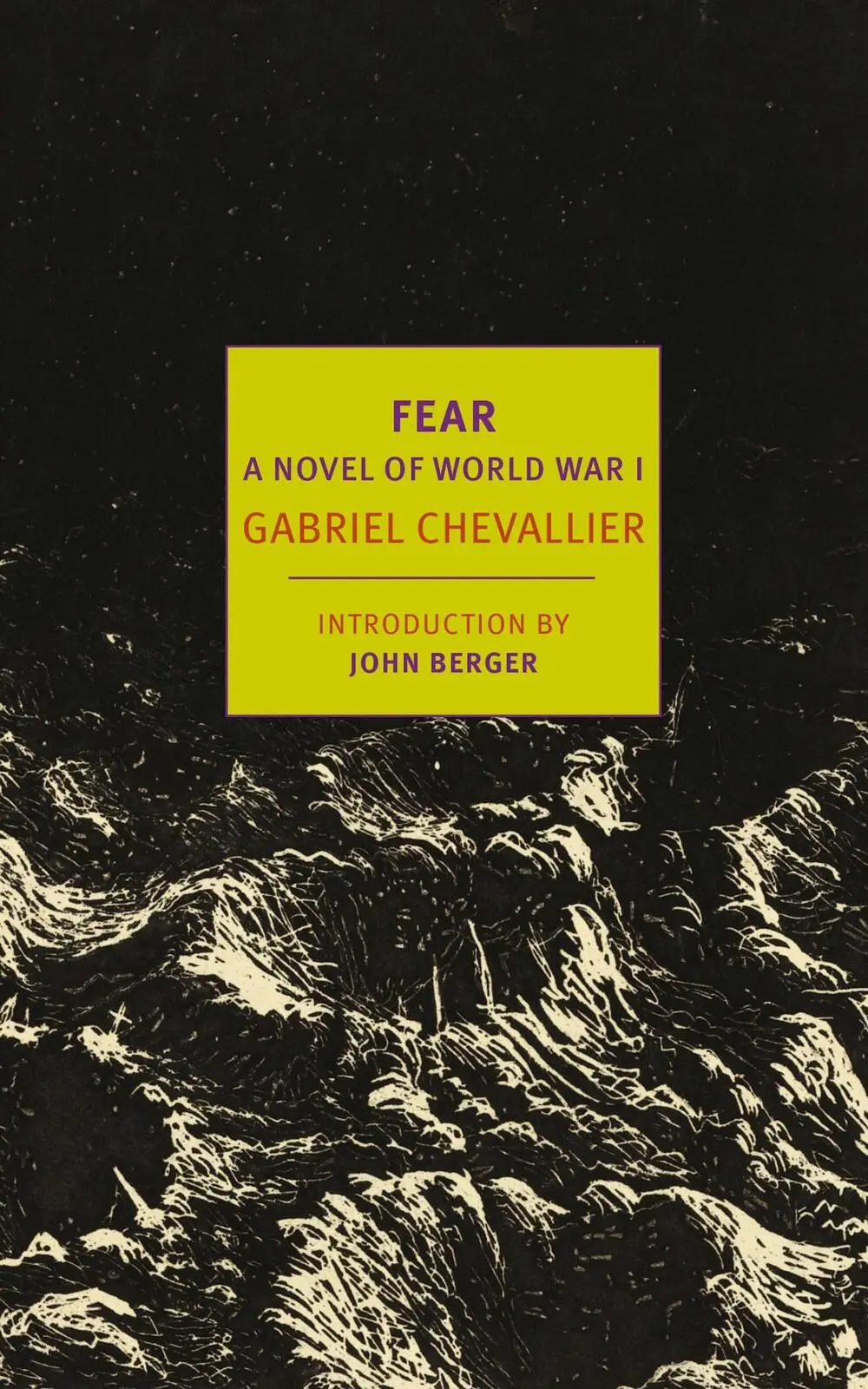
- Название:Fear
- Автор:
- Издательство:New York Review Books
- Жанр:
- Год:2014
- Город:New York
- ISBN:нет данных
- Рейтинг книги:3 / 5. Голосов: 1
-
Избранное:Добавить в избранное
- Отзывы:
-
Ваша оценка:
Fear: краткое содержание, описание и аннотация
Предлагаем к чтению аннотацию, описание, краткое содержание или предисловие (зависит от того, что написал сам автор книги «Fear»). Если вы не нашли необходимую информацию о книге — напишите в комментариях, мы постараемся отыскать её.
1915: Jean Dartemont heads off to the Great War, an eager conscript. The only thing he fears is missing the action. Soon, however, the vaunted “war to end all wars” seems like a war that will never end: whether mired in the trenches or going over the top, Jean finds himself caught in the midst of an unimaginable, unceasing slaughter. After he is wounded, he returns from the front to discover a world where no one knows or wants to know any of this. Both the public and the authorities go on talking about heroes — and sending more men to their graves. But Jean refuses to keep silent. He will speak the forbidden word. He will tell them about fear.
John Berger has called
“a book of the utmost urgency and relevance.” A literary masterpiece, it is also an essential and unforgettable reckoning with the terrible war that gave birth to a century of war.
Fear — читать онлайн бесплатно полную книгу (весь текст) целиком
Ниже представлен текст книги, разбитый по страницам. Система сохранения места последней прочитанной страницы, позволяет с удобством читать онлайн бесплатно книгу «Fear», без необходимости каждый раз заново искать на чём Вы остановились. Поставьте закладку, и сможете в любой момент перейти на страницу, на которой закончили чтение.
Интервал:
Закладка:
I am in debt to charming, unaffected Germaine for the greatest joy I experienced during my leave: a few hours of forgetting spent in her company. In future, I will write to her.
Even the worst upheavals cannot change people’s characters. This seven-day leave proved to me that my father’s narrow-minded stubbornness would never alter, whatever I was doing. And what more could I do, today, than be a soldier? Being one, was I not completely satisfying public opinion and thus raising the standing of my family?
It is true to say that I’m a malcontent hero. If I am asked about the events of the war, I have the bad and unsociable habit of describing them as I found them. This liking for truth is incompatible with civilised behaviour. Those milieus where I was received and welcomed expected me to vindicate their smug passivity by my own optimism, expected me to display that scorn for the enemy, for hardship and danger, that good humour and spirit of enterprise that are legendary and so characteristic of French soldiers, the ones you see on the covers of almanacs, debonair and smiling in a hail of bullets. Civilians like to see the war as a fine adventure, an excellent distraction for young men, an adventure that of course has its dangers but compensates for them with the joys it offers: glory, romantic encounters, freedom from everyday cares. This convenient image tranquilised consciences, legitimised profits, and also allowed people to say, ‘our hearts bleed’ while living like pigs in clover. I have little faith in those hearts which feel the suffering of others so deeply. They must be made of some very rare material. You only truly suffer in your own flesh: in the ‘flesh of your flesh’ that suffering is already a lot less, except in the case of unusually sensitive souls.
I was well aware that it would have been polite, when offered a fine meal in a luxurious establishment, to put everyone at ease by declaring that we were on our way to victory and everything at the front was going along splendidly. In return for which they would have poured me a second glass of cognac, offered me a second cigar, while saying, in that indulgent tone that is reserved for soldiers: ‘Come on now, a poilu like you, you won’t get cigars like this in the trenches, so don’t be shy!’ In other words: you see, nothing is refused you!
But I did not tell of exploits where the Germans got a good hammering, I froze the most lively conversations. I was ill-mannered, I made myself unbearable, and people are glad to see the back of me.
My father has insisted on accompanying me to the station this evening. We don’t have much to say to each other. We walk along the draughty platform, waiting for the train. My father is afraid of draughts, he’s turned up his coat collar and I can tell he’s impatient.
‘Don’t wait. Why catch cold for a few minutes that won’t change anything?’ I say.
‘No, no, I’ll wait!’ he answers gruffly, like a man who has decided to set an example, to do his duty to the end, whatever the personal cost.
So we exchange a few unimportant words, and I notice that he keeps glancing furtively at the station clock. My departure is at an awkward time. I am aware that if my father leaves me soon and jumps on a tram, he can still meet up with his friends at the brasserie: Friday is their day. This is surely on his mind. Naturally I cannot mention the meeting without making him angry. We are standing side by side but our thoughts are far apart. A father and son? Yes, of course. But also, especially, a man going to the front and a civilian… The whole war separates us, a war that I know and he does not.
At long last the train arrives, one of those squalid, noisy army trains. Again I advise my father to go, on the pretext that it will take me some time to find a seat. He accepts a compromise:
‘Yes, you’re right, you’ll be better off with your pals!’
We embrace. He stays standing in front of me for a moment, indecisively. From the way he’s drumming his fingers in the air, I can tell he has something on his mind. He shares it with me:
‘Do try to get yourself a stripe or two!’
‘I’ll try!’ I say, being conciliatory.
‘So, farewell, see you soon, I hope… And don’t do anything reckless out there!’ he says, without much warmth.
We embrace again. He turns and heads off quickly. Perhaps to hide his emotion… Before going down the steps into the underground passageway, he waves me goodbye a final time, waves in the air, a vigorous wave: the gesture of a free man…
I stand alone on the platform, by the train. I’m alone, with my haversack with food for two days, my water bottle, my blanket, my wallet with a bit of money close to my chest, my watch on my left wrist, my knife in the right pocket of my trousers, secured by a chain, my pocket scissors — all my worldly goods… I haven’t forgotten anything.
I see the great, quiet city, sleeping — the city full of people who are not in danger, happy people and elegant, vivacious young women, who are not for soldiers. I can make out the streams of light of the main avenues of the city centre, where people are having fun as if nothing abnormal was happening.
The locomotive lets out steam and I can hear the guards’ whistles. So I jump on the train quickly, into the nearest carriage. Its foul, warm breath hits me in the face, the breath of a drunkard. I step over bodies and people grumble as I try to find a place for myself. I’m back in the war…
DUG-IN
‘The common soldier entertains no thoughts of becoming known, and dies unnoticed, among many others; he lived very much in the same way, but still he was alive; this is one of the chief causes of the want of courage in people of low and servile condition.’
La Bruyère (from The ‘Characters’ of Jean de la Bruyère, translated by Henri Van Laun, London, 188?)1. QUIET SECTORS
‘EIGHTEEN DEGREES,’ shouts Baboin.
‘Twenty-five paces,’ I reply.
We note down the figures on a sheet of paper, then walk round a traverse. I count my strides until the next elbow in the trench, and push my stick into the ground. It has a red thread tied to it. Baboin looks through the viewfinder cut out of cardboard attached to his compass and tells me the degrees of deviation from true north; I tell him the distance. We are making a map of the sector. This entirely safe activity fills the afternoon, when we’re free, and we intend to make it last as long as possible.
Baboin, a highway engineer in civilian life, is the batman for the lieutenant commanding our company. He’s a small man with a beard and short legs, quiet and meticulous, who accepted this servant role to avoid the disadvantages of the front line. He’s attached to the lieutenant’s command post, where he more or less has the role of housekeeper: sweeping, emptying dirty water, warming up the meals, doing the dishes, washing underwear and cleaning clothes. He rarely leaves the shelter of the command post unless he’s forced to. His only pride is his small, careful handwriting, which is a perfect copy of the models of calligraphy. His script reveals a natural submissiveness and a lack of imagination which goes with his character: he follows orders with the respect of a petty bureaucrat. He explained his position to me, which is a wise one, though I don’t think I would be capable of such wisdom if it made me perform a role like his: ‘Here it’s a matter of not trying to be clever and getting home alive.’ I have pretty much the same plan, but I know that in my case it can suddenly be compromised by an outburst of temper, that some instruction that I find offensive will make me quickly lose patience, even if it endangers my life. But I don’t blame Baboin for the path he has chosen. He doesn’t seem to find it degrading, or if he does he hides it carefully. I am grateful for his friendship, which is that of an equal, and which shows itself through gifts in kind, coffee and tobacco, of which he gets a copious supply from the kitchens. He holds me in esteem because I ask him for professional advice.
Читать дальшеИнтервал:
Закладка:
Похожие книги на «Fear»
Представляем Вашему вниманию похожие книги на «Fear» списком для выбора. Мы отобрали схожую по названию и смыслу литературу в надежде предоставить читателям больше вариантов отыскать новые, интересные, ещё непрочитанные произведения.







Обсуждение, отзывы о книге «Fear» и просто собственные мнения читателей. Оставьте ваши комментарии, напишите, что Вы думаете о произведении, его смысле или главных героях. Укажите что конкретно понравилось, а что нет, и почему Вы так считаете.